

A Place to Name What You Are Feeling
An emotional wellness journal can be useful when the day moves faster than your ability to process it. You may know that something feels unsettled without having the words for it yet. Work, messages, family needs, errands and decisions can leave little time to notice what you are carrying.
Journaling creates a short pause. You can begin with one sentence, rough handwriting and no plan to document the whole day. A prompt such as Today, I noticed... is enough to start.
SoulFul GLO places journaling alongside guided meditation, sound journeys, yoga, breathing and self-discovery. You might write before listening, use sound to settle before opening the page or finish a meditation with a brief note about what came up.
The practice has a practical purpose: notice what is present, name it as accurately as you can and decide what needs your attention next.
Start a reflection practice with SoulFul Unlimited.
What Is an Emotional Wellness Journal?
An emotional wellness journal is a reflective writing practice used to notice emotions, record daily experiences and recognise patterns over time. Entries may include free writing, guided prompts, mood check-ins, gratitude notes, body awareness or short plans for the next day.
You can use the journal to explore:
- What you are feeling
- What triggered a reaction
- Where you notice tension in your body
- What feels unfinished
- What gave you energy
- What drained your attention
- What you need next
- Which situations keep repeating
- What can wait until another day
- What you want to handle differently
Wellness note: Journaling is a self-care practice. It does not replace therapy, medical care or professional mental health support.
Emotional Wellness Journal vs. a Regular Diary
A diary often records what happened. An emotional wellness journal looks more closely at your response to what happened.
A diary entry might read: I had a long day at work and came home tired.
An emotional wellness entry might continue with: Which part of the day drained me most? Where did I ignore my own needs? What would make tomorrow more manageable?
You can use both approaches in the same notebook. The reflective questions simply help you move from a timeline of events to a clearer account of your feelings, needs and choices.
Over several entries, you may begin to notice recurring situations: agreeing when you wanted to pause, feeling tense before particular conversations, losing energy after long periods on a screen or settling more easily after movement or sound.
The SoulFul GLO daily wellness ritual guide offers one way to place journaling within a repeatable routine.
How to Start an Emotional Wellness Journal
Keep the first entry short enough that you would be willing to repeat it.
- 1. Choose a Format You Will UseA notebook, notes app, guided journal or SoulFul GLO reflection practice can all work. Choose the option that is easiest to reach when you want to write.
- 2. Begin With One SentenceStart with Right now, I feel..., Today, I noticed... or What I have not said aloud is... Stop after one sentence if that is all you have.
- 3. Name the FeelingMove beyond broad answers such as fine or bad. You may feel overstimulated, relieved, irritated, uncertain, proud, disappointed or grateful.
- 4. Check the BodyNotice your jaw, shoulders, chest, stomach, hands, back or throat. Record the physical sensation without diagnosing it.
- 5. Choose One Next StepFinish with something manageable: drink water, stretch, take a walk, send a message, delay a reply, choose a meditation or prepare one task for tomorrow.

Emotional Wellness Journal Prompts
Use these prompts when you need more direction than a blank page provides.
Daily Check-In Prompts
- What am I feeling right now?
- What is taking up the most space in my mind?
- What did I need today that I did not ask for?
- What felt harder than expected?
- What went more smoothly than expected?
- What is one thing I handled well?
- What can wait until tomorrow?
Stress and Mental-Load Prompts
- What am I carrying that other people may not see?
- Where did I feel most tense today?
- Which responsibility needs attention first?
- What could make this situation slightly easier?
- Is there a boundary I need to communicate?
- Am I taking responsibility for something I cannot control?
Self-Discovery Prompts
- Which pattern keeps repeating?
- What have I been avoiding?
- What gives me energy lately?
- What drains my attention?
- What do I want more of in my daily life?
- What am I learning about myself at this stage?
Evening Prompts
- Which thought keeps replaying?
- What can I leave for tomorrow?
- What did my body carry today?
- What do I want to remember before sleep?
- What sentence would help me close the day?
Sound-Journey Prompts
- Which sound did my attention return to?
- Did the music bring up a memory, feeling or image?
- What did I notice in my body while listening?
- Which word describes my state now?
- What do I want to write before the next track begins?
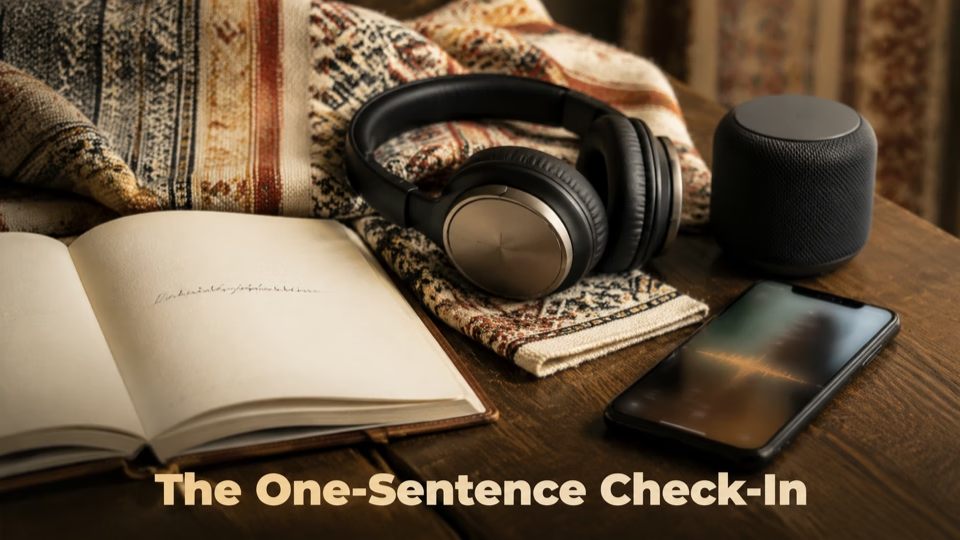
A Sound-Supported Journaling Practice
Sound can provide a point of attention before you begin writing. This may be helpful when silence makes thoughts more noticeable or the blank page feels too direct.
- Choose a SoulFul GLO sound journey.
- Listen for one minute before opening the journal.
- Follow one tone, rhythm, instrument or pause.
- Write While listening, I noticed...
- Continue for three to five minutes.
- Finish with one next step.
Use this video as an introduction to a SoulFul GLO sound-supported reflection practice.
Watch the video directly on YouTube.
You can also explore the SoulFul GLO Sound Journey Library or read the beginner's guide to sound journeys.
Why Pair Sound With Journaling?
Sound gives your attention something specific to follow, while the journal lets you record what you noticed. You can listen first without demanding an immediate explanation, then write once a feeling, memory or physical sensation becomes clearer.
The SoulFul GLO sound healing meditation guide explains how sound can be used during meditation and reflection. The SoulFul GLO sound healing app overview describes how sound journeys sit alongside the app's other wellness practices.
Wellness note: SoulFul GLO uses sound healing language within a self-care and wellness context. Sound journeys are not medical treatments and do not promise a particular emotional outcome.
The Pena in SoulFul GLO Reflection Practices
Some SoulFul GLO sound journeys include Pena recordings performed by artists from Manipur. The Pena is a traditional Manipuri bowed string instrument. Its single string can sustain notes with a gradual decay, giving the listener a performed sound to follow among the surrounding ambient elements.
The instrument belongs to a living musical and cultural tradition in Manipur. Naming the Pena, its origin and its performers keeps that source visible when the recordings are placed within contemporary sound journeys.
Read the SoulFul GLO guide to Far East healing sounds for more about the instrument and the brand's approach to layered sound.
Morning, Midday and Evening Journal Practices
Morning Check-In
Write for three minutes before messages and tasks take over your attention:
- Today, I am arriving with...
- One feeling I notice is...
- One thing that needs attention is...
- My priority for this morning is...
- One supportive next step is...
For a longer routine, read the SoulFul GLO morning self-care guide for women.
Midday Check-In
Use a two-minute entry when you feel scattered: What is my current state? What needs attention now? What can wait? What is one realistic next step?
The SoulFul GLO practice chooser can help you decide whether to continue with sound, meditation, movement or journaling.
Evening Check-In
Use these lines to record what remains active at the end of the day: Today, I carried..., Today, I learned..., Tonight, I can leave... and Tomorrow, one thing I can do is...
If you prefer to listen before writing, try the SoulFul GLO bedtime routine with soundscapes.

Emotional Wellness Journaling for Women
Women do not share one emotional experience, and no journal method will suit everyone. A women-focused practice can still make room for situations such as work, caregiving, household planning, relationship responsibilities, body changes, ambition, fatigue and emotional labour.
Useful questions may include:
- What am I carrying that other people may not see?
- Where am I agreeing automatically?
- What do I need before I continue?
- Which part of my life needs more attention?
The SoulFul GLO meditation for women guide offers related practices using guided meditation, sound and personal reflection.
How to Build a Repeatable Journaling Habit
Connect journaling to something you already do. You might write after morning tea, before opening your laptop, following a sound journey, after yoga or before bed.
Use the same short structure when you have limited time:
- Notice what is happening.
- Name the feeling.
- Listen to your breathing, body or one sound.
- Write one honest sentence.
- Choose one next step.
The SoulFul GLO guide to sound and well-being offers more context on combining listening with daily wellness practices. You can also explore the wider SoulFul GLO experience.
When Journaling Feels Difficult
The page may feel too open when you are tired, overwhelmed or unsure where to begin. Reduce the size of the task.
Write one line instead of recounting the whole day. Name the emotion without explaining it. Describe a body sensation when you cannot find an emotional word. If writing still feels difficult, listen for one minute and record one thing you heard.
Try one of these openings:
- My shoulders feel...
- My mind keeps returning to...
- What I need but have not said is...
- The smallest thing I can write today is...
One accurate sentence is a complete check-in.
Emotional Wellness Journal FAQ
What is an emotional wellness journal?
It is a reflective writing practice used to notice feelings, record daily experiences and recognise recurring patterns.
How do I start an emotional wellness journal?
Begin with Right now, I feel... or Today, I noticed... Name one feeling and finish with one manageable next step.
What should I write about?
You can write about mood, stress, body sensations, emotional triggers, gratitude, boundaries, needs, repeated situations and decisions you want to revisit.
Is journaling good for emotional wellness?
Journaling can support reflection and emotional awareness. It is a self-care practice and does not replace therapy or professional mental health support.
How often should I journal?
Choose a frequency you can repeat. A short daily entry or a few entries each week may be more practical than a demanding routine.
Can I journal with music or sound?
Yes. Sound can provide a focus point before writing, especially when silence makes thoughts more noticeable.
What is a SoulFul GLO sound journey?
It is an immersive listening experience created for meditation, rest, yoga, journaling, manifestation and reflection.
What is the Pena?
The Pena is a traditional Manipuri bowed string instrument. SoulFul GLO uses Pena recordings performed by artists from Manipur in some sound journeys.
Can SoulFul GLO support journaling?
SoulFul GLO includes journaling, guided meditation, sound journeys, yoga and self-discovery practices that can be used separately or together.
Where should I start?
Write one sentence beginning with Today, I noticed... Then name one feeling and decide what needs your attention next.
Related SoulFul GLO Guides
- SoulFul GLO home
- Sound healing app
- Morning self-care routine for women
- Meditation for women
- Sound healing meditation
- Bedtime routine with soundscapes
- Sound and well-being
- Practice chooser
- Far East healing sounds
- Sound journeys for beginners
Start Your Journal With One Sentence
Begin with Today, I noticed... Name one feeling, record where you sense it in your body and choose one manageable next step. If the page feels too quiet, listen to a SoulFul GLO sound journey first and follow one tone, rhythm or instrument before you write.
Begin your reflection practice
Write one sentence, then pair your journal with a sound journey when listening feels easier than silence.