
Sleep advice can feel either too strict ("no screens ever") or too vague ("just relax"). Real life is messier. Your mind is busy. Your body is tired but tense. And the moment you lie down, thoughts start performing.
A bedtime routine that truly helps is not about being perfect - it is about creating predictable cues that tell your nervous system, "It is safe to power down." One of the easiest cues to repeat nightly is sound: gentle soundscapes that soften stimulation, mask disruptive noise, and give your attention something calm to rest on.
This guide is a practical, non-clinical blueprint for using soundscapes alongside sleep hygiene basics. You will learn how to structure your bedtime routine without burning out, what to listen to and what to avoid, the best volume and timer settings, and what to do if you wake up at 2 a.m.
If you want a broader habit-first framework for consistency, see Daily Wellness Ritual. If you are new to SoulFul GLO, start at the SoulFul GLO home page.
Quick Answer: What Is the Best Bedtime Routine With Soundscapes?
A simple, effective routine looks like this:
- 30-60 minutes before bedDim lights and reduce stimulation.
- 10-15 minutes before bedDo a short calming practice, such as breathing or a body scan.
- In bedPlay a steady sleep soundscape at low volume with a 45-90 minute timer.
- If you wake upDo not check the time. Take 10 slow breaths and resume the same soundscape quietly.
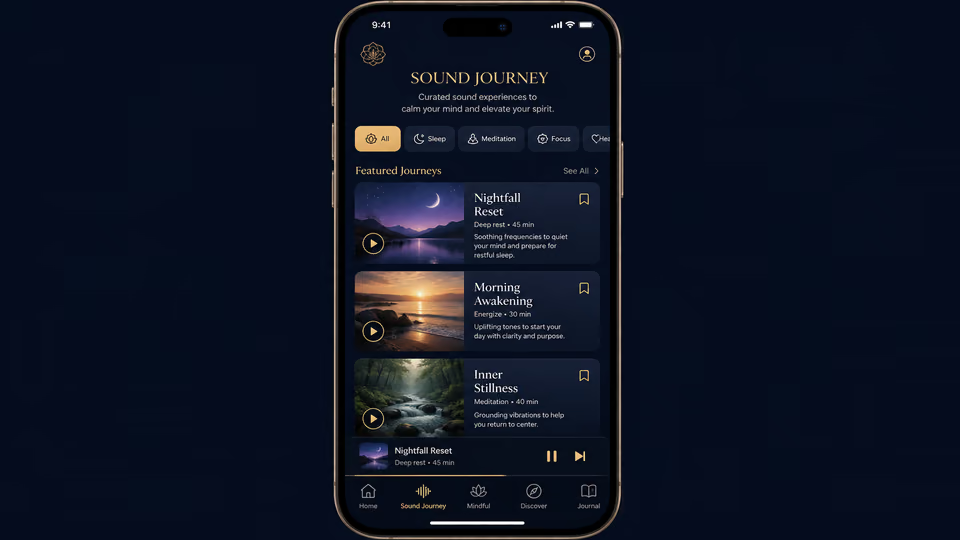
You can explore sleep-friendly Sound Journeys in the SoulFul GLO Sound Journey Library.
Quick Links
Why Soundscapes Help With Sleep
When you cannot sleep, it is rarely because you "forgot how." It is usually because your nervous system is still in day mode - processing, scanning, anticipating.
Soundscapes can help because they reduce sudden changes in your environment, mask interruptions like traffic or household noise, create a gentle and predictable audio blanket, and give your mind a soft anchor so it stops grabbing onto thoughts.
Sound does not force sleep. It supports the conditions where sleep becomes easier.
Step 1: Build the Bedtime Structure
Think of bedtime in three phases: Power Down, Settle, and Drift. Each phase has one job.
Phase 1 - Power Down, 30-60 minutes before bed
Goal: reduce stimulation and prepare your environment.
Do:
- Dim lights. Warm light is ideal.
- Lower noise and activity levels.
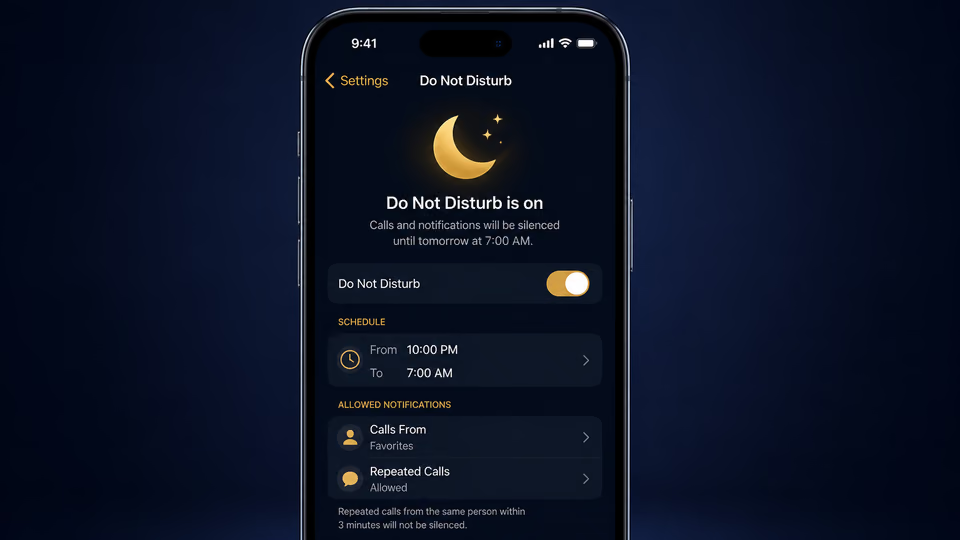
- Put your phone on Do Not Disturb.
- Avoid stressful content, including news, emails, and heavy conversations.
Optional audio: play a gentle ambient soundscape in the background at low volume. Keep it simple, with no dramatic changes.
Phase 2 - Settle, 10-15 minutes before bed
Goal: signal safety to the body.
Choose one small practice: a 3-5 minute breath practice with the exhale longer than the inhale, a short body scan, or gentle stretching for the neck, shoulders, and hips.
Then start your sleep-friendly soundscape before getting into bed so the transition feels smooth.
Phase 3 - Drift, in bed
Goal: stop trying and let sleep happen.
This is where soundscapes shine. Choose audio that is steady, minimal, and predictable. Avoid sound that feels like a story you have to follow.
Step 2: What to Listen To, and When
Not all relaxing audio is sleep audio. Here is a quick selection guide.
Best soundscapes for sleep onset
Choose rain textures, ocean waves, forest ambience, minimal ambient beds, and slow, soft transitions.
Avoid tracks with big builds, dramatic drops, surprise changes, or anything emotionally intense.
Best soundscapes for sleep maintenance
Choose steady textures with minimal variation, longer tracks or looping-friendly sound, and consistent volume and tone.
This matters if you wake easily. Sudden silence or big shifts can cause micro-wakeups.
If your mind is racing
Try a short guided meditation first, around 3-5 minutes, then let the soundscape carry you.
If you want to explore a library of Sound Journeys built for calm and rest, visit the Sound Journey Library.
Step 3: Volume and Timer Settings That Actually Work
Most sleep-audio issues come down to two settings: volume and duration.
The one notch lower volume rule
Set volume so it feels like an atmosphere, not entertainment. If you are actively listening to details, it is likely too loud. Lower it until it becomes a soft background layer.
Simple timer guidance
- If you fall asleep quickly: 30-45 minutes.
- If you wake up at night: 60-90 minutes.
- If silence wakes you: try a longer timer or consistent playback at very low volume.
Avoid abrupt stops if possible. Some people's nervous systems notice the change and wake slightly.
Step 4: The 2 A.M. Wake-Up Plan
Waking up is not the problem. The spiral is.
If you wake up at night, your goal is to stay out of performance mode. Here is a plan you can memorize.
- 1. Do not check the timeChecking the clock invites mental math: "I only have X hours left." That tends to activate the brain.
- 2. Do a 60-90 second breath resetInhale for 4, exhale for 6, and repeat 8-10 times.
- 3. Resume the same soundscape, quietlyUse the familiar sound you fell asleep to. Familiarity signals safety.
- 4. If you are awake longer than 20-30 minutesGet up briefly, keep lights low, and do something boring: sip water or read a calm page on paper. Then return to bed and restart your drift routine.
The goal is gentle repetition, not forcing sleep.
Step 5: A Simple Bedtime Routine You Can Copy
Version A - The Busy Day Routine, 15-20 minutes total
- 5 minutesDim lights and turn Do Not Disturb on.
- 3 minutesDo a breath reset: 4 in, 6 out.
- 10 minutesStart a sleep soundscape with a 45-60 minute timer.
Version B - The Full Wind-Down Routine, 35-60 minutes total
- 30 minutes before bedDim lights and step away from intense inputs.
- 10 minutesDo a gentle stretch or body scan.
- 20 minutesPlay a sleep soundscape with a 60-90 minute timer.
If you want a consistency framework so you do not overthink nightly routines, read Daily Wellness Ritual.
Common Mistakes, and the Fixes
Mistake 1: Choosing audio that is too interesting
Fix: pick minimal soundscapes for sleep - less variation and fewer changes.
Mistake 2: Volume too loud
Fix: lower volume until it is environment-level.
Mistake 3: Changing tracks every night
Fix: repeat the same soundscape for 3 nights. Familiarity helps.
Mistake 4: Using your phone in bed after starting audio
Fix: set audio, then place your phone face-down out of reach.
Build Your Soundscape Sleep Stack
Sound works even better when paired with a tiny nervous-system cue.
Try this simple stack:
- 2 minutes: jaw and shoulder release.
- 3 minutes: longer exhales.
- Soundscape: 45-90 minute timer.
This is also a great template for nights when you feel anxious. Explore Sound Journeys to support this stack in the Sound Journey Library.
FAQ
What is the best sound to sleep to?
Most people do best with steady, predictable sound: rain, ocean, forest ambience, or minimal ambient beds. Choose what feels calming and not stimulating.
Should I sleep with headphones?
If headphones are uncomfortable or unsafe for your sleep posture, use a speaker at low volume. Comfort matters more than perfect audio.
Should sound play all night?
Many people prefer a timer, usually 45-90 minutes. If silence wakes you, experiment with longer timers at very low volume.
What if sound does not work for me?
Try different textures, lower the volume, repeat the same track for a few nights, and pair it with a short breath practice.
Where to Start With SoulFul GLO
- Read this guide again when you need a reset: Bedtime Routine with Soundscapes.
- Browse the library: Sound Journey Library.
- Learn more about SoulFul GLO: SoulFulGLO.com.
Unlock Deeper Sleep Support With SoulFul GLO Unlimited
Get consistent access to premium sound journeys designed for calm, focus, and sleep.