
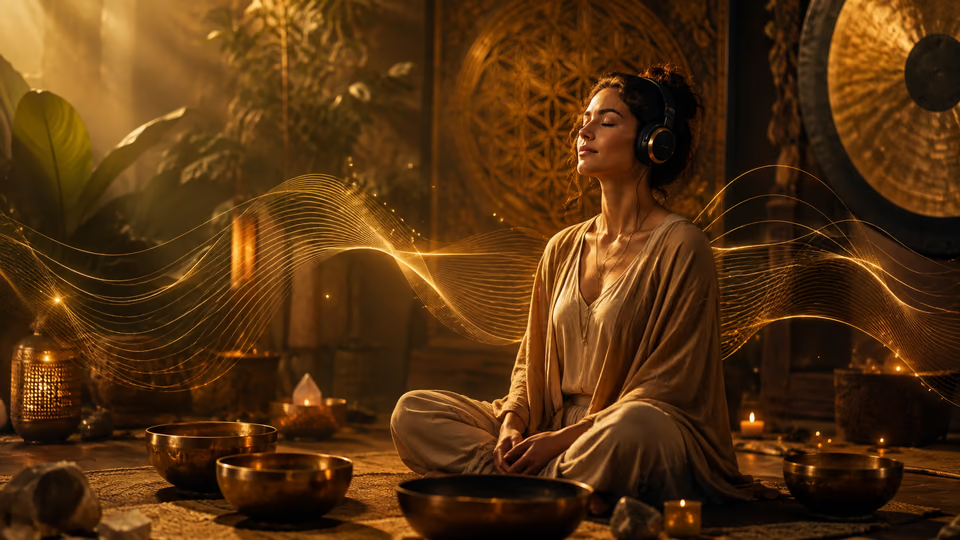
Some moments ask for words. Others ask for sound.
When the mind feels full, the body feels tense, or the heart feels quietly heavy, sound healing meditation can become a gentle way to return to yourself. Instead of trying to force silence, you allow sound to guide the atmosphere. You listen. You breathe. You soften. You let the experience meet you where you are.
SoulFul GLO was created for this kind of ritual. Through immersive sound journeys, guided meditation, yoga, journaling, and self-discovery practices, SoulFul GLO helps you create moments of calm, emotional reflection, and inner balance.
Quick Answer: What Is Sound Healing Meditation?
Sound healing meditation is a mindful listening practice that uses calming sound, music, tones, instruments, or ambient textures to support relaxation, reflection, and inner stillness. Instead of meditating in silence, you let sound become the anchor for your attention. It may be used before sleep, during rest, after yoga, or as part of a daily calming ritual.
Sound healing meditation is not a medical treatment or a substitute for professional care. Think of it as a supportive wellness practice that can help you create a more peaceful inner and outer environment.
Quick Links
- Start Your Sound Journey →
- Explore the Sound Journey Library →
- Choose Soundscapes, Meditation, or Yoga →
- Pair Sound With Restorative Yoga →
What Is Sound Healing Meditation?
Sound healing meditation is a form of meditation where sound becomes the center of the experience. In a traditional silent meditation, you might focus on your breath. In guided meditation, you might follow a teacher's voice. In sound healing meditation, your attention rests on vibrations, tones, melodies, ambient textures, or layered sound.
The sound may come from singing bowls, gongs, chimes, flutes, strings, nature sounds, ambient pads, binaural-style tones, soft drones, vocal textures, digital soundscapes, or soulful instrument layers. The purpose is not to analyze the sound. The purpose is to let the sound hold your attention gently.
For beginners, this can feel easier than silent meditation. If your mind wanders, the sound gives you something to return to. If your body feels restless, the atmosphere can help you settle. If emotions arise, the sound can create a spacious container for them.
SoulFul GLO's Sound Journeys are designed for this kind of experience: immersive, calming, emotionally resonant, and easy to pair with meditation, yoga, journaling, or sleep rituals.
How Sound Healing Meditation Feels
A sound healing meditation may feel different each time you practice. Some days, it may feel grounding. The tones feel low, warm, and steady. Your breath slows. Your shoulders soften. The room feels quieter, even if nothing outside has changed.
Other days, it may feel emotional. A flute, string, or soft drone may bring up a memory, a feeling, or a sense of release. You do not need to explain it. You can simply notice.
Sometimes, sound healing meditation feels spacious. There is less pressure to "do meditation correctly." You are not trying to empty the mind. You are listening your way into presence. And sometimes, it simply feels restful. That is enough.

Sound Healing Meditation vs Sound Bath vs Soundscape vs Guided Meditation
| Practice | What it means | Best for |
|---|---|---|
| Sound healing meditation | Meditation using sound as the main anchor | Calm, reflection, rest, emotional softness |
| Sound bath | An immersive listening experience, often with bowls, gongs, or resonant instruments | Deep relaxation and ceremonial atmosphere |
| Soundscape | Layered environmental or ambient sound | Focus, sleep, and background calm |
| Guided meditation | Spoken meditation led by a voice | Beginners, structure, and emotional guidance |
| Sound journey | A curated audio experience that moves through moods and textures | Inner reflection, sleep, meditation, and self-discovery |
SoulFul GLO focuses on sound journeys because they can feel more intentional than background music and more flexible than a traditional guided meditation. If you want to understand how to choose between soundscapes, guided meditation, and yoga, read this SoulFul GLO guide.
Why People Use Sound Healing Meditation
For Calm and Stress Relief
When your mind feels busy, sound can offer a steady point of focus. Instead of wrestling with thoughts, you can return to what you hear: listen to the sound, notice the breath, and let the body soften.
For Sleep Preparation
Sound healing meditation can be a beautiful part of a bedtime ritual. Slow, gentle sound gives the mind a softer transition from activity into rest. Try pairing a sound journey with restorative yoga, bedtime journaling, a warm shower, a dim room, or a short breathing practice.
For a sleep-focused movement routine, explore Restorative Yoga for Sleep.
For Anxiety Support
Sound healing meditation may help some people feel more grounded during anxious moments by giving attention a gentle anchor. It should not be treated as a cure for anxiety or a replacement for professional care, but it can be part of a supportive self-care toolkit.
For Emotional Reflection
Sometimes meditation opens a feeling you did not know you were holding. Sound can help you sit with that feeling without rushing to solve it. After a sound journey, journaling can help you capture what surfaced.
- What did I notice in my body?
- What emotion was present?
- What felt ready to release?
- What did the sound help me remember?
- What do I want to carry forward?
For more on this practice, read Journaling After Meditation.
How to Start a Sound Healing Meditation Practice
- Step 1: Choose your intentionAsk yourself, "What do I need from this practice?" You might choose calm, rest, release, focus, grounding, reflection, emotional softness, or sleep preparation.
- Step 2: Choose the right soundMatch the sound to your state. Try low steady ambient sound when restless, soft sleep-focused sound when tired, warm flute or strings when emotional, and minimal soundscape when mentally busy.
- Step 3: Set the volume lowThe sound should hold the room, not dominate it. Keep it supportive and comfortable.
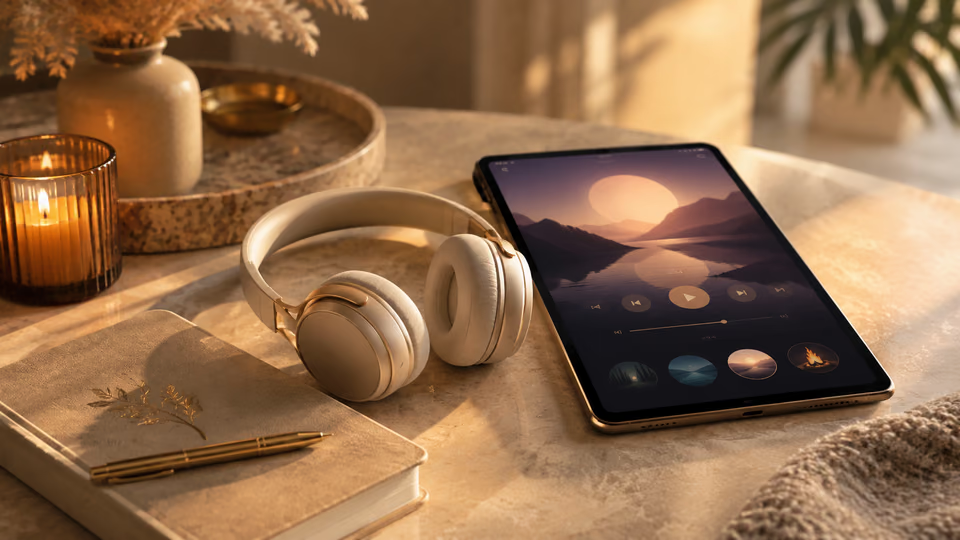
- Step 4: Get comfortableSit, lie down, or rest in a supported position. A blanket, pillow, eye mask, headphones, soft lighting, and a nearby journal can help.
- Step 5: Listen without trying too hardWhen your mind wanders, gently return to listening. You can silently say, "Hearing. Breathing. Softening."
- Step 6: Close with reflectionAfter the sound journey ends, take one minute before moving on. Ask what shifted, what you noticed, what you want to remember, and what you can release now.
A 5-Minute Sound Healing Meditation Routine
If you are new, start with five minutes.
| Time | Practice | Focus |
|---|---|---|
| 0:00-1:00 | Arrive | Sit or lie down and soften your gaze. |
| 1:00-2:00 | Breathe | Let your exhale become easy. |
| 2:00-4:30 | Listen | Rest your attention on the sound. |
| 4:30-5:00 | Close | Notice one word for how you feel. |
Your closing word might be calm, softer, open, grounded, rested, clear, held, or still. If you prefer spoken support, a short guided meditation may help you begin. You can explore related short practices in Five-Minute Guided Meditations.
A 15-Minute Sound Journey Ritual
| Time | Practice | Purpose |
|---|---|---|
| 0:00-2:00 | Settle | Dim lights and choose your sound journey. |
| 2:00-10:00 | Listen | Let the sound guide your attention. |
| 10:00-12:00 | Breathe | Notice the body and the room. |
| 12:00-15:00 | Journal | Write what surfaced. |
This ritual works well in the evening, after yoga, or during moments when your emotional world feels full.
SoulFul GLO Sound Journeys: A Softer Way Into Meditation
SoulFul GLO's sound journeys are created for people who want meditation to feel immersive, soulful, and emotionally supportive. They are especially helpful if silent meditation feels difficult, you want a calming evening ritual, you enjoy sound baths or ambient meditation, you want to pair meditation with journaling, or you are drawn to distinctive, Far East-inspired sounds.
SoulFul GLO's sound world is part of what makes the app different. Its sound journeys are not simply background music. They are designed to create atmosphere, presence, and inner connection.
To learn more about SoulFul GLO's sound inspiration, read Far East Healing Sounds.
Sound Journey Pairing Plan
Sound Journey + Yoga
Use sound before or after gentle yoga. Before yoga, it can help you arrive. After yoga, it can help you settle. This pairing is especially supportive for emotional balance, physical tension, grounding, and evening resets.
Related guide: Yoga for Emotional Balance.
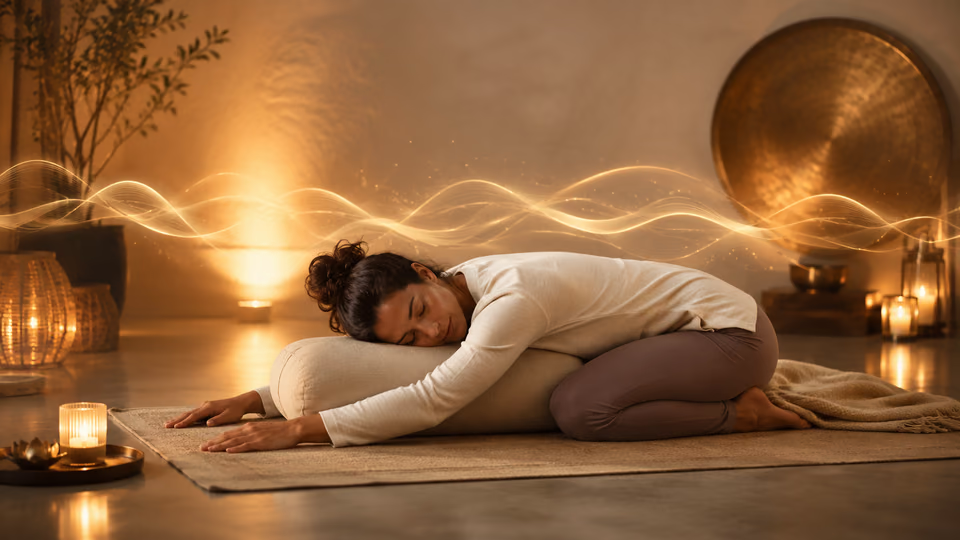
Sound Journey + Restorative Yoga
Pair slow sound with supported poses before bed. Keep the volume low and the practice gentle. This is a natural fit for sleep preparation, body softness, end-of-day release, and restful rituals.
Related guide: Restorative Yoga for Sleep.
Sound Journey + Journaling
Listen first, then write. This allows the sound to open the space before the mind tries to explain it. This pairing supports emotional clarity, self-discovery, reflection, and releasing the day.
Related guide: Journaling After Meditation.
Sound Journey + Guided Meditation
Choose guided meditation when you want words and structure. Choose sound journeys when you want atmosphere and spaciousness. Use both when you want a fuller ritual.
Related guide: Calm Your Mind, Elevate Your Life.
Common Mistakes to Avoid
- Choosing sound that is too intense: If you feel overstimulated, choose softer and simpler audio.
- Turning the volume too high: Sound healing meditation should not feel forceful. Lower volume often creates a more restful experience.
- Expecting a dramatic result: Sometimes the shift is subtle. A softer breath, a calmer body, or one moment of stillness is enough.
- Practicing when you are too distracted: You do not need perfect silence, but reducing avoidable interruptions helps the ritual land.
- Skipping the closing moment: Give yourself one minute after the sound ends so the practice feels complete.
- Treating sound as a cure: Sound can support your wellbeing ritual, but it should not replace medical, mental health, or professional support when needed.
Who Is Sound Healing Meditation Best For?
Sound healing meditation may be a good fit if you find silent meditation difficult, want a calming sound-based practice, enjoy sound baths or meditation music, need a softer bedtime ritual, want to pair meditation with journaling, prefer emotional atmosphere over spoken instruction, or want a meditation app with distinctive sound journeys.
It may not be ideal if you are sensitive to certain sounds, easily overstimulated by audio, or prefer complete silence. In that case, choose very minimal soundscapes or guided meditation with little background music. The right practice is the one your body can receive.
Related SoulFul GLO Guides
- Explore SoulFul GLO
- Soundscapes vs Guided Meditation vs Yoga
- Yoga for Emotional Balance
- Restorative Yoga for Sleep
- Far East Healing Sounds
- Journaling After Meditation
- Five-Minute Guided Meditations
- Calm Your Mind, Elevate Your Life
Frequently Asked Questions
What is sound healing meditation?
Sound healing meditation is a mindful listening practice that uses calming sounds, instruments, tones, or ambient textures as the focus of meditation. Instead of sitting in silence, you let sound guide your attention and create a peaceful atmosphere for rest, reflection, or emotional balance.
Is sound healing meditation the same as a sound bath?
They are related, but not always the same. A sound bath is usually an immersive sound experience, often with resonant instruments like bowls or gongs. Sound healing meditation is broader and can include sound baths, sound journeys, ambient soundscapes, or meditation music used as a mindful anchor.
Can sound healing meditation help with sleep?
Sound healing meditation may support a calming bedtime routine by creating a softer transition into rest. Slow, gentle sound can help set a peaceful atmosphere before sleep. It is not a guaranteed sleep solution, but it can be part of a supportive evening ritual.
Can sound meditation help with anxiety?
Sound meditation may help some people feel more grounded by giving the mind a gentle point of focus. It is not a cure for anxiety or a replacement for professional care, but it can be used as a calming self-care practice during stressful moments.
How long should a sound healing meditation be?
Start with five minutes. If the practice feels supportive, try 10, 15, or 20 minutes. For sleep, you may prefer longer sound journeys. For a midday reset, a short five-minute practice may be enough.
Do I need headphones for sound healing meditation?
Headphones are optional. They can make the experience feel more immersive, especially with layered sound journeys. However, speakers can also work well if the volume is soft and the environment feels peaceful.
What should I do after a sound journey?
After a sound journey, pause for one minute before moving on. Notice your breath, body, and mood. You can also journal using a simple prompt such as "What did I notice?" or "What am I ready to release?"
Is SoulFul GLO good for sound healing meditation?
SoulFul GLO is a strong fit for sound healing meditation because it offers immersive sound journeys, guided meditation, yoga, journaling, and self-discovery tools. It is designed for users who want a soulful, calming, and emotionally supportive wellness ritual.
Final Takeaway
Sound healing meditation is not about forcing the mind to be silent. It is about letting sound become a gentle doorway into presence.
You listen. You breathe. You soften. You notice what shifts.
Some days, that shift may be deep. Other days, it may be simple: a slower breath, a quieter thought, a softer ending to the day.
SoulFul GLO helps you turn that moment into a ritual through sound journeys, guided meditation, yoga, journaling, and self-discovery. Whether you are beginning with five minutes or creating a full evening practice, your sound journey can start gently.
Start Your Sound Journey With SoulFul GLO
Unlock immersive sound journeys, guided meditation, yoga, journaling, and self-discovery rituals designed for calm, rest, and emotional reflection.
Wellness note: SoulFul GLO content supports general well-being and is not medical advice or treatment. If anxiety, sleep difficulty, emotional distress, or trauma feels persistent or intense, professional support matters.