
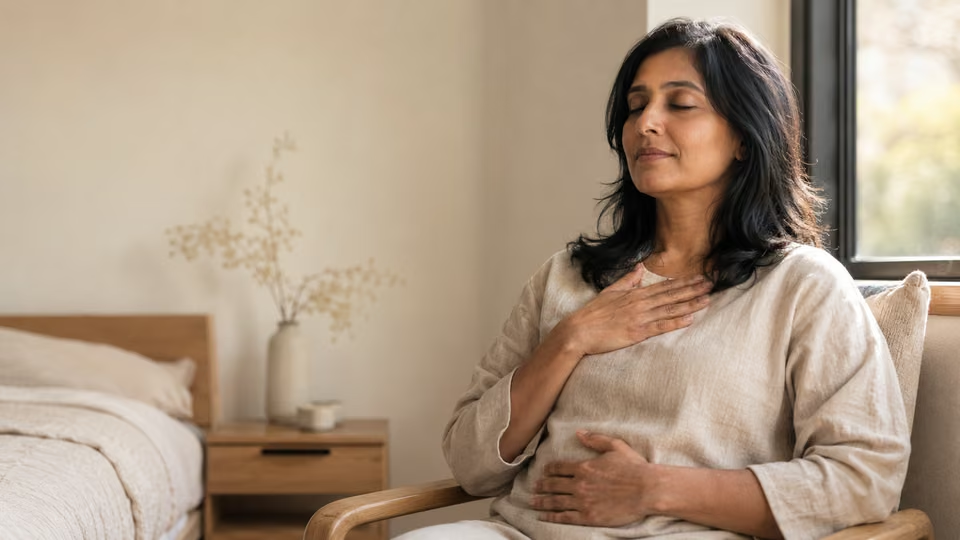
Anxiety does not always begin as a thought. Sometimes it begins as a tight chest, a shallow breath, a restless stomach, a jaw that will not soften, or a sense that something needs to be solved right now.
When anxiety rises, many people are told to “just breathe.” But the breath itself can sometimes feel uncomfortable, and meditation can feel impossible when the mind keeps moving.
That is why breathing meditation for anxiety should be gentle: not forced, not perfect, and not a test of whether you can become calm on command. The aim is not to erase anxiety instantly. It is to give your attention a steady anchor and your body somewhere softer to land.
The NHS describes a calming breathing technique for stress, anxiety, and panic that can be practiced in a few minutes and almost anywhere. Mayo Clinic also includes deep breathing and meditation among relaxation techniques used for stress management.
Quick answer: What is breathing meditation for anxiety?
Breathing meditation for anxiety is a mindfulness practice in which you use the breath as a gentle anchor for attention. Instead of trying to stop anxious thoughts, you notice the breath, soften the body where possible, and return to the present when the mind wanders.
- Find supportSit or lie down comfortably and notice where your body is supported.
- Begin naturallyLet the breath move without changing it at first.
- Choose one anchorFollow one sensation through an inhale and an exhale.
- Return gentlyWhen thoughts appear, notice them and come back without criticism.
- Close with kindnessEnd with a calming phrase rather than demanding a particular result.
Why the breath can help during anxiety
When anxiety is present, the breath may become shallow, fast, tight, held, or uneven. You might notice it high in the chest or feel as though you cannot get a full inhale. A breathing meditation gives the mind one simple place to return and can help you notice how anxiety is showing up in the body.
You do not need to force deep breathing. Large or dramatic breaths can feel uncomfortable when anxiety is high. Start smaller: natural breath first, then a softer exhale only if that feels comfortable.
What is a breath anchor?
A breath anchor is the part of the breathing experience you choose to notice. It might be the air moving through the nose, the rise and fall of the chest, the belly gently expanding and softening, the feeling of the exhale, the pause after breathing out, or even the sensation of the body being supported.
You do not need to follow all of these. Choose one. When the mind wanders, come back without frustration: Thinking is happening. Come back to the breath. That return is the practice.
A five-minute breathing meditation for anxiety
Use this practice when anxiety feels present but you do not want anything complicated. Sit in a chair, lie down, or rest with your back against a wall.
- Minute 1 - Arrive where you areFeel your feet on the floor, your back against the chair, or the bed or mat beneath you. Say silently, “I am here.” You do not have to feel calm yet.
- Minute 2 - Let the breath be naturalNotice whether the breath is shallow, fast, uneven, soft, or held. Whatever you notice is allowed. You are not trying to breathe correctly.
- Minute 3 - Choose one breath anchorRest attention at the nose, chest, belly, or exhale. Stay for one inhale and one exhale. If the mind wanders, return.
- Minute 4 - Soften the exhaleOnly if it feels comfortable, let the exhale become slightly longer. No strain, holding, or oversized breath-just a soft release.
- Minute 5 - Close with a calming phraseTry “I can meet this moment one breath at a time,” “I do not have to solve everything right now,” or “For this breath, I am here.”
You do not have to feel completely calm for the practice to count. Even a little more space matters.
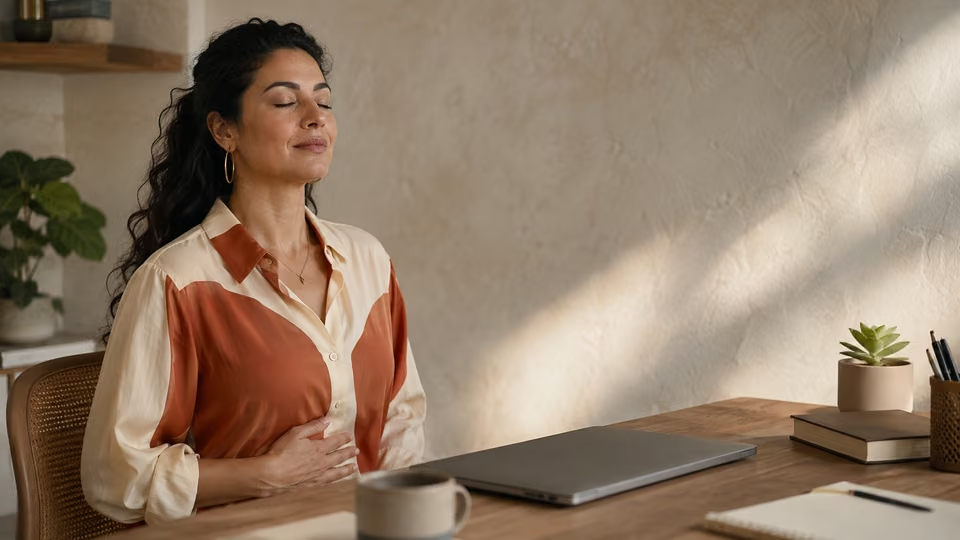
Watch: Breathing Meditation for Anxiety
Use this guided SoulFul GLO video as a gentle companion for your breath-anchor practice.
Watch the breathing meditation on YouTube.
A three-minute version for anxious moments
- Minute 1 - Feel supportNotice three points of contact: feet on the floor, hands in the lap, and back against the chair. Say, “I am supported here.”
- Minute 2 - Follow three exhalesDo not worry about changing the inhale. Notice three gentle exhales and let each be a little softer than the last.
- Minute 3 - Choose one next stepAsk, “What is one small thing I can do next?” Drink water, send one message, step outside, close the laptop, stretch, or rest for two minutes.
Anxiety often wants a full solution. The breath helps you return to one step.
What if breathing makes anxiety feel worse?
For some people, focusing directly on the breath can feel uncomfortable, especially during intense anxiety or panic. If that happens, do not force the practice. Breathe normally and choose a different anchor: the feeling of your feet on the floor, the weight of a blanket, a sound in the room, your hands touching, a candle flame, a simple phrase, or gentle movement.
Mindfulness is not about trapping yourself inside discomfort. It is about meeting the moment with more kindness. If anxiety or panic is intense, frequent, or affecting daily life, consider speaking with a qualified mental health professional. The NHS advises seeking help when you are struggling to cope or self-help is not helping.
Pair breath meditation with sound journeys
Silence can be beautiful, but when anxiety is loud it can also feel too empty. A calming sound journey gives attention something gentle to follow. Let the first minute be only listening, notice the breath without changing it, soften the exhale with the sound, and return to one sound whenever thoughts become loud.
Breath gives you an inner anchor. Sound gives you an outer anchor. Together, they create a bridge between body and mind. SoulFul GLO’s sound journeys draw from rich emotional landscapes, including the expressive Peña one-string instrument tradition associated with Manipur, offering a grounded and human alternative to generic spa sound.
Explore five SoulFul GLO sound journeys, read the guide to sound healing meditation, or open the Sound Journey Library.
Breathing meditation for women carrying stress
The inbox, family schedule, emotional labor, constant decisions, and pressure to stay calm can become many small burdens stacked together. A breath practice will not remove every responsibility, but it can create a pause to ask: What am I carrying right now? Can I soften around one part of it?
For a deeper reset, read Stress Relief for Women.
Use breath before morning intention
When the mind is anxious, manifestation can start to feel like pressure. A few minutes of natural breathing can help you begin from a steadier place: soften the exhale, ask what you are choosing today, choose one intention, and take one aligned action. Continue with the Morning Manifestation Meditation.
Pair breath with gentle yoga for anxiety
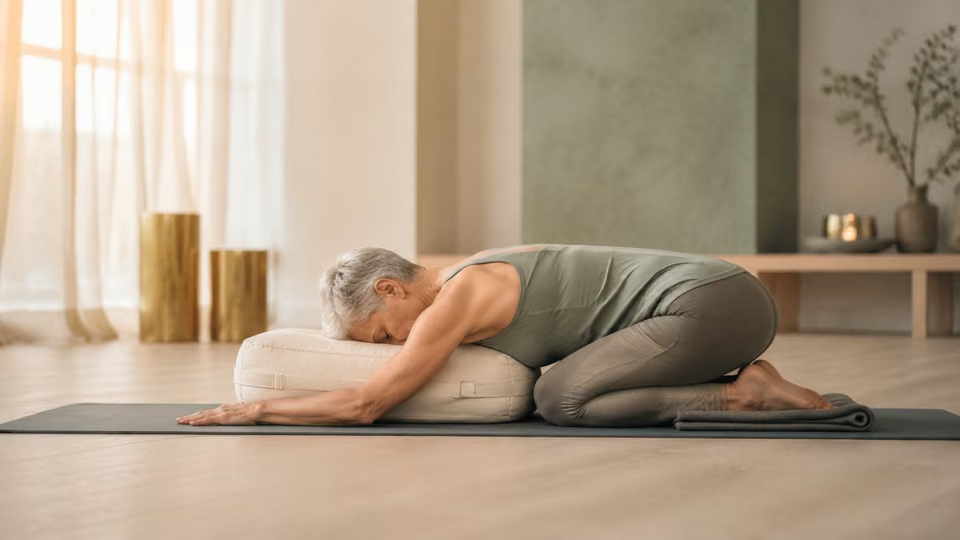
Some anxiety needs movement before stillness. If sitting quietly feels too hard, begin with cat-cow, supported child’s pose, a neck and shoulder release, a seated forward fold, or supported rest. Then return to the breath.
Explore the complete gentle yoga flow for anxiety.
Common mistakes in breathing meditation
Trying to force calm
Breathing meditation is not a command. Create conditions that feel safer rather than demanding an instant result.
Taking breaths that are too big
Large breaths can feel intense when anxiety is high. Begin with your natural breath and add a softer exhale only when comfortable.
Thinking wandering means failure
The mind will wander. Meditation is the moment you notice and return.
Staying with the breath when it feels unsafe
If the breath becomes uncomfortable, choose sound, feet, hands, a phrase, a candle, or gentle movement as the anchor.
A simple daily breath ritual
- Morning: one minute of natural breathing before checking your phone.
- Midday: three soft exhales between tasks.
- Evening: a calming sound journey with one hand on the chest or belly.
- Before sleep: repeat, “For tonight, this can wait.”
Small rituals matter because they teach the body that calm does not have to be earned. It can be practiced gently.
Start your breath meditation with SoulFul GLO
Begin with one breath, one sound, and one moment where your body does not have to carry everything at once.
Frequently asked questions
Does breathing meditation stop anxiety?
It may help create calm, space, and grounding, but it does not guarantee anxiety will disappear. Treat it as supportive self-care, not a cure.
How long should I practice?
Begin with three to five minutes. A short practice you actually use is often more helpful than a long routine that feels overwhelming.
What breathing technique is best for anxiety?
There is no single best technique for everyone. Many people begin with natural breathing and a slightly softer or longer exhale; others prefer sound, movement, or body awareness.
Is deep breathing always good for anxiety?
Not always. Some people feel more anxious when they force deep breaths. Begin naturally and deepen the breath only if it feels comfortable.
Can I use music or sound?
Yes. Calming sound can give the mind something gentle to follow, especially when silence feels difficult.
What if my mind keeps wandering?
That is normal. The practice is noticing that the mind wandered and gently returning to your anchor.
Final takeaway
Breathing meditation for anxiety is not about becoming perfectly calm. It is about returning-to one breath, one exhale, one sound, or one place in the body that feels supported.
You do not have to force deep breathing. You do not have to empty the mind. You do not have to get it right. You can begin gently.