
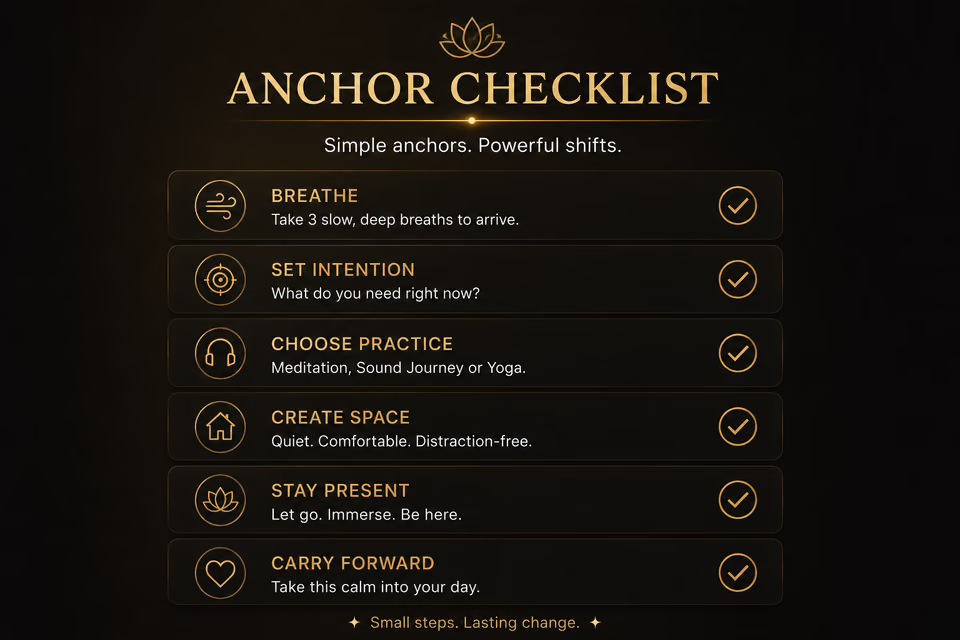
You wake up and reach for your phone. There are messages waiting. Notifications. Work. Family. Plans. Things you meant to finish yesterday.
Before the day has properly begun, your attention is already being pulled in several directions. When life feels this full, the suggestion to "practice mindfulness" can sound like one more item for the list.
But what if mindfulness did not require you to find more time? What if you could begin with the moments already hiding inside your day?
At SoulFul GLO, we believe wellbeing can live alongside real life - not apart from it. Mindfulness can happen while the kettle boils, while you wait for a page to load, before you answer a message, or during the few seconds between closing one door and opening another.
These are anchor moments: tiny opportunities to return your attention to where you actually are. They may last only a few seconds, but repeated throughout the day, they can gently change your relationship with your attention.
Quick Answer: How Can Busy People Practice Mindfulness?
Choose one ordinary action you already perform every day and use it as a reminder to return to the present moment.
- Before your phoneTake one conscious breath before checking notifications.
- When you standFeel your feet on the ground.
- With your first sipNotice the cup, aroma, taste, and swallow.
- Between tasksTake three breaths before starting the next thing.
- Before sleepRemember one moment from the day that you actually noticed.
Quick Links
- Explore Guided Meditations →
- Explore Sound Journeys →
- Try 5-Minute Guided Meditations →
- Unlock SoulFul GLO Unlimited →
What Is a Mindfulness Anchor?
A mindfulness anchor is something in the present moment that you deliberately place your attention on, such as your breath, physical sensations, sounds, movement, or your surroundings.
The purpose is not to stop thinking. It is not to empty your mind. And you do not have to make yourself feel calm.
An anchor simply gives your attention somewhere to return. For example, right now, notice one breath. Do not change it. Feel the inhale arrive and the exhale leave. That is it. You have just created a tiny mindful moment.
This simplicity is especially useful when you are busy because mindfulness does not need to become another task competing for your time. Instead, it can become part of what you are already doing.
Why Tiny Mindfulness Moments Matter
We often imagine meaningful habits as things that require substantial effort: an hour at the gym, 30 minutes of meditation, or a complete morning routine.
But consistency can also begin much smaller. A short mindful pause creates a simple interruption between operating automatically and consciously noticing what is happening.
Think about how much of an ordinary day happens on autopilot. You walk somewhere while thinking about where you will go next. You eat while reading. You listen while preparing your reply. You open your phone without remembering why you picked it up.
Mindfulness introduces a small space into that momentum. Not necessarily a dramatic one. Just enough to notice: I am here.
10 Tiny Anchor Moments That Change Your Day
1. Take one conscious breath before checking your phone
For many of us, the smartphone is the doorway into the day. Before opening notifications tomorrow morning, pause. Take one natural breath. Feel your body against the bed. Notice the temperature of the room. Then reach for your phone.
Your anchor: one breath before the screen.
2. Feel your feet when you stand up
Standing happens dozens of times each day, which makes it a wonderful built-in mindfulness reminder. The next time you rise from your desk, sofa, bed, or car seat, notice your feet. Feel them touch the ground. Notice the shift in weight. Feel your body moving upward.
Your anchor: feet on the ground.
3. Turn the first sip into a ritual
Coffee, tea, water, juice - it does not matter. Before automatically drinking, give your first sip your full attention. Notice the weight of the cup, the warmth or coolness against your hand, the aroma, the first taste, and the sensation of swallowing.
Your anchor: the first sip.
4. Use doorways as a reset
Every doorway represents a transition: bedroom to hallway, home to outside, lift to office, meeting room to corridor. As you cross it, take one breath and notice: I am entering something new.
Your anchor: doorway equals return.
5. Listen to one sound completely
Mindfulness does not always need to focus on breathing. Sound can be an equally accessible anchor. Pause occasionally and identify one sound: a bird, rain, traffic, a fan, footsteps, music, or voices somewhere in the distance.
Instead of immediately naming or judging it, listen. Notice its texture. Is it near or far? Steady or changing? Can you notice the moment it disappears?
Your anchor: one sound, fully heard.
Sound can be particularly helpful if sitting silently with your thoughts feels difficult. If you would like to explore using sound intentionally, read Sound Journeys for Beginners and Far East Healing Sounds.
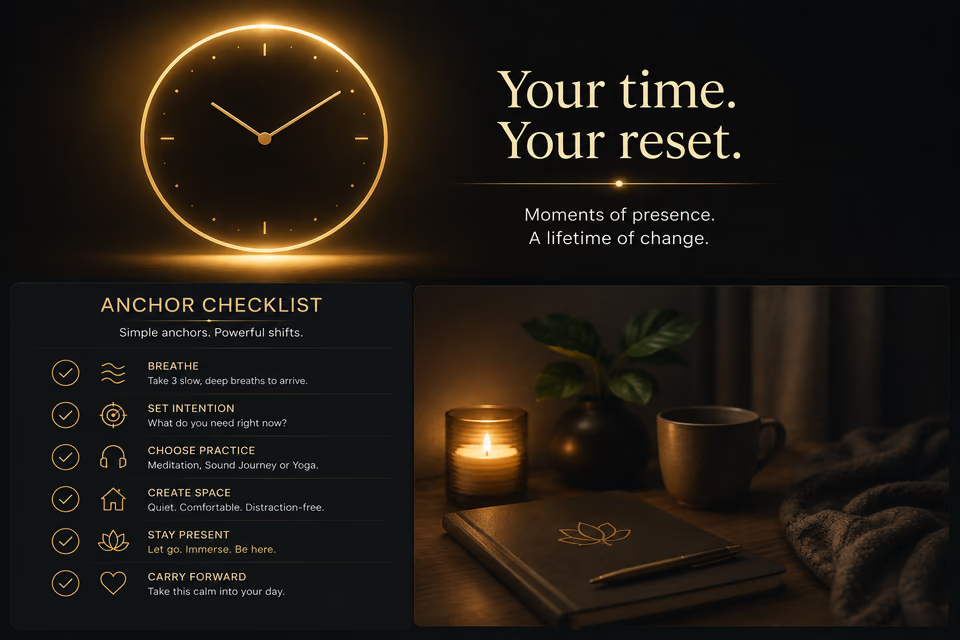
6. Create a three-breath transition between tasks
Busy days often do not contain clear endings. One email becomes another. A meeting finishes and another tab opens. Work flows into home life.
When you complete a meaningful task, pause for three breaths. Breath one: notice that you have stopped. Breath two: allow the previous task to be finished for now. Breath three: notice what you are about to begin.
Your anchor: three breaths between chapters.
7. Make waiting time mindfulness time
We spend an extraordinary amount of life waiting: for the kettle, the lift, a website, a traffic light, a queue, or someone to answer. Our instinct is often to eliminate these empty spaces by reaching for a phone.
Try occasionally doing the opposite. Let yourself wait. Notice your breathing. Look around. Feel your hands. Observe your surroundings.
Your anchor: waiting is the practice.
8. Take one mindful bite
You do not need to eat an entire meal mindfully to practice mindful eating. Start with one bite. Perhaps the first bite of lunch. Put down your phone for a moment. Notice the colour and texture of the food. Take the bite. Notice flavour, temperature, and texture.
Your anchor: one bite without distraction.
9. Pause before you press send
Digital communication moves quickly, sometimes faster than our awareness. Before sending an important email, message, comment, or reply, stop for one breath and ask: Is this what I want to communicate?
Your anchor: one breath before send.
10. End your day with one moment you remember
Before sleep, resist the pressure to conduct a complete review of your day. Instead, remember one moment. It does not need to be impressive: sunlight on the floor, a good sip of tea, a bird outside, a laugh, a finished task, or a few seconds of rest.
Your anchor: one moment worth noticing.
How Do You Practice Mindfulness When You Are Extremely Busy?
Start with one ordinary action you already perform every day. You do not need all 10 practices. In fact, trying to implement everything immediately can turn mindfulness into another productivity project.
Choose one anchor. Practice it for a week. Once it begins to feel natural, add another if you want.
Do You Need to Meditate to Be Mindful?
No. Formal meditation and everyday mindfulness are related, but they are not identical. Mindfulness is the practice of intentionally paying attention to your present experience. Meditation gives you dedicated time to practice attention more deliberately.
You can experience mindfulness while walking, drinking tea, listening, eating, stretching, or breathing. Formal meditation can deepen that skill, but everyday mindful moments are a perfectly approachable place to begin.
If you are ready to experiment with a more structured practice, explore the SoulFul GLO Guided Meditation Library. If a longer meditation feels unrealistic right now, start with 5-Minute Guided Meditations.
What If Your Mind Keeps Wandering?
It will. That is not evidence that you are doing mindfulness incorrectly.
The practice is not maintaining perfect concentration. The practice is noticing that attention wandered and gently returning it. That return is part of the practice.
There is no need to criticize yourself for becoming distracted. Modern life provides plenty of opportunities for distraction. Mindfulness simply gives you opportunities to return.
Should You Choose Meditation, Yoga, or Sound?
Different practices can support different moments. Sometimes you may want guidance. Sometimes movement feels more natural. Sometimes you do not want instructions at all - you simply want to close your eyes and listen.
- Guided meditation can provide structure when you are learning how to work with attention.
- Yoga can bring mindfulness into movement, breath, and physical sensation.
- A Sound Journey can offer immersive listening when you want fewer words and more space.
Our guide to Soundscapes vs Guided Meditation vs Yoga can help you decide which experience fits your mood, available time, and preferred way of unwinding.
From Tiny Moments to a Mindful Rhythm
Perhaps one mindful breath does not sound transformative. That is okay. It does not have to be. The opportunity lies in repetition.
Imagine your day contains 10 small returns: one before your phone, one with your coffee, one walking through a doorway, one listening to birds outside, three breaths after a meeting, one before sending an important message, one during dinner, and one before sleep.
Individually, they are tiny. Together, they begin creating a rhythm. Mindfulness becomes less like an appointment and more like a thread running quietly through everyday life.
Frequently Asked Questions About Mindfulness for Busy People
What is the quickest mindfulness exercise?
One of the quickest mindfulness exercises is simply taking one conscious breath. Notice the inhale and exhale without trying to change them.
Can I practice mindfulness for only one minute?
Yes. Mindfulness is not defined by session length. A one-minute practice can involve observing your breath, noticing physical sensations, listening carefully, or becoming aware of your immediate environment.
How can beginners start practicing mindfulness?
Attach mindfulness to an activity you already do every day, such as one breath before checking your phone or giving your first sip of tea or coffee your full attention.
What is the difference between mindfulness and meditation?
Mindfulness is intentionally paying attention to present experience. Meditation is a structured practice that can help cultivate mindfulness and other attentional skills.
What if I do not have time to meditate?
Use existing moments - walking, waiting, eating, drinking, listening, or transitioning between tasks - as opportunities to notice your present experience.
Can music and sound be used for mindfulness?
Yes. Listening itself can become a mindfulness practice. You can focus on individual sounds, changes in rhythm, silence between notes, or your own response to what you are hearing.
Build a Practice That Fits Your Life
There is no perfect mindfulness routine. There is only the practice you can realistically return to.
Maybe today that is one breath. Tomorrow, perhaps it is five minutes. Another day, you might want movement, a guided meditation, or an immersive Sound Journey.
SoulFul GLO brings these experiences together so you can choose what fits the moment rather than forcing every day into the same wellness routine.
Start With One Tiny Anchor Today
Your mindful life does not have to begin with an hour of silence. It can begin with the next breath.