
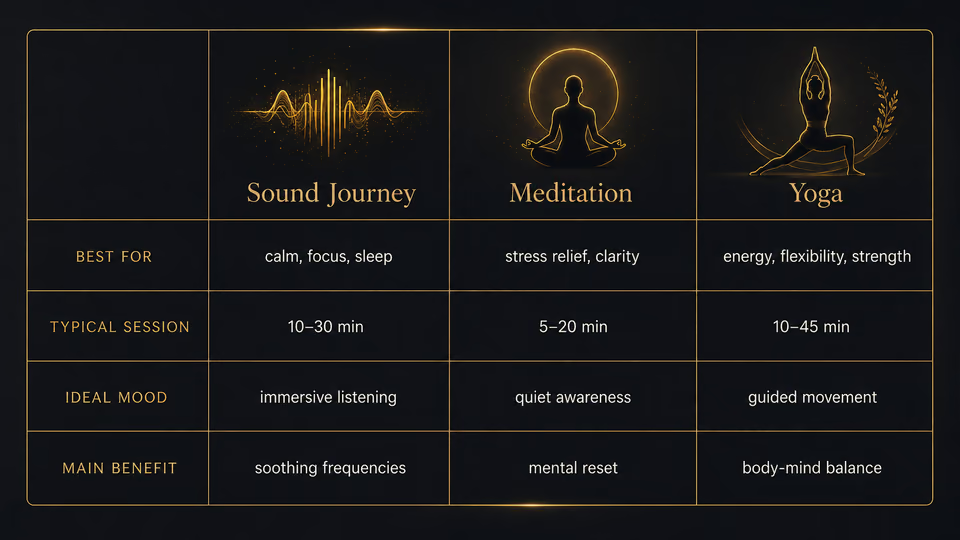
When stress builds, most of us ask the same question: What will actually help right now? A soundscape? A guided meditation? A yoga session?
The truth is: all three can work - but they work best in different moments, for different nervous-system states, and at different times of day. Choosing the right tool is less about preference and more about matching the practice to your current needs.
In SoulFul GLO, these three pillars - Sound Journeys, Guided Meditation, and Yoga - are designed to work together. This guide will help you understand how they differ, when each is most effective for stress and sleep, and how to build simple stacks you can repeat without burnout.
Quick Links
First: What Each Practice Is Really Doing for Your Nervous System
Stress and sleep problems are not only mental. They are often physiological. Your nervous system may be activated, overloaded, or tense.
- Activated: anxiety, restlessness, or racing thoughts.
- Overloaded: overwhelm, irritability, or shutdown.
- Tense: tight muscles, shallow breath, or a restless body.
Each practice supports a different pathway back to balance.
Soundscapes (Sound Journeys): External Anchor
Soundscapes are powerful when your mind needs something gentle to rest on. They help by smoothing environmental noise, giving attention a steady thread, and supporting downshifting through rhythm and atmosphere.
They are especially useful when you are too tired or stressed to do much.
Guided Meditation: Internal Guidance
Guided meditation helps when your mind needs direction - especially during anxious spirals, busy thought loops, self-criticism, or emotional flooding.
The voice guidance reduces decision fatigue and gives your attention a path.
Yoga: Somatic Release and Regulation
Yoga helps when stress is stored in the body: tight shoulders, jaw tension, restless legs, agitation, or the need to move energy through.
Yoga can be the quickest way to shift your state when sitting still feels hard.
Comparison Table: Soundscapes vs Guided Meditation vs Yoga
| Practice | Best for | Hard when | Ideal duration | Best time of day |
|---|---|---|---|---|
| Soundscapes / Sound Journeys | Overwhelm, mental noise, sleep support, calming background | You need specific mental guidance | 10-60 min | Evening, bedtime, work focus |
| Guided Meditation | Anxiety, racing thoughts, emotional regulation, self-compassion | You are too restless to sit | 3-20 min | Morning, midday reset, bedtime |
| Yoga | Tension, restlessness, low mood, nervous-system regulation through movement | You are exhausted or time-crunched | 8-35 min | Morning activation, afternoon release, evening downshift |
What Works Best for Stress Relief?
Stress shows up in different forms. Match the practice to the form.
If your stress is mental: racing thoughts
Best: Guided meditation, then soundscape.
Why: Guidance organizes attention first; sound sustains calm afterward.
Try a simple sequence: 5 minutes guided meditation, then 10 minutes of a low-volume Sound Journey.
If your stress is overwhelm: too much input
Best: Soundscapes or Sound Journeys.
Why: Sound reduces decision fatigue. You do not have to think - you just listen.
Try one 12-20 minute Sound Journey while sitting or lying down.
If your stress is physical tension: tight body
Best: Yoga, then soundscape.
Why: Movement releases tension; sound helps your system settle into rest.
Try 10-15 minutes of gentle yoga followed by 10 minutes of a Sound Journey in Savasana.
What Works Best for Sleep?
Sleep is not one problem. It is often two: falling asleep and staying asleep.
For falling asleep faster
Best: Guided meditation or soundscape, depending on your mind.
- If your mind is busy: guided meditation first.
- If your mind is tired but restless: soundscape first.
Use low volume, minimal variation, and a timer so the audio does not stop abruptly.
For waking up at night
Best: Micro-meditation plus a very steady soundscape.
If you wake up, your goal is to avoid activating the brain. Do not check the time. Take 10 slow breaths with the exhale longer than the inhale, then resume a soft soundscape at very low volume.
When Each Practice Is Best
Choose soundscapes when...
- You feel overstimulated.
- You cannot focus long enough to follow a guided voice.
- You need a calm background while working.
- You want sleep support without effort.
Start here: Explore Sound Journeys.
Choose guided meditation when...
- Anxiety is loud.
- Thoughts are looping.
- You need structure and reassurance.
- You want to shift emotional tone quickly.
Choose yoga when...
- You feel tense, restless, or stuck.
- Sitting still feels impossible.
- You need a somatic reset before sleep.
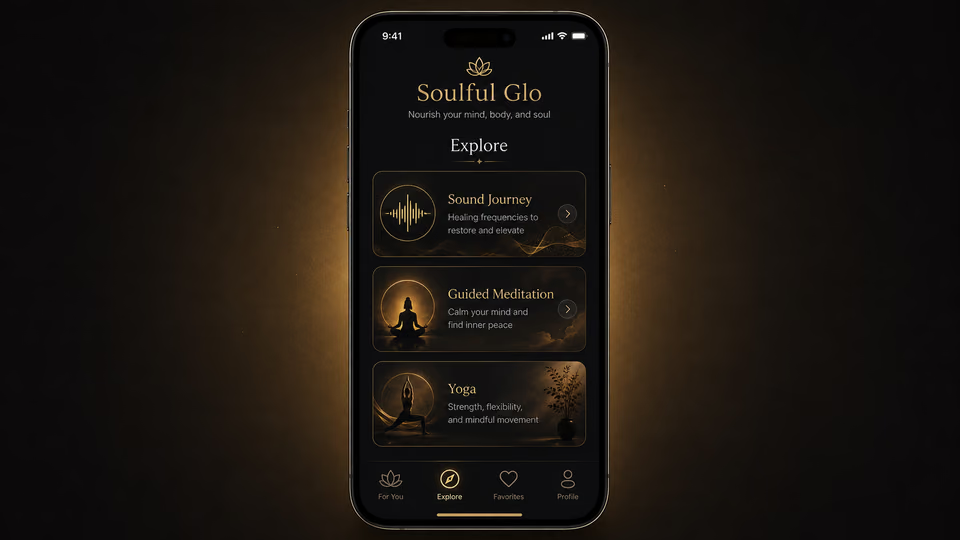
The Secret: Stacks Work Better Than Single Sessions
Most people choose one practice and hope it solves everything. But your nervous system often benefits most from a stack: a short sequence that moves you from activation to regulation to rest.
Think of stacks like a ritual pathway. Below are four stacks you can repeat.
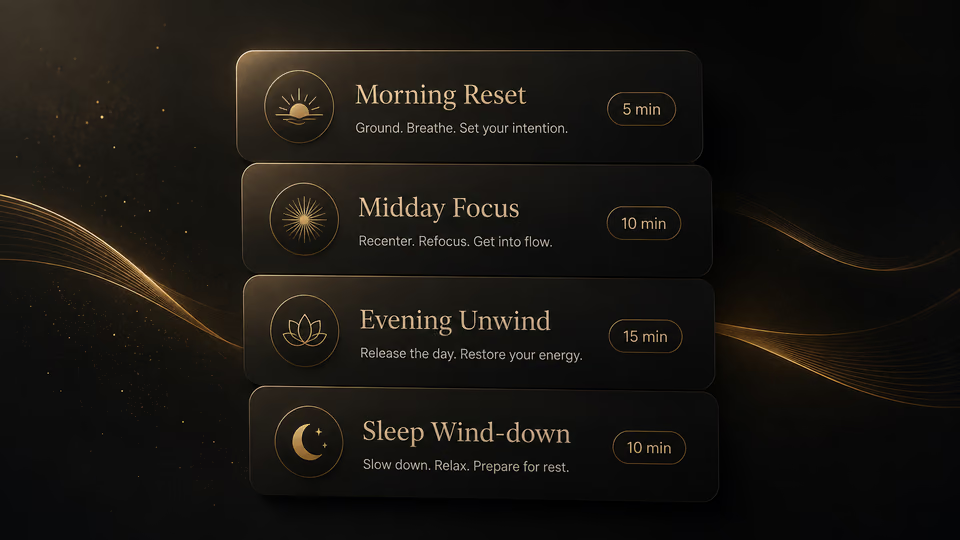
Routine Stack Cards
Stack 1: The Sleep Stack (20-35 minutes)
Goal: Fall asleep faster and stay asleep more easily.
- Yoga, 10 min: gentle hips and twists.
- Guided meditation, 5 min: soft landing body scan.
- Sound Journey, 10-20 min: steady sleep soundscape with timer on.
Stack 2: The Calm Stack (10-20 minutes)
Goal: Reduce overwhelm quickly.
- Sound Journey, 10-15 min: minimal, steady textures.
- Optional, 2 min: one-line journal: "Right now I feel... I need..."
Stack 3: The Focus Stack (10-30 minutes)
Goal: Clear mental clutter and focus.
- Guided meditation, 3-5 min: breath counting or clarity reset.
- Sound Journey, 15-25 min: low-volume focus soundscape while working.
Stack 4: The Anxiety Stack (8-18 minutes)
Goal: Calm an anxious spike.
- Guided meditation, 5 min: longer exhales and grounding language.
- Sound Journey, 8-12 min: steady, warm, minimal soundscape.
Explore Sound Journeys to build stacks: Sound Journey Library.
How to Build Your Default Plan
Decision fatigue is real. Create defaults so you do not have to decide every day.
Choose one default sound journey for sleep or calm, one default guided meditation for anxiety reset, and one default yoga session for gentle flow.
Then use this rule:
- If you feel overwhelmed, choose sound.
- If you feel anxious, choose guided meditation first.
- If you feel tense or restless, choose yoga first.
Defaults protect consistency.
Common Mistakes and Quick Fixes
Mistake 1: Volume too high at bedtime
Fix: Lower volume until it feels like environment, not content.
Mistake 2: Choosing stimulating soundscapes for sleep
Fix: Pick minimal tracks with fewer changes.
Mistake 3: Trying to meditate when your body is restless
Fix: Do 5-10 minutes of gentle yoga first.
Mistake 4: Expecting one session to solve stress
Fix: Use a stack and repeat it for 3 nights before judging results.
Build Your Ritual With SoulFul GLO Unlimited
If you want the easiest path to consistency, remove friction: access the full library of premium sound journeys, guided meditations, and yoga sessions so you can build stacks that match your mood and schedule.
Start SoulFul GLO Unlimited
Build calming stacks for stress, sleep, focus, and body-mind balance with one gentle library.