

Meditation can create calm in the moment - but the deeper transformation often comes after. Integration is what turns a single session into a meaningful practice. That is where journaling fits in.
A meditation journal is not about writing perfectly or producing profound paragraphs. It is a gentle bridge between what you felt during practice and how you want to live after practice. A short reflection helps you notice patterns, name emotional shifts, and build consistency - without pressure.
In this guide, you will learn how journaling supports integration, how to keep it simple, and 21 prompts aligned with meditation themes like self-worth, boundaries, and gratitude. You will also get a practical 14-day plan for turning reflection into a habit.
Quick Links
Why Journaling After Meditation Works
Meditation helps you slow down. Journaling helps you remember what you learned.
1. It captures what your mind usually forgets
You might feel calmer after a session, then lose that clarity an hour later. A few lines of reflection preserve the signal from your practice.
2. It strengthens self-awareness over time
A single entry is a snapshot. A series of entries becomes a pattern. Patterns are where real insight lives: what triggers stress, what helps you reset, what emotions repeat, and what needs more care.
3. It improves consistency by making practice meaningful
When meditation is only about feeling calm, you may skip it on busy days. But when meditation becomes a practice that teaches you about yourself, you are more likely to return.
Think of journaling as the quiet moment that says: "This mattered."

How to Journal After Meditation
You do not need a long routine. You need 2-5 minutes.
The 3-line method
Right after meditation, write one line for each of these:
- Body: What do I feel in my body right now?
- Mind: What is one thought pattern I noticed?
- Heart: What do I need today?
That is it. If you want more depth, use the prompts below.
The no-pressure rule
Your journal is not a performance. Some days your entry will be one sentence. That counts.
Optional pairing: sound + reflection
If your mind is busy, try listening to a gentle Sound Journey for 5-10 minutes before journaling. It helps you enter reflection in a softer state. Explore the Sound Journey Library.
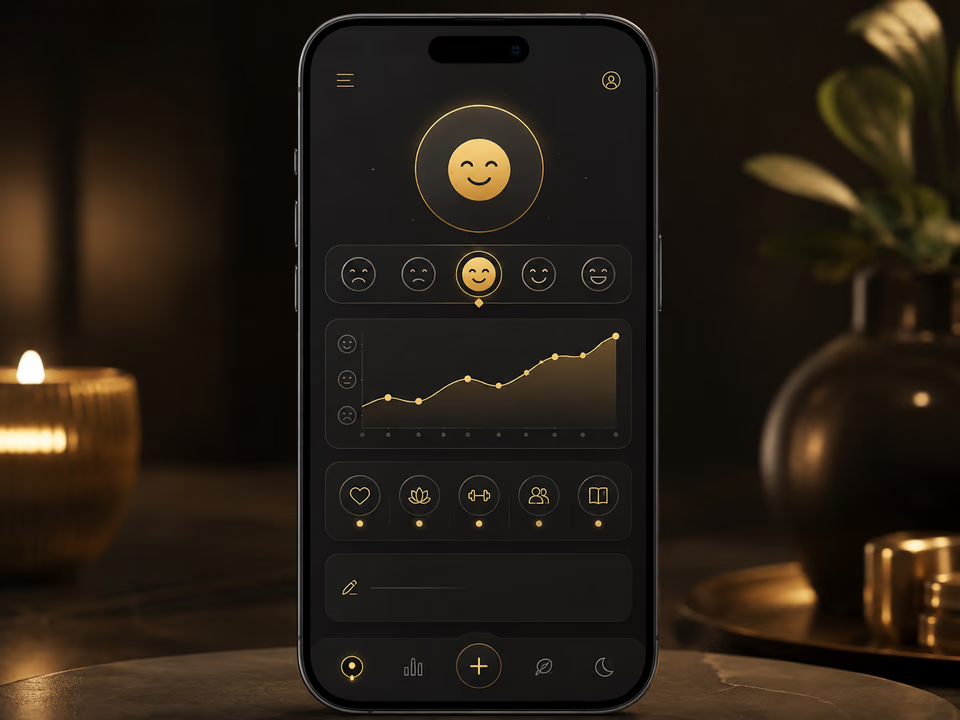
The 14-Day Journaling Rhythm
You do not need to do all 21 prompts in two weeks. Instead, use a rhythm that creates consistency without overwhelm.
14-day structure
- Days 1-7: One prompt per day. Choose the theme you need most.
- Day 7: Weekly review and pattern check.
- Days 8-13: One prompt per day. Mix themes.
- Day 14: Two-part reflection: what changed and what you will continue.
Your daily routine
- 3-10 minutes meditation.
- 2-5 minutes journaling.
- Optional: 5 minutes of Sound Journey to soften into rest.
If you want premium access to more guided content and sound journeys that support daily practice, unlock SoulFul GLO Unlimited.
21 Journaling Prompts
Use one prompt per day, or choose based on your mood. Keep answers short and honest.
Self-worth prompts
- What part of me deserves more gentleness today?
- If I believed "I am enough," what would I stop chasing?
- What am I proud of that I rarely acknowledge?
- Where do I measure my worth by productivity or perfection?
- What would I say to myself if I spoke like I speak to someone I love?
- What is one tiny act of self-respect I can do today?
- What belief about myself am I ready to soften or release?
Boundaries prompts
- Where am I saying yes when my body is saying no?
- What drains me most lately - and what boundary would protect me?
- What does a healthy boundary feel like in my body?
- What is one boundary I can practice without guilt this week?
- Where do I over-explain instead of simply choosing?
- What do I need to ask for more clearly?
- What am I afraid will happen if I set this boundary - and is that fear true?
Gratitude prompts
- What is one simple moment today that felt peaceful?
- What is working in my life, even if it is small?
- Who or what supported me recently, seen or unseen?
- What part of my body am I grateful for today - and why?
- What did I handle better than my past self would have?
- What do I want to savor this week?
- What is one thing I can thank myself for today?
How Short Reflections Improve Consistency
A journal practice helps you see progress that is not always visible.
You will start noticing micro-shifts
Instead of "I feel better," you may notice: "My shoulders dropped after 3 minutes," "My anxiety spikes at the same time each day," or "I feel calmer when I set my phone down earlier."
You will build a personal calm manual
Over time, your journal becomes a record of what calms you, what triggers you, what you need when you are overwhelmed, and what routines support your sleep and focus.
You will reduce self-judgment
When you see patterns on paper, you are more likely to respond with compassion instead of blame. Journaling turns "What is wrong with me?" into "What is happening for me?"
A 2-Minute Weekly Review
On Day 7 and Day 14, answer these three questions:
- What theme keeps repeating? Self-worth, boundaries, gratitude, or something else?
- What helped me most this week? Breath, sound, movement, earlier bedtime, or another support?
- What will I keep for next week? One habit, one boundary, or one supportive practice?
This review step is what turns journaling into integration.
Pair Journaling With Sound Journeys
If you want to make journaling feel more calming and less mental, use sound as a soft doorway into reflection.
- Before journaling: 5 minutes of a gentle Sound Journey to settle.
- After journaling: 10 minutes of sound to rest and integrate.
Deepen Your Ritual With SoulFul GLO Unlimited
If you want consistent support for meditation, reflection, and calming sound journeys, SoulFul GLO Unlimited is designed to help you build a daily ritual that lasts.
Start SoulFul GLO Unlimited
Pair meditation, journaling, and immersive sound journeys into one consistent ritual.