
You write a sentence in your notebook and immediately want to change it. Perhaps you called an object by the wrong name, made a statement more confidently than you intended or found a clearer way to describe the afternoon. You can keep writing without making the first words disappear.
A readable cross-out can show both the wording you began with and the wording you chose next. This guide describes an optional method for your own informal journal. It does not set rules for official records, promise better memory or make keeping every earlier phrase a condition of honest reflection.
Quick answer
Use a light single line through the words you want to replace, leaving them readable if that is what you intend. Put the replacement nearby and make its relationship clear. Continue writing. For a change made on another day, add a dated note rather than making the page appear unchanged since its original date. A cross-out does not remove private information.
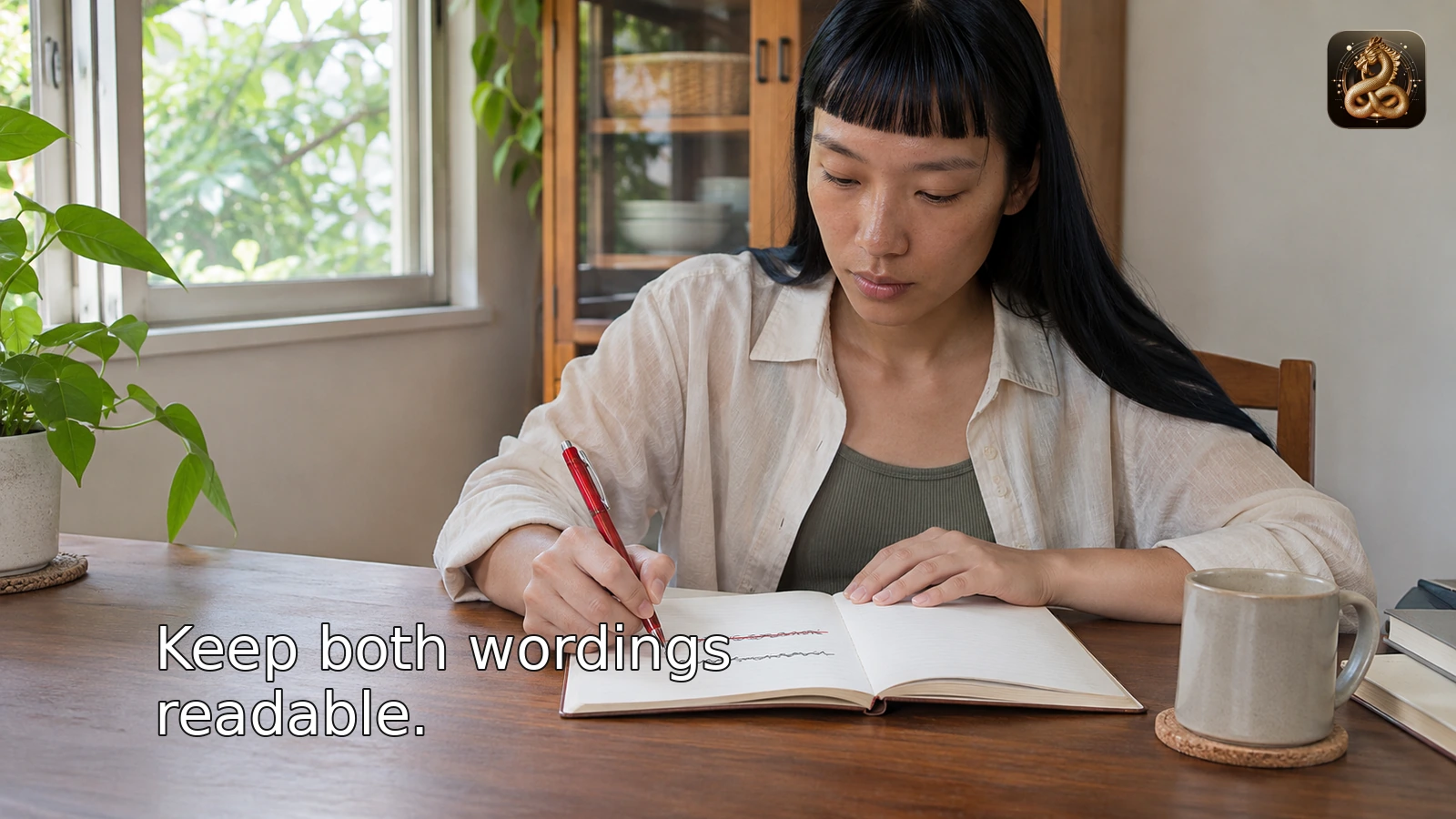
Try the method on an ordinary sentence you are comfortable retaining. You may prefer a fresh page, a separate note or no edit at all. The point is to make the page usable for your own purpose, without treating an informal notebook as a document that requires a professional correction procedure.
Decide what kind of change you are making
Begin with the sentence itself. Did you use a word you did not mean, state something you are unsure of or simply prefer another phrase? Naming that difference can help you choose a proportionate edit. A change in style does not need to be presented as a discovery about what happened.
For example, you might replace “huge” with “larger than the old one” because the second phrase says more clearly what you noticed. That is a wording choice. Replacing a definite day with “earlier this week, date uncertain” changes the certainty of the account. Both can belong on the page.
Sometimes the earlier statement remains a fair record of what you thought at the time. If your view changes later, a separate dated passage can preserve that sequence. You do not have to cross out the original merely because it no longer represents your current opinion.
Read SoulFul GLO's change-of-mind journal guide for that wider comparison between an earlier and a later view. The method here concerns the physical relationship between words being revised and their replacement on a handwritten page.
Keep the mark simple enough to read
If you want the first wording to remain visible, draw one ordinary line through the selected words. Check the result on your actual paper. A heavy pen, repeated strokes or a very small script can make the words difficult to read, even when you intended only a light mark.
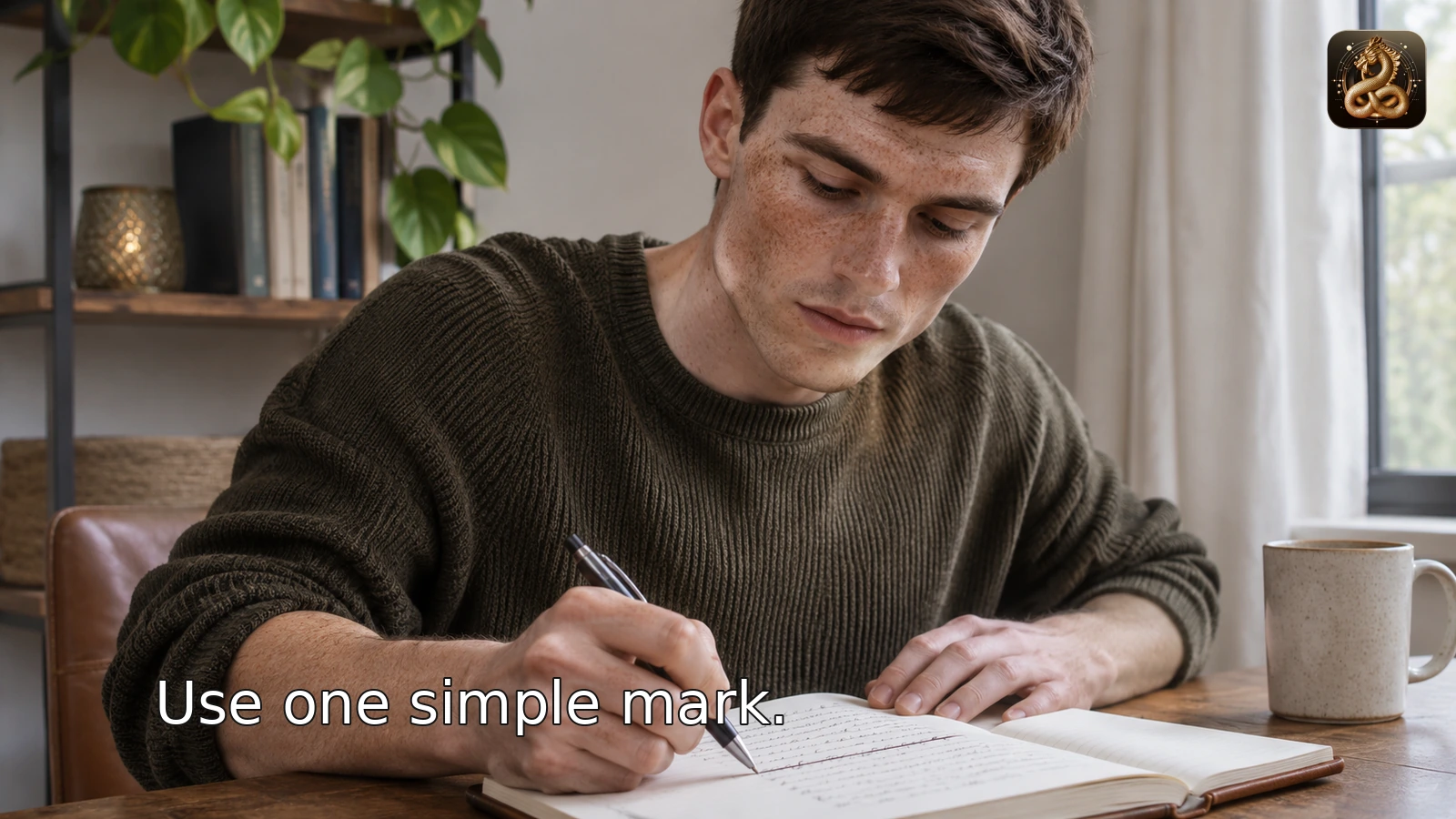
Use the writing materials already available to you. This exercise does not require a special correction pen, coloured ink or a dedicated notebook. You can test an unfamiliar pen on spare paper before using it on a page you want to preserve.
Mark only the words you mean to replace. A line through a whole paragraph may obscure several statements that were not changing. If a small replacement leaves the sentence grammatical and understandable, the rest can remain as it was.
You may choose a different personal mark. If its meaning would be unclear later, write a short explanation such as “replacement above.” The mark serves the reading of the page; it need not become a private code with many symbols to remember.
Place the replacement where its connection is clear
Leave enough room for the new words. You can write a short replacement above the line, beside it or on the next available line. Choose the position from the space actually on the page. Crowding a sentence into a narrow margin can make both versions harder to follow.

If you move to another place, use a small pointer you will recognise. A simple number beside the changed sentence and the same number beside the replacement can be enough. Avoid covering the words with a long arrow or squeezing a note between lines already full of writing.
Read the sentence with the replacement once. Can you tell where it begins and ends? You may find that the new phrase changes the meaning of the following sentence too. If so, explain the narrow difference rather than continuing to cross out unrelated parts of the entry.
For a longer replacement, start a separate passage with a plain lead-in: “A clearer version of the sentence about the room.” You can leave the first passage visible without making the notebook carry two competing complete accounts in the same tiny space.
Make uncertainty visible in the replacement
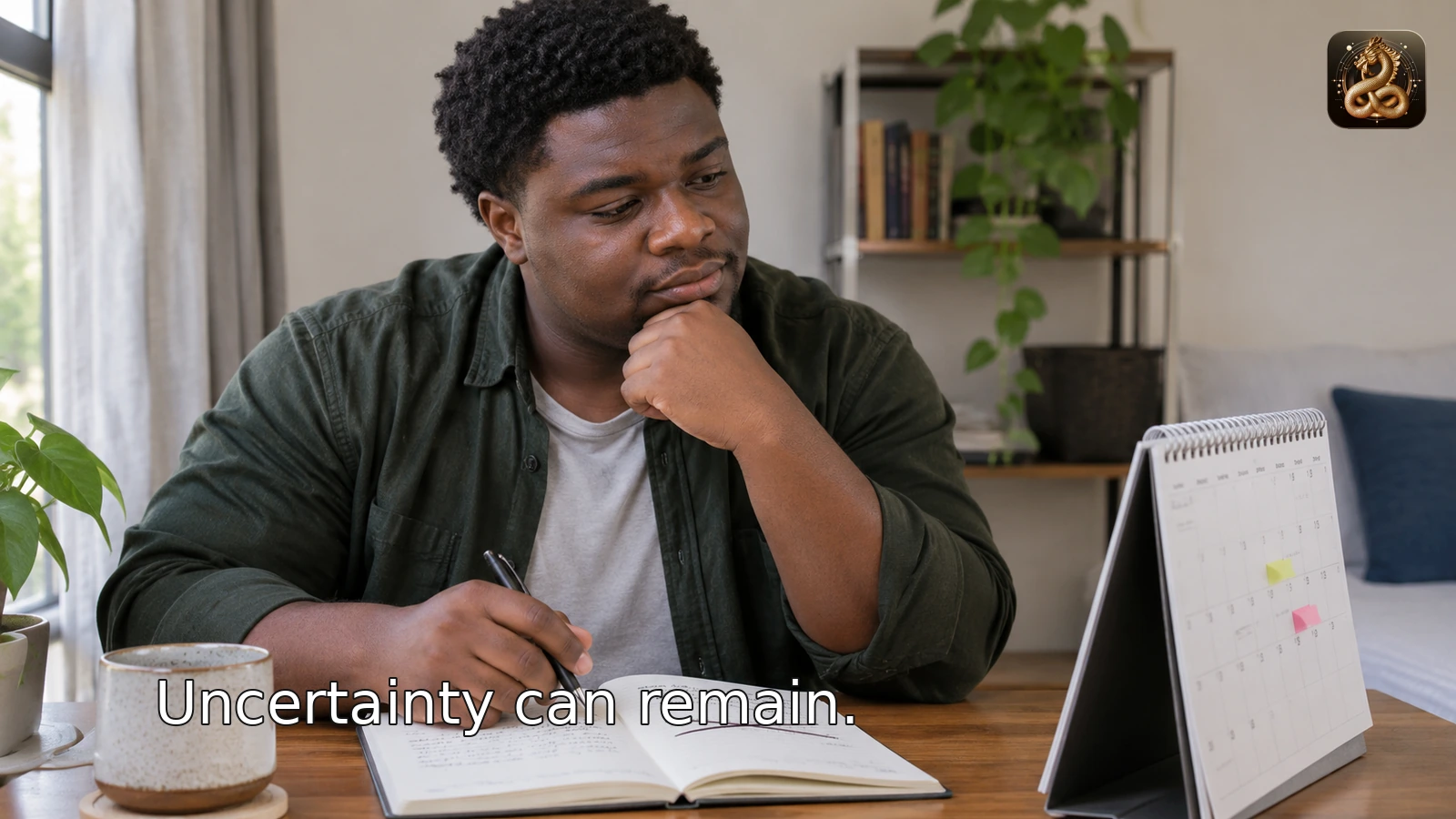
An edit can reduce confidence instead of supplying a new answer. If you wrote that three people arrived and now realise you did not count, the replacement might say “several people; I did not count.” That expresses the limit of the account without choosing another unsupported number.
Keep a remembered detail separate from a possible explanation. “The chair was beside the door” describes the location you recall. “Perhaps someone moved it for the meeting” proposes a reason. A smoother sentence should not silently turn the second statement into a witnessed event.
If an ordinary source later resolves a detail, describe what that source supports. A calendar may establish when an appointment was scheduled while leaving the time you actually arrived uncertain. Keep the correction as narrow as the information allows.
You can also leave a question open. “I cannot tell from this entry which afternoon I meant” is usable writing. A personal journal does not need a complete answer for every ambiguous line. Choosing uncertainty can be the finished edit.
Keep same-sitting edits distinct from later notes
While writing, you can make a readable change and continue. If you return days later, identify that later occasion when its timing matters. A date beside the new note helps distinguish what you wrote originally from what you learned or preferred afterward.
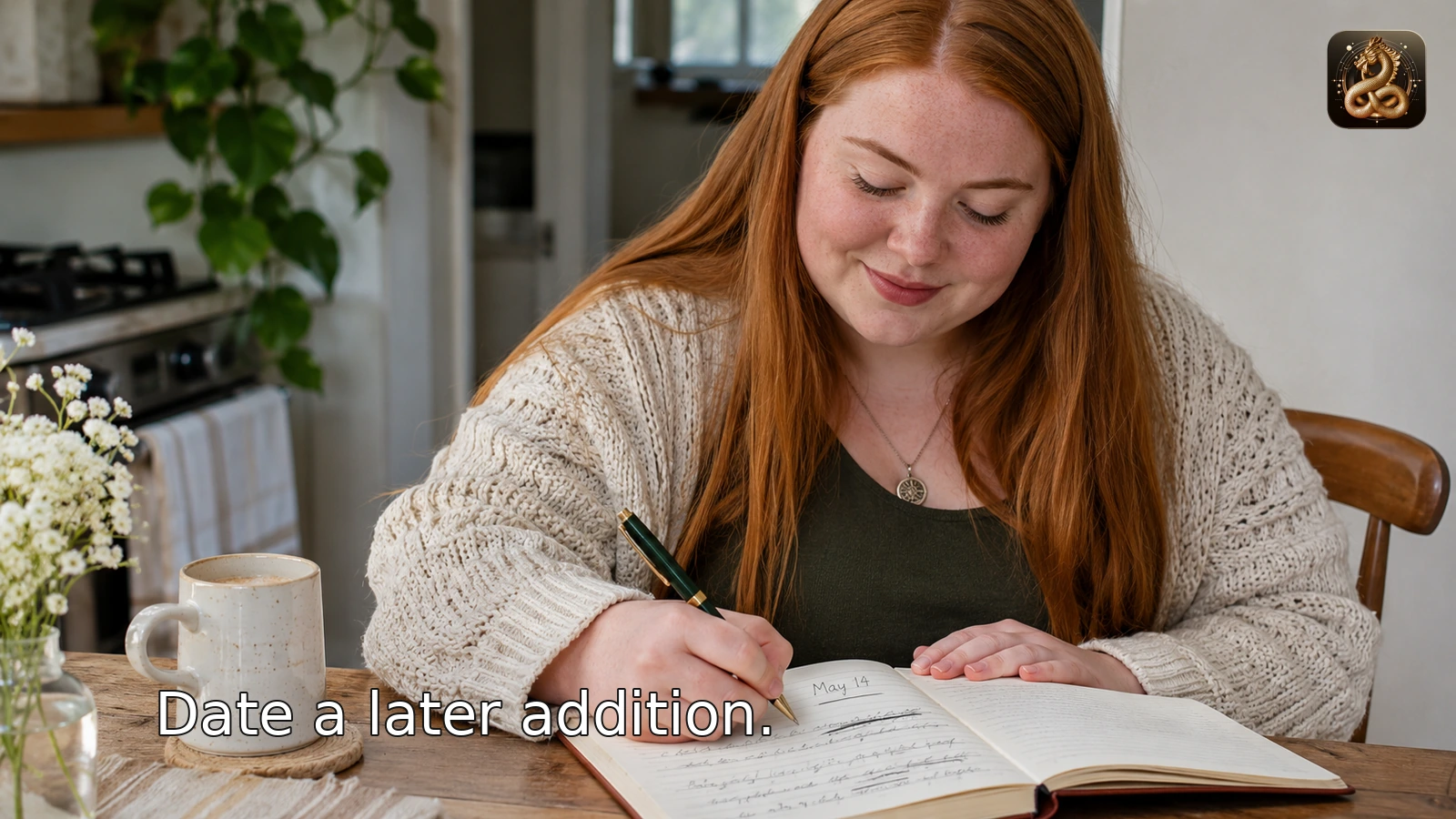
A later note might begin, “Added Friday: I checked the timetable today.” Use the real date when available, or an honest approximate reference when you cannot establish it. Do not add an exact-looking date simply because it makes the page seem complete.
Avoid revising the original entry's date to match the day you edited it. The original account and the later addition can have separate time references. This preserves a useful distinction without requiring a detailed log of every spelling correction.
You need not date each mark made during the same sitting. Decide what context is useful for your own reading. This is an informal writing choice, not a system this article has validated for legal, medical, workplace or research documentation.
For another way to keep the source and your later work separate, explore SoulFul GLO's guide to making a found poem from journal words. That creative exercise marks a working copy and leaves the original page intact.
Recognise when a new page is simpler
Sometimes the available space is too small for a readable replacement. You can stop trying to fit the edit into the margin. Begin a new passage, give it a short pointer to the earlier page and write what you mean in ordinary sentences.
A pointer can use a page number, entry date or a brief nonsensitive subject. Choose something you can actually find again. “The paragraph about moving the table” may be more useful than an elaborate label that you will not remember when you return to the notebook.
If there are several edits, ask whether they still serve the entry you wanted to make. You can retain a rough page and write a separate account rather than repeatedly working over every line. A personal notebook can contain alternatives without declaring one a perfect final version.
Keep the new account labelled as new. Recopying a page today does not make the copy the untouched original. You can note that it is a clearer rewrite and retain or dispose of the earlier material according to your own purpose and the controls you understand.
Two fictional page edits
Changing the scale of a description
In this invented example, Isha writes, “The new table filled the whole room.” Looking at the page, she decides that the phrase overstates what she meant. She draws a single line through “the whole room” and writes “more of the corner than the old table” on the next line.
The replacement makes her intended comparison visible. It does not prove the room's measurements or require her to measure it. She is revising an ordinary description in a personal entry, and the original phrase remains readable if she wants to see how she first expressed it.
Isha continues with another observation about the room. She does not need to rewrite the full entry or explain the revision as a change in personality. The mark records a small composition decision and can stay that size.
Adding information on a later day
In a second fictional situation, Tomas finds that an older entry names the wrong day for a library visit. Today he checks his own dated receipt. He leaves the earlier line readable and adds a dated note identifying the receipt and the detail it supports.
If the receipt establishes only the transaction date, he does not use it to confirm every part of the afternoon. The note can correct one date while leaving the rest of the entry as his recollection. An outside reader should not have to infer that all the surrounding details were independently checked.
These examples show different reasons for changing words. One narrows an expression during composition; the other adds later information. They are original illustrations, not customer accounts, demonstrations of therapeutic benefit or instructions for correcting a formal record.
A readable cross-out is not a privacy measure
Words can remain visible beneath a line. If you no longer want to retain a name, address or other private detail, a readable strike-through does not remove it. Consider the actual page and any copies before deciding what to do with information you do not want stored.
A photograph or scan may preserve a version made before the edit. Marking the paper does not change that separate file. This guide does not establish a secure deletion method or guarantee that a recipient cannot recover material you have shared.
Before sharing an excerpt, read both the replacement and any visible earlier words. A small margin note can contain more personal detail than the main paragraph. You can choose a narrower passage, prepare a clearly labelled separate copy or decide not to share.
The privacy decision can remain separate from the composition exercise. You do not need to retain unwanted information to make the practice count. Use an arrangement that fits your circumstances, and seek appropriate guidance when a record has requirements beyond a personal notebook.
Stop when the relationship is understandable
Read the changed sentence once with its replacement. If you can tell what was revised and which wording you intend now, you may be done. There is no requirement to make the page look untouched or to transform every crossed-out word into a lesson.
Leave ordinary imperfections alone when they do not affect your purpose. A spelling error, uneven line or unfinished phrase may be acceptable in a private entry. You decide whether an edit makes later reading easier or merely adds another round of work.
Set the notebook aside whenever revisiting the page feels unwelcome. This is optional personal writing, not treatment or a requirement to work through difficult material. Appropriate support remains available separately from the decision about a page.
Frequently asked questions
Do I have to keep the earlier words readable?
No. This method is for occasions when you want both versions available. You may prefer another informal writing arrangement. If you want to remove private information, a readable cross-out is not the method for achieving that.
Can I use an eraser instead?
You can choose the materials and editing method for your own notebook. Erasing changes what remains available to read. If keeping the first wording matters, use a separate copy or another arrangement rather than assuming it can be recovered later.
What if the replacement needs more space?
Use a new passage with a short pointer to the original sentence. A page number, date or clear subject can establish the connection. A readable second passage is often more useful than several tiny additions forced into a full margin.
Should I correct every old entry?
There is no such requirement here. Return to a specific sentence when you have a reason to do so. Keep later knowledge separate from earlier writing, and leave other pages alone if reviewing them does not serve a purpose you want.
Choose the next page for the writing you want
If you would rather begin a fresh entry, read SoulFul GLO's prompt-adaptation guide. Use a question that fits your present subject and leave the edited page available for whatever role you want it to have.