
You used to think the library’s upstairs tables were the best place to read. Then you started going at a different hour and found that you preferred the downstairs corner. You can write about the change without calling your earlier preference foolish. There may be a good reason both statements made sense when you wrote them.
A small change of mind is enough for this exercise. It could be about where to meet a friend, whether a regular activity suits you, or how you interpret an ordinary instruction. Use one page to show the earlier view, the current view and what shifted between them. You can leave the rest of the subject unsettled.
Quick answer
Write your earlier view and your current view in two separate passages. If you have an old entry, quote a short phrase or note where to find it instead of revising it. Then name the observation, conversation, changed circumstance or preference that prompted the shift. If you cannot pin the change on one thing, say so. End with what you think today and any question that remains open.

Start with the sentence you actually changed
Choose a change you can express in one ordinary sentence. “I thought the morning slot was the easiest to get to” has a clear subject. “I was wrong about the class” leaves you with a much larger story and no obvious place to begin. The exercise works best when the earlier statement is specific enough to set beside a later one.

Write a first line with a time reference you can support: “When the group first moved to the new room, I preferred the back table.” If the date is uncertain, use an honest approximation. You may remember the move clearly without knowing the week. Keeping that distinction does more for the entry than adding a date because a dated line looks tidy.
If several opinions changed at once, pick one that still feels useful to record. You might now prefer a different room, a shorter visit and a different time. The change in visit length can have its own entry if it matters. One question on this page gives you room to describe what actually happened instead of settling every part of the arrangement.
Keep the earlier wording visible
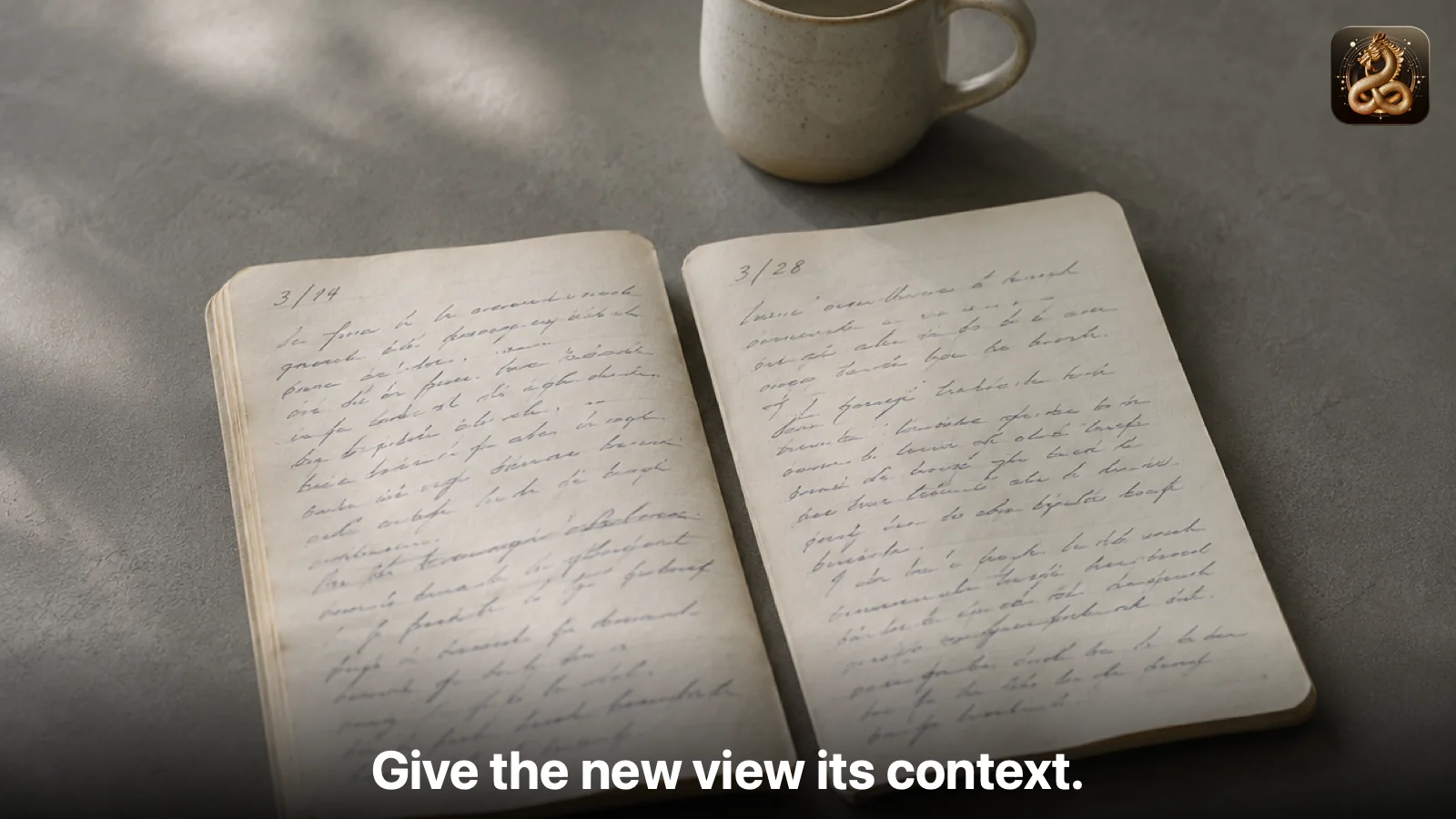
If the earlier view is in your journal, go back to the relevant line. You can copy it with quotation marks or write a short pointer such as “the second paragraph on the page dated 3 November.” Copy only the words you need for the comparison. If your old paragraph included several other topics, you can leave those out of the new entry.
If there is no earlier record, write what you now remember thinking and label it as a recollection. “I remember favouring the front table, though I don’t remember my exact reason” carries useful limits. It differs from putting a convincing sentence in quotation marks and making it look like something you wrote at the time.
Treat the previous page as part of the evidence you have, rather than a text to correct. A handwritten margin note can point you to the new entry if that helps you find it later. A digital journal can hold a separate dated note. Either way, you can keep the earlier view readable without making it represent what you believe now.
Say what prompted the shift
Look for the smallest thing that helps explain the change. Did you use the room at a different hour? Did someone clarify a detail you had misunderstood? Did a repeated experience slowly alter what you wanted? A change in preference can have as much place on the page as new information.
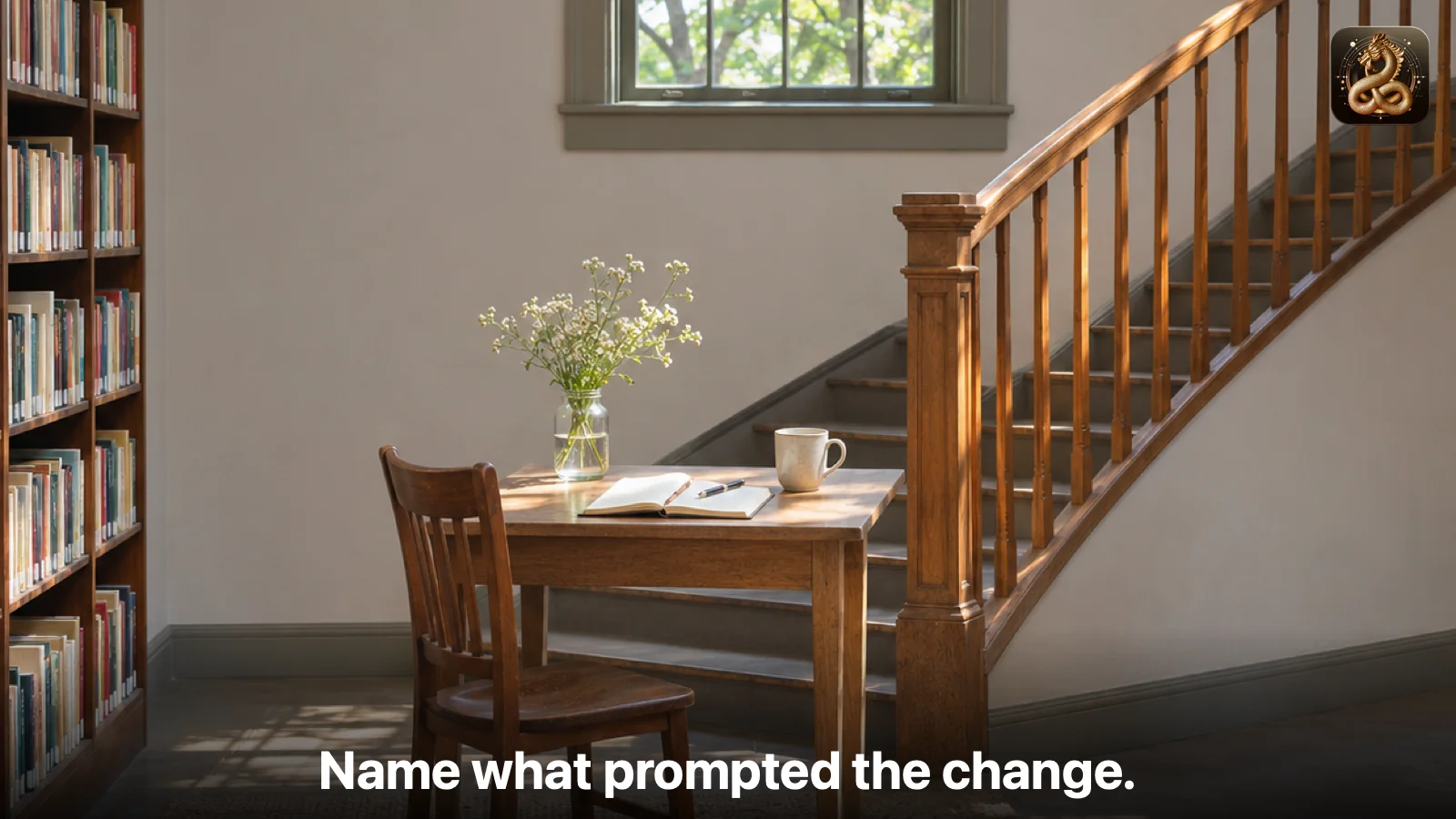
Separate what happened from your explanation. “The downstairs seats were still empty when I arrived” is an observation. “I now prefer them because I can settle sooner” is your interpretation. If both belong in the entry, put them in separate sentences. That lets you reconsider the explanation later without erasing what you noticed.
Sometimes a single event makes the shift easy to describe. Other times you only realise the change after you have been choosing differently for a while. You can write “I cannot place the first day I preferred it” and then describe one later occasion that helped you notice the difference. Avoid inventing a decisive moment to make the entry read like a story.
For a related exercise about recording what happened separately from what you expected, read SoulFul GLO’s expectation and observation journal guide. That exercise keeps a prediction and an observation distinct. On this page, the question is what you now think and what, if anything, moved you there.
Write the current view at the right scale
Give the new statement the conditions it needs. “I prefer the downstairs corner on weekday afternoons” makes a claim you can use. “The upstairs tables are always a bad choice” says more than the experience supports. A good entry can narrow your earlier statement rather than reverse it completely.
You can also change how sure you are without switching sides. Perhaps you still favour the same meeting place but are less sure it works when several people arrive at once. Record that shift in confidence. It can be the main change, even if you would make the same choice this week.
If you are writing about another person’s suggestion, limit the new statement to your own view. You can say that hearing their explanation changed your preference. You cannot necessarily say what they hoped you would do. If their intention matters and you do not know it, keep it outside the account or leave it as an open question.
Try two ordinary examples
Imagine Noor once wrote, “The weekday morning slot is easiest for me.” She meant that the bus was quieter then. After using a new afternoon route twice, she writes: “I still prefer the morning bus. On days when I have a later start, the afternoon slot is easier to reach from work. I hadn’t tried that route when I wrote the earlier line.” The new entry narrows the older view. It keeps the quieter bus and the changed route visible as separate details.
Imagine Mateo used to think the reading group was too fast because he struggled to keep up at the first meeting. Weeks later he learned that the group had discussed two short chapters that day instead of the usual one. His new note reads: “I still found the first meeting fast. Knowing it was an unusual week, I no longer assume the next meeting will feel the same.” He records the changed interpretation without having to sign up again or rate the group.
In both examples, the writer leaves a useful question open. Noor does not know whether she will prefer the afternoon route in winter. Mateo does not know how the next meeting will go. The new view can stand alongside those uncertainties without turning them into errands.
Choose where to stop
Read the two passages once. If you can tell what changed and what you are relying on, you can stop. A single line about uncertainty can be enough, and it need not be phrased as a question you must answer. You might write “This is where I am with it today” and leave the next page for another subject.

You may find that your view did not change after all. Perhaps the setting changed, or you still want the same thing but have a different way of getting there. If the distinction helps, record it. There is no obligation to keep the original title of the exercise once you can describe the real difference more clearly.
If you decide to make another entry later, date it as a separate observation. The next view can disagree with both earlier passages. Keeping the entries readable gives you a record of the circumstances under which each view made sense. It does not commit you to tracking every opinion you hold.
Keep the basis close to the claim
If the change followed something you read, make a short note of where you read it. The point is to help yourself find the relevant line later. You may remember a notice from the library door without remembering whether the change was permanent. The place you read it, and the fact that you did not check its duration, belong next to the new statement.
When the change is about taste, you may need even less detail. “I like the afternoon room better now that I read there on my own” gives the preference a useful setting. It leaves you free to like the other room for a different kind of visit.
Before you add a final sentence, check whether you are describing what changed in your view or what changed around you. Both can appear on the page. Keeping them separate gives you a clearer account to return to.
Frequently asked questions
What if I can remember the earlier view but not its reason?
Record the view as a recollection and leave the reason blank or uncertain. A sentence such as “I remember preferring the first room, but I don’t recall why” still gives the new entry a clear starting point. Avoid borrowing today’s reason and assigning it to the earlier version of yourself.
Does this work for a preference I have changed more than once?
Yes. Pick the two points you want to compare and give each its own time reference. You can mention that there were other stages without summarising them all. If you later want a longer record, use a separate timeline rather than squeezing each change into this entry.
Do I need to explain why the later view is better?
No. The later view may fit current circumstances more closely or include information you did not have before. You can show that difference without making a general judgment about which position anyone else should hold. If you are unsure which fits you now, say so.
Should I fix a factual error in the original entry?
In a personal journal, a dated correction beside the original entry can preserve both what you wrote and what you later learned. You can also make the correction on a separate page and add a pointer. If other people rely on the information in a shared record, follow whatever correction process applies to that record.
Keep the two lines you can use
Choose one ordinary view and give the old and current statements a line each. Add one sentence about what prompted the change. If you want another way to record a difference between what you thought and what you saw, try the expectation and observation exercise. Otherwise, leave the two views dated and readable. You can come back if a later experience gives you something new to add.