
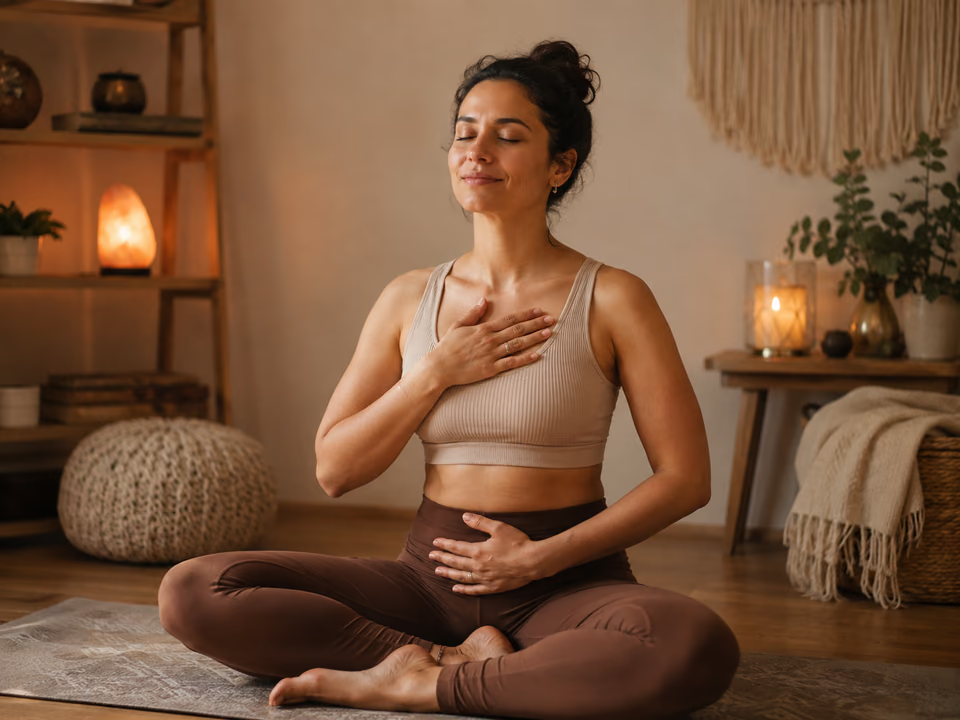
Anxiety can make the present moment feel far away. Your thoughts may race ahead. Your body may feel tense. Your breath may feel shallow. You may know you are safe, but still feel unsettled inside. In moments like this, telling yourself to "just calm down" rarely helps.
A grounding meditation for anxiety offers a gentler path. Instead of forcing the mind to be quiet, grounding meditation helps you return to what is real and steady right now: the floor under your feet, the breath moving through your body, the sounds around you, and the feeling of your hands resting somewhere safe.
At SoulFul GLO, grounding is not about fixing yourself. It is about giving your mind and body a softer place to land. Through guided meditation, gentle yoga, sound journeys, journaling, and emotional wellness rituals, SoulFul GLO helps you reconnect with presence one breath at a time.
Feel grounded with SoulFul GLO Unlimited.
Quick Answer: What Is Grounding Meditation for Anxiety?
Grounding meditation for anxiety is a calming practice that uses breath, body awareness, sensory focus, or sound to help you reconnect with the present moment. Instead of trying to stop anxious thoughts, you gently shift attention toward something steady, such as your feet on the floor, your breath, or a soothing sound.
Start with three minutes. The goal is not perfect calm. The goal is to feel a little more here.
What Is Grounding Meditation for Anxiety?
Grounding meditation is a mindfulness practice that helps bring your attention back to the present moment when anxiety pulls it into worry, fear, or overthinking. It may include:
- Feeling your feet on the floor.
- Noticing the breath.
- Naming what you see or hear.
- Placing a hand on your heart or belly.
- Listening to a calming sound.
- Slowly scanning the body.
- Repeating a grounding phrase.
- Practicing gentle yoga.
- Writing one honest journal sentence.
Grounding meditation is not a cure for anxiety, and it is not a replacement for therapy, medical care, or professional support when needed. But it can be a supportive self-care tool in anxious moments.
Think of it as a way to tell your body: "I am here. This is now. I can return to this moment." That small return can matter.
Why Grounding Helps When Anxiety Feels Overwhelming
Anxiety often pulls attention away from the present. The mind may move into what-if questions, replay what went wrong, worry about what others think, or demand that everything be fixed right now. Grounding does not argue with those thoughts. It simply gives your attention another place to rest.
Grounding Uses the Body as an Anchor
Your body exists in the present moment, even when your thoughts are in the future. Feeling your feet, hands, breath, or the surface beneath you can help reconnect attention to now.
Grounding Reduces the Need to Fight Thoughts
Trying to force anxious thoughts away often makes them louder. Grounding gives you something else to notice.
Grounding Can Feel Safer Than Silent Meditation
For some people, silent meditation feels difficult during anxiety. A grounding practice with sound, breath, or gentle movement can feel more supportive.
Grounding Creates a Small Pause
Even a few seconds of awareness can create space between you and the anxious thought. You may still feel anxious, but you may also feel a little more steady. That is a meaningful beginning.
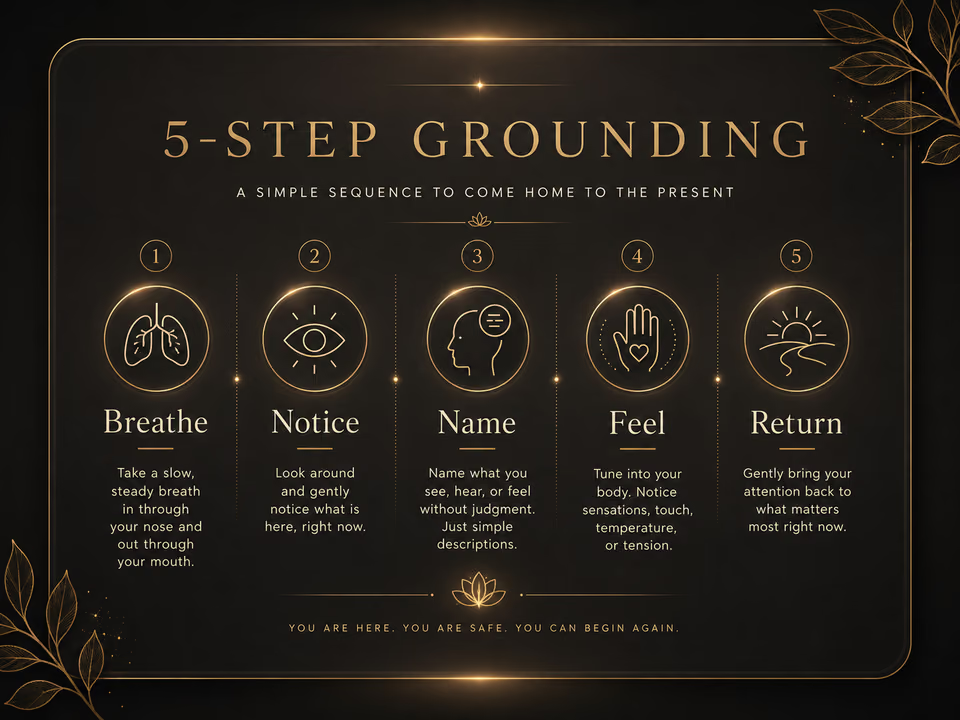
A Simple Grounding Meditation for Anxiety
Use this practice whenever you feel anxious, scattered, or disconnected.
- Find supportSit, stand, or lie down. Feel the chair, floor, bed, mat, or ground holding you. Say silently, "I am supported right now."
- Place a hand on the bodyPlace one hand on your heart, belly, chest, or thigh—wherever feels comforting. Say, "I am here."
- Notice the breath without forcing itLet the breath be natural at first. Notice whether you feel it in the chest, belly, throat, nose, or back body, then gently soften the exhale.
- Name what is presentWithout judgment, name what you notice: "Tightness is here." "Worry is here." "Restlessness is here." "Breath is here." "Support is here."
- Return to one anchorChoose your feet on the floor, a hand on your heart, the breath, a sound, or a grounding phrase. Return to it again and again.
- Close with a gentle phraseSay, "In this moment, I can be here," or, "I do not have to solve everything right now." Stay for three to five minutes.
3-Minute, 5-Minute, and 10-Minute Grounding Routines
Choose the version that matches your energy.
| Time | Best For | Routine |
|---|---|---|
| 3 minutes | Sudden anxious moments | 1 minute body support, 1 minute breath, 1 minute grounding phrase |
| 5 minutes | Emotional overwhelm | 1 minute support, 2 minutes sensory grounding, 1 minute sound, 1 minute closing phrase |
| 10 minutes | Full reset | 2 minutes gentle yoga, 3 minutes grounding meditation, 3 minutes sound, 2 minutes journaling |
You do not need to complete a long practice for it to count. Anxiety often responds better to gentleness than pressure.
The 5-4-3-2-1 Grounding Method
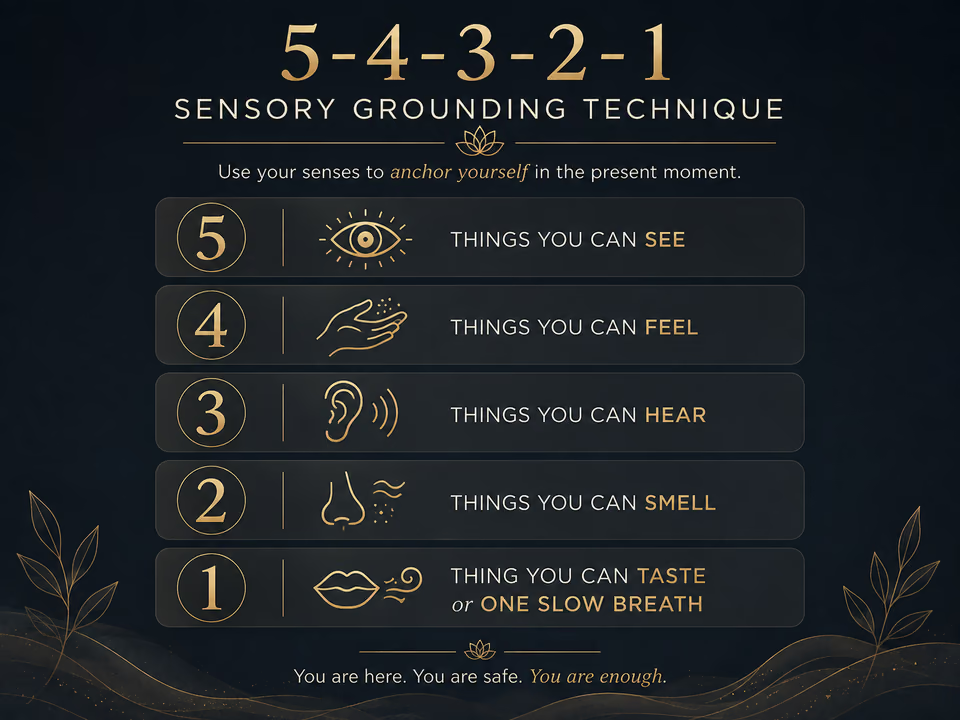
The 5-4-3-2-1 method is a simple sensory grounding technique. It helps bring attention back to the environment around you. Try this slowly:
- 5 things you can see: Look around and name five things, such as a lamp, blanket, window, plant, or your hands.
- 4 things you can feel: Notice four physical sensations, such as feet on the floor, clothes on your skin, hands touching, or the chair supporting you.
- 3 things you can hear: Listen for three sounds, such as a fan, distant traffic, or your breath.
- 2 things you can smell: Notice two scents. If you cannot smell anything, name two scents you like.
- 1 thing you can say to yourself: Choose a phrase such as "I am here," "This moment is real," "I can take one breath," or "I am supported."
This method is useful because it gives the mind a clear task without asking it to analyze anxiety.
Pair Grounding Meditation With Gentle Yoga
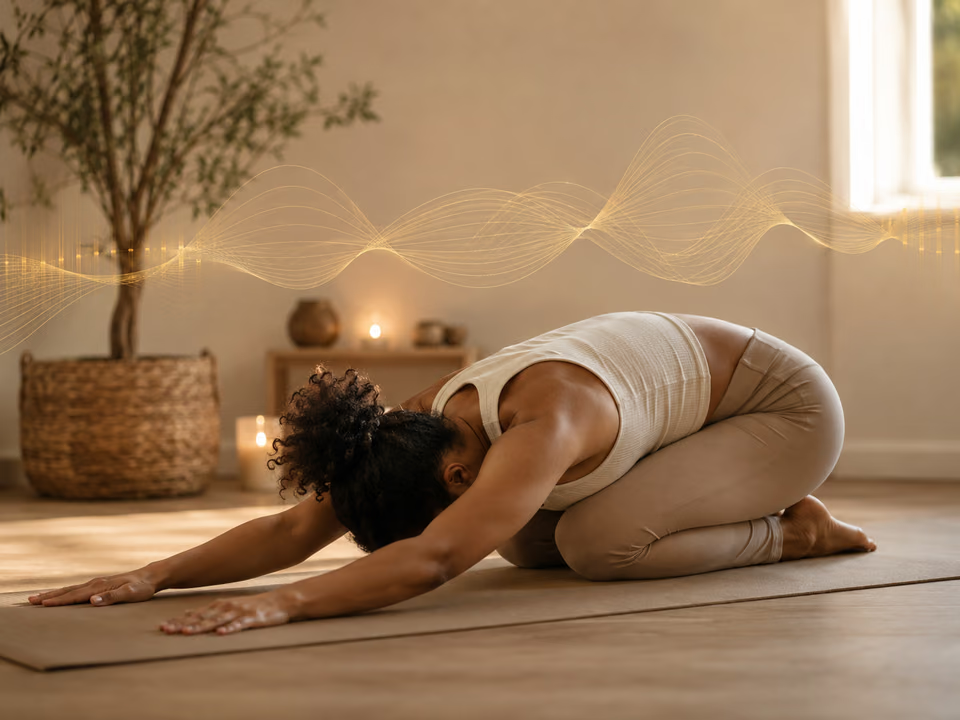
When anxiety feels physical, gentle movement can help. Grounding yoga does not need to be intense. In fact, slower is often better.
- Child's Pose: Rest your forehead on a pillow, mat, or stacked hands. Let the body fold inward and feel supported.
- Cat-Cow: Move slowly with the breath. Inhale to open. Exhale to round.
- Seated Forward Fold: Bend the knees and let the body soften. Use pillows or blankets if needed.
- Legs Up the Wall: Rest your legs against a wall or chair. Let the floor hold you.
- Supported Resting Pose: Lie down with a pillow under the knees and one hand on the belly.
Explore gentle grounding practices in the SoulFul GLO Yoga Library. For an anxiety-focused movement practice, read Yoga for Anxiety: A Gentle Flow. For emotional balance through yoga, visit Yoga for Emotional Balance.
Sound Pairing for Grounding
Sound can be helpful when anxiety makes silence feel too loud. Instead of sitting in a quiet room with racing thoughts, choose a soft sound as your anchor.
| Anxiety State | Recommended Sound | Why It Helps |
|---|---|---|
| Racing thoughts | Minimal ambient sound | Gives attention a simple anchor |
| Body tension | Low grounding tones | Supports steadiness |
| Emotional overwhelm | Warm flute or soft strings | Creates a softer atmosphere |
| Restlessness | Slow rhythmic texture | Helps attention settle |
| Nighttime anxiety | Gentle sleep soundscape | Supports evening transition |
SoulFul GLO's sound world includes soulful, Far East-inspired textures designed to create a calm and reflective atmosphere. Learn more in Far East Healing Sounds. To choose between practices, read Soundscapes vs Guided Meditation vs Yoga.
Journaling After Grounding Meditation
After grounding meditation, journaling can help you understand what your anxiety was trying to communicate. Keep it simple. Ask: What am I feeling right now? What triggered this anxiety? What do I need in this moment? What is one thing that is true right now? What can I do next that is small and kind? What can wait? Where do I feel support? What would help me feel safer?
Try this three-line format: Right now I feel: … Right now I need: … One small next step is: … This turns journaling into support, not analysis.
Grounding Meditation for Women
For many women, anxiety is not only personal. It can be tied to emotional labor, responsibility, caretaking, overthinking, planning, and the pressure to hold everything together.
A grounding meditation for women should not feel like another task. It should feel like permission: permission to pause, feel the body, stop managing everything for a moment, and return to yourself.
SoulFul GLO's women-centered meditation experience supports this kind of emotional wellness through yoga, meditation, sound journeys, journaling, and self-discovery. Read more in Meditation for Women.
A grounding phrase for women carrying too much: "I do not have to hold everything alone in this moment."
Grounding Before Sleep
Anxiety can feel stronger at night because the day finally becomes quiet. If your mind races before sleep, try this bedtime grounding ritual: dim the lights, sit or lie down, feel the bed supporting your body, place one hand on your heart, name three sounds you can hear, exhale slowly, and repeat, "For tonight, I can rest."
If your body also feels tense, try Restorative Yoga for Sleep.
Common Mistakes to Avoid
- Trying to force calm: The goal is not to instantly remove anxiety. The goal is to create a little more steadiness.
- Judging your thoughts: Anxious thoughts may still appear. You are not failing. Return gently.
- Over-controlling the breath: Deep breathing can feel uncomfortable for some people during anxiety. Let the breath be natural first.
- Choosing intense audio: Choose something soft and steady rather than dramatic or overstimulating.
- Practicing only when anxiety is intense: Grounding is easier when practiced regularly. Try it during calmer moments too.
- Turning grounding into a test: There is no perfect session. Even noticing one sensation is a beginning.
Feel Grounded With SoulFul GLO
SoulFul GLO helps you create grounding rituals that meet you where you are. Try a guided grounding meditation, practice gentle yoga for anxiety, use sound as a calming anchor, journal after meditation, build an evening ritual, or choose what supports your mood today.
When anxiety feels loud, you do not need to do everything. Start with one breath, one sound, one pose, or one phrase.
Return to What Is Steady
Feel grounded with SoulFul GLO Unlimited or explore gentle practices in the Yoga Library.
Related SoulFul GLO Guides
- Explore SoulFul GLO
- Yoga for Anxiety Gentle Flow
- Yoga for Emotional Balance
- Restorative Yoga for Sleep
- Far East Healing Sounds
- Soundscapes vs Guided Meditation vs Yoga
- Meditation for Women
- What Should I Practice Today?
Frequently Asked Questions
What is grounding meditation for anxiety?
Grounding meditation for anxiety is a calming practice that brings attention back to the present moment using breath, body awareness, sensory focus, or sound. It helps you feel more connected to what is real and steady right now.
How do I ground myself when I feel anxious?
Start by feeling your feet on the floor or your body supported by a chair or bed. Take a natural breath, name what you see or hear, and repeat a phrase like "I am here." Keep the practice simple.
What is the 5-4-3-2-1 grounding technique?
Name five things you see, four things you feel, three things you hear, two things you smell, and one grounding phrase you can say to yourself.
Can meditation help with anxiety?
Meditation may support anxiety by helping you pause, notice your thoughts, and return to a calming anchor. It is not a cure or substitute for professional care, but it can be a helpful self-care practice.
What should I listen to during grounding meditation?
Choose soft, steady, low-volume sound. Minimal ambient sound, gentle flute, grounding tones, or calming soundscapes can give your attention a restful anchor.
Is yoga good for grounding anxiety?
Gentle yoga may help if anxiety feels physical or restless. Slow poses like Child's Pose, Cat-Cow, forward fold, and Legs Up the Wall can bring attention back to the body.
How long should grounding meditation be?
Start with three to five minutes. If that feels supportive, try ten minutes. The practice does not need to be long to be meaningful.
When should I get professional help for anxiety?
If anxiety feels intense, persistent, difficult to manage, or interferes with daily life, sleep, work, or relationships, consider speaking with a qualified mental health or medical professional. Grounding meditation can support self-care, but it is not a replacement for professional help.
Final Takeaway
Grounding meditation for anxiety is not about forcing yourself to feel calm. It is about returning gently—to the breath, the body, the floor beneath you, the sounds around you, and the truth that this moment can hold you even if your thoughts feel loud.
With SoulFul GLO, grounding can become a ritual of support through meditation, yoga, sound, journaling, and emotional wellness practices. Start small. One breath is enough to begin.
One Breath Is Enough to Begin
Feel grounded with SoulFul GLO Unlimited or choose a gentle grounding practice from the Yoga Library.
Wellness note: This article supports general well-being and self-care. It is not medical advice or a substitute for qualified mental health or medical care.