
You are getting ready for bed and would like to play a sleep meditation. The person sharing the room wants quiet, or has already fallen asleep. There is no need to turn the recording into a joint activity. Decide whether it can fit without asking the other person to listen or changing an agreement about the room.
A sleep meditation can be a short optional part of preparing for bed. Its value here depends on the arrangement: where you are, how long you want to listen and what the other person needs from the room. If the sound does not fit, you can choose a different place, a written practice or no guidance at all.
Quick answer
Agree on the room arrangement while both people can discuss it. If one person wants quiet, use audio in another suitable place or at an agreed earlier time. Keep any device, light and stopping control workable for you and for the other person. If those details cannot be settled, choose a quiet option or skip the session. A recording is not required before you can go to bed.
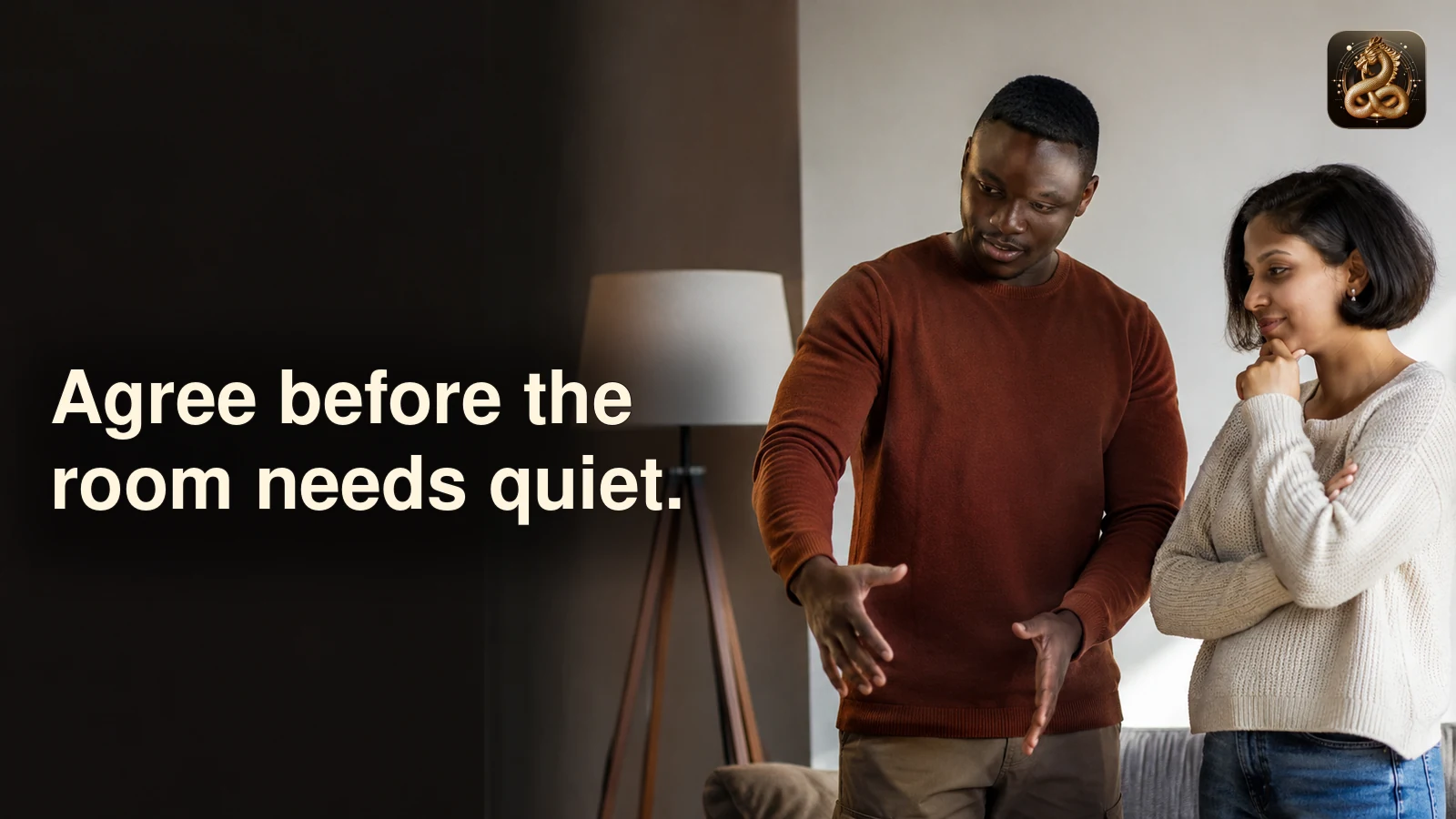
Ask about quiet at the time you actually mean
Try a specific question while both people are awake: “I was thinking of listening briefly before bed. Is there a time or room where that would be out of the way?” This is easier to answer than a general question about whether meditation audio is welcome. You can discuss the arrangement without asking anyone to assess the practice itself.

One person may want silence after turning the light off but have no preference about audio earlier. Another may use the room before you do and want it quiet from the time they arrive. Use the actual difference between the two routines. There is no reason to assume that one bedtime sequence will work for everyone sharing a room.
If the other person is already asleep and you have no agreement, choose a way of preparing that does not depend on discovering what they will tolerate. You can leave the audio for another evening or use a suitable place where you will not disturb anyone. An experiment while someone is sleeping gives them little opportunity to say what they want.
Consider a different place before changing the recording
You might listen earlier in a chair in another room, then leave the device there or stop playback before returning. Choose a place you can use without making another person's routine more difficult. This may be simpler than trying several volumes in a bedroom that was meant to be quiet.

If there is no separate room, ask whether there is an earlier part of the evening when the audio can fit. If neither timing nor place works, the situation may be easier to solve by leaving audio out. That does not require finding a special silent meditation. An ordinary transition to bed is still an option.
Plan the move back into the room, too. If you expect to use the device for another responsibility, put it where you can retrieve it without searching. If the recording ends while you are elsewhere, make sure it has actually stopped before returning. Confirm the controls you use rather than depending on a setting whose behaviour you have not checked.
Treat headphones as one arrangement to discuss
Headphones can change who hears the recording, but they do not settle every part of a shared-room choice. The person beside you may notice sound leakage, the light from a display or repeated movements to adjust the device. You may need to remain able to hear an agreed interruption. Ask about the arrangement as a whole instead of using “I'll wear headphones” as the end of the conversation.

If you both agree to a headphone arrangement, keep it manageable. Check what is audible and visible before the other person tries to sleep. Decide where the controls will be and how you will finish. This guide does not recommend wearing a device during sleep or determine what is suitable for an individual. Listening briefly before bed is a separate choice from leaving a device on while you sleep.
If headphones make it harder to respond to something you need to hear, use a different arrangement. You do not need to settle a general question about whether headphones or speakers are preferable. You only need to know whether this use fits this room.
Check what each listening arrangement involves
SoulFul GLO's headphones-or-speakers guide describes practical differences between those two ways to listen. Use it to think through your own setup, while keeping the agreement about quiet separate from the equipment choice.
Choose a quiet version without making more work
If you want guidance without sound, you can read a short written practice in an appropriate place before going to bed. Check whether the light or screen needed for that option would be another disturbance. Reading at a different time or in another place may be easier than switching from audio to a bright display beside someone who wants darkness.
A quiet option can also be a familiar action with no instructions: putting something away, changing clothes or taking a short pause before lying down. It can be enough if your reason for playing audio was to give the evening a clear transition. Avoid replacing one optional routine with a more elaborate one simply because the first did not fit.
If a written practice does not suit you, you can leave it out. The point of a shared-room decision is to find an arrangement that respects both people. It does not depend on everyone doing an equivalent practice.
Plan an ending that does not require another negotiation
Decide what will end the audio if you choose to play it. You may stop at a specific point or choose a single recording with an ending you know. If the player normally suggests something else when a recording finishes, check what it actually does before using it in the shared arrangement. Keep a stop control available.
When you agree on an earlier time, ask what should happen if the room becomes needed sooner. The answer can be simple: stop the recording or move if another suitable place is available. You do not need to explain why the practice deserves to continue to its scheduled end. The time you listened can still have been the time you wanted.
If the agreed arrangement does not work, talk about the detail later. A brief note like “the screen was brighter than we expected” gives you something concrete to change. It is more useful than concluding that one person's whole bedtime routine was unreasonable.
Keep the spoken agreement smaller than a rule for every evening. “I will use the other room tonight and stop before I come back” is specific. If the other room is often needed by someone else, the agreement may need to change on another day. That is a question of access to the space, rather than a judgment about whether a person should want to listen.
If you can listen before the room becomes quiet, use an ordinary reminder that does not need to sound in the bedroom. You might make the decision when you finish another evening task or when the other person says they are about to turn in. The reminder is only useful if it reduces a decision, rather than giving you something else to keep track of.

You can also discuss whether there is anything that matters apart from sound. A person may be comfortable with a low light but find repeated phone checks distracting. Someone may want to keep a particular walkway clear in the dark. Choose where to put a device or written page with those practical details in mind. The smallest change may be leaving the device somewhere you can reach before entering the room.
If you are staying somewhere temporarily, an agreement may be useful for that night alone. You do not need to agree on a permanent routine with someone sharing a room on one trip. Ask what will work for the time you are both there, and change the plan when the circumstances change.
When the quiet person prefers to decide in the moment, leave the alternative ready. That can mean a familiar chair in another room or simply being willing to go to bed without playing anything. A useful fallback is one you can choose without waiting for a negotiation.
Two ordinary shared-room choices
Leena wants to listen to a familiar voice before bed, while the person she shares the room with wants quiet after turning off the lamp. They agree that Leena will listen in the living room first. She ends the recording when she is ready and leaves the phone there. The other person does not need to take part for the arrangement to be workable.
Nikhil sometimes arrives after the other person has already fallen asleep. On a particular night the living room is in use. He could spend time looking for a shorter track, but neither the location nor the timing works. He leaves audio for another evening and goes to bed. He does not need to find a substitute to make the decision complete.
These examples are fictional. They illustrate an agreement and a choice when no suitable place is available. They do not establish that either person slept more easily, or that everyone who shares a room needs the same boundaries.
Keep the agreement easy to revisit
An arrangement that works on one evening may stop fitting when work hours, shared responsibilities or the room change. Return to the practical questions: who needs quiet, when does that matter and where else can the listening take place? If the answers change, adjust the next occasion rather than insisting that the old agreement should cover it.
Keep the description of what happened narrow. “I used the other room and stopped before coming back” is an observation. “That routine will make us both sleep well” is a claim the arrangement cannot establish. You can keep using a practical agreement when it serves both people, even if sleep varies for reasons you cannot identify.
Frequently asked questions
Do we need to listen together?
No. One person can prefer audio and the other quiet. Choose an agreed place or time for the listener, or leave the recording out of the shared room.
Can I play a very quiet recording beside someone who is already asleep?
If there is no prior agreement, choose a different arrangement. You cannot find out what the other person wants by guessing what they will hear. An earlier time, a suitable separate place or no audio may fit better.
Does a sleep meditation need to run until I fall asleep?
There is no requirement in this guide to keep a recording playing. You can stop when you are ready to end the practice. An optional wind-down does not guarantee sleep or treat a sleep problem.
What if the room is quiet only at a different time than I want to listen?
Consider whether an earlier or shorter session serves your purpose. If it does not, you can skip the audio for that occasion. The agreement can remain about the room instead of becoming a decision about the value of meditation.
Choose a routine that fits the room
If you want an example of a broader wind-down, read SoulFul GLO's bedtime routine with soundscapes and keep only the parts that suit your agreement. When one person needs quiet, a shorter routine or a different place can be the whole practical change.