
A sound journey can begin with the equipment you already have. Perhaps headphones are beside your laptop, a small speaker is in the kitchen, or your phone has its own speaker. The useful question is which setup fits this session: who shares the room, what you need to hear around you, how the equipment feels and whether you can keep listening at a modest level.
Neither headphones nor speakers are a requirement for a meaningful pause. You do not need to buy a particular product, achieve complete isolation or hear every detail in a recording. This guide concerns practical setup choices for optional listening. It does not compare devices as treatments or promise that a certain sound will produce relaxation.
Quick answer
Choose headphones when private listening suits the setting and the fit feels comfortable. Choose speakers when other people agree to shared sound, or when avoiding something on your ears makes the session easier. Begin playback quietly, account for the time you will spend listening and change the setup if it feels distracting or uncomfortable. Either option can be turned off.
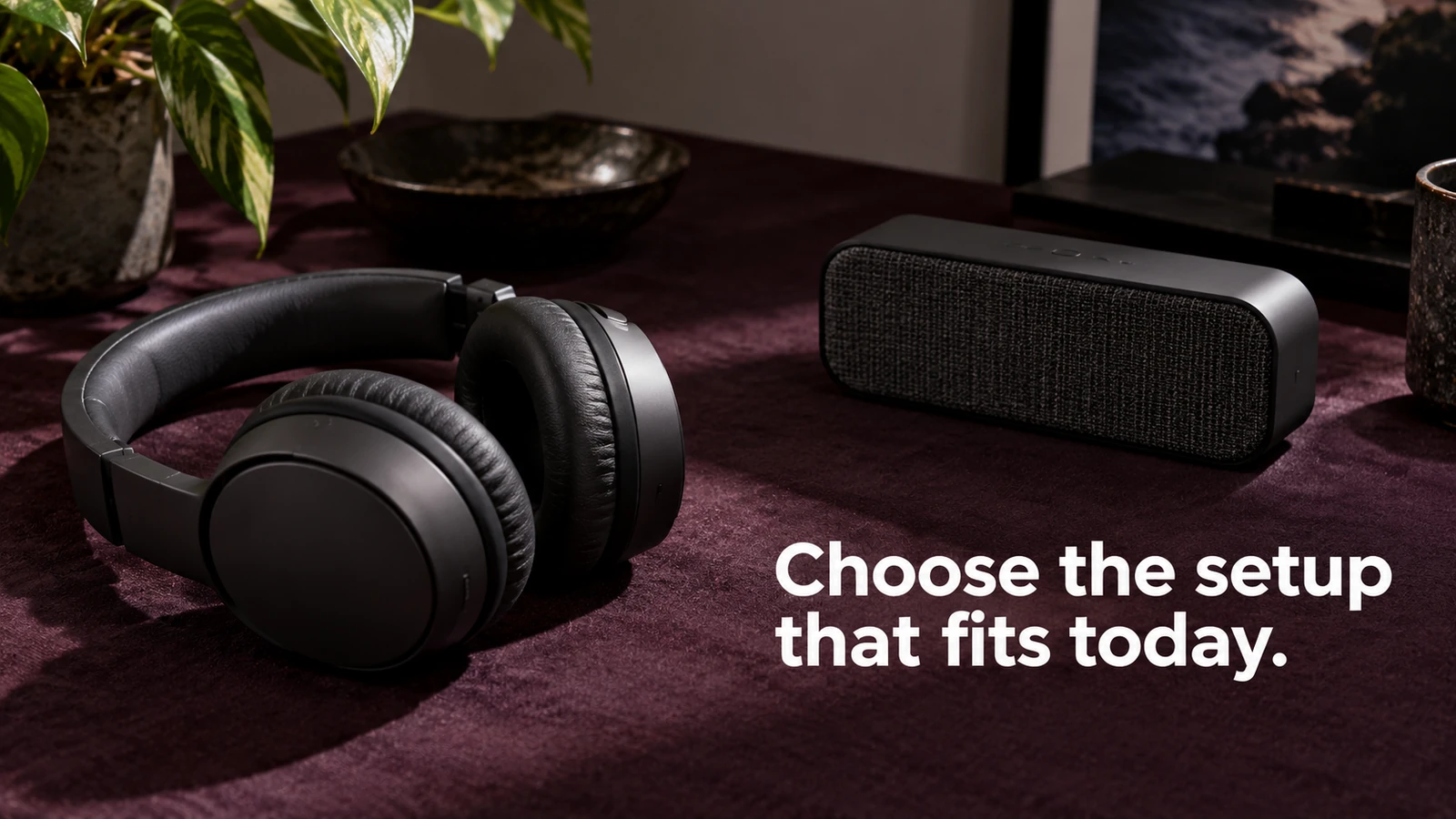
Before choosing, ask three questions: who else will hear this, what must I remain aware of, and what feels workable today? Those questions usually matter more than the label on the equipment. A quiet room and an ordinary speaker can be enough. A shared room may call for private listening, a shorter session or another activity instead.
Start with the room, not the device
In a shared home, the speaker becomes part of everyone else's environment. Ask before playing it, especially when someone is working, resting or using the same space for a different purpose. Agreement to background music yesterday does not automatically mean agreement to a sound journey today. Keep the question simple: would a short period of quiet playback work now?
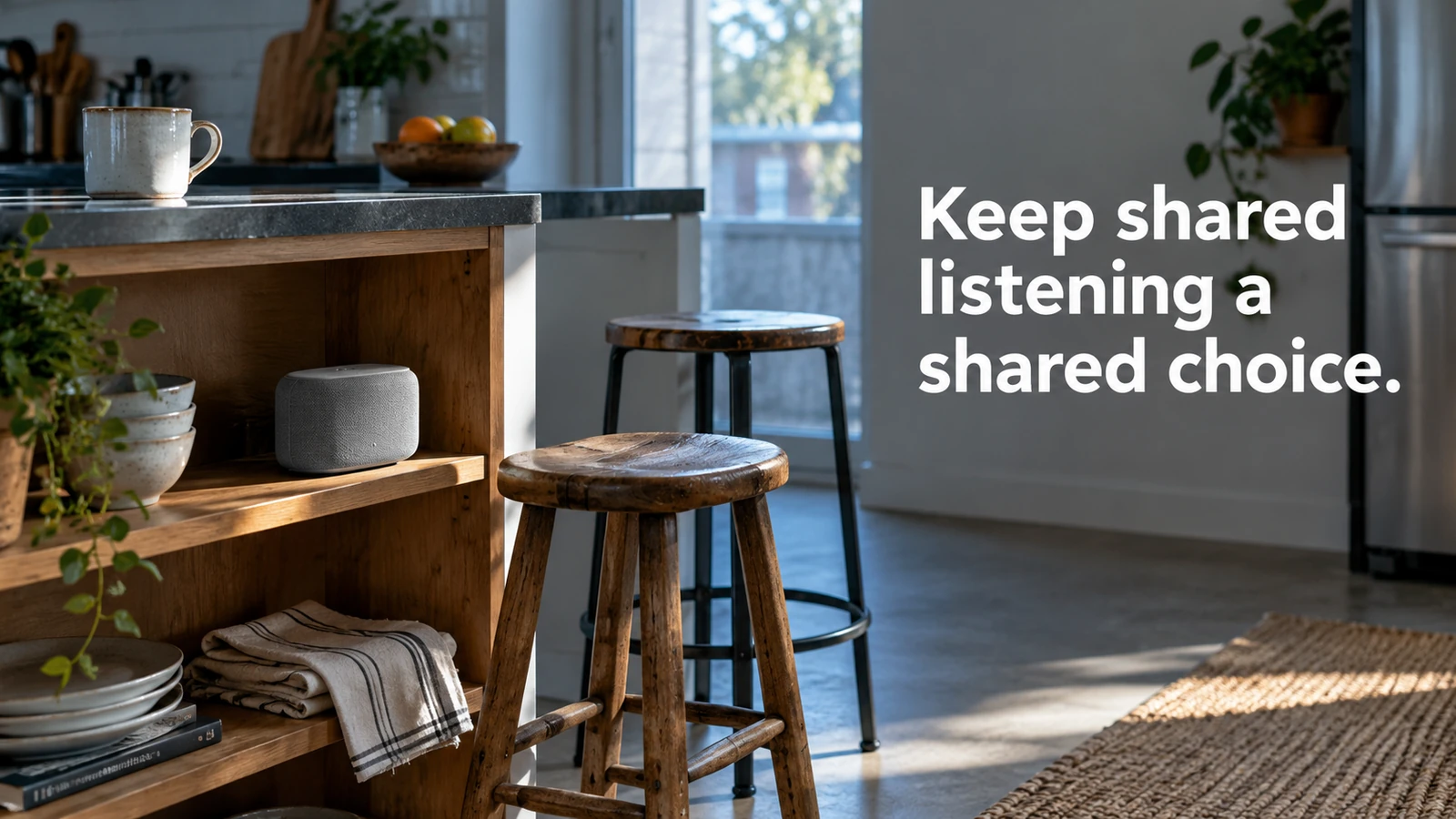
If the answer is no, headphones may be an option, but they are not the only one. You could listen later, use a different room or choose an activity without audio. The aim is not to negotiate a perfect environment out of a difficult household moment. A workable decision can be to postpone listening without treating that as a failed routine.
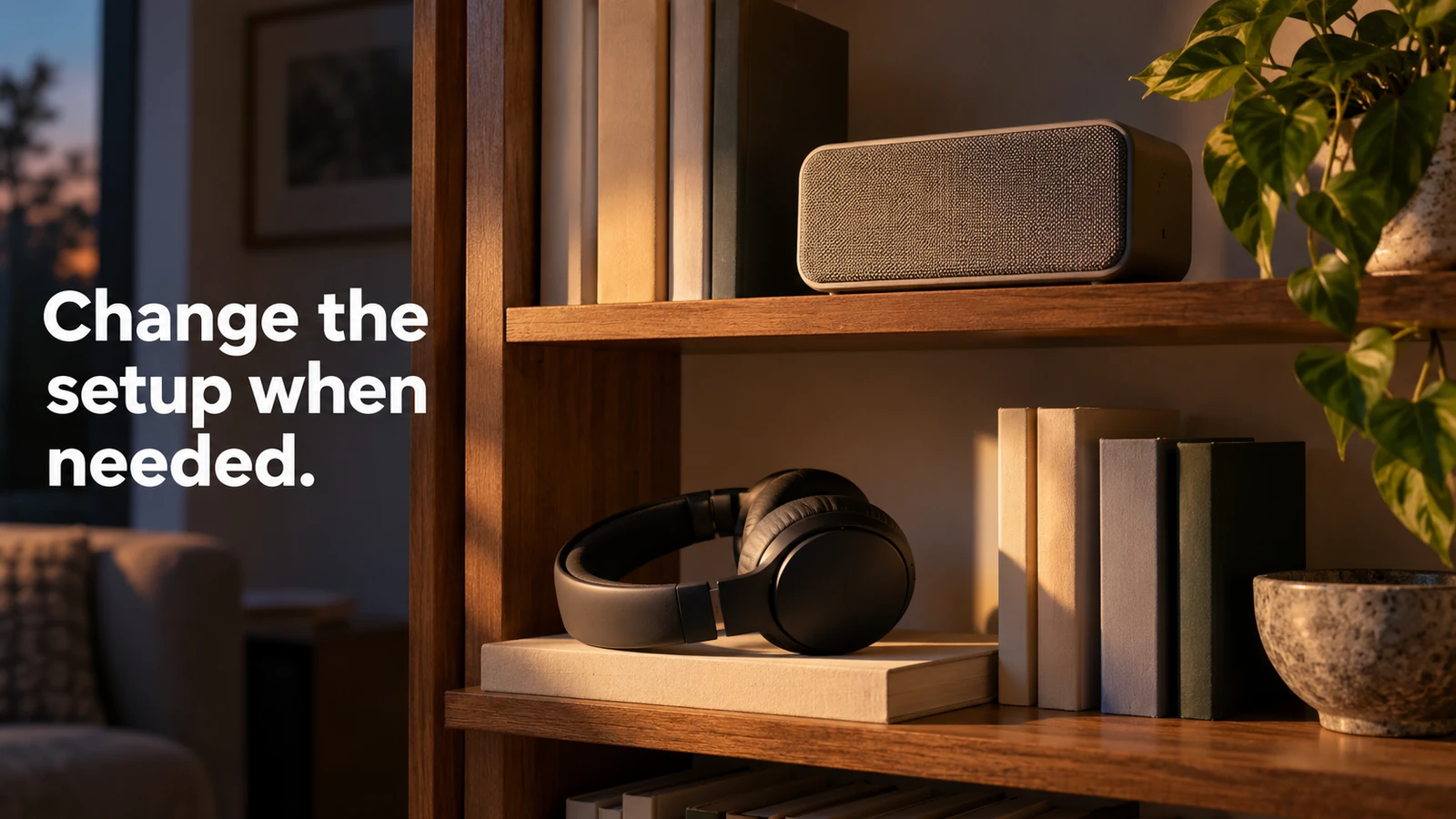
For someone listening alone, speakers remove the need to wear equipment. They also send the recording into the room, where distance and other sounds affect what you hear. Try the device in a stable position that keeps walkways clear. There is no need to create a studio layout. Ordinary room sounds can remain present instead of being covered by louder playback.
Consider what needs your attention
Do you need to hear a colleague, respond to a person you care for or notice a routine household signal? Make that responsibility part of the choice before starting. A sound journey is optional; it should not depend on ignoring a task that requires your attention. If listening would interfere with it, pick another moment or another kind of pause.
Do not use this guide to decide whether a device is suitable for driving, cycling, machinery or another activity where missed signals could matter. A seated listening session in an ordinary room is the setting discussed here. Equipment marketed as allowing outside sound does not remove your responsibility to judge whether the activity and environment are appropriate.
You can also decide how to handle a normal interruption. Put playback within easy reach, and be willing to pause it. You do not need to finish a track once it begins. For a household conversation, stopping the sound and giving the person your attention may be the most practical response. The next session does not need to make up for the unfinished one.
When headphones are a useful option
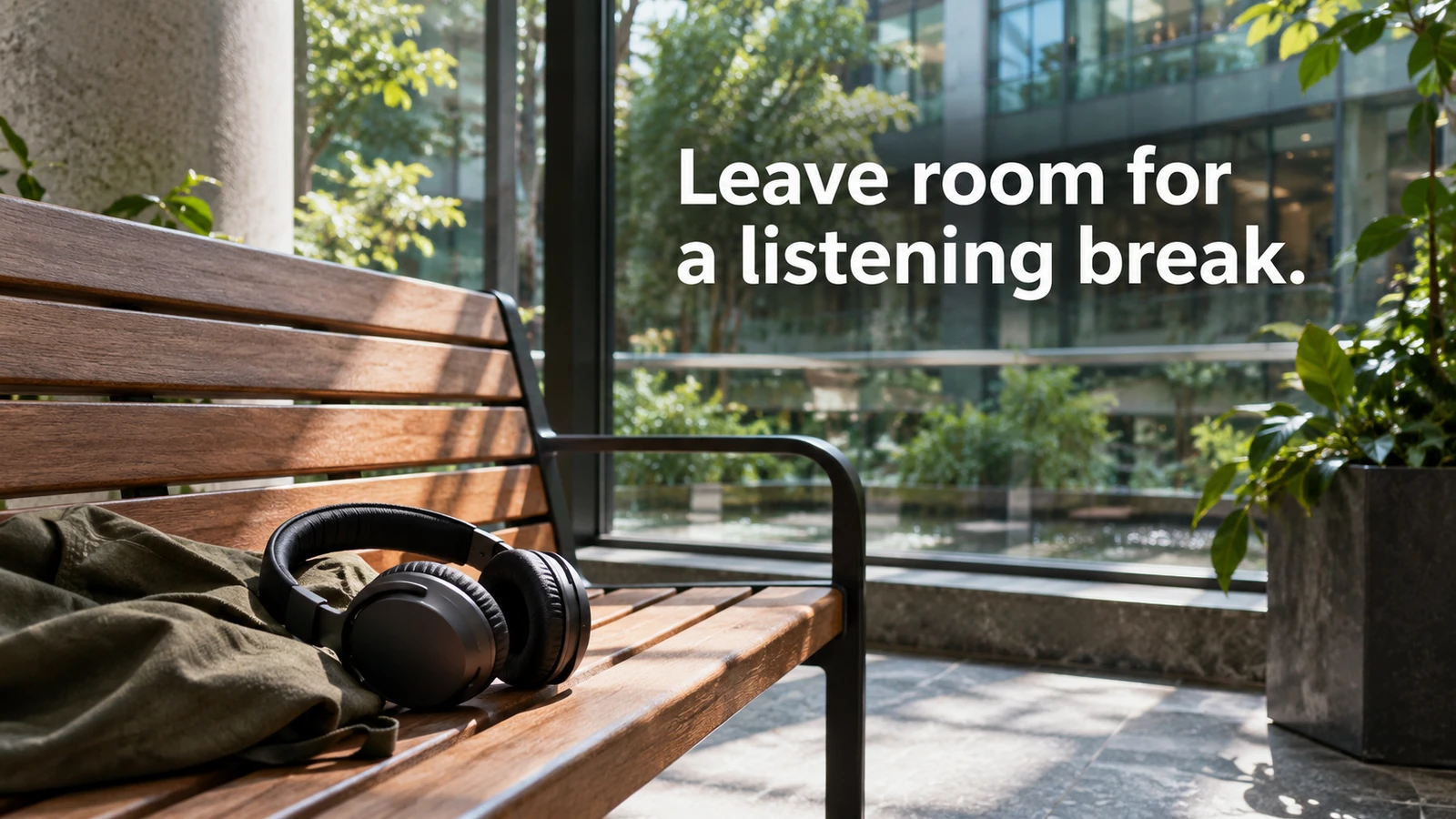
Headphones keep the recording from becoming shared room sound. That can be helpful in an apartment, a home office or another place where different people have different plans. Check the physical fit before committing to a long session. Pressure, heat, rubbing or a cable that catches on furniture are reasons to adjust or choose something else.
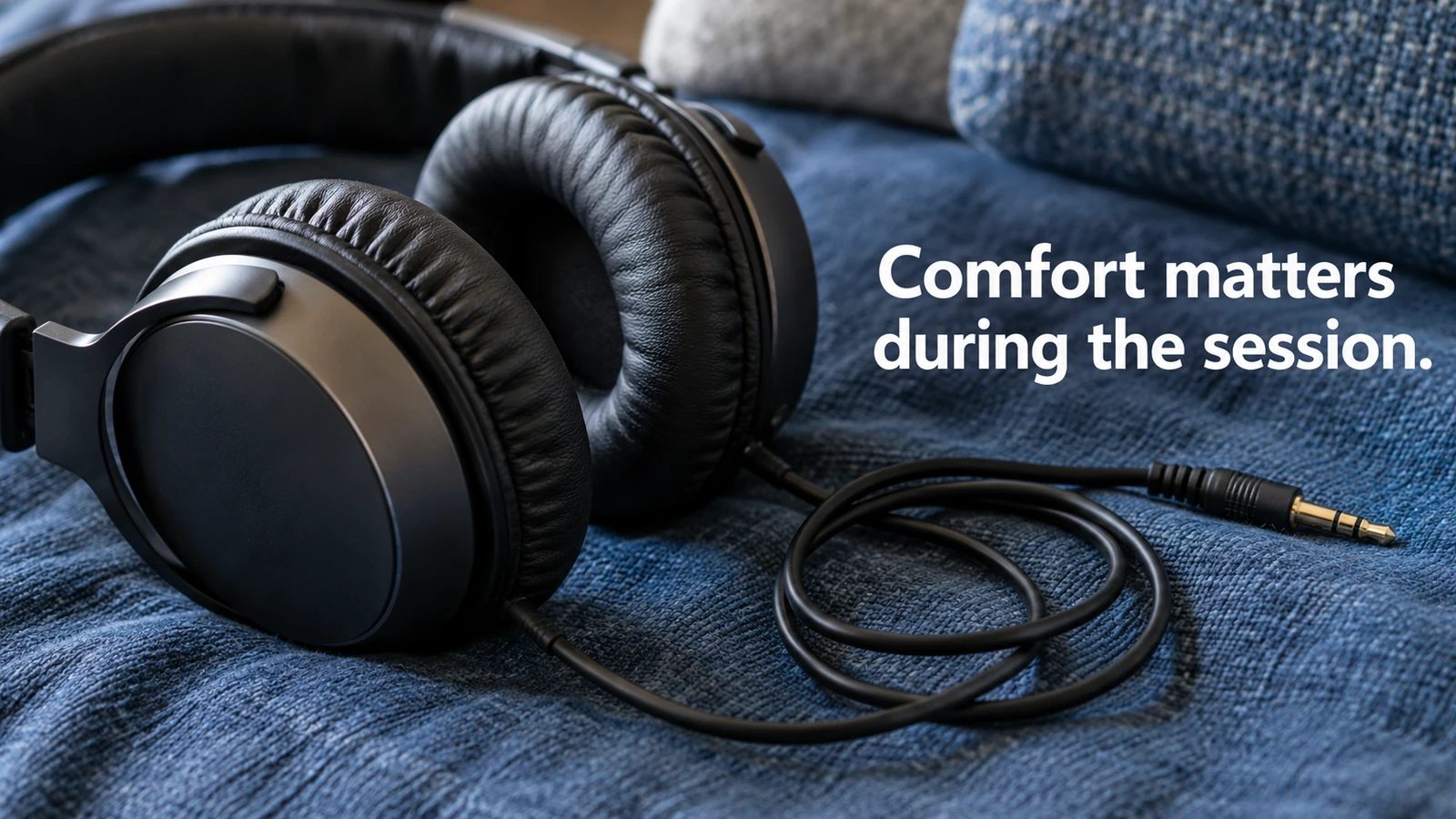
Take a moment with playback stopped. Notice whether the ear cushions, headband or earbuds feel acceptable without trying to persuade yourself that discomfort is part of the practice. A good fit for one person may not work for another. Equipment can also feel different on a different day. You can set it down and use speakers if the room permits, or finish the session.
Noise cancellation, where an actual device supports it, may reduce the temptation to raise the recording over surrounding noise. It does not make any volume or duration safe by itself, and it is not a reason to remain in an unsuitable setting. Use only features your equipment genuinely provides. This article does not claim that SoulFul GLO supplies device controls or hearing monitoring.
When speakers are a useful option
Speakers can suit a shared listening session when the people present have agreed to it. They may also be easier when you would prefer not to wear headphones. Set the speaker on a stable surface and begin quietly. Check how the sound reaches the place where you will sit, rather than assuming that its setting will sound identical across the room.
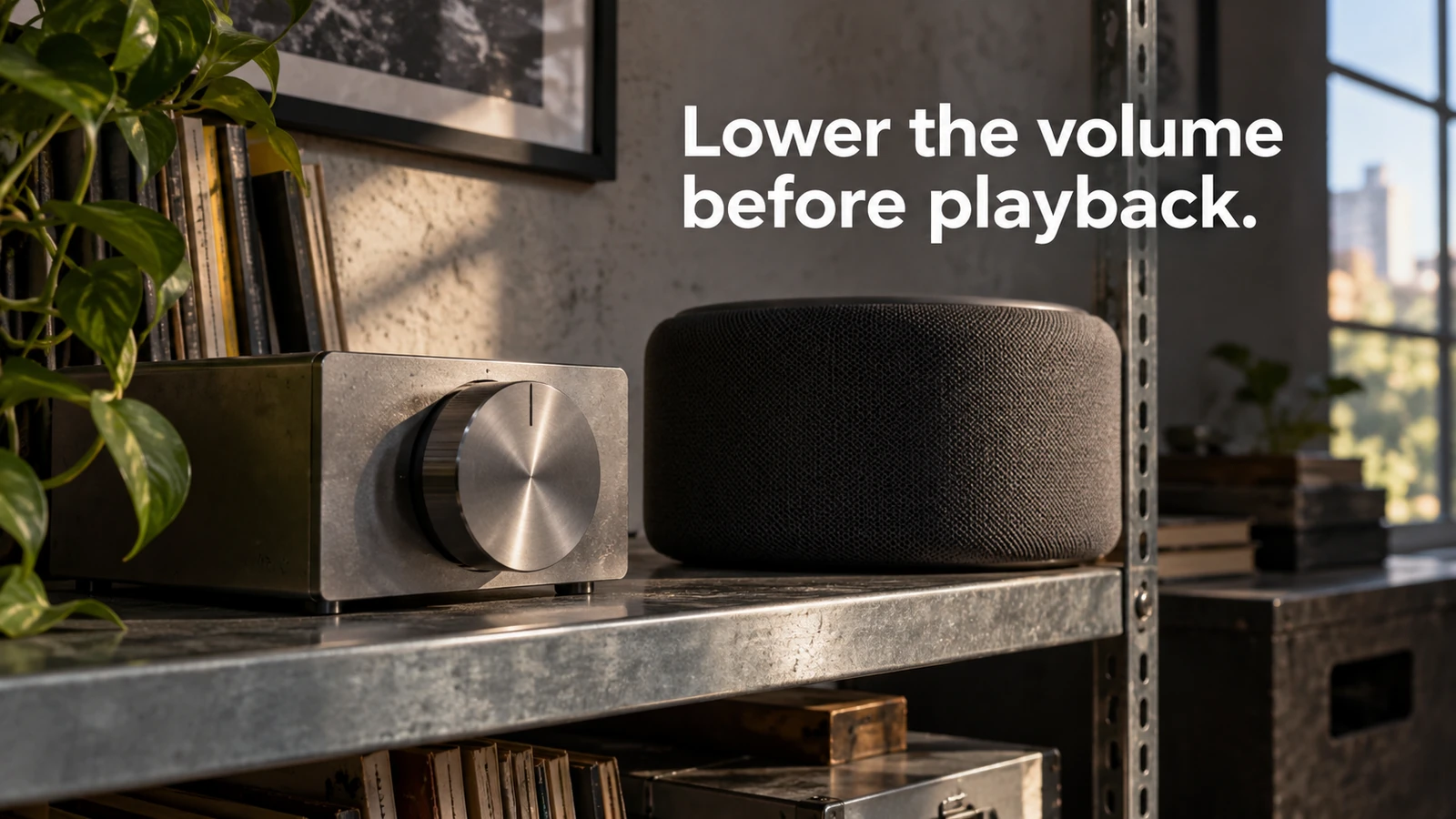
Other people may hear the recording differently from where they sit. Ask whether the level works for them, and be prepared to lower it or stop. Someone else's wish for silence is a valid part of a shared setup. You do not need to explain the benefits you hope to obtain in order to override their preference.
A phone speaker is another possible starting point. It may reproduce a recording differently from separate equipment, but hearing every low note is not an obligation. Avoid placing the phone where it could fall or where you must keep reaching awkwardly to control playback. If the sound seems thin or unpleasant, choose a different recording or another activity rather than turning it up to force a fuller experience.
Keep level and time in the decision
The World Health Organization explains that louder sound and longer listening increase hearing risk. It recommends keeping volume down, limiting exposure and taking breaks. These principles apply to headphones and speakers; a relaxing title or familiar track does not change the effect of sound exposure. Start low and avoid competing with background noise by increasing playback.
Read WHO's safe-listening guidance
A volume slider is not a measurement of the sound reaching your ears. Equipment, fit, distance and the recording all affect the result. If your device has a genuine exposure-monitoring or volume-limiting feature, consult its instructions. Do not treat a particular percentage as a guarantee across devices. This guide deliberately avoids promising a universal safe setting for every reader.
Include listening time outside the sound journey when thinking about exposure. A day of calls, music and other loud environments is relevant too. A break can mean turning off playback and leaving your ears free of equipment for a while. If you have persistent ringing or difficulty hearing, WHO recommends professional assessment. Changing the kind of speaker is not a substitute for that assessment.
Try a short comparison without turning it into a test
If both options are available, compare them briefly in the same ordinary setting. Begin with one at a low level and ask whether the fit, controls and room arrangement work. Then stop playback before switching. You are comparing practical ease, not proving that one device changes your mood or delivers a better wellness outcome.
Keep the recording familiar enough that discovering new sounds does not dominate the comparison. Notice the difference between an equipment problem and a preference. A headset that presses painfully is a practical problem; liking room sound more than close sound is a preference. Both can support changing your choice. You do not need a numerical rating or a purchase decision.
For a hypothetical example, Leela tries headphones at her home desk but finds the headband uncomfortable. She does not continue to complete an experiment. Later, when the room is available, she uses a small speaker for a short listen. The useful outcome is identifying a workable setup. It does not demonstrate that either device improves health or concentration.
Three everyday situations
In a shared flat, Amir's housemate is preparing for a call. He asks about room sound and learns that silence would be helpful. He can choose comfortable private headphones, move the session to another time or skip audio. The decision respects both people without requiring a longer negotiation about whose routine matters more.
At home alone, Mira prefers speakers because she dislikes having anything on her ears. She starts at a low level and places the controls where she can reach them. When a delivery arrives, she stops playback. She may resume later, but the interruption does not turn the session into something she must complete before returning to the day.
During a planned shared listen, two friends choose speakers and agree that either can request a lower level or stop. They avoid assuming that the person who selected the recording also decides the volume. Their agreement concerns this session only. Nobody is expected to report a particular feeling afterwards or continue when the sound becomes unwelcome.
Explore the basic listening setup
If you want an overview of choosing a recording and arranging an ordinary session, the existing beginner guide covers those wider steps. Use it for context rather than treating equipment choice as the whole practice.
Read Sound Journeys for Beginners
Choose another kind of practice when audio does not fit
Some settings are better suited to a pause without a recording. You can choose an ordinary attention exercise or another gentle activity instead of trying to make sound work everywhere.
Frequently asked questions
Are headphones required for a sound journey?
No. Speakers or a phone speaker may be workable if the recording sounds acceptable and the setting permits it. Check any genuine recording instructions, but do not assume that private listening requires buying equipment. The practical choice can change from one session to another.
Do speakers make listening safer?
Not automatically. Sound level and listening time still matter. Distance and the room affect what reaches your ears. Keep playback down and take breaks regardless of the device. Do not use comfort or a peaceful recording as evidence that the exposure is safe.
What if headphones feel uncomfortable?
Stop or adjust them. You do not need to endure pressure, heat or pain for a wellness exercise. Try another available setup only if it fits the room and your responsibilities. Ending the listen is also a reasonable choice, without needing to replace it immediately.
Can I listen while someone else works nearby?
Ask before using speakers. Headphones may reduce shared playback, but consider whether you need to respond to the other person. If the arrangement is not workable, choose a different time. Agreement should concern the present situation rather than a standing assumption.
Should I turn it up to hear every detail?
No. Missing a quiet detail does not make the session unsuccessful. A quieter environment, a different recording or no audio may be better options than competing with noise. There is no requirement to create an immersive experience at the expense of comfortable, cautious listening.
What should I notice after trying a setup?
Notice practical facts: fit, ease of reaching the controls, shared-room agreement and whether the listening period was manageable. You do not need to assess whether you became calmer. Those observations can guide the next choice without turning an optional pause into a performance review.