
You and a friend both remember an ordinary afternoon and would like to keep a record together. One person suggests a shared journal. Before choosing a notebook, it helps to ask what shared means: two private entries written alongside each other, selected passages exchanged later, or one record that you both contribute to and read?
This guide concerns the third arrangement: a deliberately coauthored journal between willing adults. It could hold observations about a garden you both visit, a small creative project or occasions you choose to remember. The useful starting point is a clear invitation, with room for either person to prefer separate writing. No particular depth of disclosure is required.
Quick answer
Agree on the purpose, intended readers and kinds of contribution before writing. Choose an ordinary first subject, identify each writer's words and decide whether responses are welcome. Keep changes attributable rather than silently rewriting the other person's account. Before continuing, discuss where the journal will live and what happens if someone wants to stop. A shared record can remain small; it does not have to become a complete account of your friendship.
Decide whether you want one shared record
A shared journal creates an intended reader from the beginning. You are composing something another participant can encounter, rather than assuming that a private page might occasionally be shared. That difference affects what belongs in the entry. Choose material you actually want in the joint record, not material you feel obliged to reveal because the other person has already written something personal.
Suppose your aim is to remember visits to a community garden. One writer may enjoy recording changes in the beds; another may want to sketch a bench. Those contributions can belong in the same notebook without requiring matching emotions or a shared interpretation. A disagreement about whether the afternoon felt busy can remain two experiences rather than an error to correct.
If what you want is quiet company while keeping your own words private, choose separate notebooks instead. SoulFul GLO's guide to journaling together without sharing describes that different arrangement. Agreeing to write at the same table does not, by itself, make any page a joint record.
Make the first invitation specific
Name a modest subject and explain what you imagine each person doing. For example: “Would you like to keep a notebook about the garden visits we both want to remember? We could each add a dated note when we choose.” This tells your friend more than “Let's be completely open with each other.” It also leaves space for a practical question or a refusal.
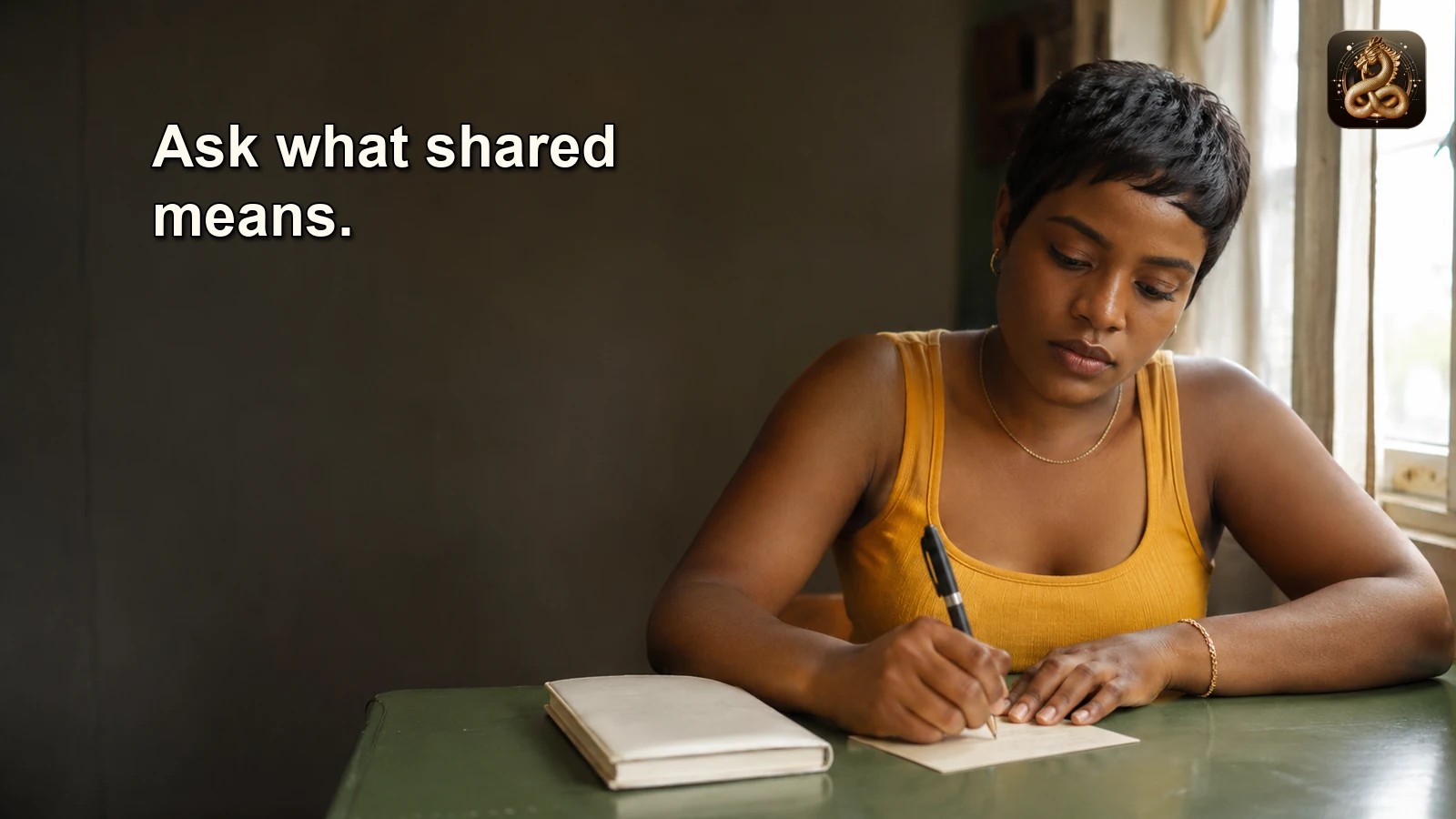
Ask whether the other person wants to read contributions as they appear or only when you meet. They may prefer writing in turns, drawing instead of writing, or having no response expected. Discovering different preferences is useful before the first entry. You can change the arrangement, choose a different activity or decide that a shared journal does not fit.

Do not treat agreement once as agreement to every later subject. A notebook about ordinary visits can become a different activity if it starts containing private relationship disputes. Ask before expanding the scope. A person can want to preserve a pleasant event while declining an invitation to analyse something more personal in the same shared space.
Keep a small agreement inside the cover
Write the few practical points you actually need. Who is invited to read and contribute? What subject have you chosen? May a writer respond to an entry, and how should a response be labelled? Where will the notebook stay? Use ordinary words rather than designing a formal policy that makes a casual activity feel like administration.
You could begin: “This notebook is for our garden visits. Jo and Mira can read and add entries. We sign our own contributions. Ask before photographing or showing a page to anyone else. Either person can pause the project.” These are example choices, not a universal agreement or a guarantee about what someone will later do with the words.
Keep practical limits believable. Someone who can read a page may remember, copy or describe it. An agreement about not sharing expresses a boundary; it cannot make disclosure impossible. Leave sensitive or unsuitable material out of the joint record. A private individual entry or an ordinary conversation may better fit something you do not want retained there.
A simple plan for the first shared entry
Start with one ordinary occasion or subject you both agreed to include. Each person can add a few sentences, a labelled sketch or a short list of details. Identify whose contribution it is using a name, initials or another agreed label. Use the actual writing date when that differs from the event date, and leave uncertain recollections uncertain.

The second person can read without replying. If a response is welcome, place it separately, with its own author label. “I remember the rain starting after lunch” is clearer than editing the first writer's paragraph to make the timing match your memory. Neither person has to turn different recollections into a single version before the notebook can continue.
End when the chosen contribution is complete enough for its writer. There is no required page count or alternating schedule. One person may write more, and a skipped turn need not create a debt. If the imbalance stops feeling workable, talk about the arrangement instead of interpreting the word count as evidence of care or commitment.
Choose where the shared record will live
A paper notebook needs an ordinary custody arrangement. If it stays with one person, agree how the other participant can read or add something without needing to explain a private reason. You might bring it to the next meeting or leave contributions until then. Do not promise uninterrupted access if your actual arrangement cannot provide it.
A digital document introduces different questions. Read the current provider instructions for who can open, comment on or edit the actual file. For example, Google's sharing guidance distinguishes those access roles and notes that restrictions cannot prevent every other way someone might share content. Those are Google-specific controls, not features this article attributes to SoulFul GLO. An agreed audience and the file's actual audience should match before personal writing is added.
Check the arrangement with a neutral test sentence rather than putting sensitive material into a file to see what happens. If access is unclear, keep the joint entry on hold. A paper alternative can be simpler, but it also needs a sensible place to live and an honest account of who may see it.
Keep different kinds of writing recognisable
The table below is a planning aid for a coauthored notebook. It separates an original contribution, a response and a later correction so that one person's words do not quietly become another person's account. You can use fewer categories if the notebook remains understandable without them.

| Contribution | Plain label | Practical boundary |
|---|---|---|
| An original entry | Mira, written on Saturday | Write material intended for the agreed readers. |
| A response | Jo's response, Sunday | Add your words separately; do not speak for the first writer. |
| A correction to your own detail | Mira's later note | Identify the change and keep its timing clear. |
| A proposed new subject | Ask before adding | Check that the journal's agreed purpose still fits. |
| An ending or pause | Project paused by agreement | Decide what happens to the existing notebook. |
Fictional demonstration: two views of one visit
Imagine Mira and Jo agree to keep a paper notebook about garden visits. They want a record of things they notice, not a rating of the outing. Inside the cover they identify the two contributors, agree to label responses and decide that neither will show a page elsewhere without asking. The notebook will stay with Mira between visits.
After a visit, Mira writes about a red watering can beside the gate. She enjoyed how easy it was to recognise their meeting place. She dates and signs the paragraph. She does not claim that Jo felt the same way, and she leaves out an unrelated personal conversation because it was not part of their chosen subject.
Jo adds a small sketch of the bench and a sentence about how crowded the entrance seemed. Their impressions can coexist. The notebook is not required to decide whether the entrance was welcoming or crowded for everyone. Each contribution shows what its writer chose to preserve about that visit.

Later, Mira realises that the can she described was orange. She adds a labelled note beside her entry instead of asking Jo to make every matching detail disappear. If Jo remembers it differently, that can remain his recollection. This invented example demonstrates attribution and scope; it does not establish that a shared journal improves relationships or memory.
Choose a format whose access you understand
Paper can make the object simple to identify, but it still has a location and readers. Decide who keeps it, when someone else may take it and whether you are comfortable with the practical risk of loss or casual reading. A notebook on a shared table is not made private simply by writing two names inside its cover.
For a digital journal, inspect the actual product's current access controls before adding content. Google's file-sharing instructions distinguish viewing, commenting and editing roles. Its sharing guidance also explains that controls cannot prevent every other way a recipient might share content. Those facts concern Google files, not a claim that SoulFul GLO provides a shared-journal feature.
Changing a title does not establish who can open a document. Nor does removing access guarantee removal of material already seen or copied. Choose a format and subject with those limits in mind. This article offers no security certification, shared-account setup or recommendation to make personal writing publicly accessible.
If you want to show someone a passage
Reading and contributing within the agreed journal is different from showing it to a new audience. Discuss the particular passage, its context and the other person's contribution before preparing a copy. One writer's permission to share their own sentence does not automatically cover someone else's words or identifying details nearby.
For the separate editing task of preparing a limited copy, use SoulFul GLO's guide to sharing a journal excerpt. You can also decide that the joint notebook stays with its current readers. A meaningful record does not need a public audience.
Agree on a pause before it becomes awkward
Either person may want to stop adding entries. Ask what happens to the object and existing contributions rather than assuming that stopping means the notebook will be destroyed, copied or transferred. A simple paper project might stay with its current keeper under the same agreed reading boundary. Another arrangement may need a different decision.

Do not promise that a contribution can always be erased from every copy or memory. If someone asks to remove their words, discuss the actual record and available options honestly. Keep the activity voluntary; an informal journal is not a reason to demand more disclosure, a final explanation or another entry before someone can leave.
Prepare a different kind of shared copy
If you want someone to read a passage from an existing private entry, use SoulFul GLO's guide to sharing a journal excerpt. Selecting one copy for a reader is a different task from creating a continuing coauthored record.
Questions readers often ask
Do we need to agree about what happened?
You can preserve different recollections with clear author labels. If a detail matters outside the journal, use appropriate records or a separate conversation rather than treating the shared page as proof. A joint notebook is not an official account.
Must each person contribute equally?
No fixed amount is required here. Choose an arrangement both people want and review it if it stops fitting. Silence or a short entry does not establish what someone feels about the relationship or the project.
Can I keep another private journal?
Yes. Choosing a joint record does not make all your writing shared. Keep the two purposes and actual storage arrangements clear. You may also decide that a particular subject belongs in neither notebook.
Does a shared journal replace a conversation?
No. It is a chosen writing activity, not a guarantee that a practical request has been understood or accepted. If something needs an actual response, ask through a suitable conversation rather than assuming an entry supplies agreement.