
You may like the idea of writing alongside a friend while wanting the words on your page to remain yours. Those wishes can fit together. A shared session can mean agreeing on a quiet place and a stopping point, then writing separately. It does not have to become an exchange of entries, a discussion of personal experiences or a test of how honestly either person writes.
The arrangement works only when participation and disclosure are genuinely optional. Start with someone who accepts a clear no, and keep the first session ordinary. This guide describes a voluntary activity between adults, not therapy, a workplace assessment or a way to resolve a difficult relationship. You can choose another activity if agreeing on boundaries feels uncomfortable or unsafe.
Quick answer
Agree before writing that entries will not be read, photographed, collected or discussed unless their writer separately chooses to share something. Decide where to sit, whether to use a prompt and how to end. Each person keeps their own notebook. At the end, an optional question about the arrangement is enough: would you change the time, place or amount of conversation next time?

You do not need matching notebooks, equal word counts or the same subject. One person may write a paragraph while the other makes a short list. Quiet company is the shared part; the entry itself remains an individual activity. An agreement expresses what you expect from each other, but it cannot guarantee privacy or another person's behaviour.
Say what the invitation includes
A vague invitation to journal together can mean different things. Your friend may imagine taking turns reading aloud, while you mean sitting quietly at the same table. Make the invitation specific enough to uncover that difference before anyone begins. For example: 'Would you like to write separately for a little while? I do not want to read our entries to each other.'
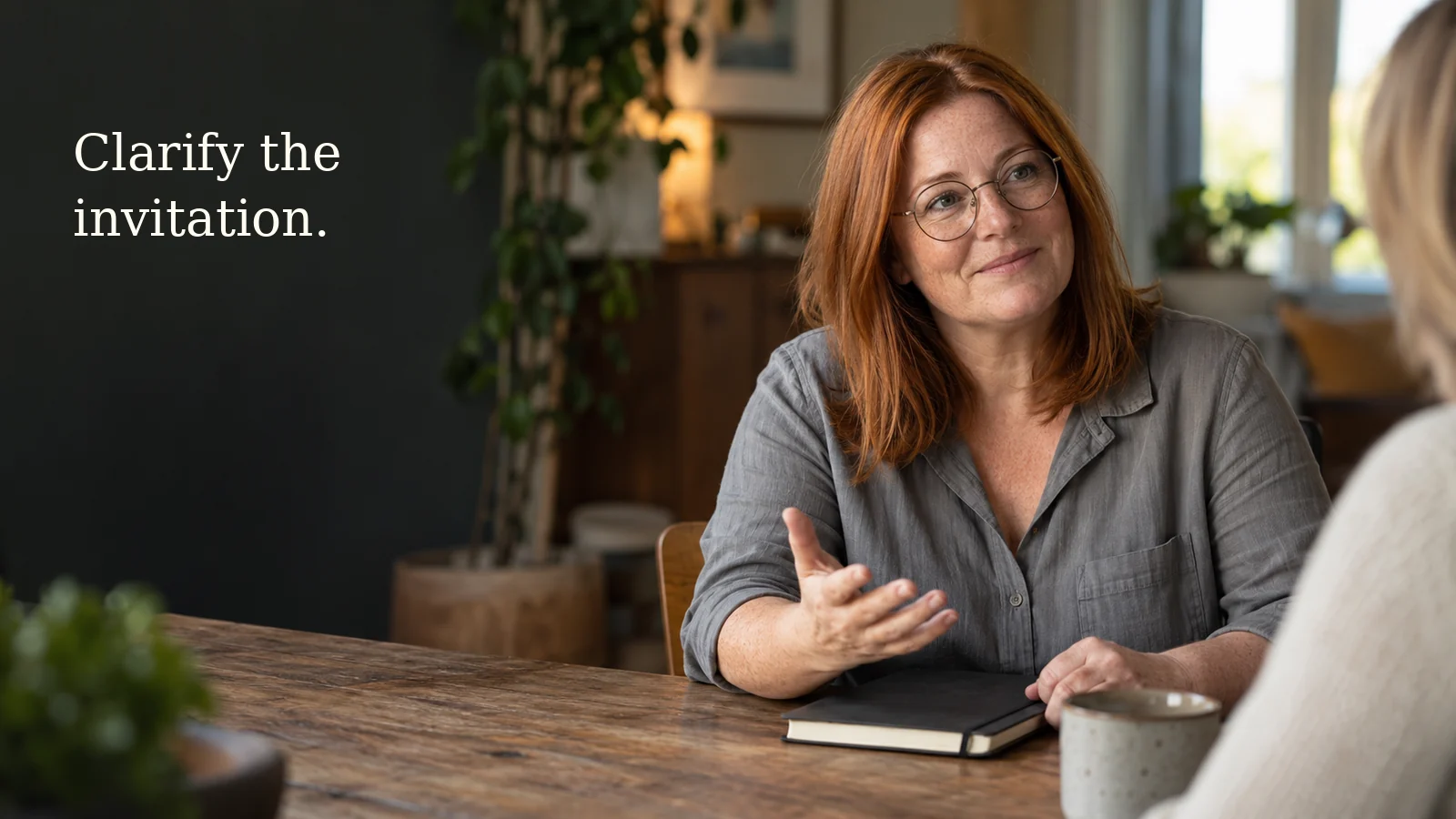
Leave room for the other person to decline or suggest something different. If they want a discussion and you do not, neither preference needs to be corrected. You could arrange a walk instead or write alone. Agreeing to meet is not agreement to every possible activity that might happen during the meeting.
Avoid framing the session as a challenge to reveal something important. An invitation such as 'we must both be completely honest' can create pressure without clarifying what will actually happen. Describe the practical activity: separate pages, quiet writing and an optional conversation afterward. Nobody needs to prove sincerity by exposing personal material.
Keep the page and the company separate
Choose seating that makes ordinary writing comfortable without putting an open page directly in the other person's view. Across a wide table or in separate chairs may suit you better than sitting shoulder to shoulder. You do not need an elaborate privacy screen. You do need to consider what someone can casually see in the actual space.
Keep notebooks, phones and other materials with their owners. Do not exchange devices to compare formats or take a photograph of the table without checking whether a page would be visible. A photograph intended to remember the afternoon can still include words someone did not choose to share. A simple no-photographs arrangement may fit the session best.
If storage or shared devices are the main concern, deal with those separately. The existing guide to private journaling in a shared household considers access and where an entry lives after writing. A friendly session agreement does not establish secure storage, confidentiality or anonymity. Write only what fits your circumstances, or choose a less personal subject.
Agree on a light structure
Decide how the session starts and how you will notice that it is ending. You might use an ordinary timer, a visible clock or one person's agreed reminder. Choose a length that feels manageable to both of you rather than treating a particular number of minutes as a proven method. Either person can stop earlier without explaining their entry.

Also agree on ordinary interruptions. Is it fine to ask where the tea is, or would you prefer to leave questions until afterward? Is background sound welcome to both people? Small arrangements matter more than making the setting look like an ideal writing retreat. If your preferences differ, use separate spaces or shorten the session.
You can change the arrangement next time. A first attempt does not need to establish a permanent routine. Notice practical facts such as an uncomfortable chair or a timer that felt intrusive. Those observations concern the setup; they do not require either person to evaluate the quality, emotional depth or usefulness of the other's writing.
Choose a prompt without requiring a shared answer
You can begin with different questions or no question at all. If you both want a prompt, choose one each person can interpret freely. 'What would I like to notice about today?' leaves more options than a question that requires a positive lesson or a private account of a relationship. Even a broad question can be declined.
Read the wording before starting and allow changes. One person might write about an ordinary meal while the other records a thought about work without identifying anyone. There is no need to announce the chosen subject. Using the same starting sentence does not make the resulting entries a joint document or give anyone a right to read them.
Offer an easy alternative
An alternative could be describing an object in the room, noting a small practical observation or writing a few words about the weather. These are options, not exercises with guaranteed effects. If no prompt fits, a person can make a different kind of note, sit quietly or leave the page blank. Do not make them negotiate for an easier question.
Make sharing a separate decision
A person may finish writing and want to read one sentence aloud. That is a new choice, not an obligation created by attending. Ask whether the other person wants to listen before beginning. Someone may welcome quiet company while not wanting to hear personal material, especially if the subject concerns people they know.

The writer chooses what to share and can stop. Sharing one sentence does not open the rest of the notebook to inspection. Listening also does not require advice, interpretation or a matching disclosure. A clear response such as 'thank you for telling me' may be enough when it suits the conversation. Ask before offering suggestions.
Avoid bargaining: 'I shared mine, so you should share yours.' Equal participation does not mean equal disclosure. You can both take part while making different decisions about what remains private. If sharing repeatedly becomes an expectation despite your agreement, reconsider whether writing together is the activity you actually want with this person.
Handle a pause without asking for the story
Someone may stop writing, close the notebook or look out of the window. You cannot know why from that action alone. They might be finished, distracted or simply unsure what to write. A practical question such as 'Would you like to stop or take a break?' offers a choice without asking them to explain their thoughts.
Do not diagnose the pause or insist that continuing will help. This is an informal activity, and either person can leave it. If a person asks for support beyond what you can offer, be honest about that limit. A peer writing session is not a substitute for appropriate professional support when someone wants or needs it.
You can also pause for your own reasons. Explain a practical need if you wish: 'I am finished for today' or 'I would rather do something else.' You do not have to disclose what you wrote to make stopping legitimate. A workable arrangement makes room for an ordinary ending as well as an early one.
End by discussing the arrangement
When the agreed stopping point arrives, let each person close and put away their own notebook. You might then make a drink or move to another room. A physical transition can distinguish writing time from conversation without creating a formal ritual. Do not collect pages or ask everyone to display what they completed.

If you want a check-in, ask about practical preferences: was the space comfortable, was the quiet welcome, and would you choose the same length again? Avoid questions that turn the entry into a performance, such as who wrote more or who discovered something deeper. The session does not need a report to count as having happened.
You may decide not to repeat it. One person may prefer writing alone, or your schedules may not fit. Treat that as information about this arrangement rather than evidence that someone failed to commit. Company can be pleasant without becoming a fixed habit. An occasional session and a one-time experiment are both possible.
A fictional example: two friends at a kitchen table
Mira invites Jo to write separately while sharing a quiet afternoon. Before opening their notebooks, she says she does not want to read entries aloud. Jo agrees and asks whether they can talk afterward about the setup. They choose seats with space between them and leave their phones away from the open pages.

Mira uses a question about an ordinary moment. Jo ignores the prompt and writes a short description of the room. When Jo stops early, Mira asks whether they want to end the quiet time or keep sitting. They choose to wait until the agreed reminder, then close their notebooks. Neither asks what the other wrote.
Afterward, Jo says the chair was awkward and suggests separate armchairs next time. Mira says she liked having no sharing round. Those are decisions about the session. The example illustrates a possible agreement, not evidence that writing together improves wellbeing, strengthens every friendship or produces more useful entries than writing alone.
Find a question for your own page
If you want possible starting points, explore the existing reflection prompts and choose only wording that fits. A prompt remains optional even when someone else is using it.
Read Journaling After Meditation: https://soulfulglo.com/blog/Journaling-After-Meditation
Keep reflection separate from tasks
A shared session does not need to produce plans or commitments. The guide to journaling without a to-do list offers ways to leave an observation as an observation rather than turning every page into work.
Read Journaling without turning it into a to-do list: https://soulfulglo.com/blog/journaling-without-a-to-do-list
Frequently asked questions
Do we have to use the same prompt?
No. You can use different questions, write freely or choose no question. Agreeing to quiet writing time does not require matching subjects or similar entries.
What if my friend asks to read my notebook?
You can decline. If helpful, restate the arrangement: you agreed to write alongside each other, not exchange entries. Consider another activity if that boundary is not respected.
Can one person write while the other draws?
Yes, if both people want that arrangement. Decide what quiet company means for you rather than measuring participation by word count or requiring identical activities.
Does this guarantee privacy?
No. An agreement does not prevent someone seeing, copying or reading a page. Consider the actual space, access and content before recording something sensitive.
Should we discuss what the session achieved?
Only if you both want that conversation, without requiring disclosure. A brief check of practical preferences is enough; no personal insight or outcome has to be demonstrated.