
The place where you practise yoga is also the place where ordinary life happens. There may be a basket waiting to be put away, a cup on the table and a bag beside the door. You want to prepare for the lesson, but a small practical task can become a much larger demand: perhaps the whole room should look different before you begin.
Saucha offers a reason to ask about preparation without turning your surroundings into a verdict about you. The word belongs to yoga's teachings, where it is often translated as cleanliness or purity. This article uses that context for an original everyday reflection. It does not supply a cleansing practice, declare thoughts impure or make a spotless home a qualification for yoga.
Quick answer
Identify what actually needs attention for the practice you intend to follow. Address a relevant, manageable concern, then stop preparing when the agreed setting is usable. Keep ordinary care separate from an appearance standard. A room can contain unfinished household work without making its occupant unworthy of practice. If an essential condition cannot be arranged, choose another activity or occasion rather than inventing a cleaning shortcut.
Start with the teaching, not a photograph
Integral Yoga's explanation of the niyamas includes saucha within yoga's observances. Its account gives the term a wider context than arranging attractive belongings. That source introduces the traditional subject; the practical decisions below are our own illustrations, not a translation of a classical exercise or a complete explanation of the teaching.

A photograph can suggest a tidy setting without explaining what is required there. The room may have been arranged for a camera rather than an actual lesson. Keep the teacher's instructions, the equipment's own care guidance and your real circumstances in view. None of those can be established from matching colours or a clear patch of floor in somebody else's image.
If a teacher introduces saucha, ask what they mean in that lesson. They might be discussing a text rather than assigning a household task. A short translation does not tell you which reflection or practice they intend. Understanding the invitation comes before deciding how, or whether, you want to take it into daily life.
Name the actual preparation concern
Begin with a concrete observation. Perhaps an object occupies space the teacher says the activity needs. Perhaps shared equipment is not ready under its owner's arrangements. Perhaps the surface or room conditions leave you uncertain. Describe that detail without jumping to a judgment about the entire home, the person who lives there or their commitment to yoga.
An observation such as “this bag is in the passage” points to a possible action. “This room is a disaster” offers less information and can expand the job indefinitely. You do not have to replace an unwelcome thought with a positive slogan. Simply return to the particular condition relevant to the activity you were planning.
Notice whether the concern belongs to preparation, appearance or a separate household responsibility. The same object might raise more than one question, but those questions need not share a deadline. A shelf that looks untidy in a video call is different from an item obstructing movement. Work that matters later does not automatically belong to the next few minutes.
Use the appropriate instructions for equipment
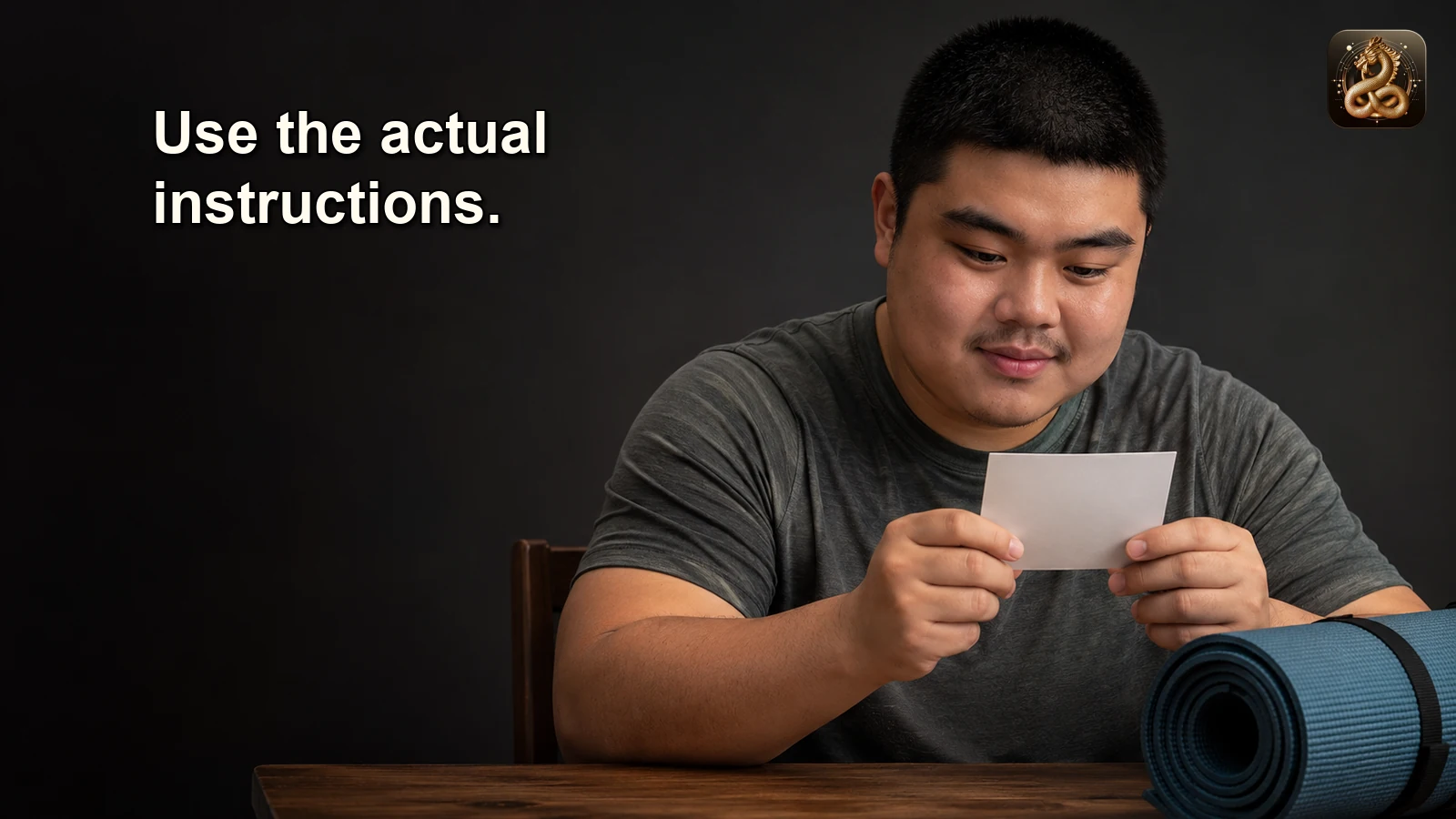
Saucha does not establish which cleaning product suits a mat, how long a surface takes to dry or whether something has been disinfected. Those questions need their own appropriate guidance. Follow the actual equipment instructions and any setting-specific requirements. A traditional term should not become permission to improvise a stronger cleaning method or combine products.
For that separate task, SoulFul GLO's yoga-mat care guide concerns matching the product and its instructions. This reflection leaves those details there. Completing a practical care step does not prove spiritual purity, and a pleasant smell does not provide evidence that a surface meets a particular hygiene requirement.
If preparation cannot be completed in time, let the practice plan change. Equipment that still needs its specified drying or care should not be hurried into use to protect a timetable. Choosing another suitable activity can be the most straightforward outcome. There is no need to turn that choice into a judgment about discipline or enthusiasm.
Make the boundary small enough to recognise
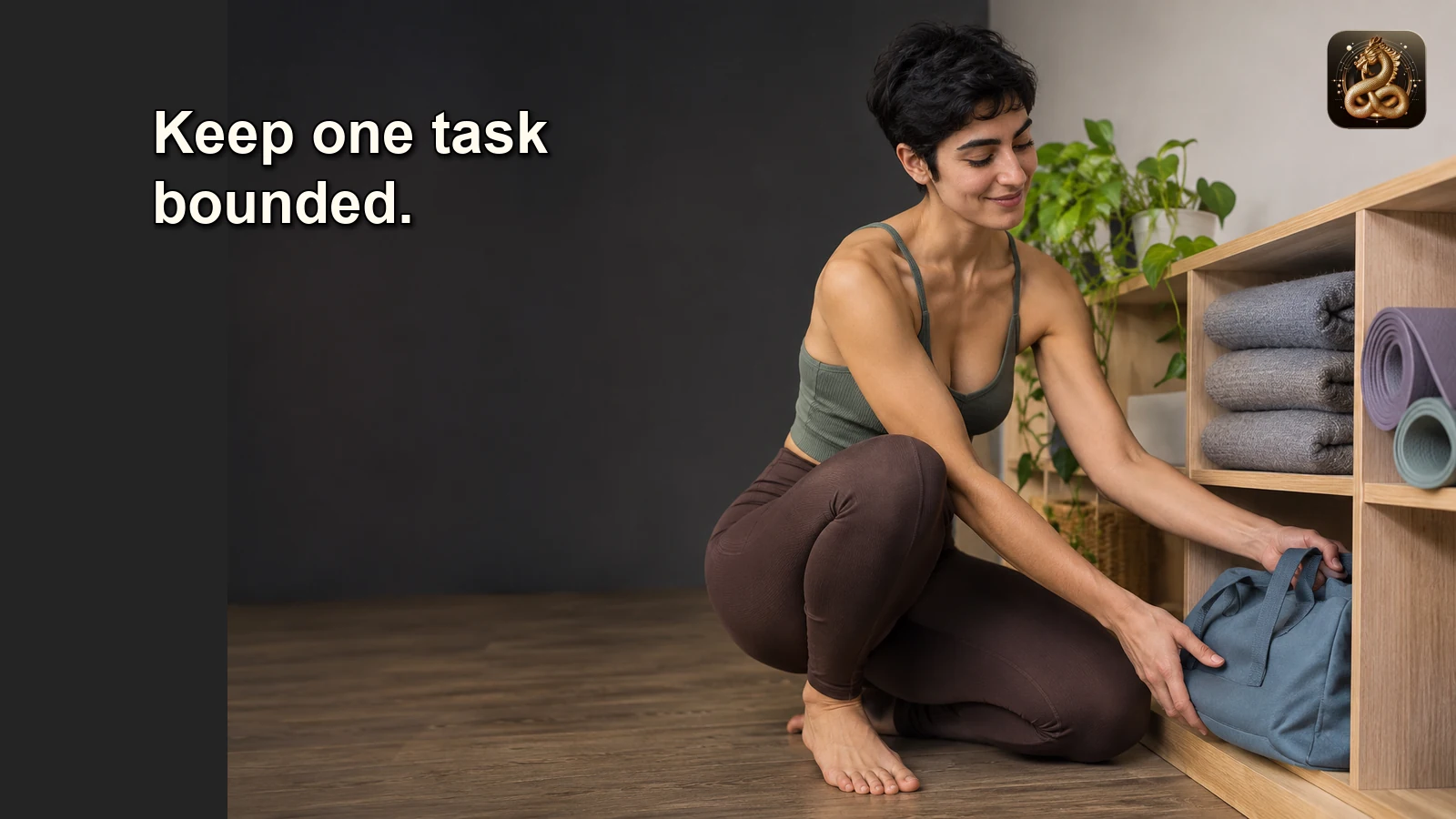
Decide what completion would look like before starting. For example, the item has been put where it belongs and the relevant passage is clear. That boundary concerns the task you identified. It does not require a transformed room, matching accessories or an absence of every distracting thought. A visible endpoint helps keep preparation attached to its purpose.
Do not create an arbitrary tidying quota. A fixed number of minutes or objects can be convenient for some household work, but it does not establish that a practice setting is appropriate. Use the actual condition and applicable instructions instead. If more information is needed, obtaining that information can become the next step rather than doing more unrelated cleaning.
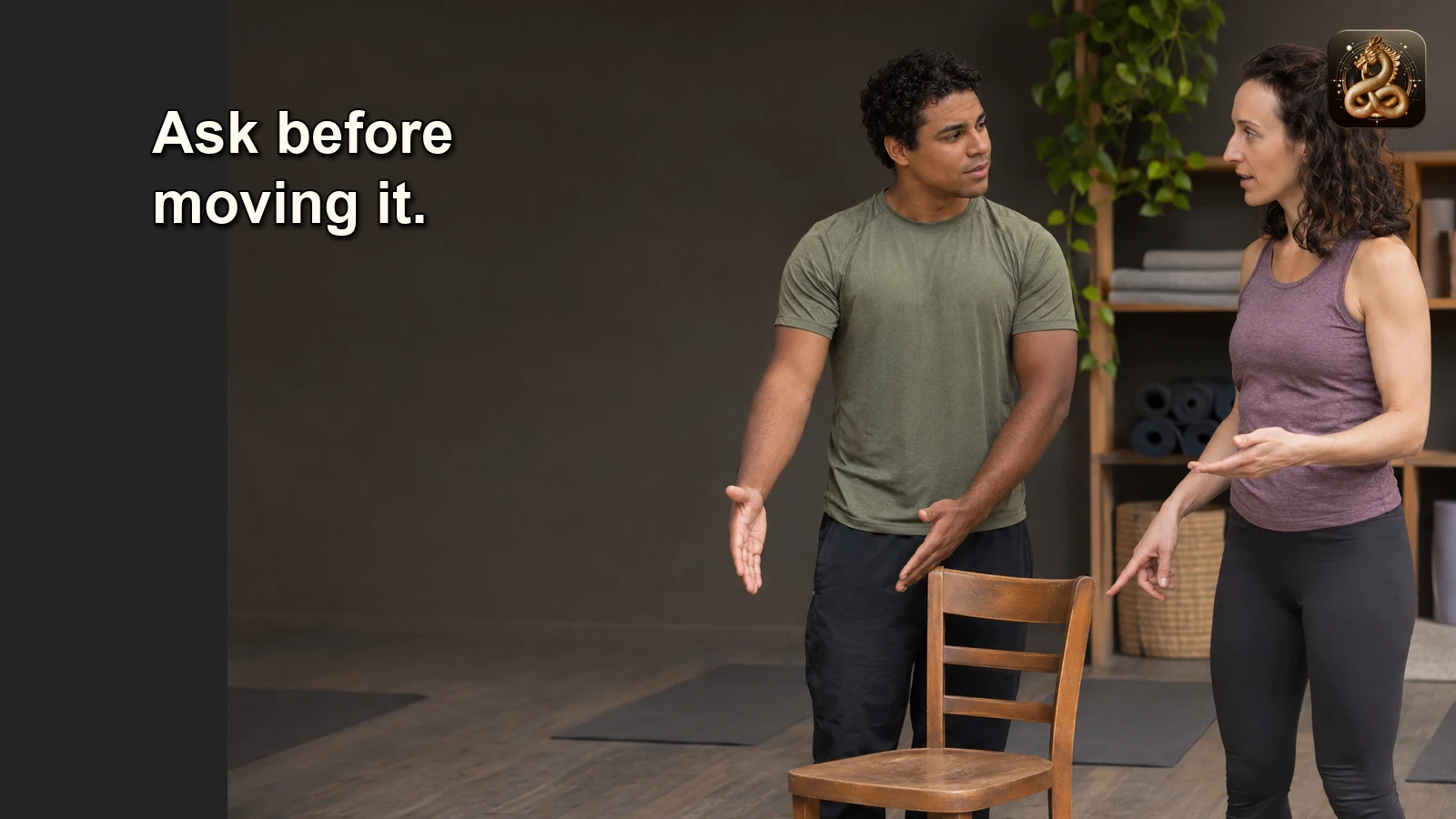
The boundary can also be a decision not to act yet. Perhaps a shared item needs its owner's permission before moving. Perhaps the relevant room is in use. Keep those limits intact. A preparation idea does not give you authority over another person's belongings, plans or preferred arrangement of a common space.
When somebody else prepares the setting, notice the arrangement they actually offer. A studio may have a particular place for bags or a procedure for returning equipment. Ask about those practical details instead of silently imposing the system you use at home. You can meet an understandable requirement without deciding that the same arrangement belongs in every other room where you practise. Shared care includes communication as well as an individual preference for order.
Consider the next use of the space too. After a lesson, your preparation may need an ordinary reversal: return a borrowed chair, put your belongings away or reopen a passage that others use. Include that responsibility in the actual agreement rather than leaving another person to infer it. Finishing does not require preserving a photograph of a yoga corner for the rest of the day. The room can return to its other purposes without undoing the choice you made.
Keep the boundary of preparation
Return to the reason for preparing, and keep the stopping point visible. A useful setting need not become a permanent display.
A proportionate preparation guide
| What you notice | Relevant question | A bounded next step |
|---|---|---|
| An object in needed movement space | Where does it belong, and may I move it? | Put it away with permission or choose another setting |
| Equipment needs care | What do its actual instructions require? | Follow the matched guidance and allow required drying |
| A shelf looks untidy | Does this affect the planned activity? | Leave appearance work for another occasion if appropriate |
| A shared room is occupied | What arrangement have we actually agreed? | Ask, wait or choose another activity |
| Preparation keeps expanding | What original condition remains unresolved? | Return to that condition and stop unrelated tasks |
Try one preparation decision
First, identify the activity you actually intend to do and read its setup requirements. A discussion, a seated reflection and a movement lesson may need different arrangements. Use the particular invitation rather than a general image of a yoga room. If the instructions are unclear, ask before treating your own guess as a requirement.

Second, name one relevant condition and the appropriate response. Keep permission, equipment care and personal needs in their proper places. You might move your own bag, ask about a shared object or decide that the space is unavailable. The plan should remain connected to a real observation rather than an imagined standard you cannot finish meeting.
Third, check the result against the original question. Has the passage been cleared? Is the required preparation complete under the applicable instructions? If so, leave the other household work alone for now. You can begin the activity you understand, or choose not to. Preparation is not a contract requiring you to practise afterward.
The simpler version is one question: “What needs attention for this activity, and what can wait?” No written checklist is necessary. If the question reveals that the activity does not fit today, that information is useful. It need not be converted into an assignment to improve the room or yourself before trying again.
Fictional demonstration: a room that is already lived in
In this invented example, Leena wants to follow a familiar lesson in her living room. A delivery box stands beside the area she plans to use, and several books lie on the table. She initially starts gathering everything into matching piles. Then she notices that she has stopped answering the original question about the lesson's actual space needs.
She puts her own box away and checks the available area against the instructions she has. The books remain on the table because they do not affect this activity. Leena has not made the room perfect or demonstrated a traditional attainment. She has completed one preparation task and chosen to leave a different household task for later.
In another fictional situation, Ravi finds that a shared mat still needs care under its owner's instructions. He asks rather than applying a product he happens to have nearby. The owner handles the care, and Ravi chooses another activity. Neither example reports a health improvement, a customer experience or proof that a particular setting is safe for everyone.
Keep personal worth out of the task
An ordinary home can be crowded, temporary or shared. This article does not treat those circumstances as evidence of anyone's character. Preparation should answer the needs of a particular activity. Avoid using the language of purity to label a person, a body, an emotion or a household as inferior because it differs from a preferred image.

Likewise, a thought that remains during practice is not dirt that must be removed. If a teacher discusses inner aspects of saucha, seek their source and explanation rather than inventing a cleansing procedure from the English translation. A general article cannot settle the meaning across traditions or tell you what a particular mental experience signifies.
You can appreciate a clear area without demanding that every part of life become orderly. For the separate reflection about appreciation alongside unmet needs, read SoulFul GLO's santosha guide. Different teachings deserve their own context; they should not be collapsed into a single instruction to feel good about everything.
Keep the practice and its limits clear
NCCIH's yoga overview recommends qualified instruction and attention to individual circumstances. Arranging a room cannot replace that guidance or establish personal suitability. This article supplies no movement sequence, cleaning certification or medical advice. Needed care and concerning symptoms deserve appropriate professional attention rather than a tidier setting.
Use the small-space yoga guide if your separate question concerns room layout for an actual lesson. Keep preparation proportionate, follow understandable instructions and leave both rest and a different activity available. A finished household task does not guarantee a particular inner experience during yoga.
Frequently asked questions
Does saucha mean my home must look like a studio?
This article makes no such requirement. Identify the actual preparation needs of the activity and the teaching context of the term. Appearance standards from a photograph do not establish those needs or determine anyone's worth.
Can I use any cleaning method as part of preparation?
Use the actual equipment and setting instructions. A yoga observance does not establish material compatibility, drying time or disinfection. Ask the appropriate owner or manufacturer when the relevant care information is missing.
What if tidying keeps delaying the practice?
Return to the condition you first identified and decide what completion would mean. Leave unrelated work for its own occasion where appropriate. You can also choose not to practise; preparation does not create an obligation.
Is an unsettled thought a failure of cleanliness?
This guide does not label thoughts or emotions impure. If a teaching discusses inner aspects of saucha, ask for its source and explanation. Do not turn a brief English translation into a demand to eliminate an ordinary experience.
Choose the next activity on its own terms
Explore SoulFul GLO's practice-selection guide when deciding between yoga, listening and meditation. Check what the actual resource asks, prepare what genuinely belongs to it and allow the rest of the household to remain an ordinary household.