
A small room can make a simple practice feel like a furniture problem. You find a strip of floor, unroll a mat and then discover that the recording asks you to move in a direction the room does not allow. Or the only available spot is also the route everyone uses to reach the kitchen.
Start with the session you want to follow and the space you actually have. The useful setup is one that accommodates the relevant instructions without blocking everyday use of the home. It can be temporary, plain and easy to put away.
This guide offers practical preparation questions, not a pose sequence, a home-safety inspection or individual exercise advice. A room arrangement cannot establish whether a practice is suitable for your health or ability. You can choose another session or leave the practice for another time.
Quick answer
Preview the session, identify the space and equipment its instructor requires, and compare those requirements with the room. Check the surface, nearby objects, route through the room and position of playback controls. Agree on shared use where needed. If you cannot make the arrangement workable, choose a different session or setting rather than forcing the movements into the available gap.
There is no universal room size in this checklist. A practice involving standing, floor transitions or wider movements can need a different arrangement from another session. A mat fitting on the floor does not establish that every movement fits around it.
Choose the session before arranging the room
Look at the actual description and preview the guidance while you are free to pause. Notice whether the instructor changes position, uses props or moves beyond the mat. Check what is specified instead of assuming that a session described as gentle stays in one small area.
Write down the practical requirements you can identify: the surface used, any stated equipment and where the instructor expects movement. This is a preparation note, not a reason to imitate unfamiliar movements during the preview. Ask a qualified instructor when the requirements or directions are unclear.
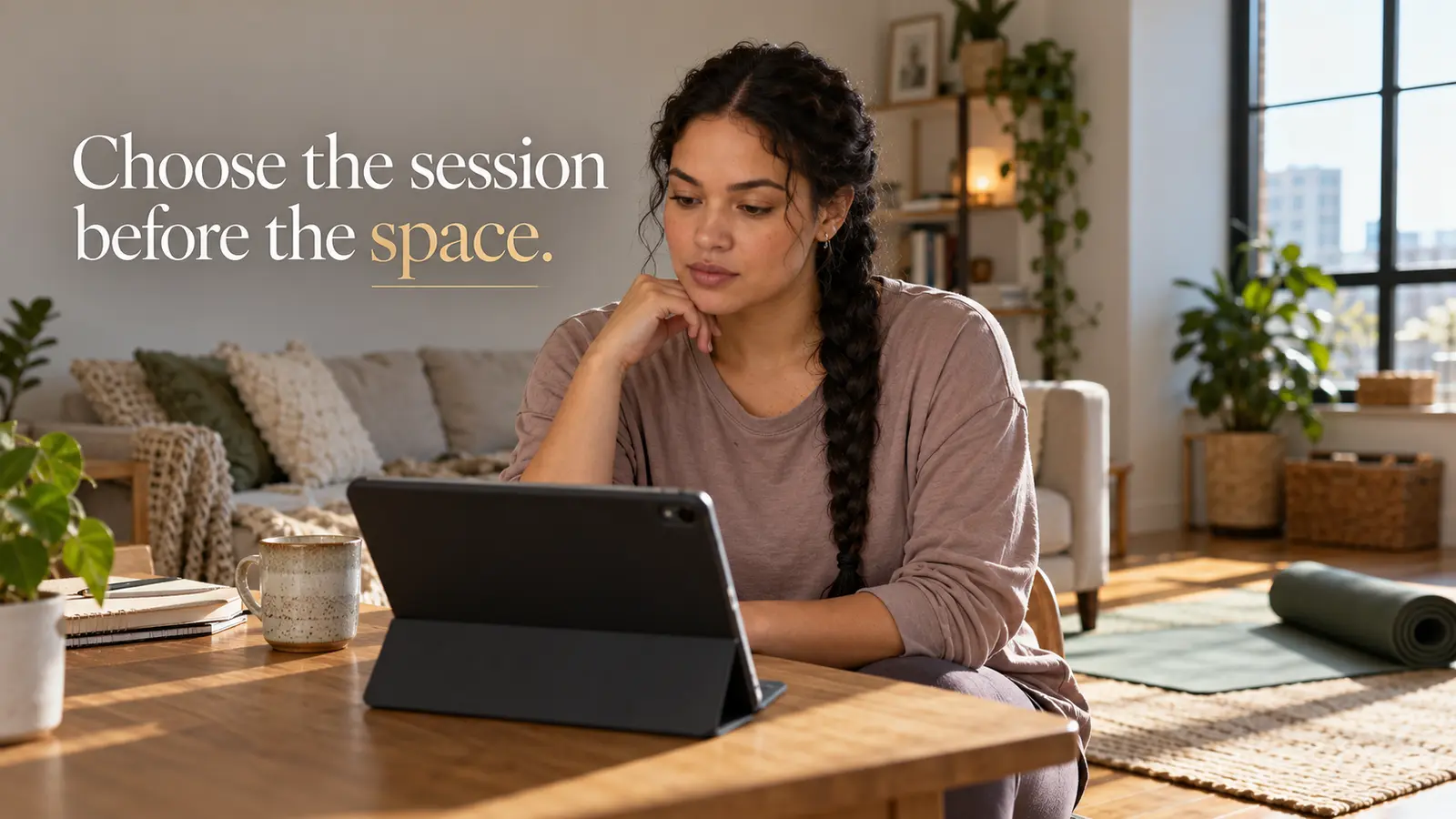
Keep selection separate from improvisation. If the recording depends on equipment you do not have or movements you cannot accommodate, another session may be a better fit. A small space is not a reason to invent a substitute support or perform a narrower version of every movement without guidance.
The National Center for Complementary and Integrative Health recommends learning yoga with qualified instruction and discussing individual needs with relevant professionals. Its safety guidance notes that injuries can occur. Use that guidance to frame your questions; this room checklist cannot certify a practice as safe for you.
Look beyond the outline of the mat
Consider the space around, above and beside the area you intend to use. A chair, shelf edge, low pendant light or opening door may be relevant depending on the session. Keep attention on the real arrangement rather than the appearance of a clear rectangle in a photograph.
A narrow gap can look generous from one camera angle. Check it from where you will actually be. You do not need to perform the session to establish that a door opens into the area or that a table occupies the space beside it.
Avoid moving heavy or awkward furniture just to make the planned session fit. Use an arrangement you can change appropriately or choose another location. If changing the room requires help, arrange that separately rather than treating furniture moving as part of the warm-up.
Keep everyday routes available
Notice which paths other people use. A place in front of the only doorway may interrupt the household even if it looks quiet at the moment. Discuss the arrangement before starting and keep access to doors and ordinary responsibilities available.
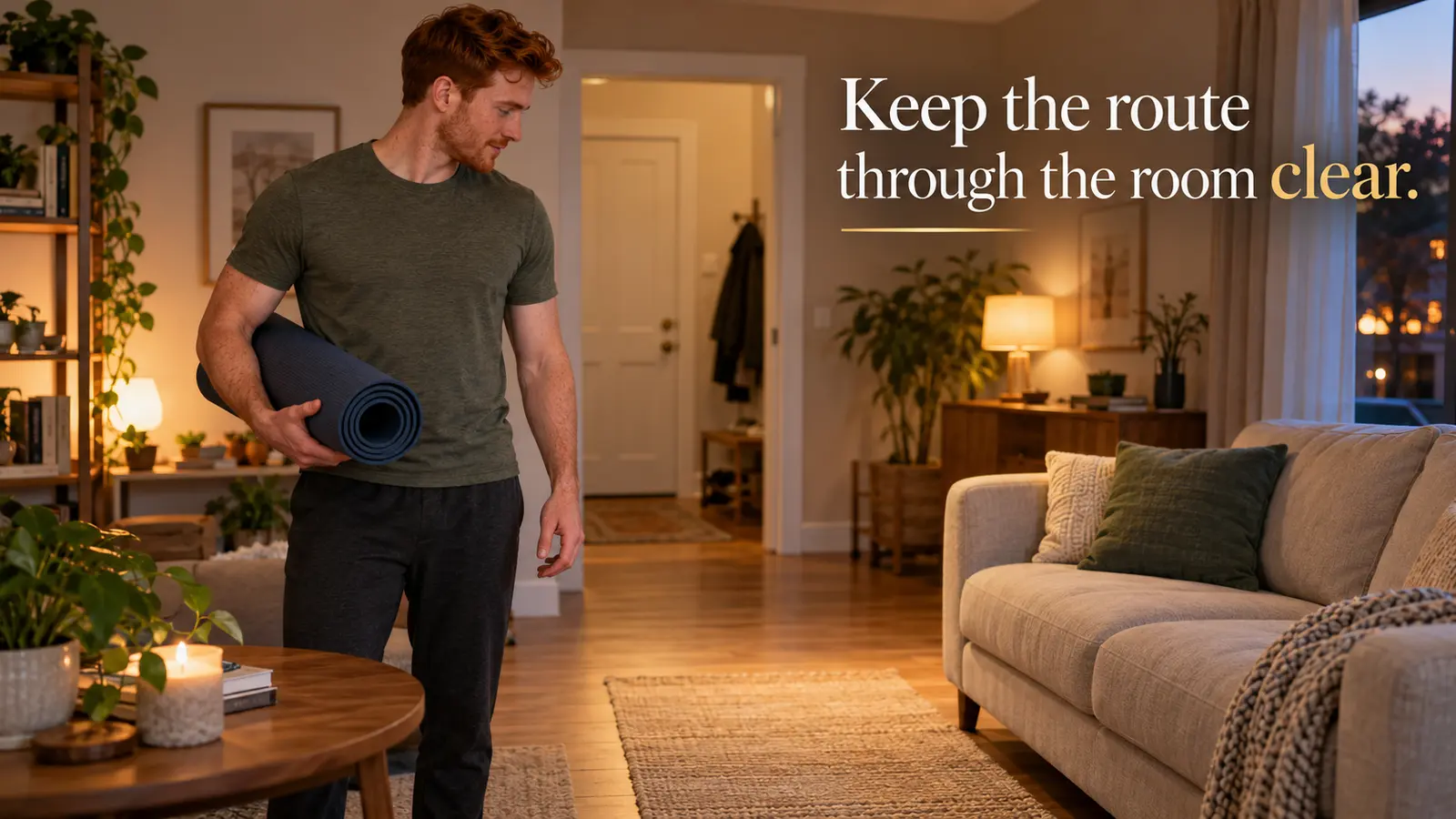
In a shared room, ask for a specific period rather than expecting everyone to infer that the mat makes the area unavailable. For example, explain which part you want to use and when you expect to put it away. Listen to the other person's requirements too.
An agreement about room use does not remove caregiving or other responsibilities. If someone needs you, respond appropriately. Choose a setting and opportunity that fit those responsibilities rather than using a practice to become unavailable without an actual handover.
A simple room-use note
You might write, “Use the area beside the sofa after the call ends; leave the doorway clear; put the mat away before dinner.” That note describes an arrangement. It does not reserve the room automatically or prove that others agreed.
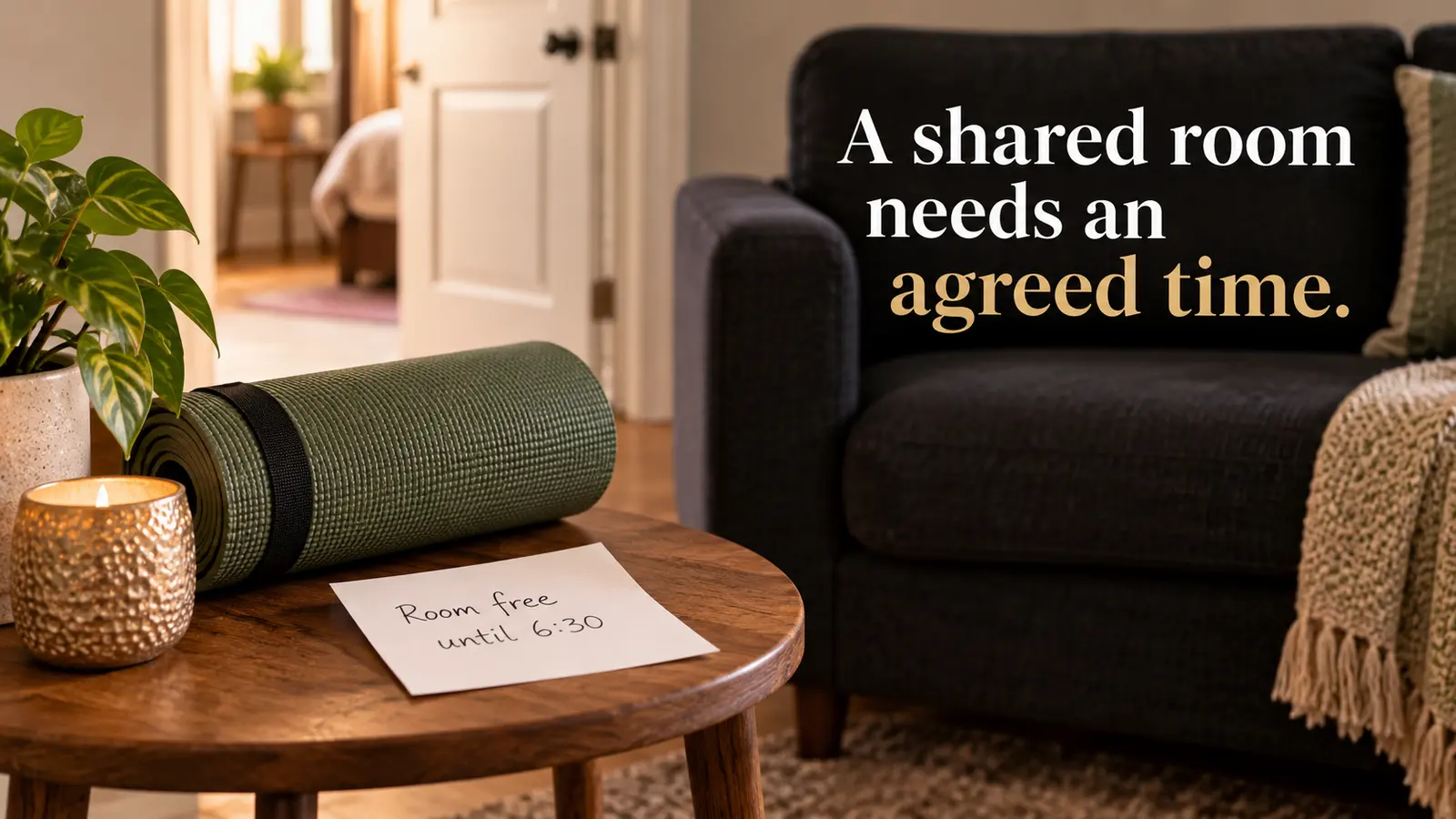
If plans change, revisit the arrangement. The household may need the space sooner than expected. Stopping, shortening the session through appropriate guidance or choosing another time are practical responses; you do not need to defend the original plan.
Check the surface and nearby objects
Inspect the actual surface and any mat according to their condition and the relevant instructions. Look for items you have overlooked, such as a loose cable, a small object under the mat or a damp area. Address the arrangement before playing the session.
This guide does not prescribe a particular flooring material, mat thickness or household substitute. Different practices and individual needs may require different choices. Ask the instructor about requirements instead of assuming that a soft surface or an extra layer solves every concern.
Keep objects used only for decoration out of the immediate practice area when they interfere with its use. You do not need candles, fragrances or a display of equipment to make a room ready. The practical question is whether the arrangement supports the selected session and ordinary access.
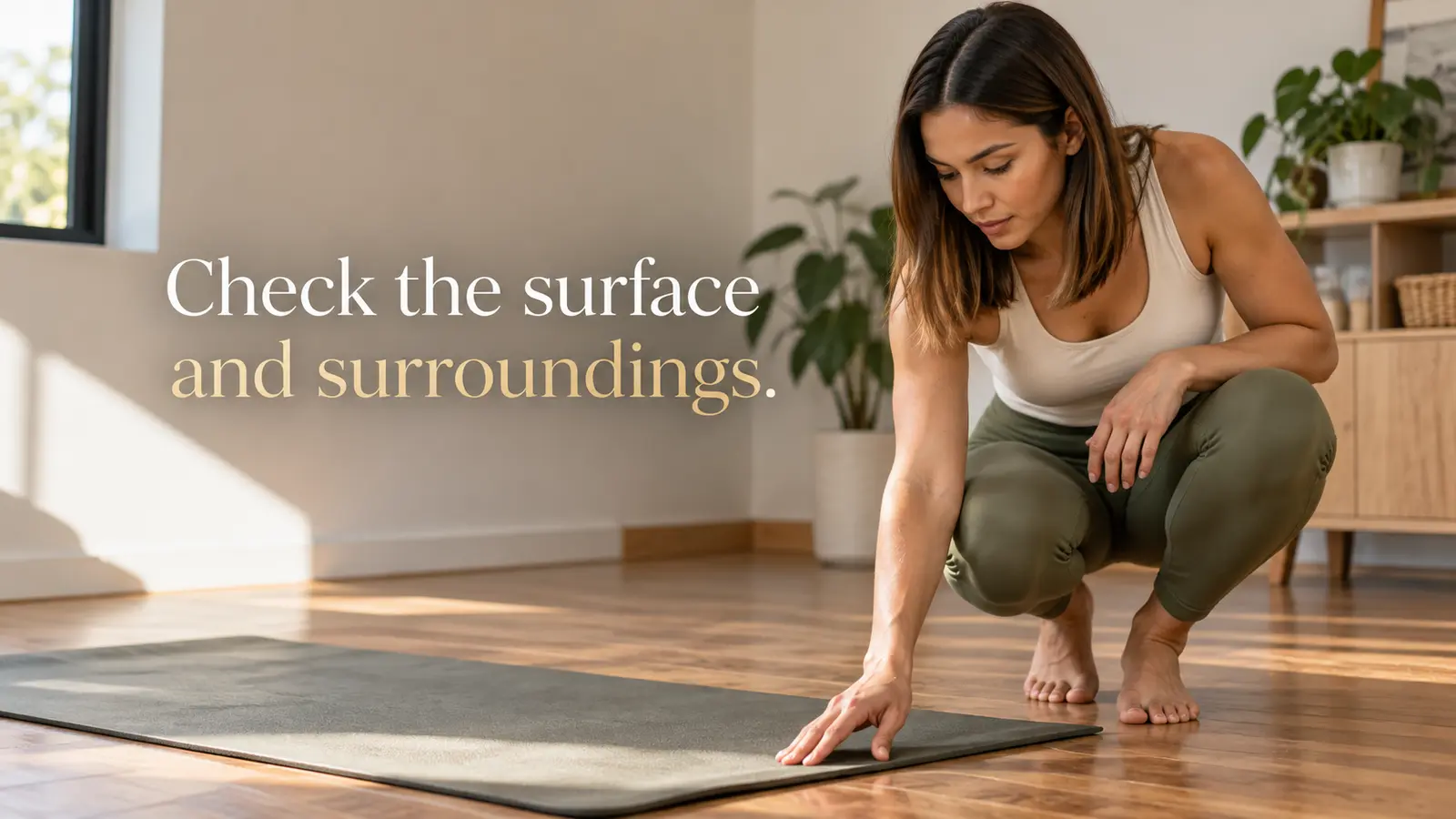
If you notice a problem you cannot resolve, leave it unresolved and choose another option. A written checklist does not turn a questionable surface or unstable object into an acceptable arrangement simply because you have acknowledged it.
Arrange the screen before you begin
Choose a position from which you can use the actual playback controls without repeatedly interrupting the session to search for them. Put the device on a stable surface suited to it. Check whether you can hear the guidance comfortably in the room.

Avoid assuming that the app offers a particular timer, voice control or automatic pause feature. Test the controls that are actually available. A translated menu or appealing preview image does not establish what the recording or player includes.
Think about the cable path if a device is connected to power. Keep the arrangement out of the movement area and everyday route. If you cannot achieve a workable setup, use another device position or choose another occasion rather than stretching the cable across the room.
For an overview of the available practice categories, explore SoulFul GLO's yoga and movement information. Check the actual session details before choosing; the overview does not certify that every recording fits a compact room or your individual requirements.
Let the room remain ordinary
Lighting should let you see the space and use the controls as needed. You do not have to reproduce a studio image, dim the room for every practice or add sound. An ordinary room can stay recognisably ordinary while you use one part of it for a session.
If you add audio beyond the instruction track, consider whether it makes the guidance harder to follow. Ask before using speakers in a shared space. A second sound source is optional, and it need not become part of the setup merely because other routines pair yoga and sound.
Choose clothing and any equipment through the actual session guidance and your needs, rather than trying to match the person in the video. This article does not require a purchase or claim that a particular brand of mat makes a session effective.
Leave a clear place for items you put aside. Moving a bag from the practice area into the doorway simply shifts the problem. The setup includes where everyday things go during the session and how you will restore them afterward.
Two fictional setup decisions
A living room between work and dinner
A fictional reader, Mina, shares a compact flat. The area beside the sofa becomes available after her housemate finishes a call, but a walkway must remain clear. She previews a session and finds that its movements extend beyond the gap she had planned to use.
Instead of trying to compress those movements, she chooses a different appropriately guided session whose stated requirements fit the arrangement she can provide. She checks the controls before starting and agrees when the room will return to everyday use.
The example illustrates a selection decision. It does not recommend a particular session or demonstrate a health outcome. Another reader with the same room might need a different practice, professional guidance or another setting entirely.
A bedroom with an inconvenient screen position
A fictional reader, Theo, can clear a suitable area for the session he has selected, but the phone would be difficult to operate from the planned location. Moving it to a stable nearby surface also keeps its cable out of the route he uses.
He checks playback before beginning. If the guidance is still inconvenient to follow, he can pause and change the arrangement. He does not continue merely to prove that practising in a small room is possible.
These are invented examples, not customer testimonials or room-safety certifications. Use them to identify the decision in front of you, then check the actual guidance, space and individual requirements involved.
Make putting things away part of the plan
A temporary setup is easier to repeat when its ending is clear. Decide where the mat and device will go afterward and which household items need to return. Avoid creating storage that blocks an exit, a needed cupboard or another person's belongings.
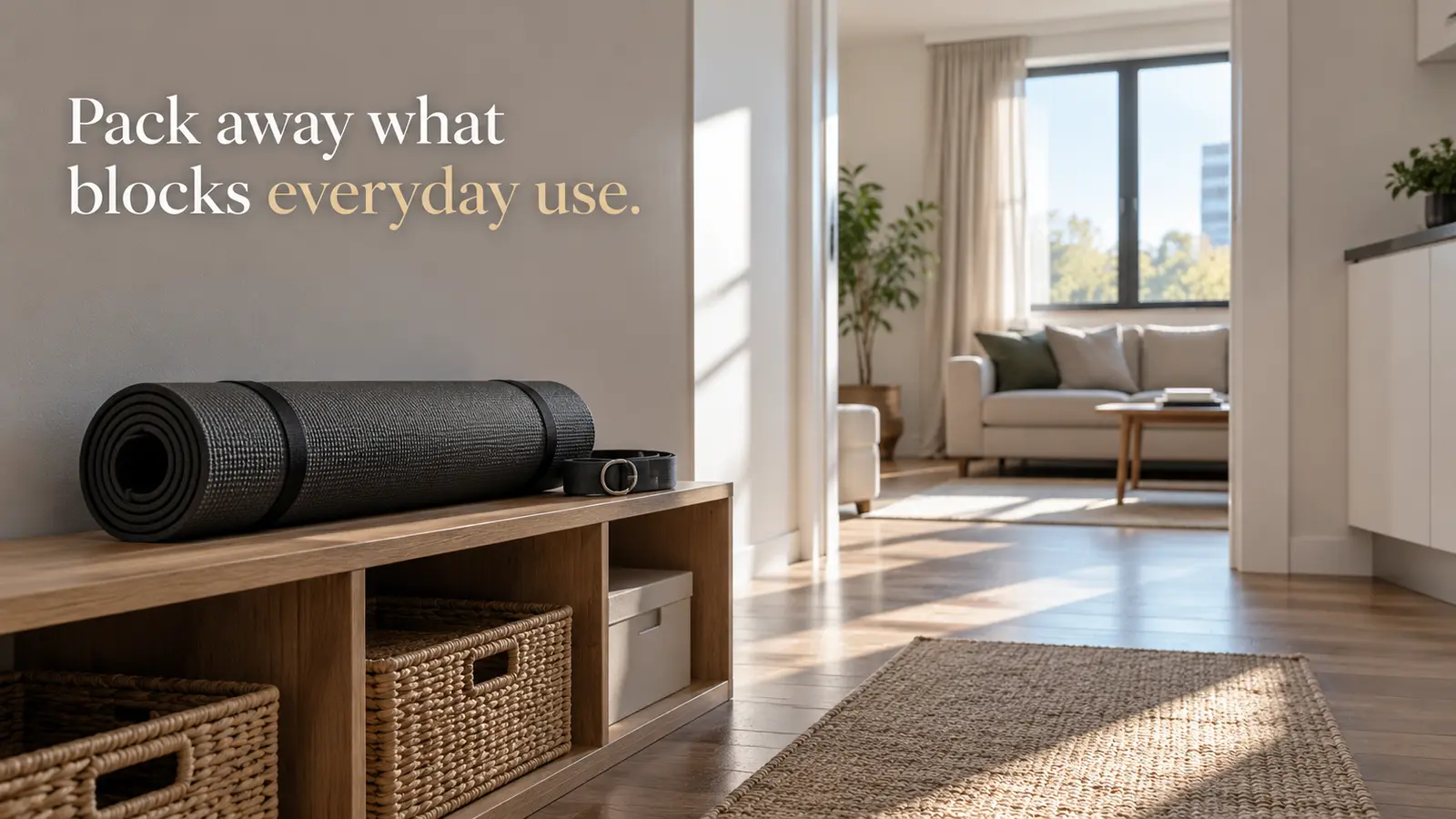
You can leave a short note about what was inconvenient: the screen was too far away, the room was needed earlier or the session required more space than expected. That observation can inform the next setup without becoming a score for the practice.
Change the arrangement that caused the problem rather than decorating the space to make it more inviting. If the room was unavailable, a different time may be relevant. If the instructions were unclear, a question for the instructor may matter more than moving the mat.
You can also decide that home is not the setting you want for this activity. A suitable class or another accessible option may fit better. Having a small home does not create an obligation to solve every practice requirement within it.
FAQs
How much floor space do I need?
Use the requirements of the specific session and instructor, including movement beyond the mat and any transitions. This guide supplies no universal dimensions. If the arrangement is uncertain, clarify it rather than guessing.
Does a mat fitting mean the session fits?
No. The mat's outline is only part of the arrangement. Nearby objects, movement, overhead space, controls and the household route can still matter. Preview the session before treating the mat as a complete measure.
Should I buy extra props for a small room?
Do not buy something solely because a room photograph includes it. Check the selected session's actual requirements and ask the instructor about appropriate options. Improvised household supports are not automatically equivalent to equipment specified in guidance.
Can I practise while other people use the room?
That depends on the arrangement, responsibilities and session. Discuss use, preserve access and change plans if necessary. This checklist cannot establish that a particular shared arrangement is suitable for everyone.
Is gentle yoga always suitable for beginners?
The word gentle does not establish individual suitability. NCCIH advises qualified instruction and attention to personal needs. Ask relevant professionals about health concerns and stop or seek appropriate help if a practice causes concerning symptoms.
When you want to choose the activity before arranging the room, revisit SoulFul GLO's practice chooser. Use the actual session information and your circumstances to select a workable option; the room can remain an ordinary shared space afterward.