
A yoga mat needs cleaning, and the first search result offers a recipe. Another recommends soaking it, while a third says never to do that. Before choosing a method, identify the mat you actually own. A useful care routine starts with the manufacturer's instructions for that product, rather than a universal mixture or an assumption about its material.
This guide helps you find, interpret and carry out those instructions. It does not offer a disinfecting protocol, determine whether a damaged mat is safe or recommend a particular brand. The aim is a practical sequence you can repeat without guessing which cleaner, drying method or storage arrangement your mat can tolerate.
Quick answer
Find the mat's current care guide, match the product name and material, and follow its stated cleaning and drying method. Prepare the required space before wetting the mat. Check the whole surface and underside before rolling or storing it. If the instructions are missing or contradictory, ask the maker or choose another arrangement for practice while you clarify them.
Keep cleaning, drying and readiness for use as separate decisions. A mat can look tidy while still being damp, slippery or worn. A fresh smell is not proof of disinfection or good grip. Check what the product guidance actually establishes and avoid adding a stronger claim simply because the routine feels thorough.
Find the guide that belongs to this mat
Look for a product label, purchase record, packaging or a model name you can match to the maker's own information. Similar colours and textures are not enough to identify a material. If the product has several editions, check whether the care instructions distinguish them. Save the useful page somewhere you can find again without searching through advertisements.

Read the care section rather than relying only on a short description of what the mat is made from. A surface coating or construction detail may matter. The name of a broad material does not supply every cleaning instruction. If the guide does not answer a practical question, keep the answer unknown instead of filling it with advice for another mat.
Manduka's care guide, for example, gives different methods for its mat families and warns against certain washing and soaking methods. It is evidence that a manufacturer's product-specific guidance matters, not a recommendation to apply Manduka's directions to every brand. Use your own mat's current instructions as the decision source for the routine below.
If you bought the mat second-hand, ask for any available product information. You may still be unable to identify it confidently. Tell the maker what you know and ask a narrow question about care. Do not turn a resemblance in a photograph into a confirmed model, or assume a previous owner's routine establishes compatibility.
Translate the instructions into a small care plan
Identify the action the guide describes: wiping, washing or another named process. Notice whether it specifies a product, dilution, cloth type, contact time, rinsing or drying condition. These details belong together. Taking a cleaner from one guide and a soaking time from another does not create a tested combined method for your mat.
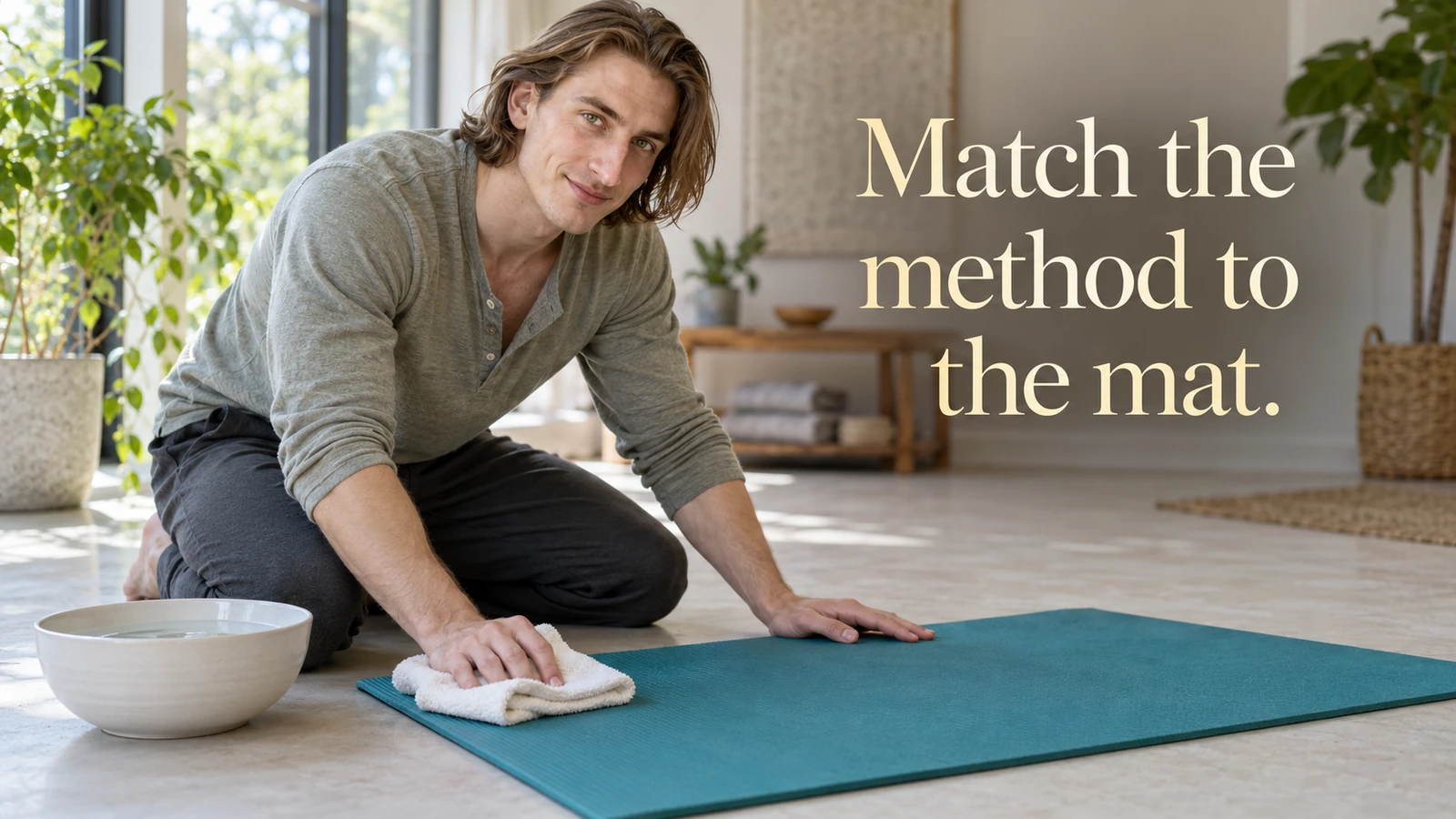
Separate a routine wipe from a deeper clean if the manufacturer makes that distinction. Do not assume that more liquid, longer contact or stronger scrubbing produces a better result. The practical target is following the stated method. If you need a disinfecting process for a particular setting, ask the responsible provider for an appropriate compatible protocol.
Prepare only the products and tools actually required. Keep their labels available while you work, particularly if a cleaner has its own directions. Do not mix cleaning products or improvise a stronger solution. This article does not supply a homemade recipe or override product safety instructions, even when an online recipe describes itself as natural.
Decide where the mat will dry before beginning. A plan that ends with putting a wet mat straight into a bag is incomplete. Check the maker's drying directions and choose a space that fits them without blocking a walkway. You may need to clean at a different time if there is nowhere suitable to leave it.
Set up a manageable cleaning space
Move ordinary clutter so you can handle the mat without stepping over objects or carrying drips across a room. Keep the required cloth or cleaning tool within reach. A small clear area is enough if it lets you follow the product instructions. You do not need to create a studio or buy a collection of accessories for a care task.
Notice the surface under the mat as well. Follow the cleaner's precautions for nearby materials and choose an arrangement that will not damage furniture or flooring. If a guide requires a process you cannot perform in your current space, pause and clarify an alternative. Improvising over an unsuitable surface can create a second cleaning problem.
Keep any product out of reach of children or animals as its label requires. Avoid using a stronger smell as a measure of progress. You can work without turning mat care into aromatherapy or an additional wellness ritual. The purpose here is practical maintenance, with the product instructions still available to check when needed.
If you share the room, agree on where the mat can remain while drying. A broad rail or clear flat area may be workable only if the manufacturer's guidance permits that arrangement. Do not leave a drying mat across a doorway or place it where someone may assume it is ready to stand on.
Clean the mat using the matched method
Follow the sequence in the guide. Work over the sections it identifies rather than guessing which side needs attention. If both surfaces require care, allow space to handle them without transferring debris back to the first side. Keep the instructions nearby so a routine interruption does not leave you trying to remember an unfamiliar step.
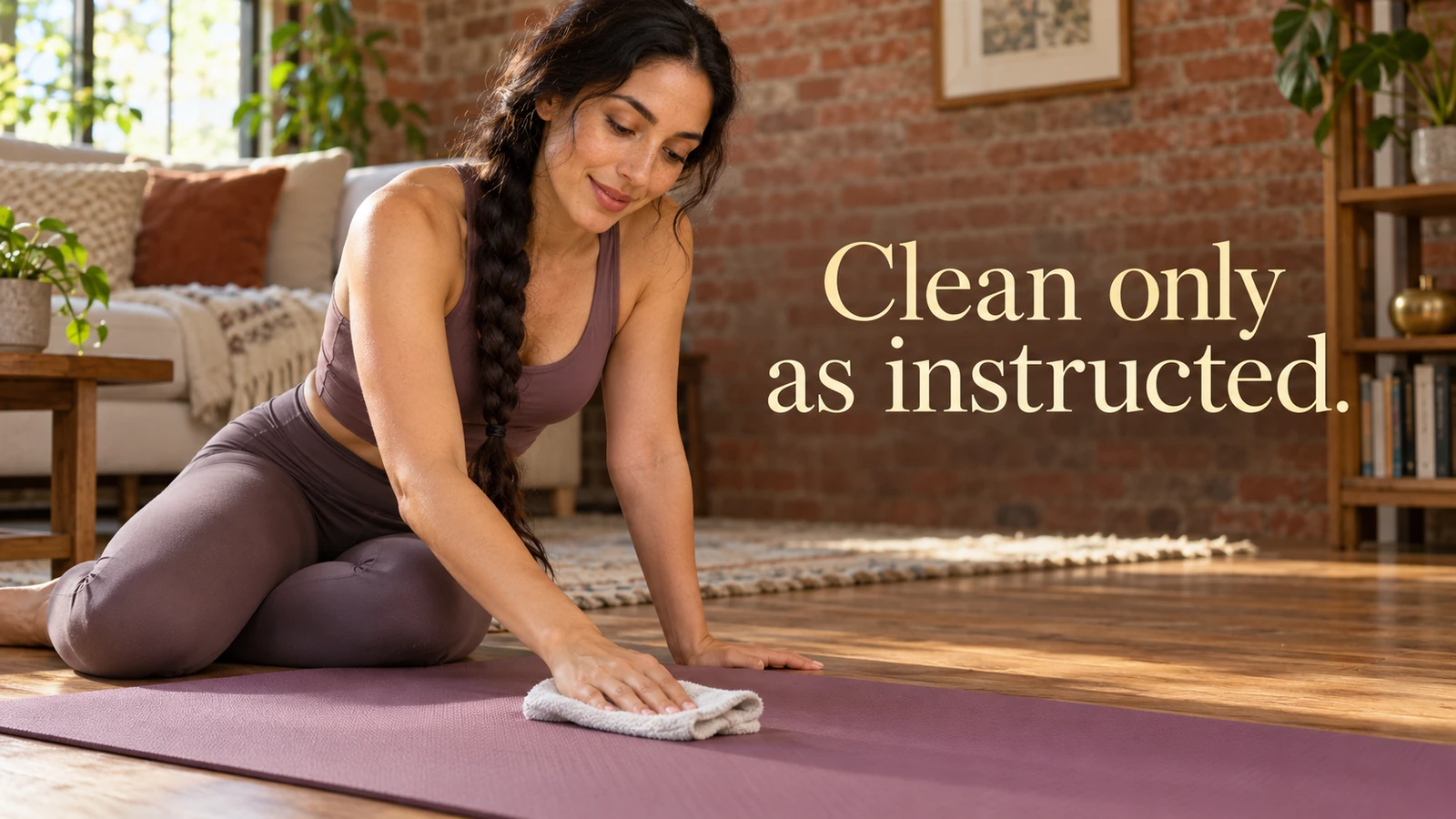
Watch what the surface is doing as you work. Unexpected colour transfer, a changed texture, persistent residue or another surprising result is a reason to stop and ask the maker. It is not a prompt to scrub harder or add another product. A general article cannot diagnose a material change from a description alone.
Avoid adding extra treatment simply because a stain remains. Appearance and the outcome of a care method are not identical questions. If a mark does not lift with the specified process, ask what is appropriate next. Some marks may need to remain; this guide does not promise that every mat can be returned to a new-looking condition.
Keep a partially completed process clear if you are interrupted. Put products away safely and remember which step remains. Do not roll a damp mat just to clear the floor quickly. If the interruption means you cannot finish the directions, follow the product's instructions for handling that situation or contact the maker for guidance.
Give drying its own place in the routine
Use the conditions the manufacturer specifies. Avoid assuming that direct sun, a heater or a machine is an acceptable shortcut. Heat and exposure recommendations vary, and a faster method found elsewhere may not suit this product. If drying takes longer than the time you have, adjust the practice plan rather than forcing the care schedule.
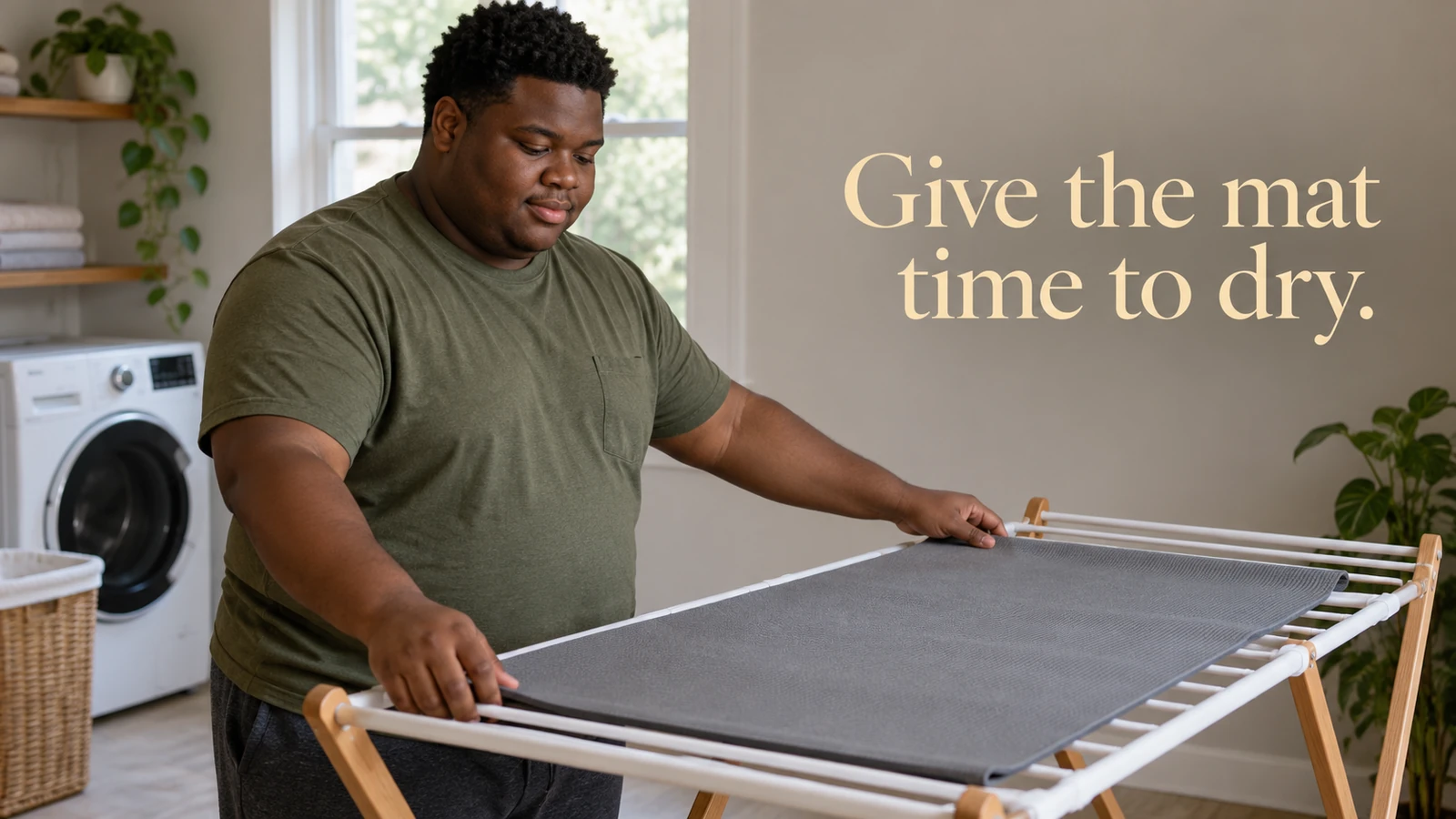
Check the areas that are easy to overlook: an underside against a surface, a folded edge or a place where the mat rests on a support. A dry-looking upper surface does not show what is underneath. Move or turn the mat only as its care instructions permit, giving attention to any area that has remained covered.
Do not borrow the drying time from another household item. Room conditions and the mat itself can differ. Follow any stated guidance, then check its actual condition before putting it away. This article supplies no universal number of minutes that guarantees a mat is dry, clean, hygienic or ready to use.
If a mat remains unexpectedly wet, develops a persistent odour or shows a material change, seek product-specific advice. Repeating the cleaning process without understanding the problem may not help. A studio-owned mat belongs under the studio's care system; do not apply an unapproved product to shared equipment because you use it at home.
Two fictional care decisions
Nia finds two online instructions that appear to conflict. One is for the exact model on her purchase record; the other concerns a visually similar mat made from a different material. She follows the matched guide and leaves the other method out. She also moves the task to the morning so the mat has an appropriate place to dry.
Nia does not infer a disinfecting claim from completing the cleaning routine. Before storing the mat, she checks the underside as well as the face she wiped. The fictional example illustrates matching instructions and planning drying space. It does not demonstrate that one brand or method is suitable for an unidentified mat.
Theo borrows a mat for a class and notices a mark after using it. Instead of spraying his usual household product, he asks the owner about the mat's care instructions. The owner prefers to handle the cleaning. Theo returns the mat as agreed and uses a different arrangement for his next session while his own mat is being cleaned.
Theo's decision avoids treating permission to practise on a mat as permission to alter its care routine. He has not established what the mark is or how it should be removed. The example is about responsibility for shared equipment, not a recommendation to leave every mark untreated or a judgment about the owner's cleaning choices.
Check storage and the next use
Store the mat according to its guide once it is fully dry. Notice whether the chosen bag or cupboard traps moisture or forces a damaging fold. Keep it away from any conditions the maker excludes. The fact that a storage space is convenient does not establish that it is suitable for this particular material and construction.
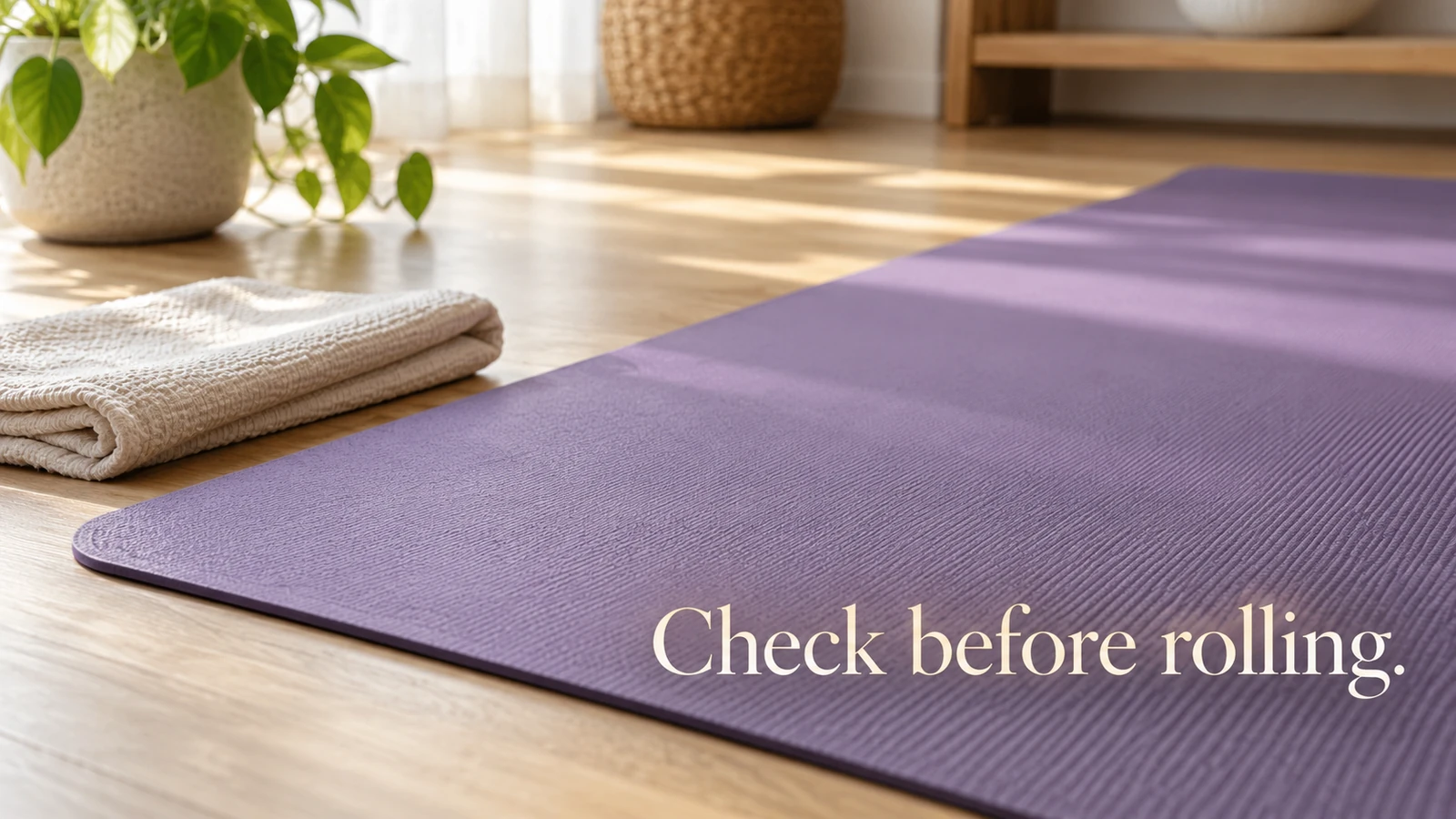
Before practising again, inspect the mat and the surface beneath it. If it is unexpectedly slick, curled, damaged or unstable, do not assume cleaning has made it ready. Seek appropriate product advice or use another suitable arrangement. A care article cannot certify grip, repair damage or decide whether a mat should be replaced.
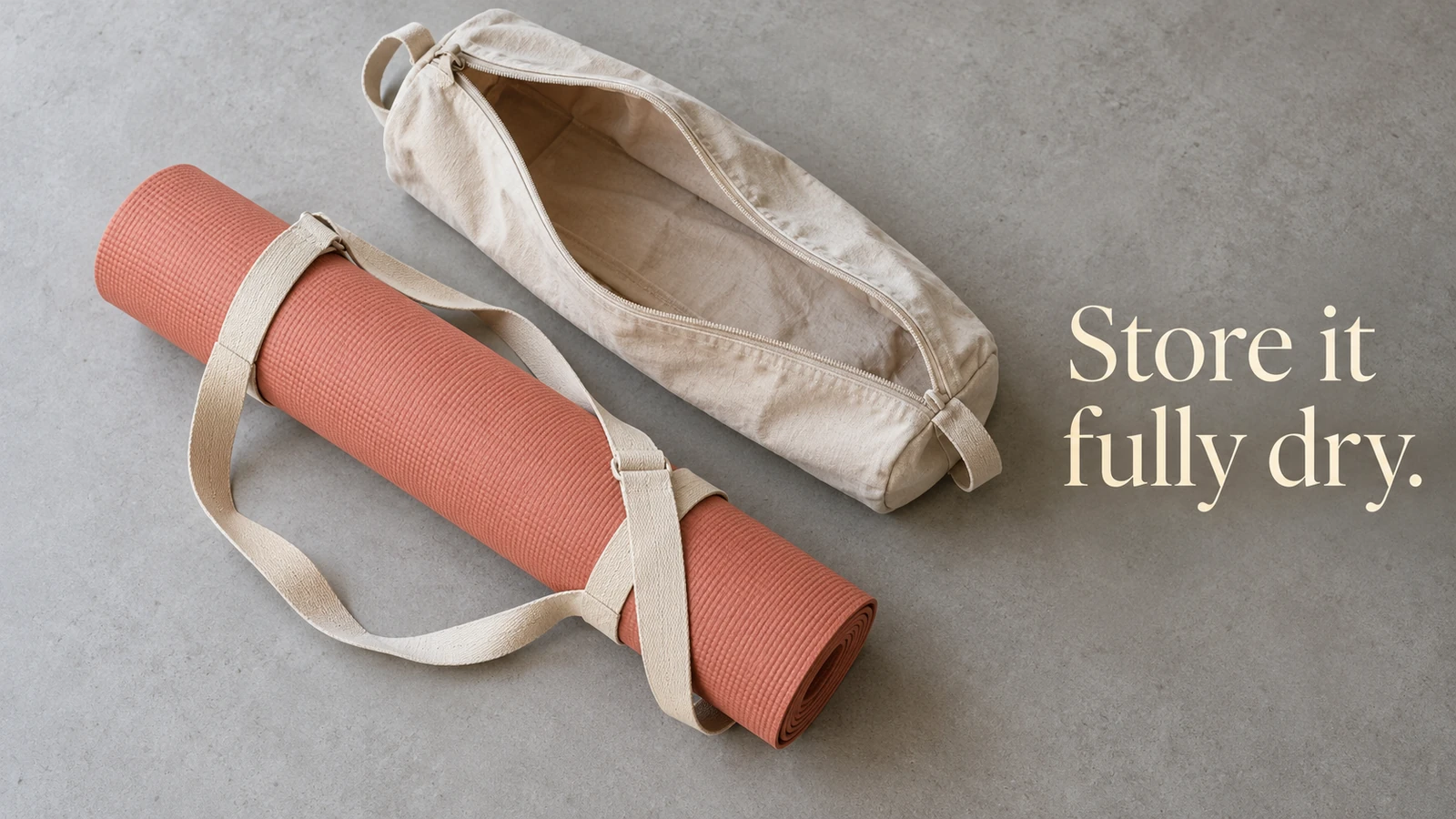
Keep the next routine simple by retaining the model information and matched instructions. You do not need a detailed journal or a new cleaning schedule with arbitrary targets. Follow the maker's recommendations and the requirements of the setting where the mat is used, revisiting the guidance when the product or circumstances change.
Arrange the rest of your practice
Once mat care is settled, SoulFul GLO's small-space guide can help you arrange an ordinary practice area. It addresses room layout and session needs rather than deciding what cleaning method belongs to a particular mat.
Read the small-space yoga guide
If your mat is still drying, you can choose another suitable activity rather than rush it into use. The practice chooser offers a broader way to consider meditation, sound or yoga without requiring a particular routine today.
Frequently asked questions
Is one cleaning recipe suitable for every yoga mat?
Do not assume so. Match the actual model and its current care instructions. A method suitable for a different material or construction is not automatically compatible with your mat.
Can I roll the mat when only the underside is damp?
Follow the maker's drying and storage instructions, checking both sides and covered areas. Do not use the appearance of the top surface as the only evidence that the whole mat is ready to store.
Does a pleasant smell prove that the mat is disinfected?
No. A scent does not establish a disinfecting result. Cleaning and disinfection are different claims. Use an appropriate product-specific protocol when the setting requires disinfection rather than inventing one from a fragrance or visual check.
What if I cannot identify a borrowed mat?
Ask the owner before applying products or changing its care routine. Permission to use equipment does not necessarily include permission to clean it however you choose. Leave unanswered product questions open until you can obtain relevant guidance.