
You have started a sound journey at home when your pet comes to the door or needs the ordinary attention you were expecting to give later. The recording can wait. Pause it before responding so that the audio does not compete with the task in front of you or restart unexpectedly through a speaker.
This guide concerns organising your own optional listening around an animal already in your care. It does not offer animal training, veterinary advice or a claim that sound journeys help pets. Choose audio for your listening, avoid directing it at an animal and follow appropriate care advice when an animal seems unwell or distressed.
Quick answer
Keep the pause control within reach and choose a setup that lets you notice your surroundings. If your pet needs attention, stop the audio and respond to the actual situation. Once the task is finished, decide whether you want to resume, replay a short part or leave the session for another time. Do not use the recording to delay care or block out signs you need to notice.
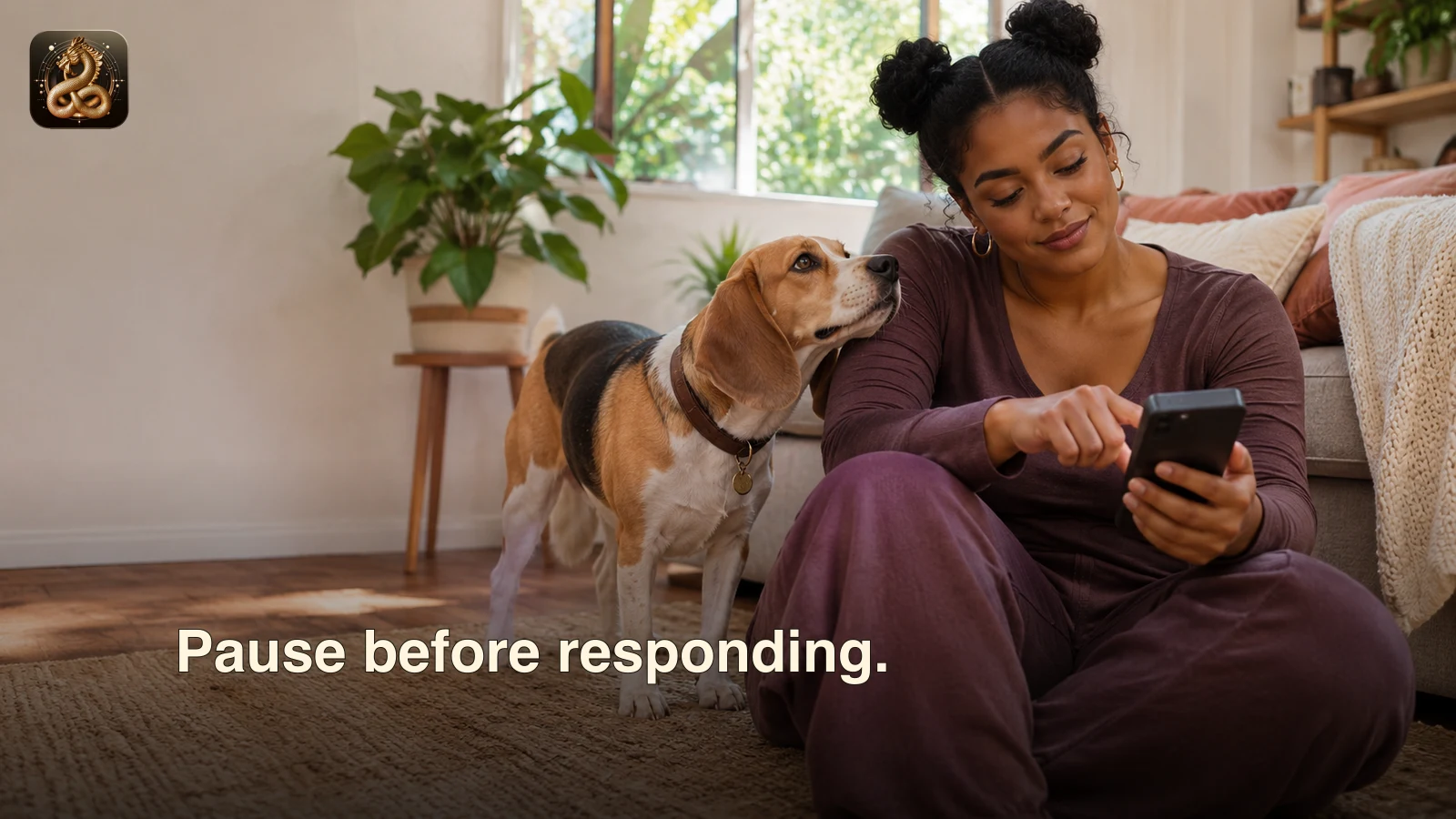
A sound journey is optional listening. Its duration does not create an obligation to stay until the end. You can finish after a few minutes without making up the unused time later. The useful arrangement is one you can interrupt when your household requires it, rather than one that depends on nobody needing you.
Choose the occasion before the recording
Look at the next ordinary care task you already know about. If feeding, a walk or another responsibility is due shortly, do that first or choose a later listening occasion. This is a scheduling decision, not a technique for making an animal wait through your session.
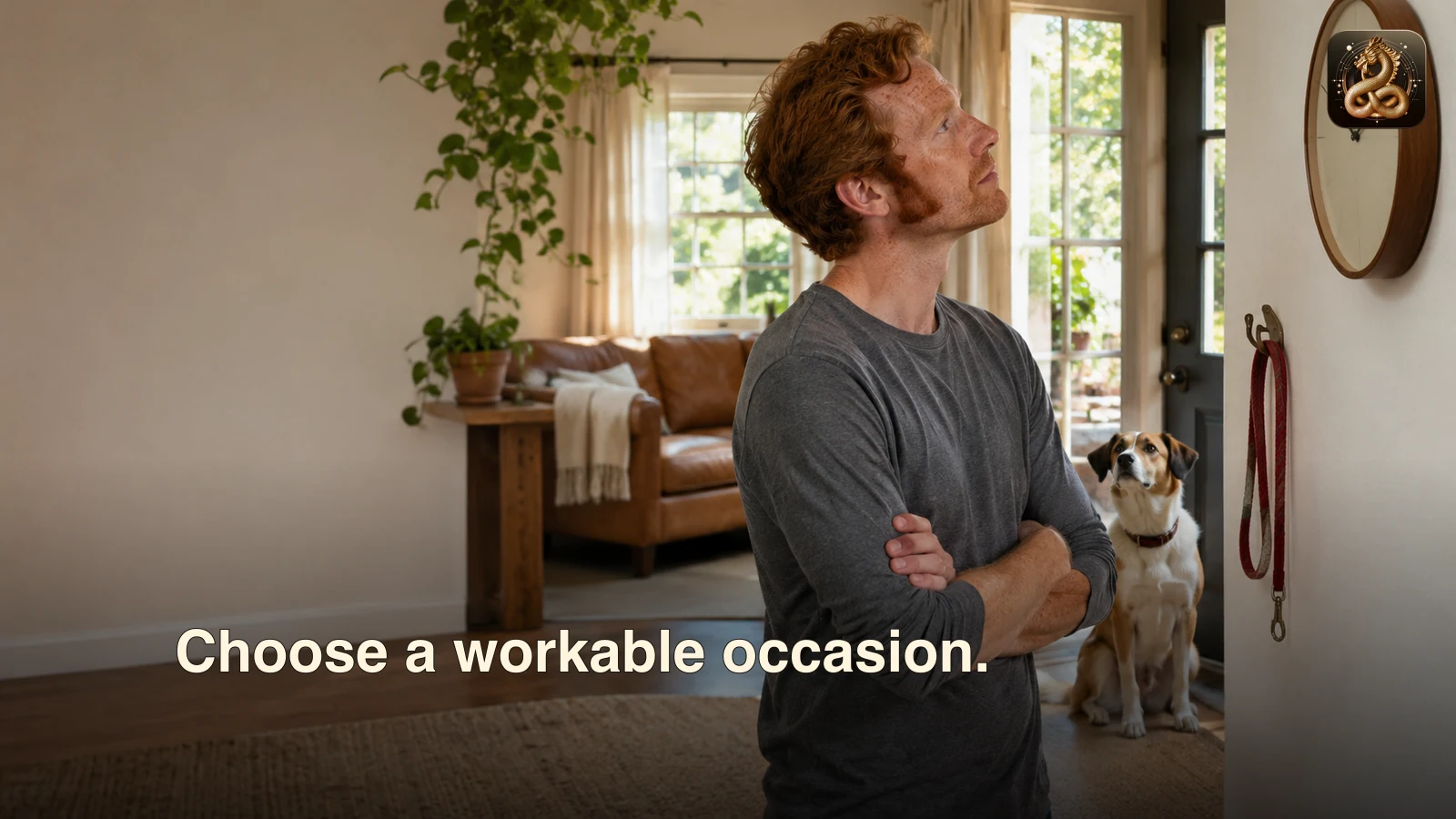
Leave room for the unexpected as well. An apparently quiet room does not guarantee uninterrupted time. Decide whether you are available to listen while remaining responsive, or whether another occasion is better. Do not start a session while performing a task that needs your full attention just because the track is short.
Consider the other people in the household. If someone else is genuinely taking responsibility for a care task, confirm that arrangement directly. A closed door or another person being nearby does not establish that they have agreed to monitor your pet. Keep the handoff separate from your hope for a quiet interval.
Set up audio for your own ears
Choose a comfortable listening level and keep the recording from becoming the dominant sound throughout the home. A track selected for a person is not automatically appropriate enrichment, a calming treatment or a sleep aid for an animal. Avoid making those assumptions from a peaceful title or a familiar instrument.
Think about what your listening equipment prevents you from noticing. Headphones may reduce your awareness of the room; speakers affect others sharing it. Neither option is automatically best. Choose for the actual care responsibility and surroundings, and leave audio off when you need to hear something reliably.
If you are comparing playback arrangements, read SoulFul GLO's guide to headphones or speakers for a sound journey. That choice concerns the listener's setting. It does not establish a safe volume, sound preference or behavioural effect for a particular animal.
Keep a clear route to the pause control
Before beginning, check where the actual playback control is. You should not need to search through several screens while an animal waits. If your usual controls are unreliable or hard to reach, fix that ordinary setup problem or choose another time. Do not assume a spoken command will work without checking.
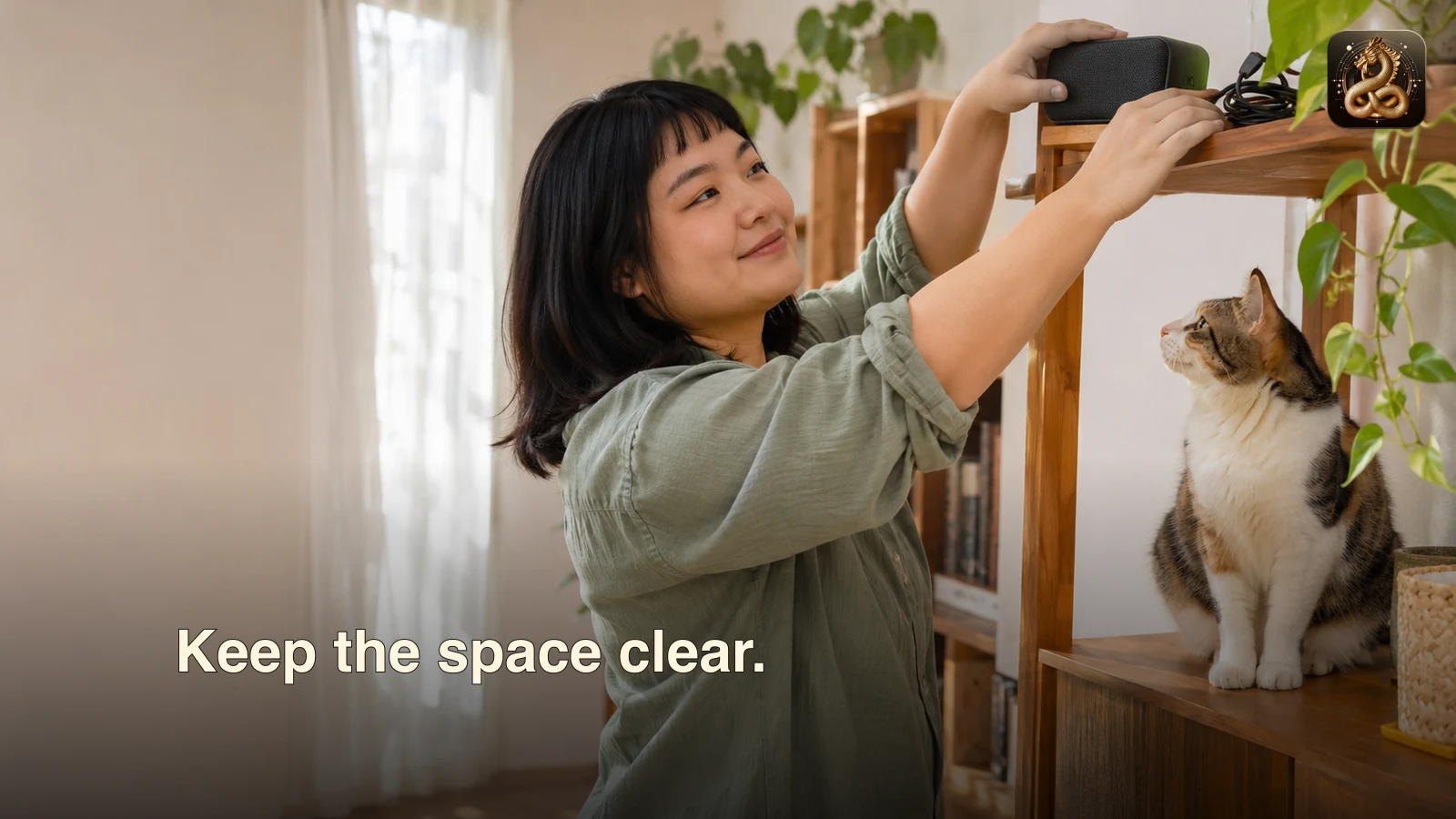
Place equipment where it will not obstruct the space you or your pet use. Keep cables, small accessories and devices out of the way according to the household arrangements you already understand. This guide cannot assess your particular room, animal or equipment. Remove a setup that creates a problem rather than trying to listen around it.
Use a listening posture from which you can comfortably stop and attend to the room. You do not need to choose a position that makes getting up difficult to make the practice feel more serious. If your current circumstances require frequent movement or supervision, a recording may simply be inconvenient today.
Respond to the interruption before interpreting it
When your pet needs attention, pause the player and check what is actually happening. An ordinary request, an unfamiliar noise and an urgent problem require different responses. Do not decide that the animal is responding to the sound journey just because the two happened together.
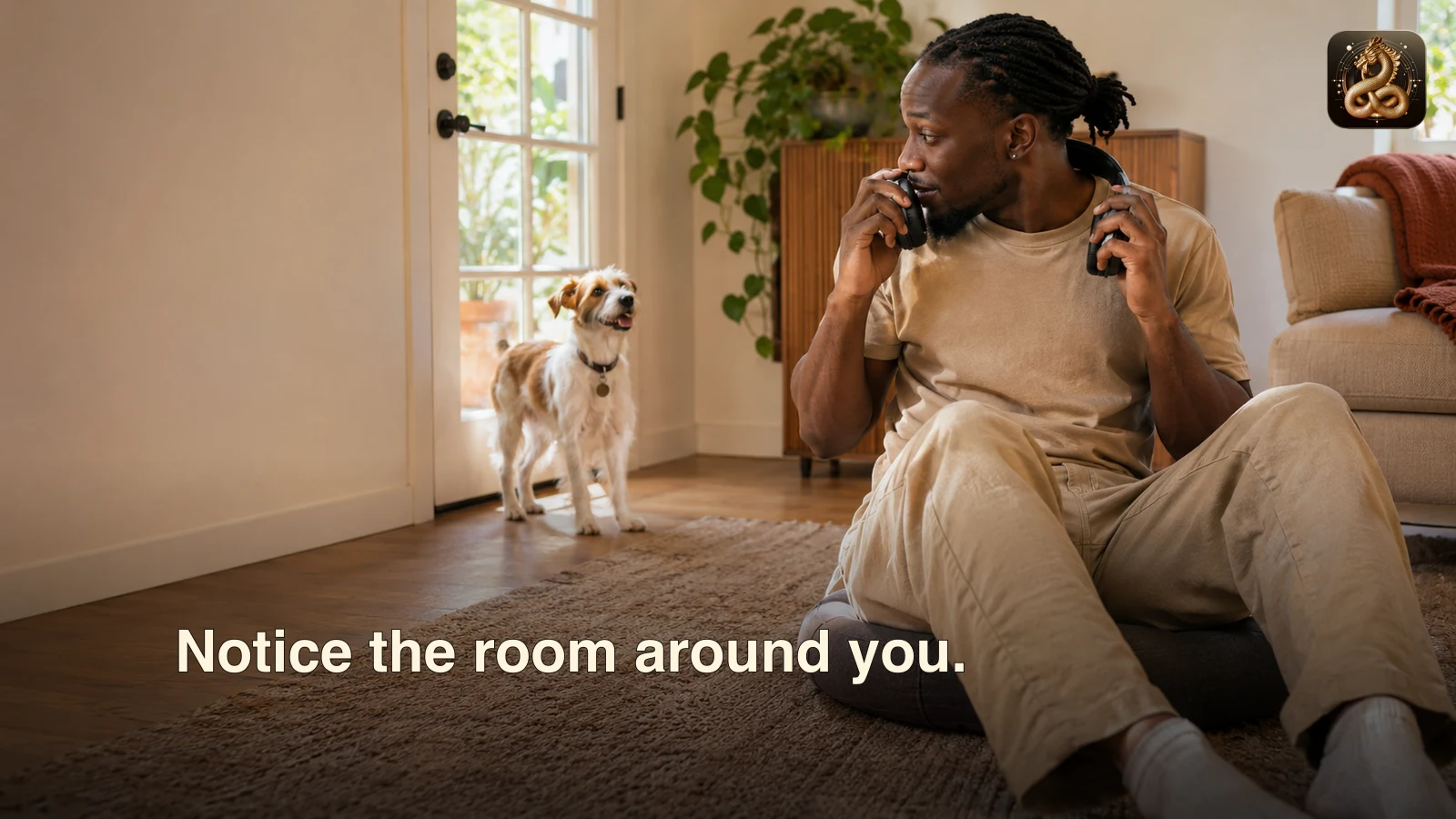
Follow the care arrangements and professional advice relevant to the animal. The recording supplies no basis for interpreting behaviour, evaluating symptoms or choosing a treatment. If something seems wrong, address that through the appropriate veterinary or other legitimate care route rather than waiting to see whether the track settles the situation.
If nothing requires action, you can still choose to finish the audio. Your willingness to continue matters too. There is no need to remain in a session because the interruption turned out to be minor. You can spend the time with your pet, do another ordinary activity or return to listening later.
Stop playback before changing rooms
Pause before moving away from a speaker or leaving headphones behind. Otherwise, the recording may continue in a room where you are no longer listening. Check that the sound has actually stopped rather than assuming that closing an app or putting a phone down pauses it.
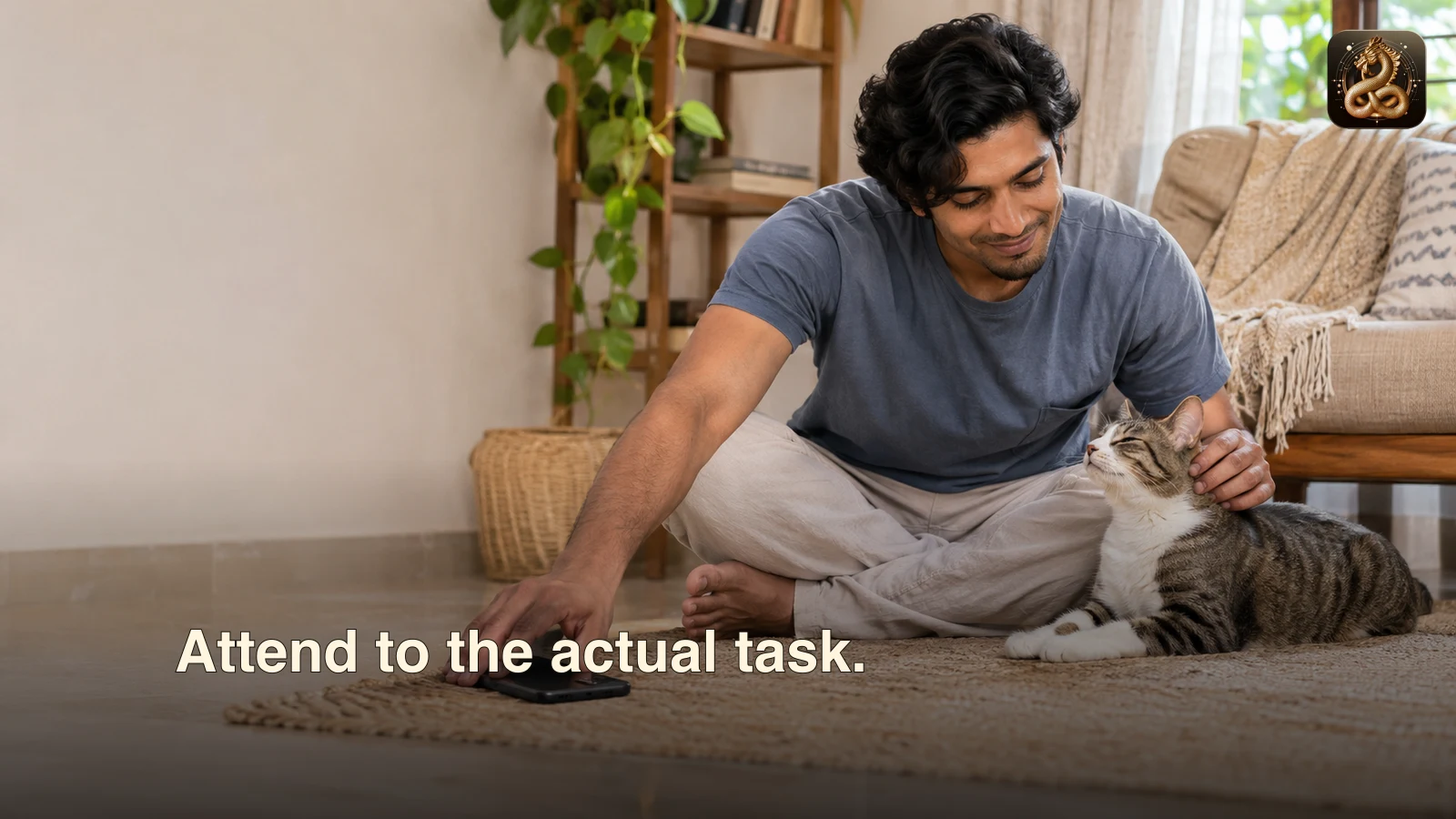
If you need to carry your device, attend to the immediate task before adjusting playback. You do not need to find a perfect stopping point in the music. A pause in the middle of a sound is an acceptable practical ending when another responsibility takes priority.
Afterward, check whether the player has a queue or repeat setting that could restart the audio. Use only controls you can verify on the actual player. The article does not assume that any service offers a particular timer or lock-screen control, and a setting on one device may not carry to another.
Decide whether the original session still fits
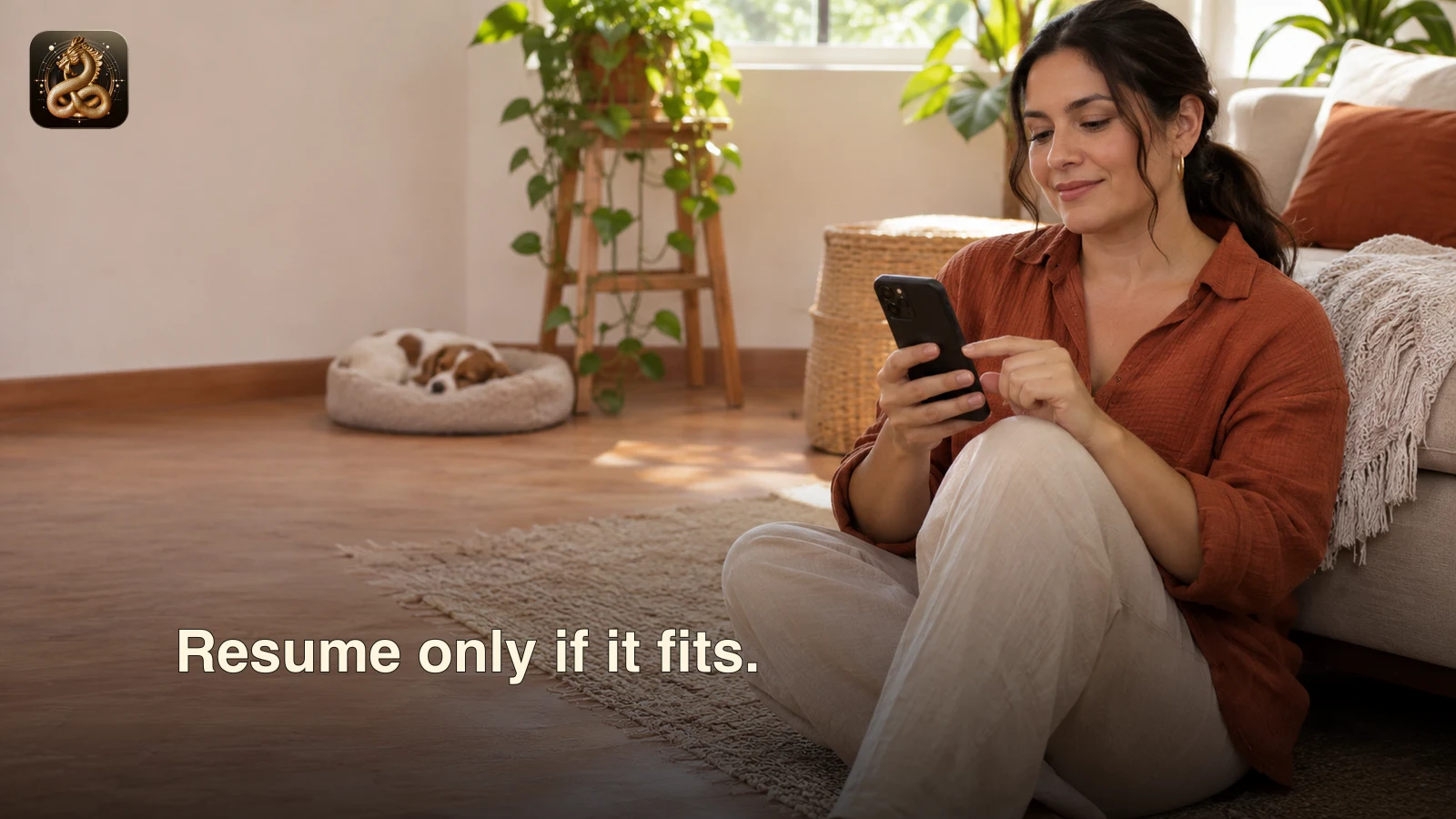
When you have finished responding, ask whether you now want to listen. The interruption may have changed your available time or what you feel like doing. A session started before a household task does not have to continue after it. Leaving it unfinished can be the simplest decision.
If you resume, first check the volume and the room again. The device may be in a different place, another person may have arrived or your pet may now be beside the speaker. Choose the setup for the present situation rather than restoring it automatically because it worked earlier.
You can replay a small part if it helps you return to the sound you were following. You can also continue from the pause without reconstructing everything you missed. A sound journey is not an examination in remembering the track, and this exercise does not require a complete listening record.
Resume with one sound rather than a catch-up task
After pressing play, notice a sound that is actually present. It might be a sustained tone, a repeating phrase or the way one sound fades. Choose something you can hear comfortably. There is no need to recover the attention you had before the interruption or to compare the two periods of listening.
If you cannot settle on a sound you want to follow, stop again. The practice need not prove that you can ignore household activity. You can choose silence or another recording on another occasion. A busy interval is not evidence that a particular sound has failed or that you have used the session incorrectly.
For a different interruption involving spoken instructions, use the guided-meditation interruption guide. A sound journey without instructions gives you a different restart decision: you may simply choose a current sound rather than recovering a step the guide asked you to follow.
Two fictional listening decisions
In this invented example, Leah starts a recording while sitting in her living room. Her dog approaches at the time they normally go outside. She pauses the track and takes care of that routine. When she returns, she has other plans and leaves the recording unfinished. Nothing about the listening exercise requires an extra session that evening.
Another fictional listener, Dev, pauses when his cat knocks an ordinary object off a low shelf. He checks the situation, addresses what needs attention and puts the device somewhere more suitable. Later he chooses to resume at a comfortable level. He follows the sound then playing rather than trying to recreate the earlier mood.
These examples illustrate the listener's choices. They are not reports about animal behaviour or proof that any audio changes an animal's feelings. The relevant decisions are pausing, attending to a real responsibility and choosing whether listening still fits afterward. An actual concern about an animal needs its own appropriate response.
Change the setup if interruptions are frequent
Notice the practical pattern without making it a judgement about your pet. Perhaps you start just before a regular care task, put the player beside a busy doorway or rely on quiet at an active time of day. You may be able to change the occasion rather than repeatedly trying to finish the same recording.
Choose a smaller listening interval if that fits, but do not treat brevity as a guarantee against interruption. You can also listen when another person has explicitly agreed to take responsibility, if that is a real option in your household. Keep the arrangement clear and do not assume agreement from silence.
It may be better to skip recorded audio on some days. An optional meditation habit should leave room for the circumstances you actually have. You can return when the household arrangement allows it without promising a daily duration or making your pet responsible for whether you completed a personal routine.
Keep observations modest
If you remember the occasion later, describe what you observed: you paused, attended to a task and resumed or stopped. Avoid turning that sequence into a claim that a track made you more patient, changed your pet's behaviour or produced a reliable emotional result. One ordinary occasion cannot establish those effects.
You can still have a preference. “I preferred listening after the walk” describes a practical choice. It does not need to become a general recommendation for everyone or a claim about the ideal time to meditate. Your setting, responsibilities and willingness to listen may differ on another day.
The suggestions here are original editorial guidance for arranging optional personal listening. No study is offered as validation of this particular routine. It is separate from animal care advice, clinical treatment and training. Keep those boundaries when discussing your experience with someone else or choosing another recording.
Frequently asked questions
Should I finish the track before responding?
No. Attend to the actual responsibility when it arises. Pause the audio rather than using the remaining duration as a reason to delay. This guide does not assess urgency; use the care judgement and professional guidance appropriate to the animal and situation.
Can my pet listen to the same recording?
This article makes no recommendation to play sound journeys for animals. It concerns your own listening. Do not assume a recording intended for people is suitable animal enrichment or treatment. Seek appropriate guidance about any animal-specific sound or behavioural question.
Do I have to start again from the beginning?
No. When you genuinely want to resume, continue from the pause or replay a short part. Stop if the current situation does not suit listening. There is no requirement to reconstruct your earlier attention or complete a certain number of uninterrupted minutes.
What if I never get a quiet interval?
Leave the recording for another occasion or reconsider the practical arrangement. Another household member's real agreement may help when available, but it is not a requirement you can impose. Choose a routine that remains optional and responsive to your responsibilities.
Let listening wait when care comes first
Keep the pause control available, respond to the real situation and decide afterward whether audio still suits the occasion. You can resume without catching up or finish without an apology to the track. The recording is there for an optional listening interval; it does not set the timetable for your household.