
Quick answer
Pause the recording if you can. When you return, check whether you still know what the speaker is inviting you to do and whether you have time for the rest. Resume when both are clear. Replay a short section if you missed a necessary instruction. End the session if the interruption changed what you need to do next. The part you already practised still counts as time you chose to spend.
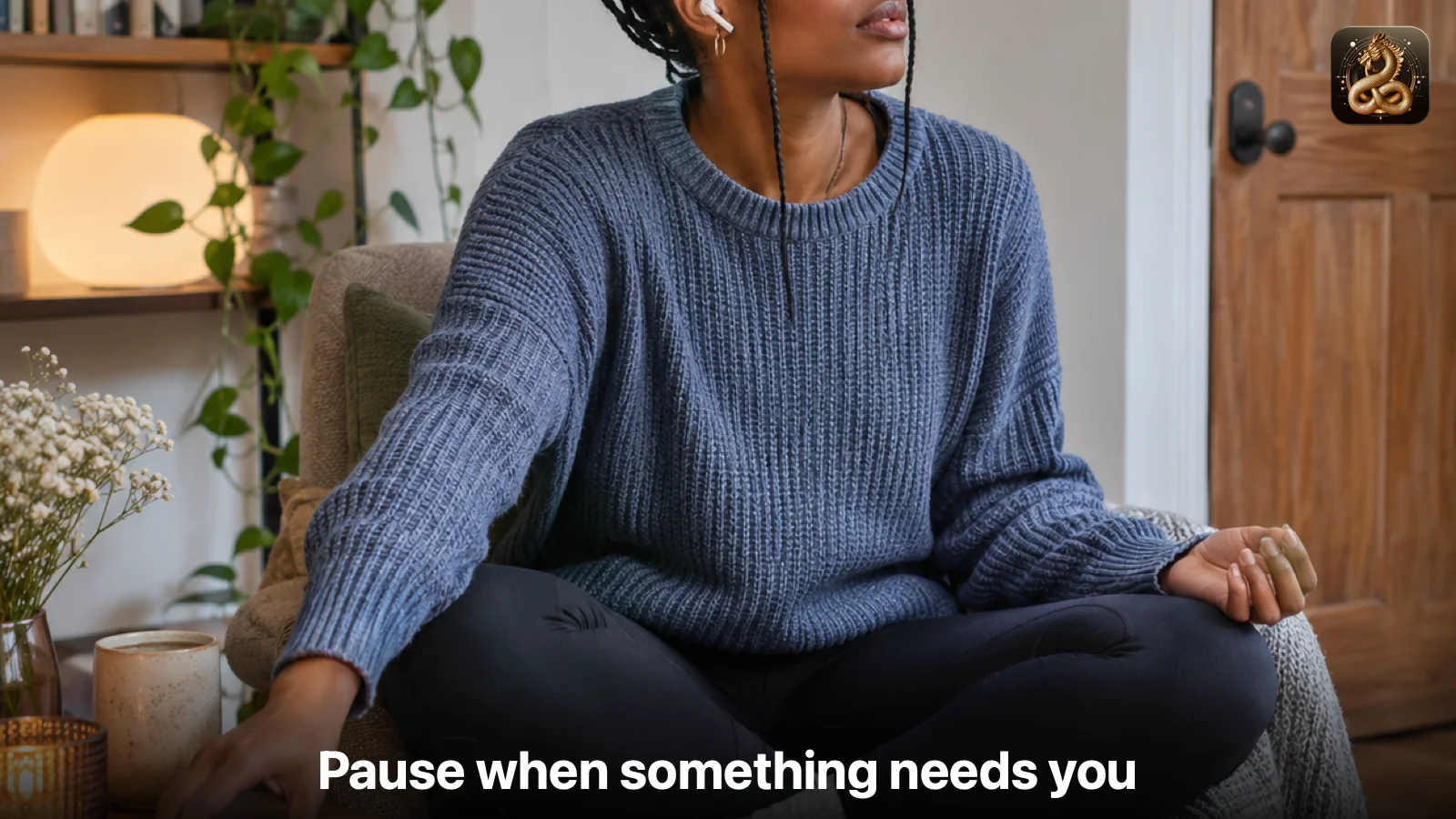
First, handle the reason you stopped
A delivery arrives halfway through a session. By the time you set the box down, the guide has moved from noticing the chair to paying attention to an image. You might feel pulled to jump straight back in because the recording is moving. Before you follow the next instruction, finish the real task that interrupted you. Put the box somewhere stable. Check whether you are expecting a second delivery. Sit down only if the immediate business is settled.
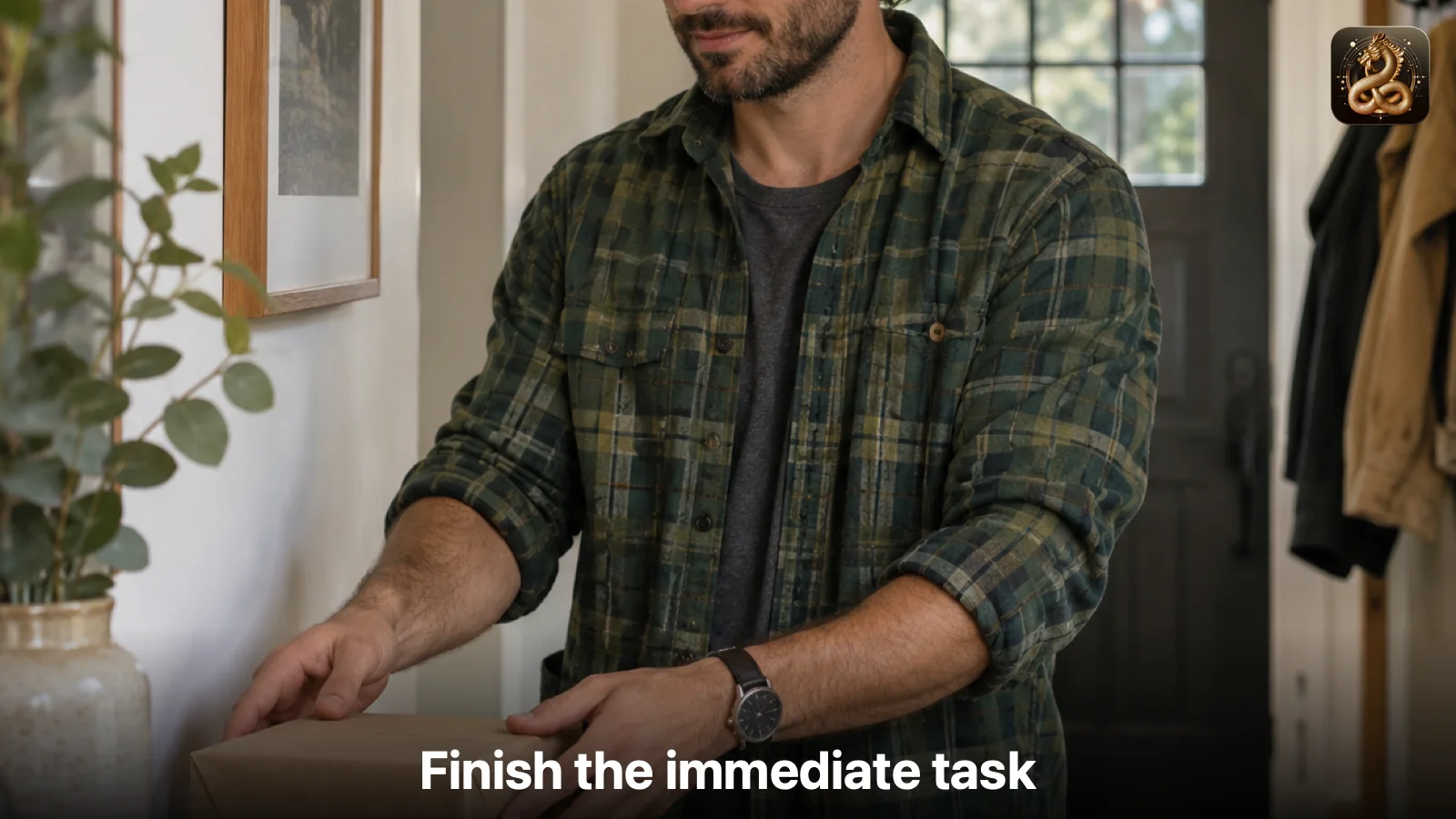
The same distinction applies when a family member asks a question. If they are waiting for an answer, a pause can remain a pause until the conversation is complete. If the question needs a longer reply than you expected, you can close the player. A track running in the background cannot tell you whether you are available to use it.
Check the recording and your available time separately
Some players resume precisely where you left them. Others reload, keep playing while the screen is locked or move on to another item. Check the displayed title and the location in the track. If you use a speaker, make sure you can hear enough to follow the words before settling back into position.
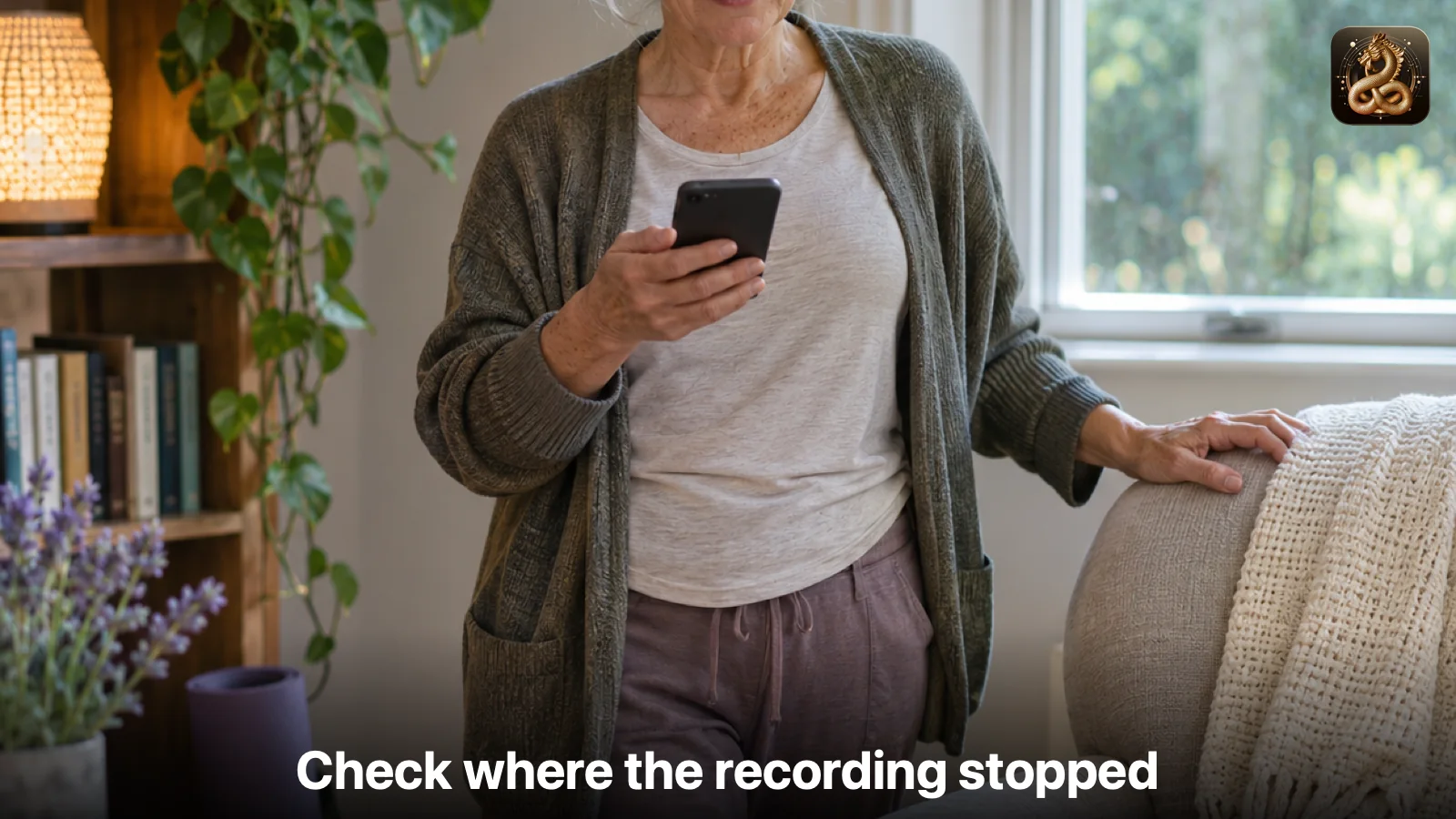
Then check the time available now. The relevant question is how much of that time you can give to the recording, including the moment when you stop. If your next meeting starts in four minutes, a section with three minutes left may fit if you are already ready for the meeting. If you still need to open notes and find the call link, your time to practise may have ended.
Choose among continuing, replaying and finishing here
Continue if the guide gives a complete current instruction. For example, “Notice one place where the chair supports you” can be followed on its own. Take a moment to find a position you can maintain, hear the invitation and decide whether to try it. There is no need to reconstruct every sentence you missed.
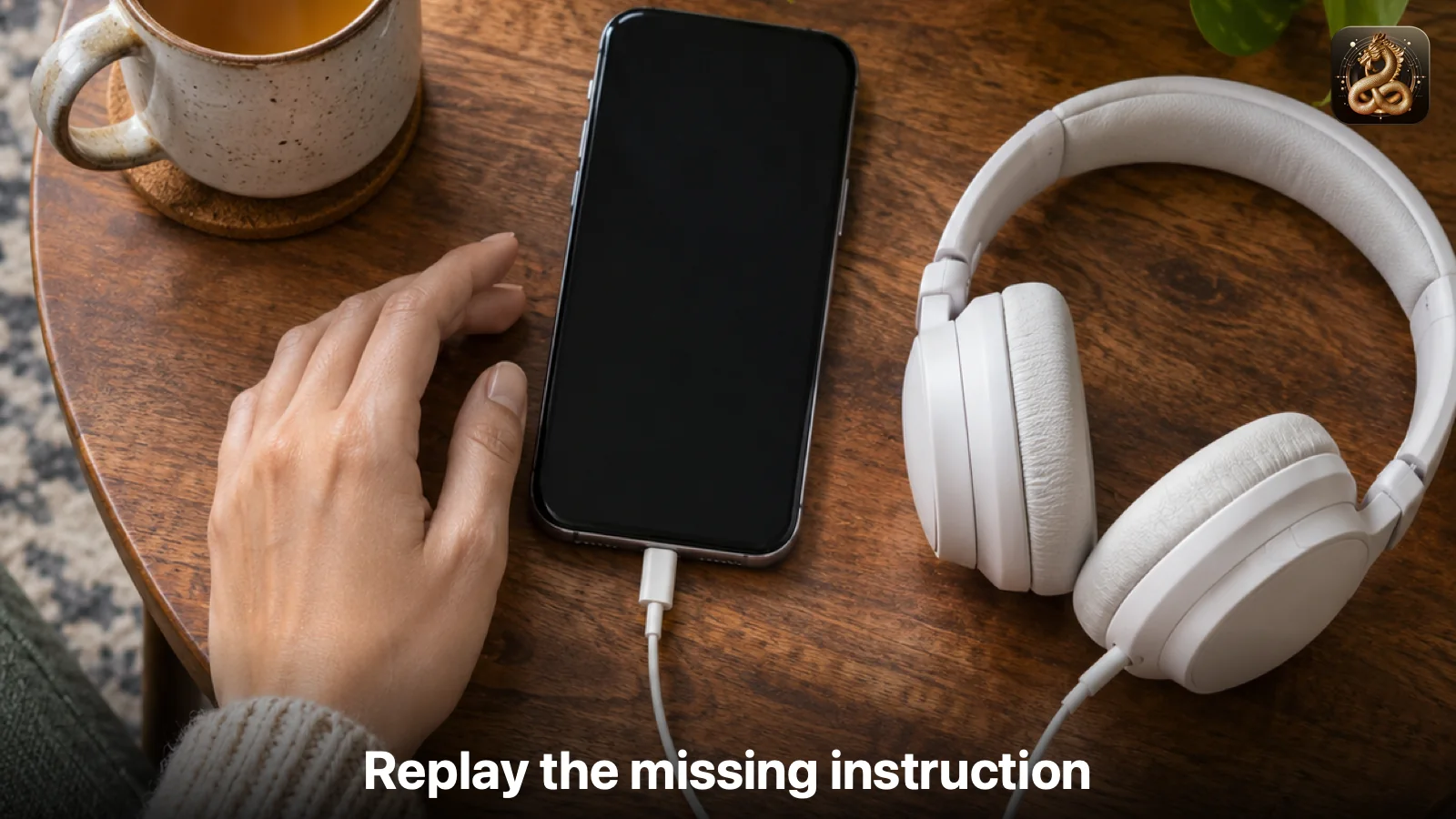
Replay a little if you hear a reference with no clear meaning. “Return to the earlier image” depends on knowing which image was introduced. Use the playback control to find the beginning of that section. Listen for the part that supplies the missing context, then decide whether the action still suits you. If you cannot locate the cue easily, stopping will cost less time than searching through the whole track.
Finish here if the time, setting or exercise has changed enough. The guide may now be asking you to close your eyes in a room you need to watch, or you may feel rushed and unwilling to continue. Stop the audio, look around and move on when you are ready. You can return another day without committing now to the same recording.
A short practice for deciding what comes next
Take your hand off the play control for a moment. Notice the surface supporting you and ask one concrete question: “Do I know what I would do if I pressed play?” If you can answer in a few plain words, such as “listen to the next instruction while sitting here,” you have enough information to make a choice.
If your answer is “I would have to work out what I missed,” decide whether finding that cue is worth the time. An optional guide can help by giving you one manageable place to put your attention. Once deciphering the recording becomes the main activity, a brief pause on your own may better suit the occasion.
Explore a guided practice. If you would like a shorter recording for a future window, browse five-minute guided meditations. Choose by the guidance offered and the time you genuinely have.
Two ordinary interruptions
Nina pauses a twelve-minute recording after hearing a knock. When she sits down again, six minutes remain. The guide is introducing a new point of contact with the chair, and Nina can hear the entire instruction. She starts from that sentence and chooses to stay for the rest. She notices that the first part felt different from the second, but she does not try to make them match.
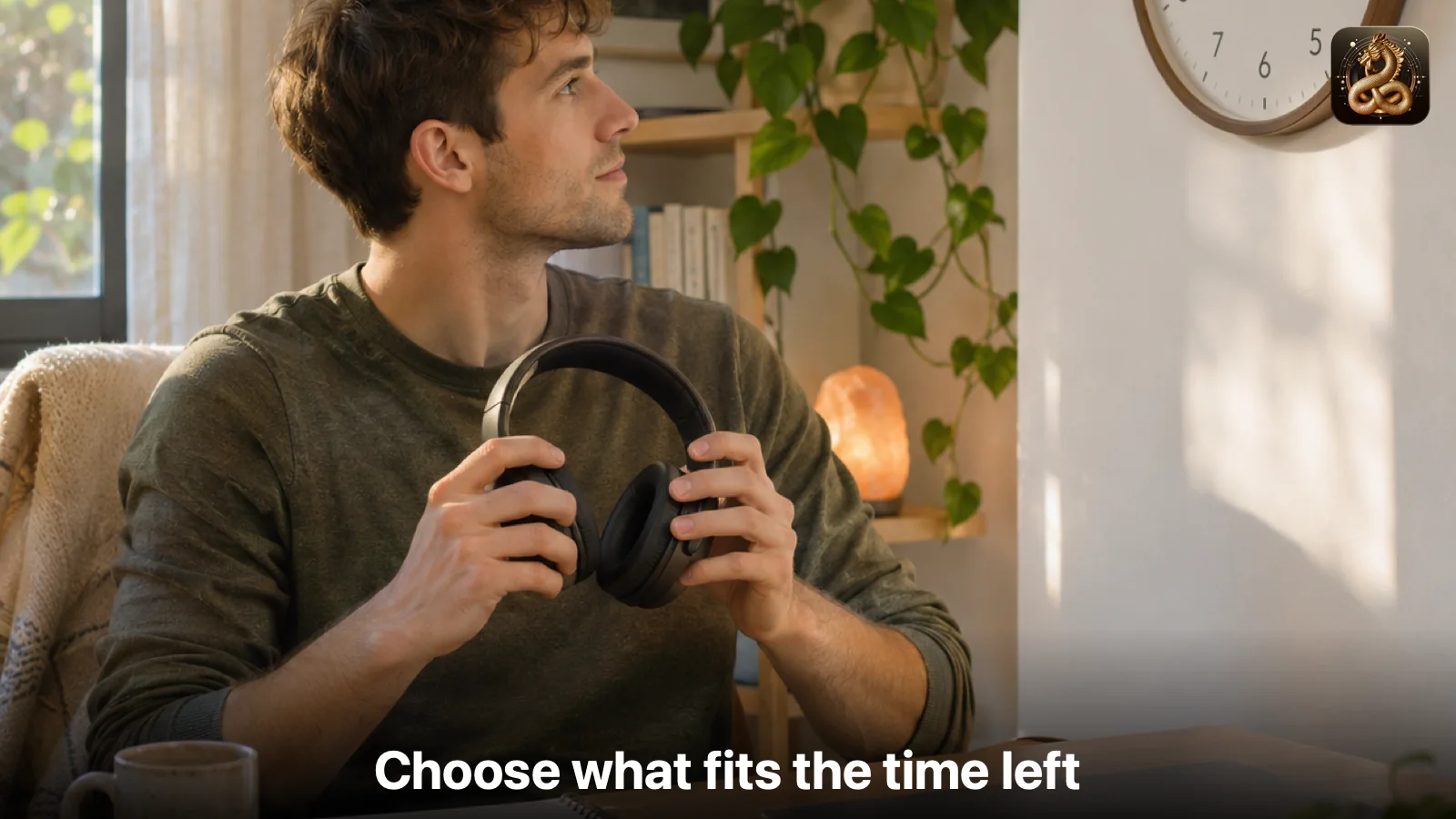
Jo is halfway through an evening practice when the washing machine signals that it has stopped. The recording keeps playing while Jo steps out. On returning, Jo hears a reference to a visual scene and has two minutes before the next task. Jo stops the audio and leaves a simple bookmark. The bookmark says “missed the setup for the image,” which will be more useful tomorrow than an exact description of the interruption.
When interruptions become predictable
One interruption can be handled in the moment. If the same kind keeps happening, change something you control on the next attempt. Choose a period after the usual call, use a shorter session or start in a room where you can pause the player easily. Leave essential calls and household responsibilities available as needed.
A repeatable return can also be part of the routine. Keep the same sequence: deal with what happened, check whether the instruction stands alone, and choose whether to play. That decision may be different even with the same recording. On one day you have the time and want the next cue. On another day, setting down the phone is the natural end.
Close the session deliberately. If the interruption means going straight back to a task, use one step from how to end meditation and return to work. Decide what you will do first, then close the player.
Leave a marker you can use
When you can pause before getting up, use the simplest marker available. The timestamp on the screen is enough if you can still see it later. If a session is playing on a speaker and you cannot reach the controls, remember the last complete instruction you heard. “Feet on the floor” gives you a place to look for. You can handle the interruption first when even that would be a distraction.
Some apps make it easy to return to a spot and others make you drag a progress bar with your finger. On a small screen, a few millimetres might take you well past the cue. It can be easier to go back to the beginning of the nearest section and listen until you hear a full instruction. If you do not know how the controls work, try them later when you can afford to lose your place.
Use the marker as a reference. A bookmark left at the fifth minute need not mean the fifth minute is where you begin next time. You may decide that a sentence just before it makes a better starting point, or that a different guide suits the next occasion. The marker saves you from guessing where you were and leaves the decision open.
Give yourself a clear way back into the room
After you return, you may be standing by the door while the recording invites you to notice the chair. You can listen to the words before deciding whether to sit. Put down what you are holding, look around and notice what has changed in the room. A changed setting is enough reason to use a different posture or leave this part of the session for later.
If you are in a shared space, someone may still be nearby. You might be comfortable listening with your eyes open or keeping the volume low enough to hear an ordinary request. If the recording is hard to understand in that setup, it is reasonable to stop. The time spent making a session fit can exceed the amount of time you have left to use it.
A return can also happen without a player. After a brief interruption, you may want to spend a moment noticing your feet or the back of the chair and then finish. This gives you a clear way to end the pause on your own terms. Choose an ordinary point of attention you can use without remembering the speaker's entire sequence.
Try a different response when the interruption is part of the setting
In an online group, the guide may have moved ahead while you were away. You may be able to hear the current instruction as it is introduced. If you come back to an unexplained exercise, wait for a cue you recognise or stay present without doing that exercise. If the group offers a suitable time for questions, you can ask where the current section began. A live session may have no replay control.
When you share a recording with someone at home, decide together whether to pause for both people. One of you may need to step out and the other may want to keep listening. A simple arrangement can work: pause if both people want to hear the same sequence, or let the returning listener join at the next clear instruction. Each person can decide how much context they need.
Sometimes the interruption is a change inside the recording, such as the audio cutting out while a device switches connections. If the voice returns and the instruction is self-contained, you can continue. If it cuts off again, stop troubleshooting for the moment and decide whether the guide is still useful. A different device or recording can be an option the next time you want to practise.
After you stop, take a moment to look around before reaching for the next thing. You may need to gather your notes, open the door or simply stand up. Name that action and do it when you are ready. A clear ending can be useful even if you only heard part of the recording.
Frequently asked questions
Should I start over every time?
Start over if the later guidance depends on the introduction and you want to go through it again. When you understand the current invitation, you can continue where you stopped.
What if the guide asks me to return to an earlier sensation?
If you remember what the guide means, decide whether you can attend to that sensation comfortably now. If you missed the setup, replay it or choose to finish.
Does continuing mean I should complete the recording?
You can change your mind at the next cue. A pause, a partial session and a complete recording can all be reasonable choices in different circumstances.
What should I note if I want to come back tomorrow?
Save the title and, if helpful, the approximate place where you stopped. A brief note on the missing instruction is enough. You can decide tomorrow whether to replay it.