
A mindful eating pause can be an ordinary moment of noticing while you eat something familiar. It does not need a special food, a silent room or a new set of eating rules. You might notice warmth from a bowl, the sound around your table or a flavour you usually overlook, then continue with your meal.
This guide treats that pause as an optional attention practice. It is not advice about what, when or how much to eat, and it is not a way to judge a meal. Keep your usual needs, preferences and any existing care arrangements in place. If paying close attention to food feels uncomfortable or burdensome, you can leave food alone and choose another meditation focus.
Quick answer: notice one ordinary detail
Use a familiar meal you were already going to eat. If you want to, notice one ordinary detail, such as warmth, colour or a sound around the table, then continue normally. Keep food choices, pace and existing care arrangements separate from this optional attention exercise. Stop the exercise or use another focus if it becomes uncomfortable.
Start with food you were already going to eat
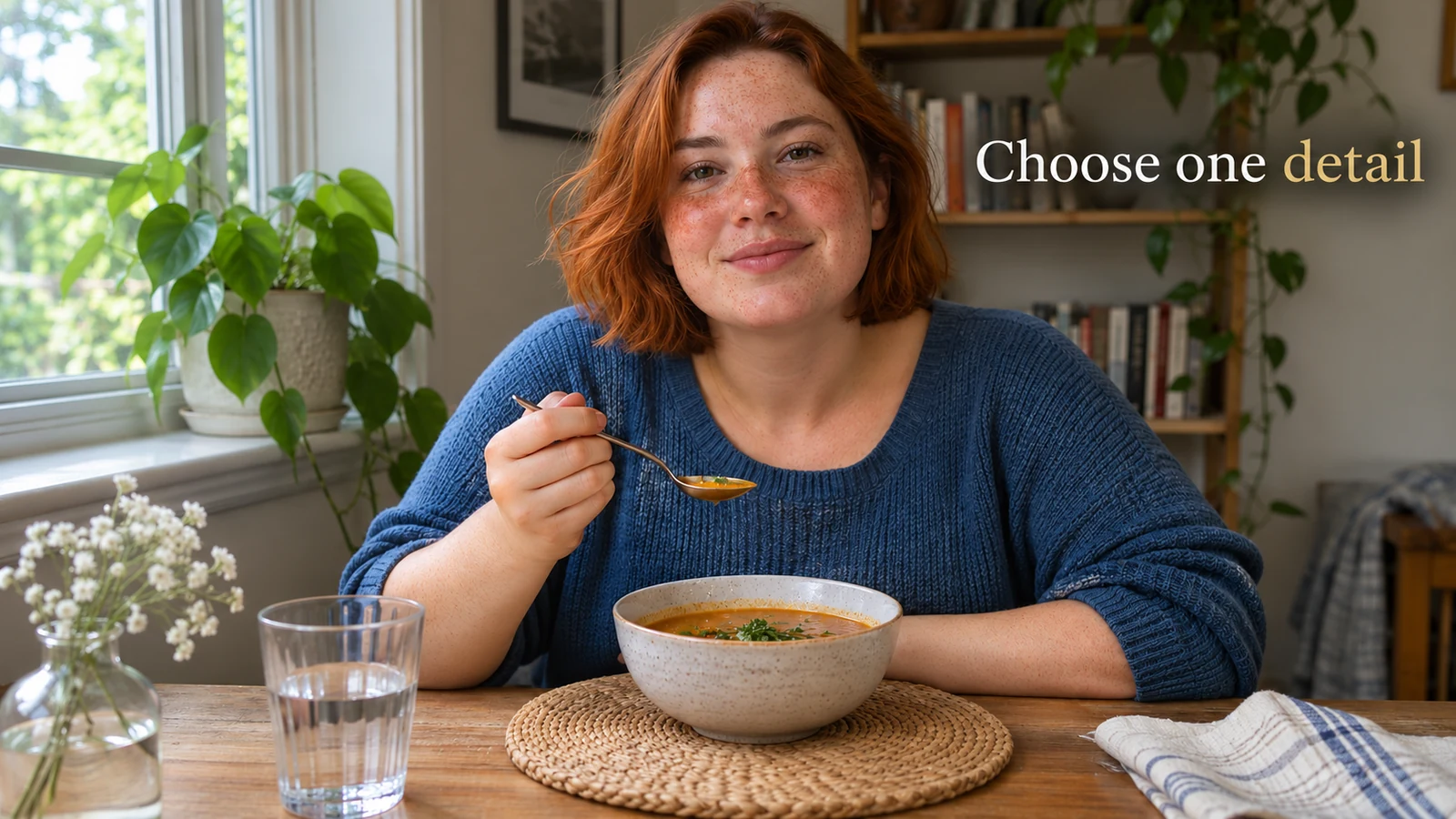
Use an ordinary eating occasion rather than preparing a test. A familiar breakfast, a sandwich or a bowl of soup can provide something to notice. You do not have to select a food because it looks attractive in a meditation photograph. The food belongs to your meal first; the practice is optional.
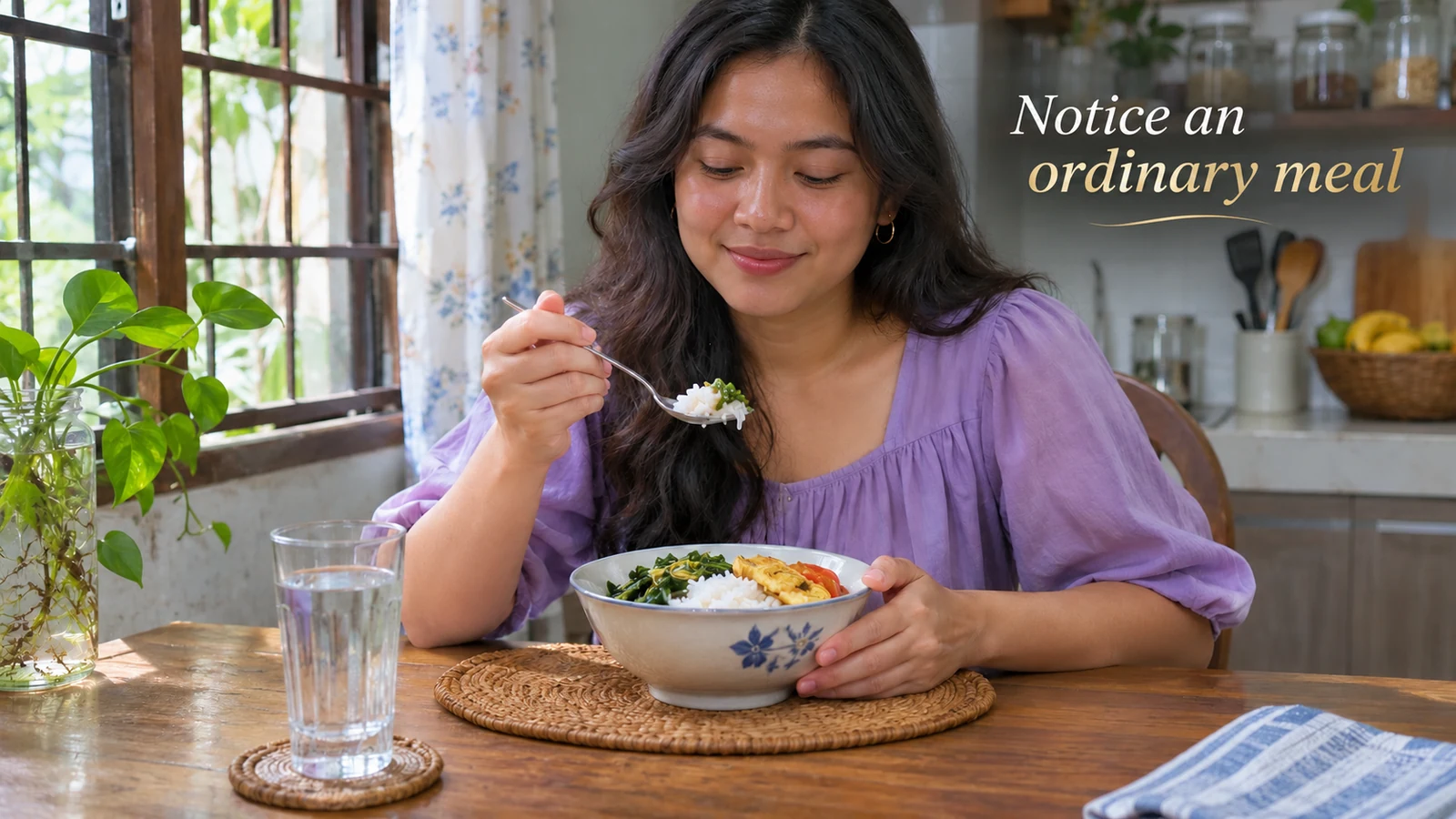
Keep the occasion recognisable. If you are hungry and about to eat, eat. There is no requirement to delay the meal, examine every ingredient or arrange the plate differently. Let eating remain an ordinary need, with attention as a small optional addition. A brief moment of attention can sit within the meal without taking charge of it.
An elaborate setup can make the practice harder to use. If you find yourself searching for the right bowl, the right music or a supposedly better food, return to what is already available. You can notice an ordinary detail in an imperfect setting. You can also decide that this is simply a meal, with no meditation added.
Choose one detail rather than a complete routine
Attention has many possible places to rest. You might notice the warmth of the plate, a familiar scent or the way light falls across the table. Pick one detail that is easy to notice. One manageable detail can stand alone, without a compulsory sensory sequence.
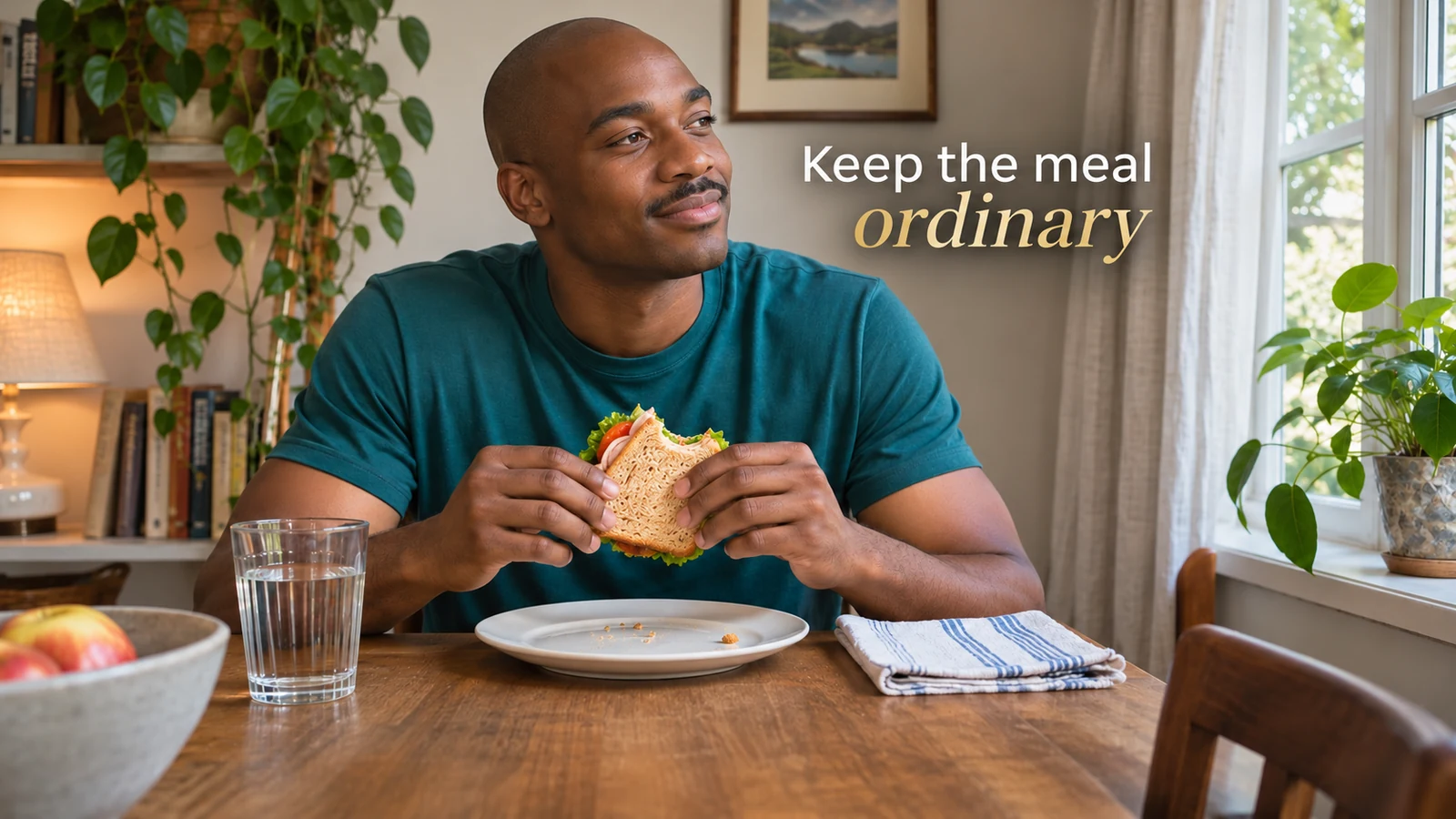
If taste is the detail you choose, let it be an observation rather than a rating. You might recognise a flavour or notice that you were thinking about something else. Neither discovery tells you whether the food is good, whether the meal is correct or whether you are a good meditator. Noticing distraction is also noticing.
You can leave the focus outside your body if that is more comfortable. The colour of a cup or a sound in the room is enough. A practice becomes less useful when it requires you to attend to a sensation you would rather not examine. There is no need to earn permission to choose something else.
Keep your normal eating pace
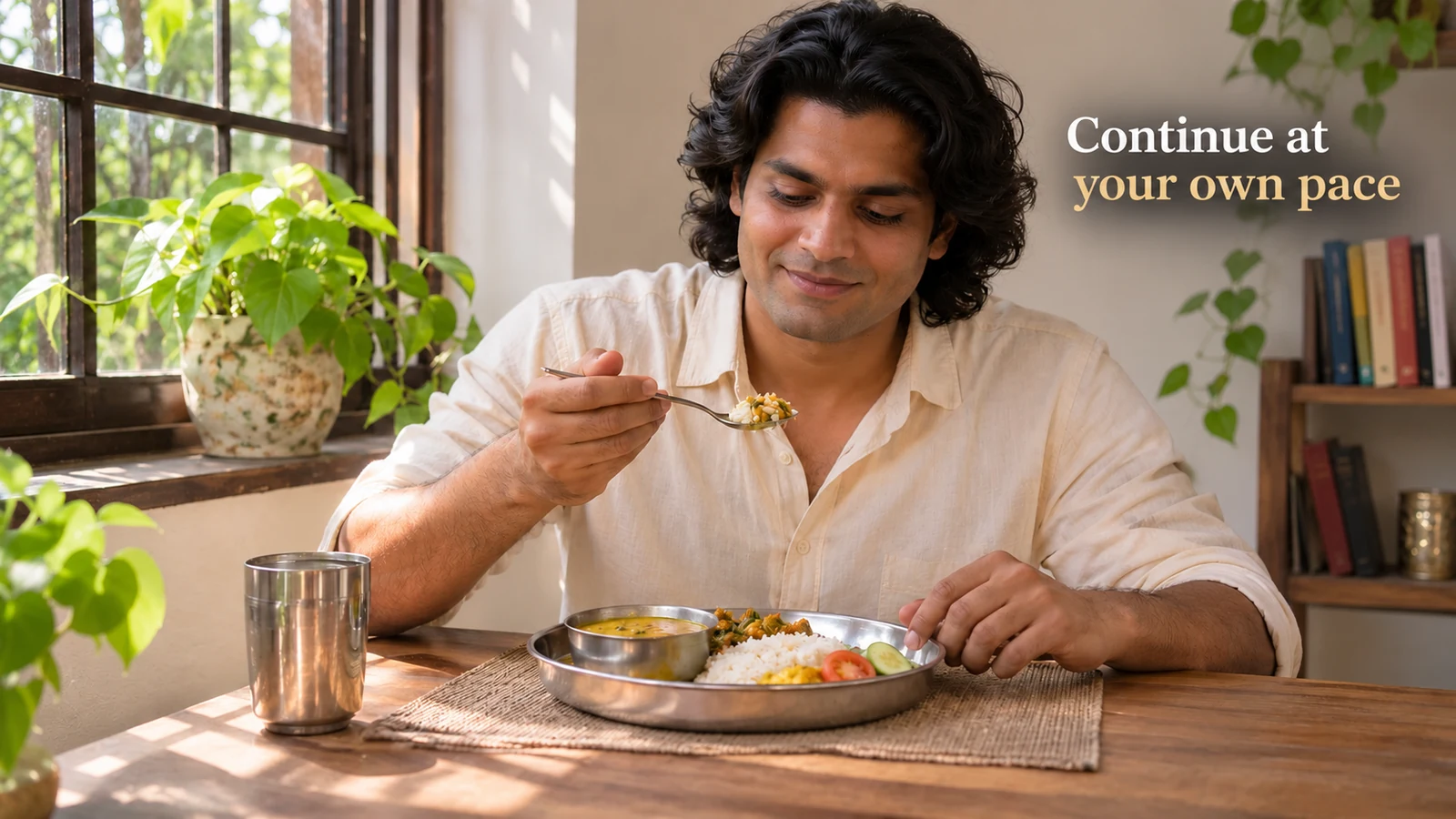
You do not need to count chews, time bites or make a meal last longer than it naturally would. Those instructions can turn a small attention practice into a monitoring task. Continue eating in a way that suits your circumstances. Noticing something and then moving on is a complete option.
Consider an ordinary lunch between activities. You might notice the temperature of your food, realise your mind is on the next appointment, and return to lunch. That does not require restarting the meal. It also does not require keeping the detail in attention for the rest of the time.
Some days there is little room for an added exercise. You may be eating with children, talking to someone or getting back to work. Keep those realities in view. The pause is not a reason to ignore people or make the occasion more difficult. It can be very brief, or absent.
Let conversation and surroundings remain part of the meal
A shared table does not have to become silent for you to pay attention. You might listen more fully to a sentence someone says, notice the feel of the chair or become aware that you are rushing toward your next activity. Then take part in the meal as usual.
Keep any private exercise separate from what other diners choose to do. Other people may simply want lunch and a conversation. Keep your own experiment small enough that it does not become a rule for the group. Attention is something you can practise without directing how another person eats.
In a noisy setting, choose a detail that is available rather than fighting the whole room. If there is too much going on, leave the exercise for another time. A busy café is not a test you must pass before you can use mindfulness in everyday life.
Choose another attention focus when it fits
If food attention is not the right focus today, explore a guided meditation in SoulFul GLO with an ordinary external focus. Choose a practice that fits your surroundings and leave yourself free to stop.
Notice the difference between attention and judgement
Judgement often arrives as a rule: I should be enjoying this more, I should never get distracted, or I have ruined the practice by looking at my phone. You do not need to answer each thought. You can notice that a rule appeared and return to the ordinary task of eating.
A simple description stays closer to what happened. The soup was warm. I noticed the spoon against the bowl. I spent part of lunch thinking about tomorrow. These statements leave the meal unevaluated. They leave room for an uneventful meal.
If the exercise starts changing into surveillance of your food or behaviour, stop the exercise. Leave the exercise unfinished if that suits the occasion. Choose a different focus, such as sounds around you, or continue the rest of the day without adding a practice. Optional means you can decline it.
Use benefits as possibilities rather than promises
A brief pause may help you notice a detail you would otherwise miss. It may create a moment to return attention from another task to the meal in front of you. These are practical possibilities, not guaranteed emotional or health outcomes. Some attempts will feel ordinary or distracting.
Berkeley's Greater Good in Action describes a named raisin meditation as one example of sensory attention. You do not need to follow that script, use a raisin or reproduce its sequence to make your own brief observation. The example shows one way a familiar object can become a focus.
NCCIH describes limitations in research on meditation and mindfulness, as well as the possibility of unpleasant experiences. Broad findings do not establish that this particular pause will help you. Treat it as a modest choice about attention, not a treatment or a replacement for advice or care you already use.
Leave food rules out of your record
You may prefer not to keep a record at all. If a note would be useful, write about whether the attention practice suited the occasion. For example: noticing the room felt easier than focusing on taste. That is information about the practice, not a judgement about what you ate.
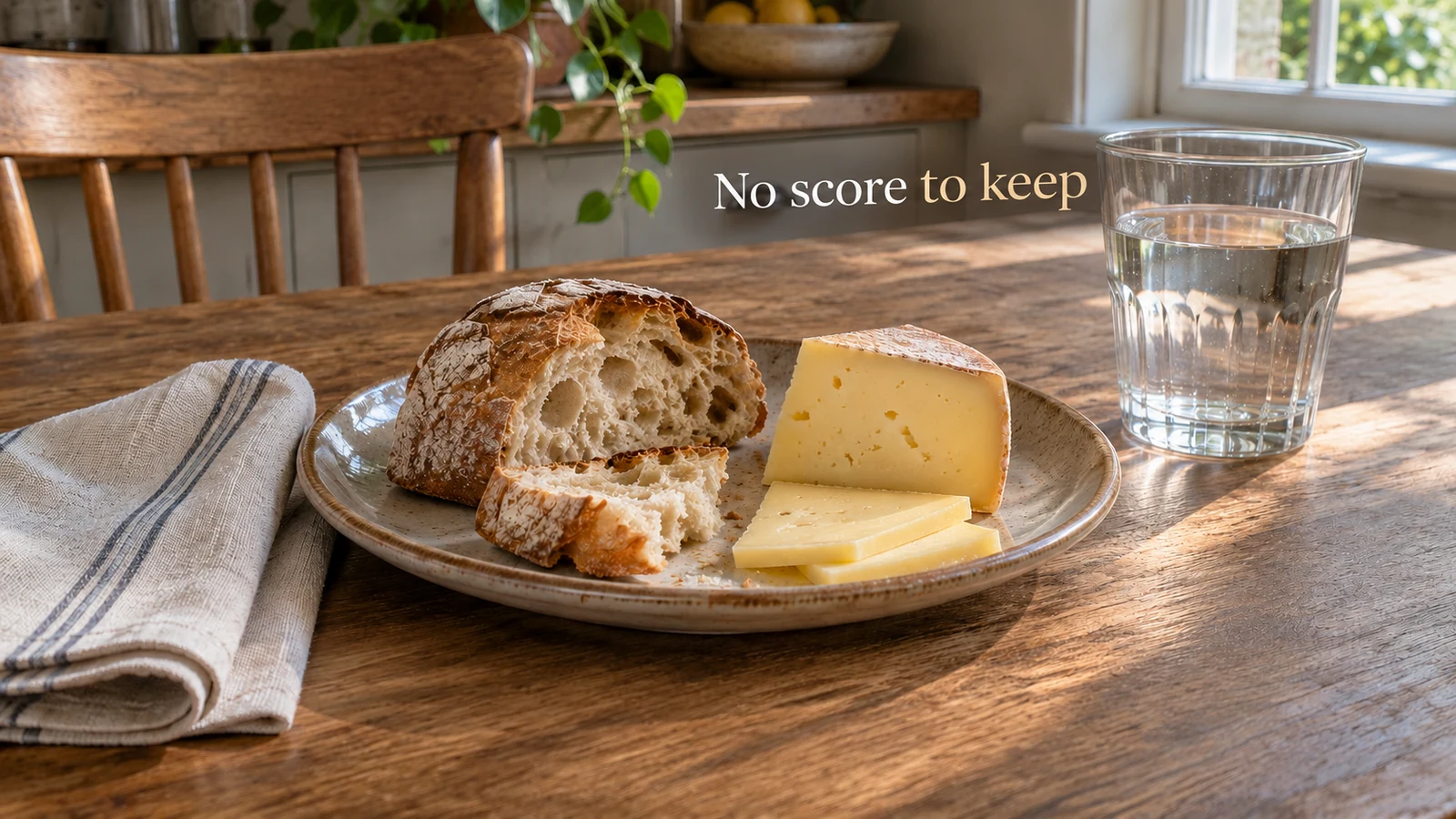
A record does not need quantities, bite counts, an eating score or a promise about the next meal. Those details are unnecessary for deciding whether a brief attention exercise fits your life. You can remember a useful observation without turning it into a system.
If you already journal, keep this note separate from any urge to assess the meal. The question is whether you want to use this kind of focus again. A perfectly reasonable answer is no. Another is sometimes, when it feels easy enough to fit.
Try a different focus when you need one
Food can carry associations that an article cannot know. You can choose another form of meditation while keeping those associations private. An everyday sound, a visible object or the support of a chair may be a more suitable place for attention. There is no hierarchy that makes food attention a necessary step.
Let any decision to repeat the pause wait until another suitable occasion. Let the next occasion stand on its own. A choice made freely today does not become a commitment for tomorrow.
Suppose an invitation to notice flavour becomes irritating or uncomfortable. You can put down the exercise while continuing your meal. If you want a pause afterward, look around the room and notice something ordinary. The meal does not need to become the location of a solution.
Where you already have advice or support concerning food, follow those arrangements. This general attention guide does not alter them. You can ask a qualified professional who knows your circumstances about practices you are unsure of, without treating a wellness article as individual guidance.
Let the meal finish without an assessment
When you are finished, return to your next ordinary activity. You do not need to decide whether the meal was sufficiently mindful. If there was a moment of noticing, that happened. If there was not, there is no missed assignment to complete afterward.
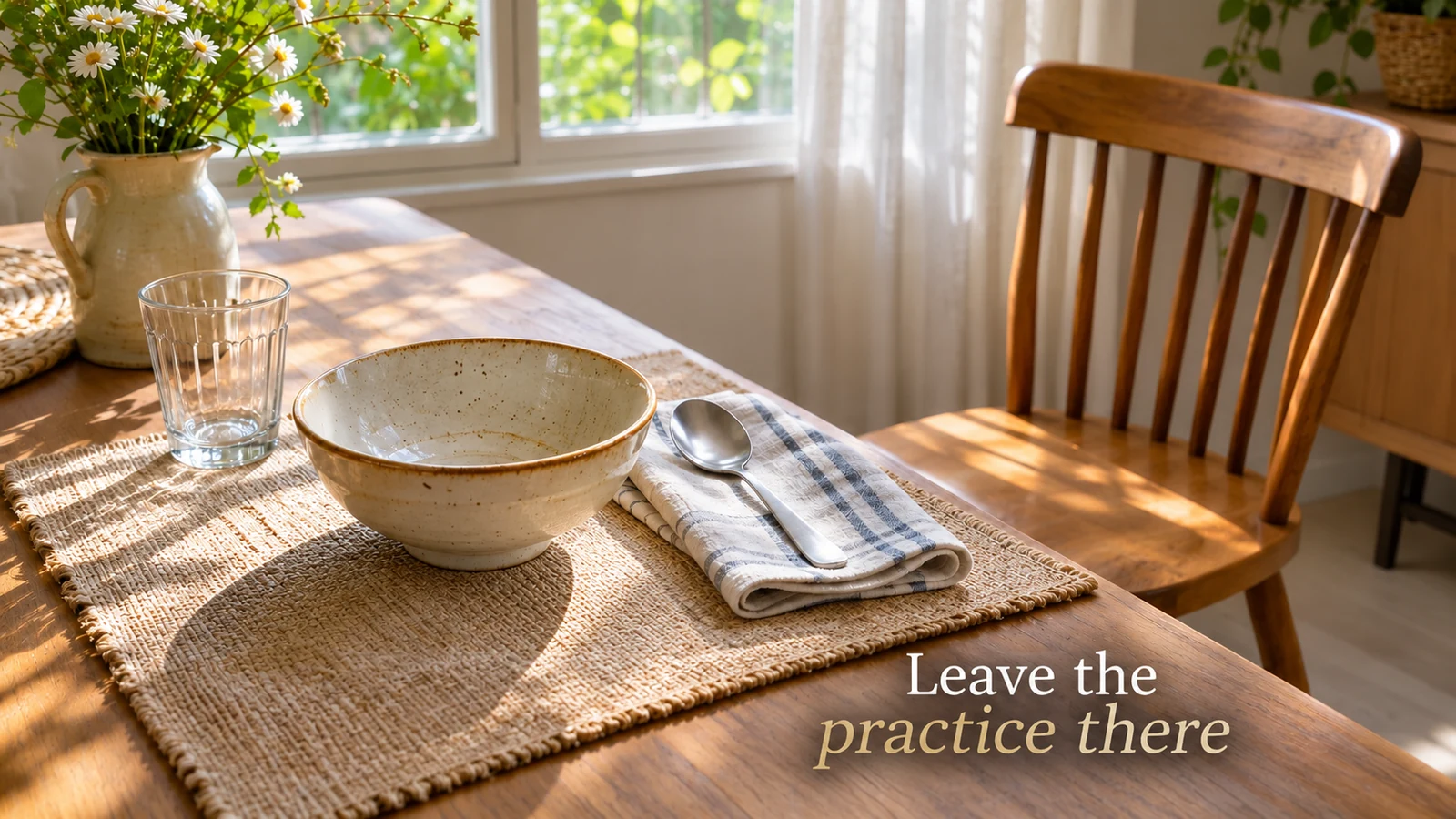
You might clear the table, speak to someone or go back to work. A practice can end with one of these actions rather than a formal reflection. That helps keep it in proportion: a possible moment within everyday life, not another obligation attached to eating.
Over time, keep only what is useful. Perhaps you occasionally notice the warmth of a cup. Perhaps you prefer meditation away from the table. Neither choice requires a stronger claim about who you are or how you should live. A small practice can remain small.
An external focus is a separate option. SoulFul GLO's eyes-open meditation guide discusses an ordinary visible setting. The plain-word anchor guide describes quiet repetition. Neither requires changing a meal, and you can choose to use neither.
Questions about a mindful eating pause
Do I need a special food?
No. If you want to try the pause, use something familiar that you were already going to eat. The exercise does not tell you which foods to choose or require a separate shopping or preparation routine.
Do I have to eat in silence?
No. You can remain part of a conversation and notice an ordinary detail when it feels natural. If an exercise would interrupt the meal or create pressure, leave it out.
What if I forget until the meal is over?
You do not need to repeat or make up anything. Continue with your day. You can choose another attention focus later if you want to, rather than treating the meal as a missed opportunity.
Should I track whether it worked?
You do not need a score. If you want to remember something, note whether the focus felt suitable and practical. Avoid making that note an evaluation of the food or your eating.
Can I choose a different meditation instead?
Yes. Food does not need to be part of your meditation practice. Choose a focus that feels workable, and stop an exercise that becomes uncomfortable or demanding.
Practise away from meals if you prefer
Explore the guided meditation options in SoulFul GLO if you would prefer to practise away from meals. Pick an available session that suits your time and attention, with realistic expectations and room to choose another approach.