
You sit down for a short meditation, close your eyes and immediately want to open them again. Perhaps you prefer seeing the room. Perhaps you are listening for a child, sharing the space with another person or simply finding closed eyes distracting. You can leave them open. The useful question is how to arrange your attention, rather than whether your eyelids are in the correct position.
An eyes-open practice can be modest: sit somewhere comfortable, choose an ordinary part of the room to look toward and notice when attention follows a thought. Return to the view without trying to stare through it. You remain free to blink, move, change your gaze or finish.
This guide focuses on a home setup and a short practice you can adapt. It is not a promise that keeping your eyes open will make meditation calming, improve your vision or resolve a health concern. Different choices suit different people, and what you prefer may change from one day to another.
Quick answer: can you meditate with your eyes open?
Yes. For the practice described here, keep your eyes comfortably open and look toward a plain, stationary part of the room. Let blinking happen naturally. Use a relaxed visual focus rather than holding a fixed stare. When you notice a thought, return to what you can see, or choose an ordinary sound instead. Stop if the exercise becomes uncomfortable.
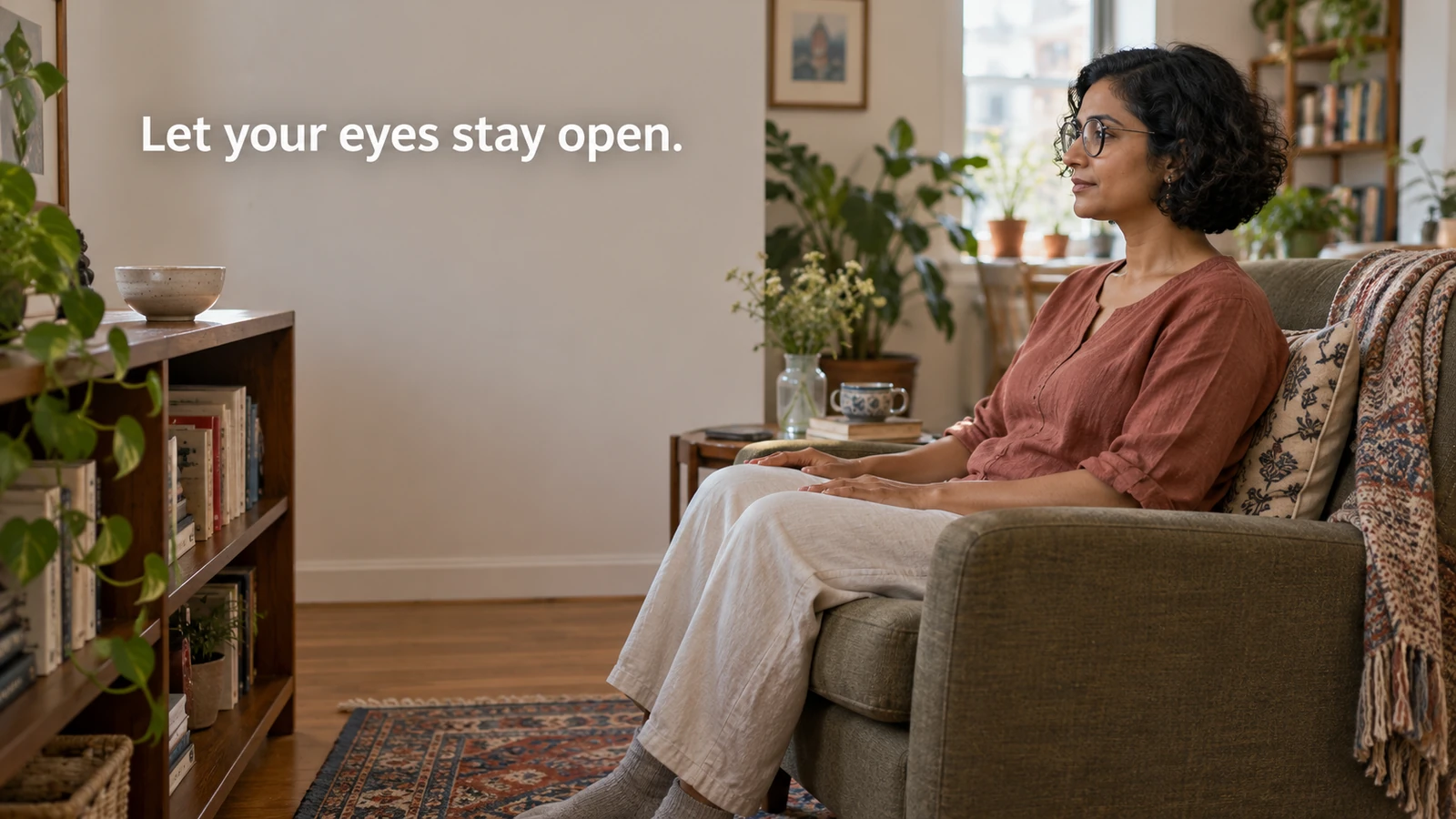
An object is optional. A patch of wall, the edge of a shelf or a simple bowl can provide a place to look. You do not need special equipment, a candle, a particular viewing angle or a room arranged for meditation.
Choose what you want this practice to do
Before arranging the room, name a practical reason for trying eyes-open meditation. You might want a short pause while remaining aware of your surroundings. You might dislike the instruction to close your eyes. You might want to notice one ordinary thing before beginning another task.
Keep the reason close to your circumstances. “I want to spend a few minutes looking at something other than a screen” is clearer than “I must become completely peaceful.” The first describes an action you can choose. The second makes your state of mind into a test.
If closing your eyes feels uncomfortable, you do not need to practise enduring that discomfort before trying something else. An eyes-open option is a choice, not an advanced stage you must earn. Equally, if open eyes feel tiring or distracting, you can change the practice or leave it for another day.
Set up one small part of the room
Start with the seat you already use comfortably. A chair with your back supported may be practical. If your feet do not comfortably reach the floor, use an available stable support. Your position should let you look ahead without lifting or bending your neck into an awkward angle.
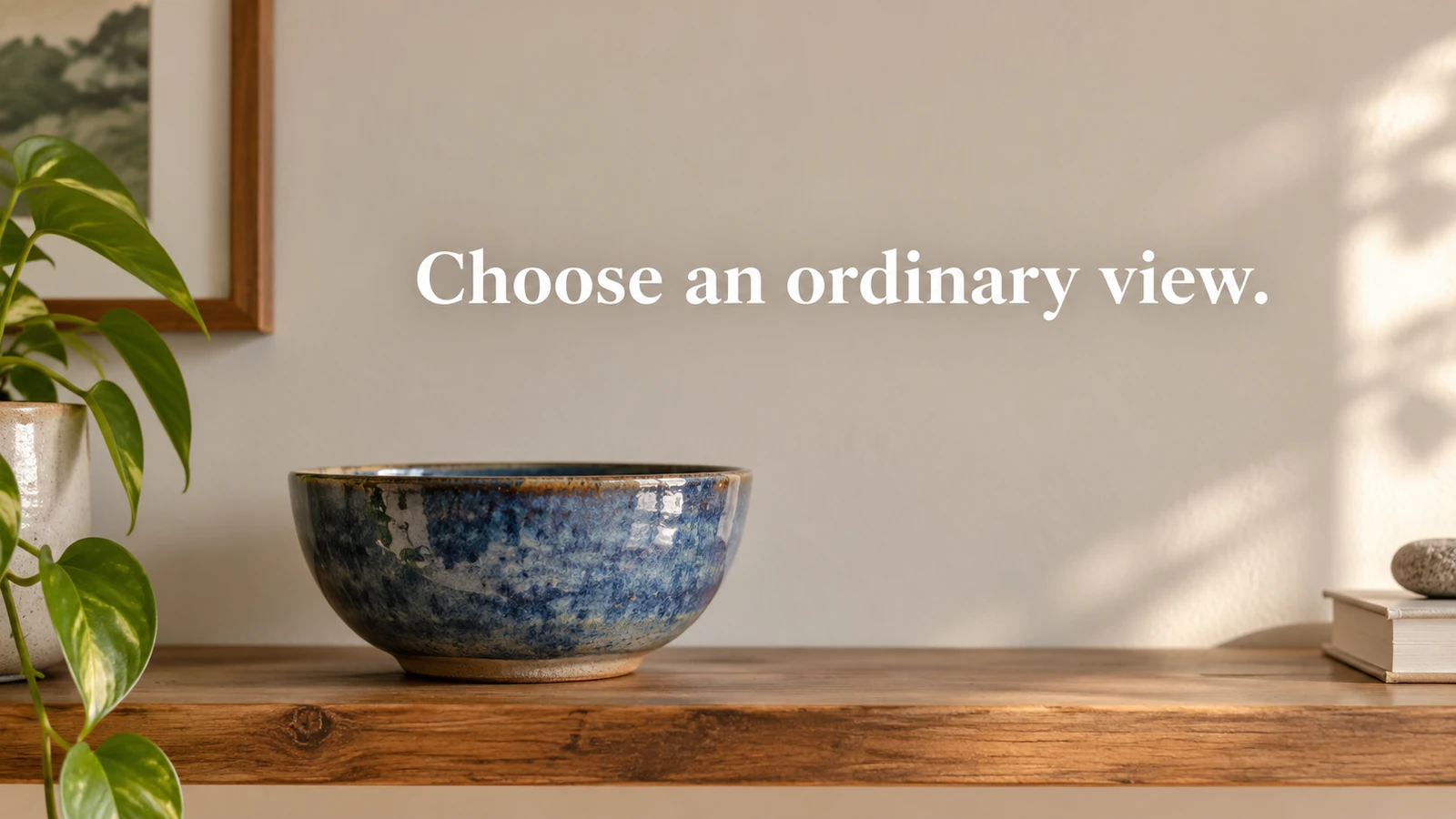
You can sit near a plain wall, face a quiet corner or look toward a stationary object. Avoid placing the focus where you need to lean forward to see it. There is no required distance; choose a view that feels easy to maintain for a short time.
Ordinary room light is enough. You do not need to darken the room or remove everything from it. If direct sunlight or a bright reflection makes the view unpleasant, change your seat or adjust the light in a way that is convenient. Never use the sun or another intense light as a meditation focus.
Make one useful change, then begin. Turning a home into a perfect meditation setting can become a larger project than the pause itself. A different chair angle may solve the immediate problem without reorganising a shelf or buying an accessory.
Pick a view without turning it into a staring task
There are several ways to place your gaze. Treat them as options to compare, not rules to complete in order.
A simple object
A bowl, folded cloth or ordinary mug can give your eyes a resting place. Choose something stationary that does not contain words you will start reading. Look at the object as a whole. You can notice its colour or outline without trying to inspect every mark.
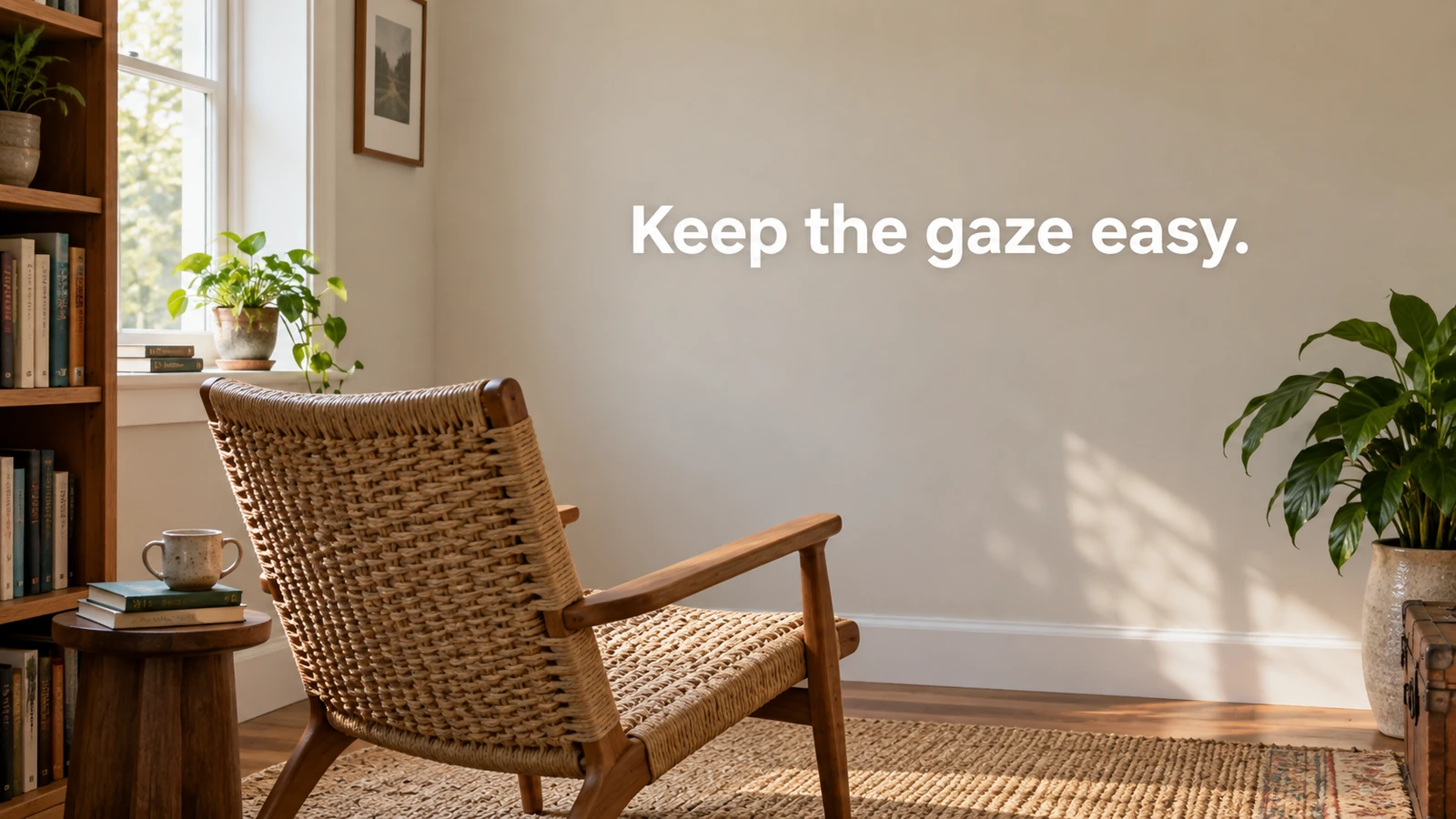
An object with personal significance may lead into memories or planning. That is not a failure, but it may make this particular practice less straightforward. If a treasured photograph turns the session into a conversation with yesterday, try a more neutral object.
A plain area
A quiet patch of wall can be useful when objects invite too much analysis. Allow the view to be ordinary. You are not waiting for the wall to become interesting or for a special visual experience to appear.
Keep your gaze easy. If the exercise becomes effortful, look elsewhere, blink or stop. Seeing an unremarkable surface for a few moments is enough; prolonged fixed staring is not the aim.
A wider view
You may prefer looking generally toward the room instead of choosing one small point. Let the scene remain available without deliberately searching it. When your eyes follow movement or your attention turns toward a sound, notice what happened and choose whether to return.
A wider view can fit a shared home where you need some awareness of your surroundings. It does not mean ignoring someone who needs your attention. Respond to responsibilities normally, then decide whether you want to resume.
Try a short eyes-open sequence
The following sequence is a practical example, not a researched treatment protocol. Read it before starting so that you can put the instructions aside. Keep the duration short enough to try without strain; there is no requirement to finish a timer.
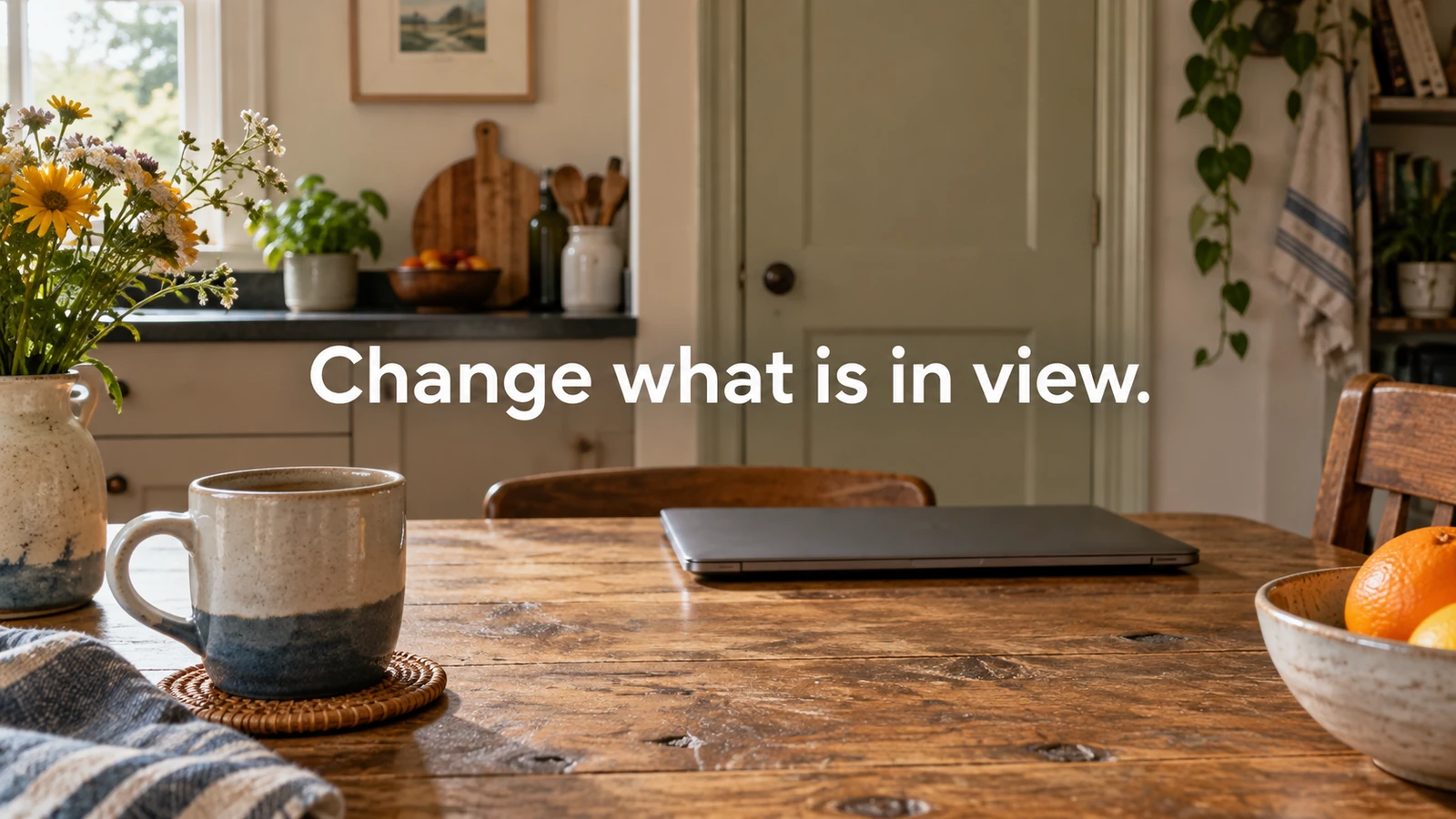
First, take your seat and look around normally. Notice where you are and whether the seat and viewing direction feel comfortable. Adjust your position before asking yourself to remain still. Let breathing continue naturally; you do not need to count it or make it deeper.
Next, choose your view. If you selected a bowl, notice the bowl. If you selected a plain area, let that area be where your eyes rest. Keep blinking and small movements available. The instruction is to return attention, not to prevent your eyes from behaving normally.
Then, notice an ordinary feature: a colour, edge or area of light. Describe it simply in your mind if that helps. “Pale blue” or “curved edge” is sufficient. Avoid turning the exercise into a detailed inventory of the room.
When a thought takes your attention, acknowledge it briefly and come back to the view. Perhaps you are thinking about a message. You can notice “message” and return without settling the whole conversation during this pause. The thought may come back; you can make the same choice again.
Finally, look around more freely and decide what happens next. Stand when ready, return to your task or write a short note about the setup. You do not need to produce a particular feeling before the session can end.
Explore another attention anchor
If you would like a related practice that uses ordinary sensory observations, read SoulFul GLO's grounding meditation guide. Compare the options at your own pace and keep the ones that feel suitable for you.
Read the grounding meditation guide
Work with visual distractions in a real home
A room can contain reminders of everything you have not finished. A laptop, a laundry basket or a stack of forms may keep pulling your attention toward planning. Instead of demanding better concentration, change what is directly in view.
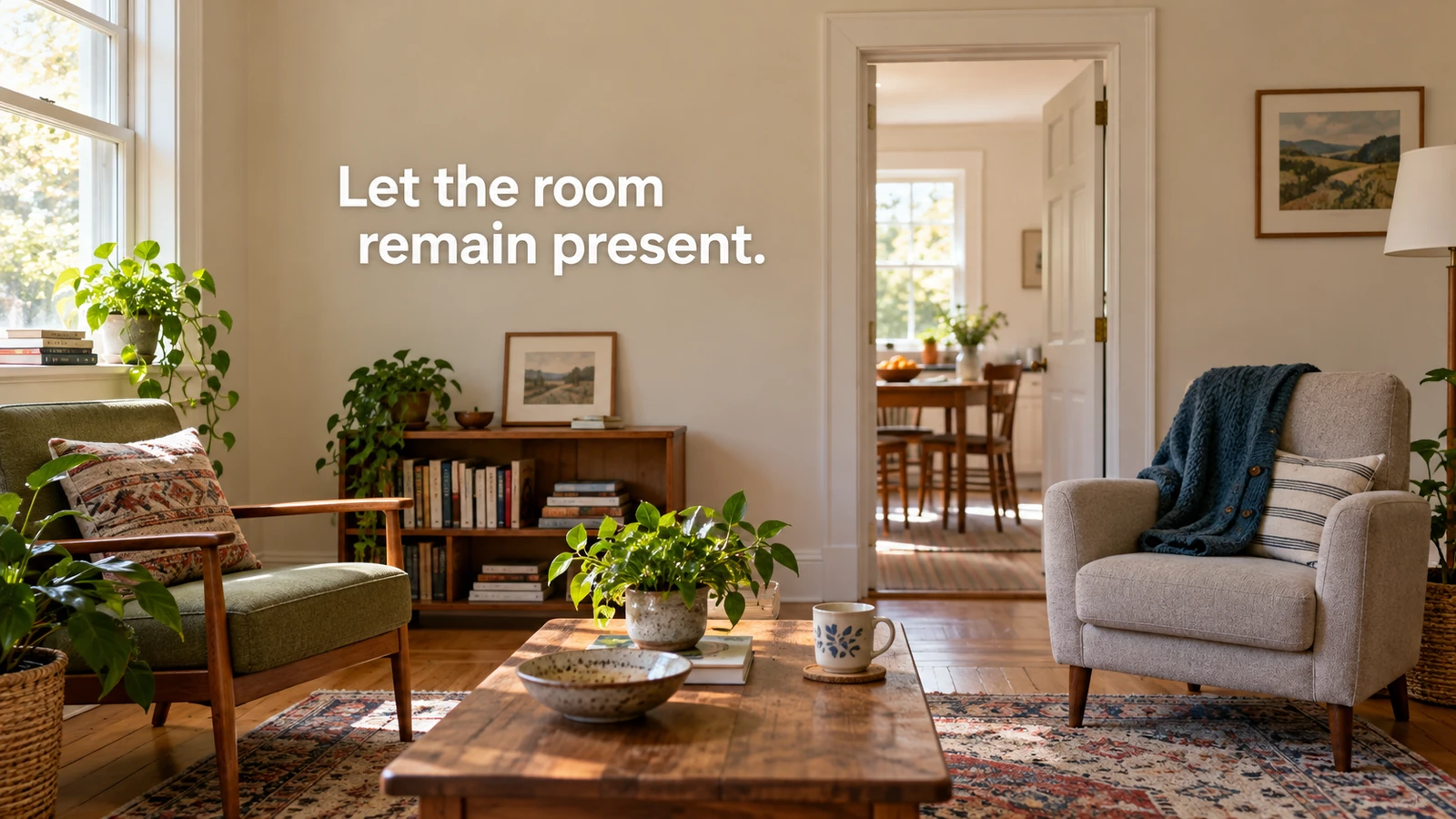
For example, imagine a reader who sits at the kitchen table after lunch. Looking toward the sink starts a mental list of cleaning tasks. They turn the chair toward a plain cupboard door and try again. The dishes still need attention, but the chosen view no longer supplies a fresh reminder every few seconds.
Screens can introduce a different problem because the content changes. Put a device where it is not directly in your line of sight if you can do so without missing something important. If you need it available, use a different visual anchor and respond when your responsibilities require it.
In a shared room, explain the pause if that would help: “I am sitting here quietly for a few minutes, but you can interrupt me if you need me.” You do not need to enforce silence around other people. If the space remains too busy, shorten the session or choose another time.
What if your eyes feel tired?
Do not turn discomfort into evidence that the practice is working. Relax the effort, look away or finish. If a particular viewing direction feels awkward, change the seat or focus. You can also switch to ordinary listening while allowing your gaze to move naturally.
This guide does not diagnose eye symptoms or prescribe exercises for them. New, persistent or concerning symptoms deserve appropriate professional advice. Meditation is optional; it should not be used to postpone care or to test how long you can tolerate an unpleasant sensation.
The National Center for Complementary and Integrative Health notes that meditation research has limits, that negative experiences can occur and that meditation should not replace conventional care. Those cautions apply even to a simple home practice. If a session causes distress, stop and seek appropriate support when needed.
Read NCCIH's meditation and mindfulness overview
Compare setups without scoring yourself
If you want to repeat the practice, compare one choice at a time. On one occasion, look toward a neutral object. On another, try a wider view of the room. Keep the sessions similarly brief so that the comparison stays practical.
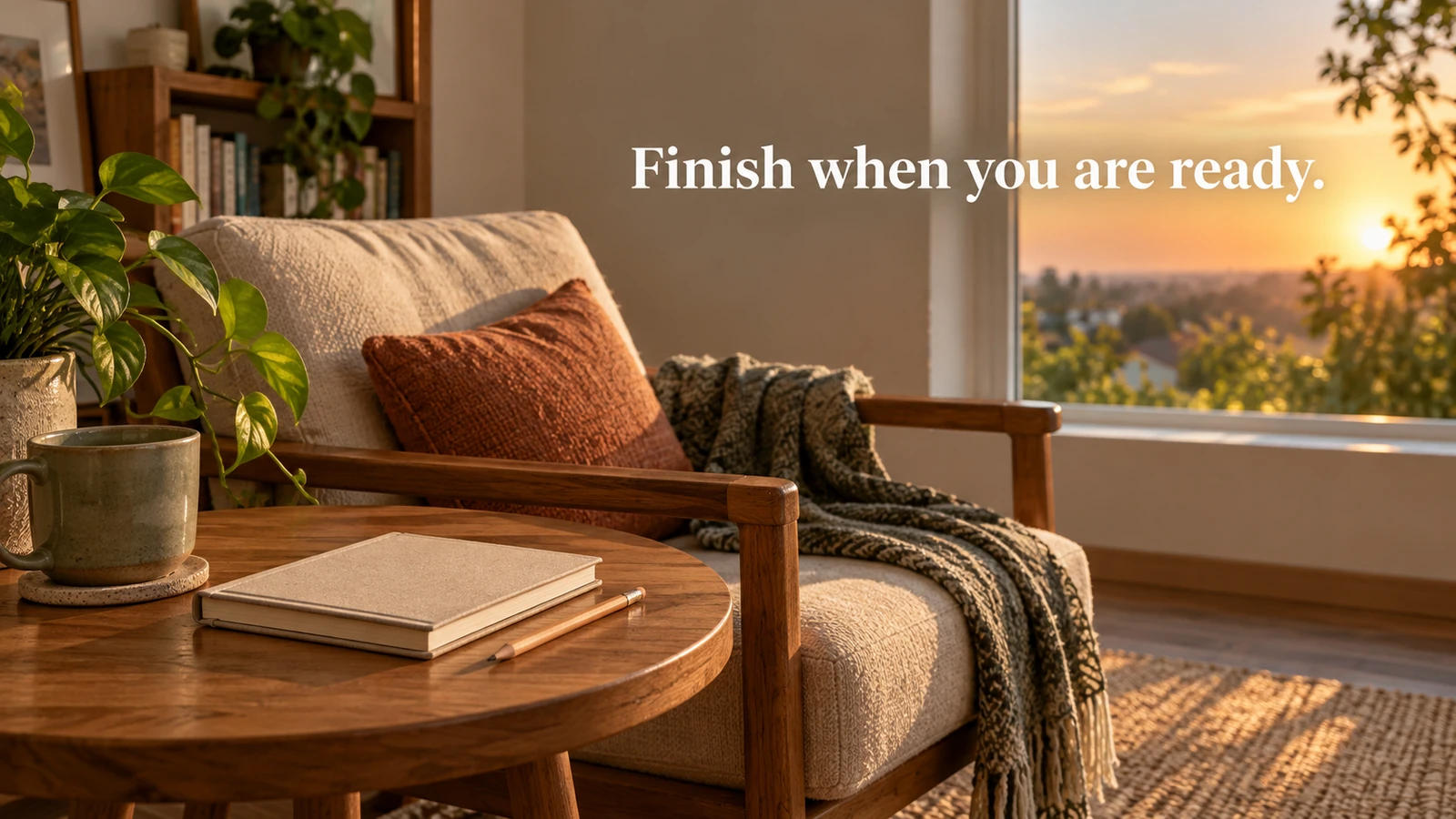
You can record three observations: the view you chose, anything that made the setup uncomfortable and whether you would choose it again. A note such as “The window reflected too much light; the shelf was easier” gives you a useful next adjustment without claiming a health result.
Avoid making concentration the only measure. An interruption may tell you that the timing was unsuitable, rather than that you practised badly. A session you stopped may still reveal a useful preference. You are choosing a workable arrangement, not earning a score.
Frequently asked questions
Do I need to keep my eyes completely still?
No. Blink and make normal small movements. This exercise does not require a fixed stare. If holding your gaze becomes uncomfortable, change it or stop.
Can I look out of a window?
You can choose an ordinary view if it feels comfortable and safe. Passing movement may be more distracting than a stationary object. Avoid looking at the sun or bright glare, and choose another view if the light is unpleasant.
Is a candle necessary?
No. This guide uses ordinary objects and room surfaces. You do not need a flame or a special visual focus. A simple bowl or patch of wall can be sufficient.
Can I listen to sound while keeping my eyes open?
Yes, if listening feels comfortable. Decide whether the visual view or the sound is your main point of attention instead of trying to follow both perfectly. Keep your gaze natural and change the practice if it feels distracting.
What if I keep thinking about other things?
Notice that attention moved and return to your chosen view when you want to. You do not need to empty your mind. If the session turns into effortful monitoring, make it shorter or leave it for another time.
Is eyes-open meditation better than closed-eye meditation?
This guide does not establish that one is better. Choose according to comfort, surroundings and preference. You can use different options on different days.
Choose a practice that fits your setting
A useful next session can begin with one decision: where you will sit and what you will look toward. If you prefer a broader choice between listening, meditation and movement, SoulFul GLO's practice chooser offers related options. Keep any session voluntary and adjustable.