You remember an afternoon in several pieces: the room you used, a conversation, something you enjoyed and a question you still have. Putting them into chronological order may feel like extra work when their connections interest you more than their sequence. A mind-map entry gives those pieces places around one shared subject.
The page can use short words and branching lines rather than paragraphs. You decide which details belong together and explain a connection when its meaning would otherwise be unclear. It is a personal arrangement of your account, not a picture of how your brain works or a test that reveals hidden feelings.
Quick answer
Put one ordinary subject near the centre of a usable page. Add a few short branches for different aspects, then add details where they belong. If you connect two branches, label what the line means. Include enough context to recognise the occasion later and stop when the page holds what you wanted. You can use just one branch, return to prose or leave a connection undecided.
Choose connections as the purpose of this page
A timeline asks what happened before and after. A mind map asks which details you want to place together around a subject. Both can describe the same afternoon, but they organise the account differently. Use the branching format when you want to see several aspects beside one another without deciding a single reading order.
The Open University’s mind-mapping resource presents a central topic with outward branches and labelled relationships in an educational reflection context. That establishes a real example of the format. The private journal exercise here is an editorial adaptation; it does not establish a health effect or suggest that the university has assessed this particular method.
A useful result might simply be a page where you can find the conversation and the setting without searching through a long paragraph. You may prefer a paragraph once you have tried it. No special stationery, artistic skill or digital mapping subscription is needed for a small paper attempt.
Give the centre a clear subject
Choose a subject that fits the entry you actually want to make. “Saturday afternoon in the community room” gives the branches a common occasion. “Everything I need to understand” leaves the page open to almost anything. Start with the smaller subject and widen it only if doing so serves your purpose.
Add an actual date or another honest time reference when it would help you distinguish this occasion. Keep a missing date uncertain rather than making the centre look more precise than your memory. A short label can hold the reference without becoming a detailed location record.
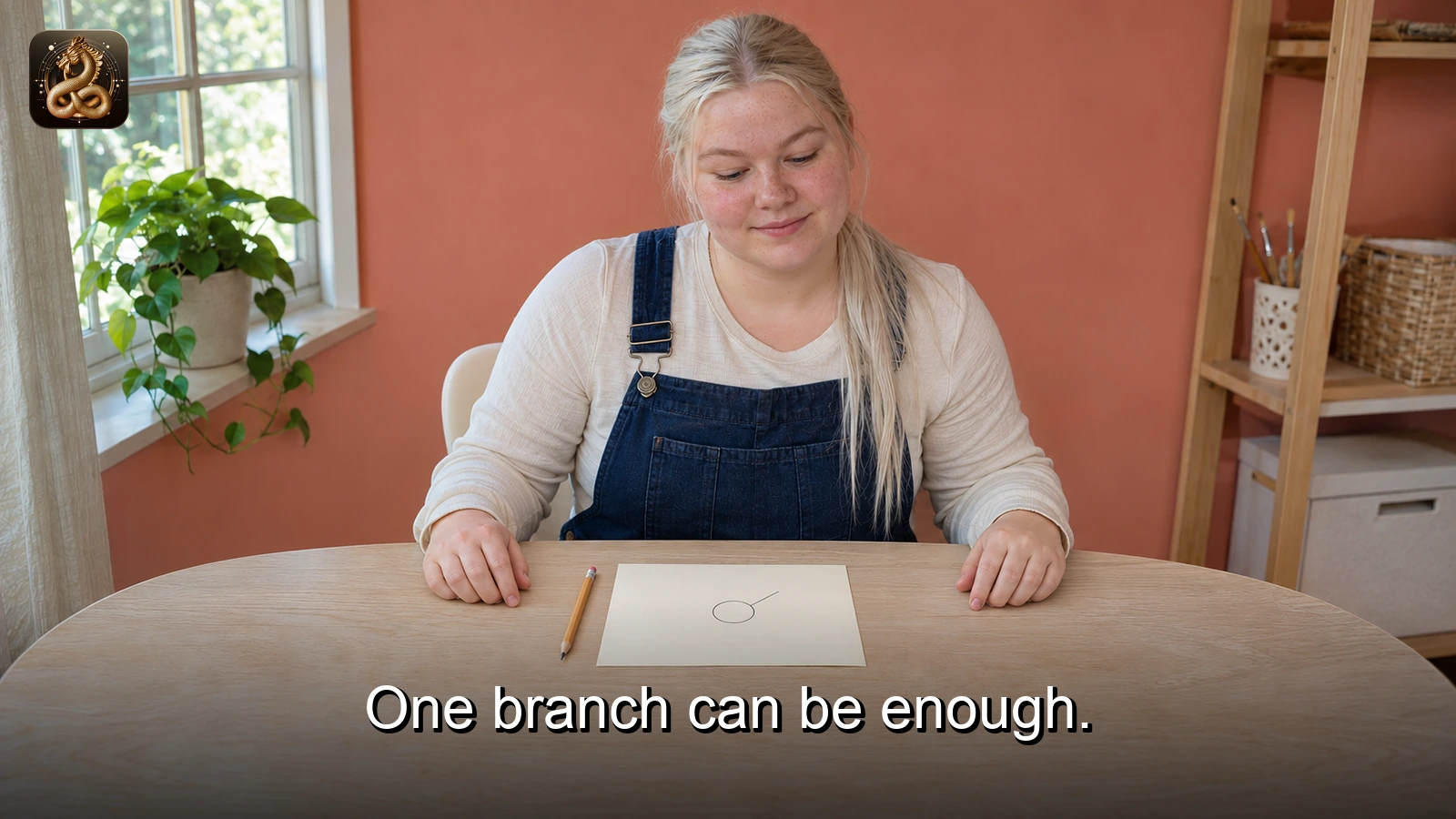
Leave room around the centre. The layout need not be symmetrical, colourful or decorative. A plain subject in a small circle is enough if you want a visible starting point. You can write the subject without a circle as well; its role comes from how you use the surrounding branches.
Start with a few different aspects
Choose branch labels that do different jobs. For an ordinary afternoon, you might use setting, activity and conversation. For a visit, you might prefer what I expected, what I noticed and what I am curious about. Select labels from your actual subject rather than completing a fixed template.
Write a short detail along or beside a branch. Under setting, “tables beside the open doors” may be enough. Under activity, “helped arrange the display” names an action. These phrases give you something to recognise without requiring a complete sentence at every point.
Keep each branch readable before adding more. If setting already contains several unrelated subjects, give one its own branch or choose a narrower detail. You do not need an evenly balanced page. One branch can have several notes while another has only a single word.
Add detail without making every thought a new branch
Use a small offshoot when it explains an existing note. A branch called conversation might contain “talked about the old noticeboard,” with an offshoot saying “I do not remember who first mentioned it.” The uncertainty belongs beside that conversation instead of becoming a general warning at the bottom.
Ask what a new mark adds. Does it identify an occasion, preserve a detail, qualify a statement or show a relationship? If it only repeats the branch label in different words, you can leave it out. Space around a note can make it easier to follow when you return.
Use sentences when a phrase becomes misleading. “Everyone agreed” may be too broad; “the two people beside me agreed about moving the table” is more specific if that is what you observed. A concise map still needs an accurate account. Shortness does not make a guess less consequential.
Label a connection instead of letting a line imply one
A line between two branches can mean many things: happened together, reminded me of, involved the same person, or something I want to compare. Write the relationship near the line when it matters. This prevents an ordinary association from looking like a claim that one thing caused another.
For example, a line from “open doors” to “conversation” could be labelled “we stood here while talking.” That describes a remembered arrangement. A line labelled “made everyone friendlier” would claim an effect you may not have evidence for. Keep the map within the account you can actually support.
An arrow adds direction, so use it deliberately. It can show the route you took or the order you remember. If you only mean that two notes are related, an ordinary line with a label may be clearer. There is no requirement to connect every branch or find a larger explanation.
A small table of useful page choices
Use the table to choose how to represent a particular detail. It compares writing decisions rather than assigning universal meanings to marks. Your page can use another simple arrangement when that is easier to read.
| What you want to keep | Possible mark | Context to add |
|---|---|---|
| One aspect of the occasion | A branch from the centre | A short label that differs from the others. |
| A detail about that aspect | A smaller offshoot | The specific observation or preference. |
| A relationship between notes | A connecting line | Words explaining what the connection means. |
| Something you do not know | A question beside its subject | Leave the answer open rather than guessing. |
A fictional example: Noor maps a community-room afternoon
Noor is an invented adult, and the following occasion is fictional. She wants to remember helping with a small display in a community room. Her centre says “Community room, Saturday afternoon.” She does not want a minute-by-minute account or a plan for the next event.
First, she adds three branches: setting, helping and conversation. Under setting, she writes “tables by the open doors.” Under helping, she writes “put the small cards beside the display.” Under conversation, she writes “talk about the old noticeboard.” The different labels keep the details easy to locate.
Second, she gives the conversation a useful qualification: “I cannot remember who raised the subject.” That note stays beside the relevant branch. She does not add a confident name merely because a name would make the page look finished.
Third, she draws a line from setting to conversation and labels it “we stood near these doors.” The line identifies a shared place. It does not claim that the room caused the conversation or that everybody enjoyed the same part of the afternoon.
Fourth, she adds a preference on a separate branch: “I liked arranging the cards.” This is her response, distinct from the action she recorded. She leaves the rest of the event without a verdict. A single preference need not become an instruction to volunteer again.
Finally, she checks that each branch can be understood from the page and closes the notebook. The simpler version would contain only the centre and the helping branch. Another writer could choose a different focus or ordinary prose. The example demonstrates organisation, not a real customer’s experience or a wellbeing result.
Keep a literal sketch as a different option
SoulFul GLO’s simple-sketch journaling guide describes recording a visible object or arrangement with a few marks and a key. Use that approach if the room’s layout is the thing you want to preserve. A branching map instead groups aspects of your account around a subject; it need not resemble the place.
Read the page once without adding to it
Begin at the centre and follow a branch. Can you tell what the short phrase refers to? Replace an unclear “that” with the object or occasion you meant. Check any connection label against the notes it joins. The purpose of this reading is to make the existing page understandable, not generate another round of branches.
If two labels overlap, you can combine them or leave a short pointer between them. If a branch has become a separate subject, give it another page when you actually want to explore it. The first entry can remain a small map rather than expand into a complete personal filing system.
You can also leave an unfinished question beside a branch. Mark it as a question, rather than adding a likely answer to tidy the page. A useful map can show the boundary of what you know as clearly as it shows a connection you want to retain.
When the page becomes crowded
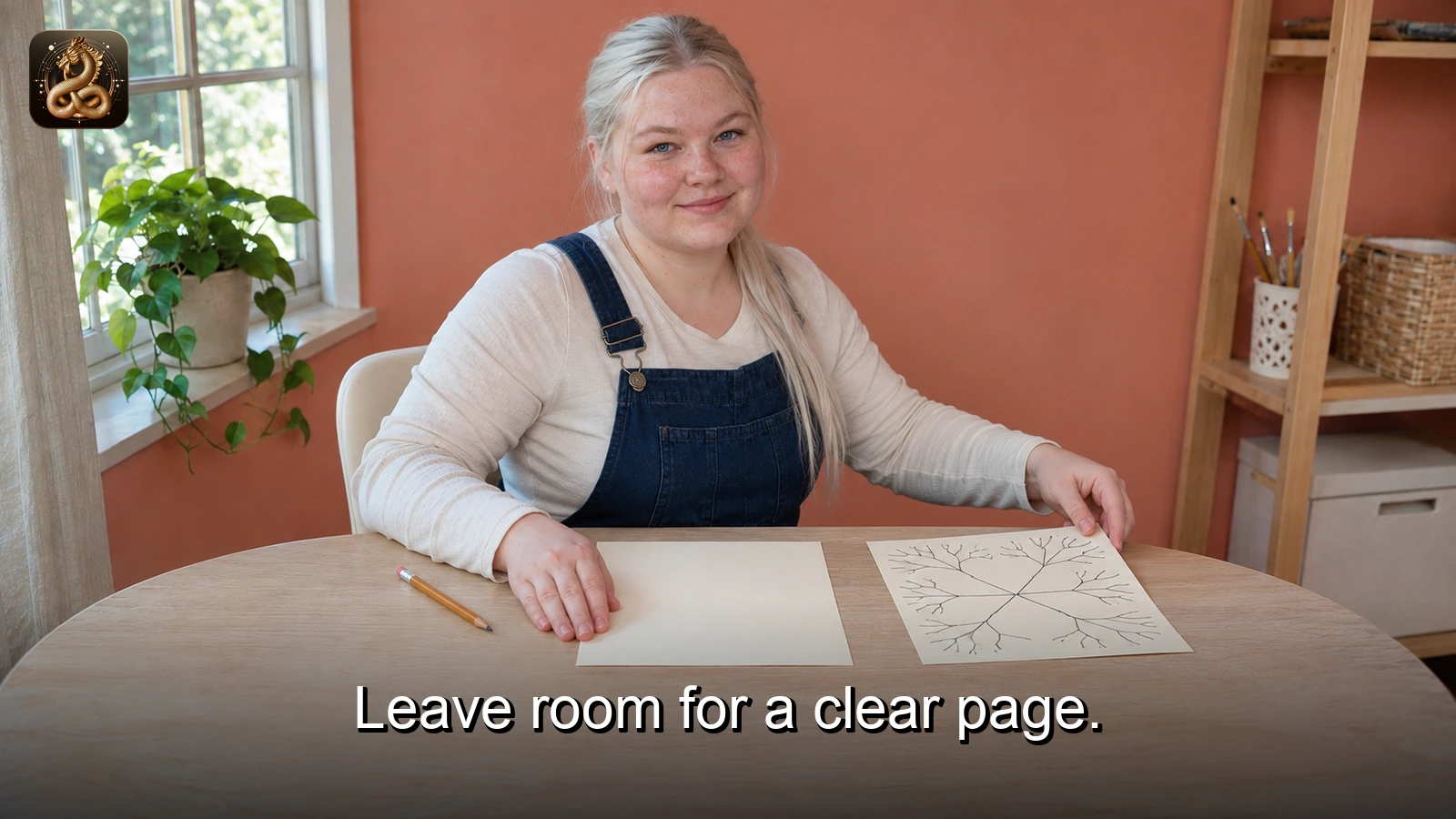
Start another small map instead of squeezing tiny writing into every gap. Give the second page a plain reference to the first if the connection matters. A page number or a short shared subject can be enough; there is no need for a complicated code.
Colour is optional. If you use it to distinguish remembered details from questions, add a small key and keep the words understandable without colour alone. An entry that depends on remembering which shade meant uncertainty may be harder to read than a brief written label.
A digital tool may suit this format, but inspect its actual features, saving and access arrangements before including private information. This article does not establish that SoulFul GLO has a mind-mapping canvas, image upload or automatic diagram feature. A paper page can remain separate from text or voice journaling tools.
Leave interpretation and future action optional
A connection on this page records how you arranged the account today. It does not establish a recurring psychological pattern or explain another person’s motives. If your interpretation changes later, add a dated note rather than quietly turning the earlier map into a record of what you now think.
A practical task may appear while writing. Decide separately whether it belongs on your usual reminder list. The map does not have to become a project plan, and every branch need not produce an action. You may want to retain an ordinary detail simply because it interested you.
Journaling is an optional self-care practice, not treatment or a substitute for appropriate support. Stop or choose another subject if the material becomes unwelcome. The format does not require you to map difficult experiences, uncover hidden causes or complete a daily series.
Frequently asked questions
Does a mind map have to look artistic?
No. Plain words and a few readable lines can be enough. Choose a layout that helps you find the details. Symmetry, pictures and colour are optional, and there is no standard of drawing skill to meet.
Must I connect every branch?
No. The shared centre already gives the notes a subject. Add a cross-connection only when you have something specific to say about the relationship. A line without a clear purpose can be left out.
Can a branch contain a whole sentence?
Yes. Use the wording needed to preserve your meaning. A longer accurate sentence can be more useful than a short phrase that makes an unsupported claim. You can mix brief labels and fuller notes.
Choose the next format by the record you want
Explore SoulFul GLO’s journaling overview when comparing written and spoken reflection. A mind map is one optional paper format among those choices. Keep it small enough to serve the particular subject you want to remember.