
You chose a quiet moment, started a meditation and soon wanted something more interesting to happen. The voice keeps giving a familiar instruction. You notice the clock, imagine another activity or consider searching for a different recording. Boredom can become the main subject of the session before you have decided what to do with it.
You do not need to make meditation entertaining or remain with an optional activity to prove determination. A more useful question is what is happening in this particular session and which ordinary choice fits it. This guide offers a small decision plan, an example and a comparison table. It does not diagnose boredom, prescribe treatment or promise that continuing will make the feeling disappear.
Quick answer
When meditation feels boring, pause the verdict that the whole session has failed. Check whether you understand the instruction, whether there is a practical need to address and whether you want to continue. You can follow the understood instruction for the time you actually have, choose a simpler format next time or finish now. There is no required feeling to reach before ending. If the experience is distressing or raises a health concern, stop and seek appropriate support rather than using this plan to push through it.
A source that leaves room for an ordinary experience
The University of Melbourne’s mindfulness exercise page explicitly includes boredom among experiences that may arise during its body-scan guidance. It also separates that exercise from a relaxation contest or required state. That provides context for allowing an ordinary experience to be present; it does not establish what every meditation should involve or that a particular SoulFul GLO recording will change your mood.
The choices below are original editorial suggestions for an optional personal activity. They are not a replacement for the directions of a qualified teacher or a method for assessing a symptom. You can read them before deciding whether meditation is something you want to do today.
Work out what you mean by boring
Try an ordinary description before adopting a broad explanation. “I have heard these words before” is different from “I cannot tell what I am meant to do.” “I would rather read my book” is different from “I am waiting for an important call.” These sentences describe different decisions. None requires you to investigate your whole personality before responding.

Keep the description close to something you can recognise. You might say that you are checking the remaining time repeatedly, expecting a new instruction or wishing the recording would change. Avoid turning those observations into a certainty that you lack discipline, that the guide is unsuitable for everyone or that meditation has nothing to offer you.
The word may also be covering a practical problem. Perhaps the speaker is hard to hear, the chosen duration no longer fits or you have been interrupted. You do not have to treat these issues as an internal experience to observe indefinitely. Use the actual playback controls, address the interruption or choose to finish. Ordinary preparation remains available.
A four-part decision plan
First, check for something that needs an ordinary response
Look at the situation rather than immediately searching for a more compelling track. Is there an appointment, another person who needs you or an arrangement you need to change? Attend to that requirement. A meditation does not make a real deadline less real. You can return another day without creating a replacement session tonight.

Next, identify the direction you actually understand
If you cannot describe what the guide is asking in one short sentence, locate the missing explanation. A preview, transcript or question to the provider may help when those options exist. Do not substitute a step remembered from another recording merely to avoid uncertainty. You can stop using guidance that you cannot follow.

Then, make a choice about this session
When the task is clear and no practical issue needs attention, decide whether you want to continue with it. Continuing can mean following the next instruction without demanding a new sensation. Finishing can mean stopping the recording and returning to the room. Neither choice needs an argument about whether you are a good meditator.
Finally, leave the next session undecided
One uninteresting listen does not have to determine your routine. You may choose the same resource later, a different clear format or another activity. Avoid promising yourself a stricter practice as repayment. A decision made for today can remain a decision for today, without becoming a contract about every future morning.
A table for different kinds of stuck moment
| What you notice | What to check | An available choice | What not to infer |
|---|---|---|---|
| The instruction seems repetitive. | Do you understand it and want to continue? | Follow the current instruction, or finish. | Repetition proves success or failure. |
| You cannot describe the task. | Is there an explanation from this provider? | Clarify the wording or choose other guidance. | Confusion is a required challenge. |
| You keep checking the time. | Has your available time changed? | Use the actual stop control when you need to finish. | You must outlast the urge to check. |
| The sound is unclear. | Is there a straightforward playback problem? | Pause and check the available controls. | You should listen harder indefinitely. |
| You would prefer a different activity. | Is meditation still your chosen activity? | Make an ordinary choice about what to do next. | Changing plans reveals your character. |
Make the choice smaller than a challenge
You may be tempted to negotiate with yourself: remain until the next interesting part, then decide. That arrangement makes interest the permission to finish. Try a more ordinary boundary instead. Decide what activity you are choosing now and let its ending remain available. There is no need to increase the planned duration because the opening felt uneventful, and a shorter choice need not be followed by a longer compensating session.
Keep entertainment and meditation as separate choices when that helps. You may want music you enjoy, a story or conversation instead of this attention task. You do not have to describe that preference as avoidance, and you do not need to call the alternative a meditation. Choosing what you actually want can be a practical decision about an afternoon rather than a judgement about what activities are valuable.
Ask a teacher a question they can answer
If you are learning within a course, report the specific point where the difficulty appears. For example: “I understand the returning instruction, but I spend much of this recording waiting for the next cue. What does your teaching suggest at that point?” That gives the teacher more information than asking whether you are doing everything wrong. Keep the question attached to their actual practice and let their answer remain specific to it.
You can also say that the duration or format is not one you currently want. Ask whether there is a suitable introductory option, rather than assuming that shorter means easier or that a longer session is compulsory. The provider may offer an alternative or may not. An unanswered question can stay unanswered while you choose another activity. This article does not turn that exchange into a test of the teacher or the listener.
A fictional demonstration: a familiar recording after lunch
The following example is invented to show the decision plan. Nora has a short break after lunch and opens a recording she has used before. During the first part, she thinks that she already knows what comes next. She begins looking for the remaining time instead of attending to the current instruction.
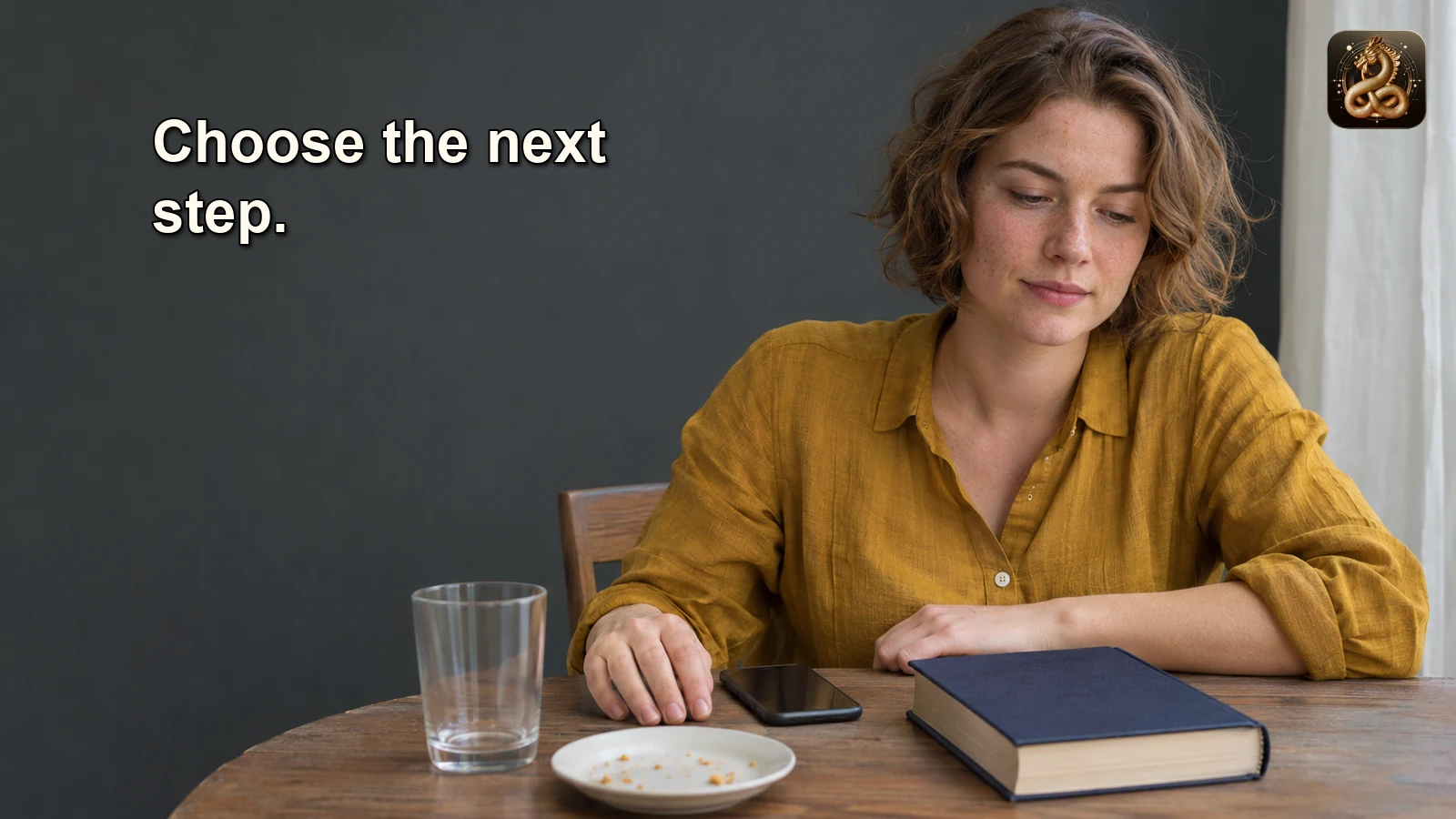
Her first description is narrow: “I am waiting for the voice to say something new.” She does not write that she has lost the ability to meditate. She checks her afternoon plan and finds that nothing urgent has changed. She can still describe the recording’s attention task and is comfortable with the ordinary setup.
Nora chooses to continue for now. She follows the instruction she can hear, without searching the audio for a surprise. The thought that she would rather read returns. She does not need to debate it or restart the track. When she decides she has had enough, she stops, notices the room and puts the device aside.
The example ends there. Nora does not report a transformed afternoon, a deeper state or a victory over boredom. Her practical result is a choice she can describe: she used part of a familiar recording and finished. Another person could make a different choice without making this demonstration incorrect.
A second branch: the task was never clear
In a different invented situation, Tomas calls a session boring because he has been waiting for instructions. The introduction contains several broad promises but does not explain the activity. He realises that he has not understood what to do. This is a different problem from Nora’s familiarity with clear guidance.
Tomas pauses and checks the accompanying description. It still does not answer his question. He leaves that resource for now. He can ask its provider for clarification if he wants, but he does not have to remain listening to demonstrate openness. Choosing understandable guidance is an ordinary preparation decision, not a refusal to learn.
Compare attention instructions before choosing a format. SoulFul GLO’s guide to focused attention and open monitoring can help you identify the task a resource describes.
Keep the simpler option genuinely simple
If you want less preparation next time, choose one change rather than rebuilding everything. You could select a shorter available recording or read its description before starting. Use options that the actual provider offers. This article does not establish that any app supplies an edit, download, timer or alternative edition for every session.

A simpler choice can also be to leave meditation aside and do another ordinary activity. Reading, making a drink or sitting without audio need not become substitute mindfulness exercises. You are allowed to choose them for their own purposes. There is no obligation to turn every moment into practice or keep a record explaining the change.
If you do repeat the recording, avoid setting “I must find this interesting” as the new requirement. You can hear familiar words and still understand the activity. You can also decide the format is no longer one you want. Both decisions concern fit; neither establishes a universal result for the method.
Finish without an extra assessment task
Use the actual stop control, attend to your surroundings and allow time for whatever comes next. You do not need to wait for boredom to become calm before standing up or returning to your day. If you want a note, one practical sentence is enough: the task was clear, the timing was awkward or the format was not what you wanted.
Keep any note about the resource separate from claims about your health or progress. “I wanted fewer spoken introductions” may help a future choice. “This proves I cannot settle” goes beyond that observation. You can also leave the session without a note; a personal practice does not need a performance report.
Questions readers often ask
Does feeling bored mean the recording is not working?
Boredom alone cannot establish what effect a recording has or whether it suits everyone. Describe this session and your choices without treating one feeling as an effectiveness test. You can decide that you do not want to continue without proving that the resource is defective.
Should I change recordings every time?
There is no rule here requiring a switch or forbidding one. Check whether you understand the current task and still want to do it. Choosing another recording is different from repeatedly searching until an expected feeling appears. You can end the search as well as the session.
Must I sit through the whole planned duration?
This is an optional activity, and the plan does not require you to finish a track. Keep responsibilities, ordinary comfort and stopping choices available. A teacher-led course may have its own participation arrangements; clarify them with the teacher rather than treating this article as that course’s directions.
What if boredom is accompanied by distress?
Do not use the label boredom to dismiss a concerning experience. Stop when needed and seek support appropriate to your situation. This article cannot assess symptoms or decide whether continuing is suitable. Understanding an optional activity is separate from managing an ongoing health concern.
If choosing the resource is your next step, read SoulFul GLO’s guide to sampling a guided meditation. Check its actual directions, then decide whether you want to begin.