
Two meditation descriptions can sound similar while asking you to do different things. One may tell you to stay with a selected object and return when attention wanders. Another may invite you to notice what arises without selecting one object to keep. Reading that difference can be more useful than choosing whichever label sounds more appealing.
You do not need to decide which style describes you as a person. Start with the actual instructions in front of you. The question is what this particular practice asks you to attend to, what it asks you to do when something else appears, and whether those directions are clear enough to follow.
Quick answer: look for the selection and return instructions
Focused-attention instructions typically select an object and describe returning to it after distraction. Open-monitoring instructions typically concern noticing changing experience without maintaining one selected object. These are broad research categories, not a guarantee about every recording or teacher using the labels. Read the directions, ask about unclear wording, and avoid inferring that one label promises better results.
This guide helps interpret a description. It does not provide a meditation protocol, diagnose a difficulty or recommend a practice as treatment. You can choose not to begin, seek clarification, or stop a practice that you do not want to continue.
What the research distinction actually describes
A 2008 review by Antoine Lutz and colleagues distinguished focused attention, involving a chosen object, from open monitoring, involving nonreactive awareness of changing experience without that same selected-object task. The authors used these categories to discuss research on attention and meditation. The paper is a review, not a trial proving that one style is better for a particular reader.
Use that distinction as vocabulary for a question. It does not mean that every teacher divides practices in precisely the same way, or that the title of a recording establishes its content. A practice can also contain different instructions at different points.

The linked paper, “Attention regulation and monitoring in meditation,” was published in 2008. Neither its publication date nor a scientific-sounding label supplies a personal prediction. This article makes no claim that either category will produce a specific change in mood, health or the brain.
Find the instruction that selects an object
Look for a sentence that tells you what to attend to. It might name a repeated word, a sound or another object. Then look for the sentence that explains what to do when attention moves elsewhere. The combination is more informative than an isolated use of the word focus.
For example, a description might ask you to attend to one repeated word and return to it when you notice another thought. That is a selected-object task. The relevant feature here is the instruction to come back to the word, not a promise about what the word will make you feel.
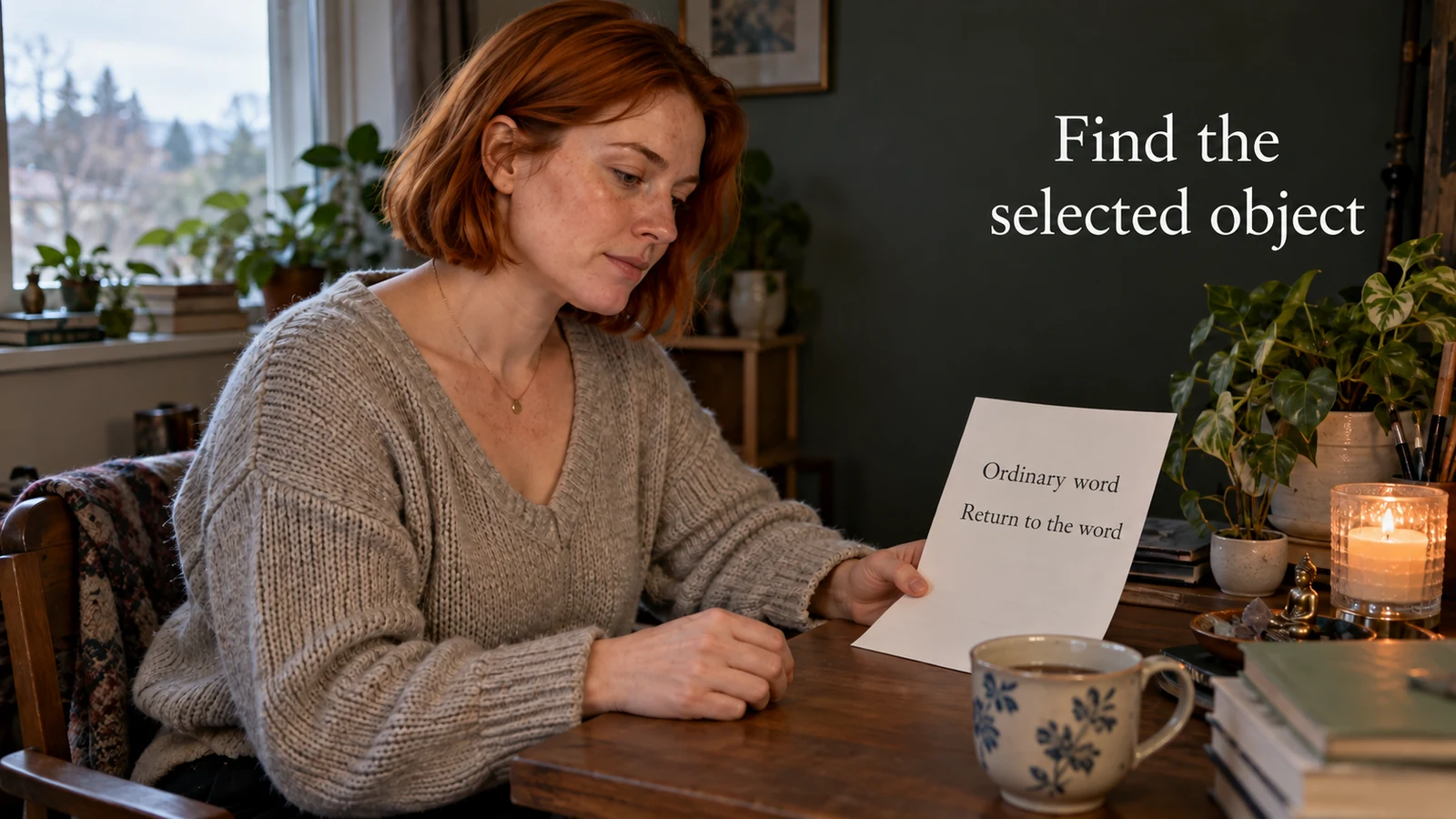
A recording's description may omit these details because the actual directions occur in the audio. If a preview or transcript is available, use it to check the task. If neither is available, you can ask the provider rather than filling in the missing directions from a category label.
Do not turn this reading exercise into a demand to monitor yourself perfectly. You are deciding whether you understand a set of directions. Recognizing the intended task does not establish how easy, difficult or useful you will find it.
CTA: Our plain-word meditation anchor guide shows one concrete example of instructions organized around a selected word: https://soulfulglo.com/blog/plain-word-meditation-anchor. Read it as an example of that task, rather than a comparison of health outcomes.
Find what “notice whatever arises” is asking you to do
A description of open monitoring may refer to changing sounds, thoughts or other experiences. Look for whether it asks you to keep one selected object or notice what becomes apparent without maintaining that object. The directions should make the intended response understandable.
Words such as open, awareness and mindful are not sufficient by themselves. They can appear in many kinds of practice descriptions. Ask what they mean in this recording or class: “Am I meant to return to one object, or notice the changing experience without choosing one to keep?”

Also check whether the provider explains any labels they ask you to use. If a practice includes briefly naming what you notice, that is an instruction to understand in its own right. Do not assume that every practice within a broad category uses the same words or steps.
You are not required to interpret vague language as a test you have failed. A description can be incomplete. Asking the provider to restate an instruction in ordinary language may resolve the uncertainty, or reveal that you would prefer a different resource.
Separate the title from the sequence
A session can begin with one task and move to another. For example, its description may first select an object and later broaden the scope of noticing. Read for the point at which the instruction changes rather than forcing the entire recording into one category.
A useful preparation note might say: “First part: selected object. Later part: directions change; check what to do then.” That note describes the sequence. It does not rank the parts or imply that progressing to the later instruction is a measure of achievement.

If a teacher offers a shorter option, ask whether it ends before a transition or includes a different version of the task. Duration alone does not tell you which instructions you will receive. A short recording can still contain several changes that deserve clear explanation.
The same care applies to a written practice. Headings can summarize a section without carrying all its directions. Read the surrounding paragraph before deciding what a term means, especially when a summary and a detailed instruction seem to point in different directions.
Compare descriptions with three ordinary questions
First ask, “What am I being asked to attend to?” Write the answer in the provider's terms, then make a short paraphrase you understand. If the answer is missing, mark it as missing instead of inventing a selected object or a broader monitoring task.
Second ask, “What happens when something else gets my attention?” A selected-object practice might describe returning. Another practice might describe noticing that experience within a wider field. Record what the directions actually say, including any point where you need clarification.
Third ask, “Does the task change during the session?” Look for a transition, a new object or a new way of responding. These questions help you compare instructions without making a claim about which category is universally easier or more effective.
You can leave a comparison unfinished. “The preview does not explain the transition” is a useful result. It identifies a question to ask or a reason to choose a resource whose instructions are clearer to you.
Fictional example: two listings with similar language
Leah finds two recordings described as awareness meditations. One preview asks listeners to return to a repeated ordinary word. The other describes noticing changing experience without selecting one object to keep. The titles did not tell her that difference, but the previews do.
She writes a sentence about each task rather than assigning either recording a score. For the first, her note says “selected word and return.” For the second, it says “changing experience; ask whether the teacher uses labels.” The second note includes a genuine unanswered question.
Leah asks the provider about that wording before choosing. The example does not predict which recording she will prefer or what she will experience. It shows a way to turn a broad category into a specific question that can receive a practical answer.
This is a fictional comparison, not a testimonial or a report about a real teacher. The invented recordings are included to illustrate reading instructions. They are not evidence that either task brings a particular benefit.
Fictional example: a session changes halfway through
Arun reads a transcript that begins with a selected object and later asks the listener to broaden attention. He initially thinks the title must describe only one of those tasks. On a closer reading, the transcript explicitly marks the change.
His preparation note records the transition and the sentence that follows it. He does not add a step from another guide to make the session fit his first interpretation. When a later phrase remains unclear, he asks what the teacher intends rather than improvising an answer.

The practical choice is whether he understands and wants to follow that resource. He can choose a different session, seek instruction or decide not to practice. Calling the second part more advanced would not resolve the unclear phrase.
This example also shows why a category is not an identity. Arun does not need to describe himself as a focused-attention person or an open-monitoring person. A decision about one set of directions can remain a decision about that resource.
Keep expectations separate from instructions
A description may combine task directions with claims about benefits. Read those as different kinds of statement. “Return to the selected word” tells you what to do. A claim that the session will reliably create a particular mental state would need its own evidence.
The category name alone does not provide that evidence. Nor does a statement that a method has been studied establish that this recording, its duration and its teaching have been tested for the claimed outcome. Avoid carrying a broad research label farther than the source supports.
You can ask for a clearer description without debating an entire tradition or research field. “What are the instructions in this session?” is a narrower question than “Which type is best?” It can help you make a concrete choice while leaving questions about outcomes appropriately open.
Questions readers often ask
Is open monitoring the same as having no instructions?
Not necessarily. A practice can give specific directions about noticing and responding without asking you to maintain one selected object. Read the actual directions and ask about any phrase that remains unclear.
Does returning to an object mean I have done something wrong?
In a practice that explicitly includes returning, that instruction is part of the described task. This guide cannot assess your practice, but the presence of a return instruction should not be rewritten as a promise that attention will never move.
Is one category always better for a beginner?
This article does not establish that ranking. Clarity, the particular teaching and your choice about participating remain relevant. A category label is insufficient to predict what a specific reader will find suitable.
Can a session include both kinds of instruction?
Yes, a sequence can use a selected object and later change the task. Check the transition and what follows it. Do not assume that a label in the title supplies directions that the session itself has not explained.
Choose a resource whose task you can describe
Before starting, see whether you can state the intended task in one ordinary sentence and identify any change in the directions. If you cannot, locate the missing explanation or ask the provider. You do not need to turn uncertainty into a personal judgment about your ability.
CTA: If you prefer to inspect directions on a page, read our guide to written meditation guidance: https://soulfulglo.com/blog/written-meditation-guidance. It addresses using a written format; the selected-object and monitoring distinction still depends on what the actual instructions say.