
A description can tell you that a guided meditation is short, slow, or intended for beginners. It cannot tell you how it feels to follow the speaker’s first instruction. A short sample gives you a chance to find that out before you settle in for the whole recording.
Listen until the speaker asks you to do one thing. If the request suits the place you are in, try it. Then decide whether the cue was clear, whether you had enough time to follow it, and whether you want to hear more. A sample is useful when it helps you choose a recording for the situation you have today.
Start with one question
Think about what you need to know before you choose. Maybe you can spare only a few minutes and want guidance that starts promptly. Perhaps spoken instructions are hard to follow when the music is prominent. You might be looking for a practice that lets you keep your eyes open in a shared room. Decide which detail matters most for this particular session.
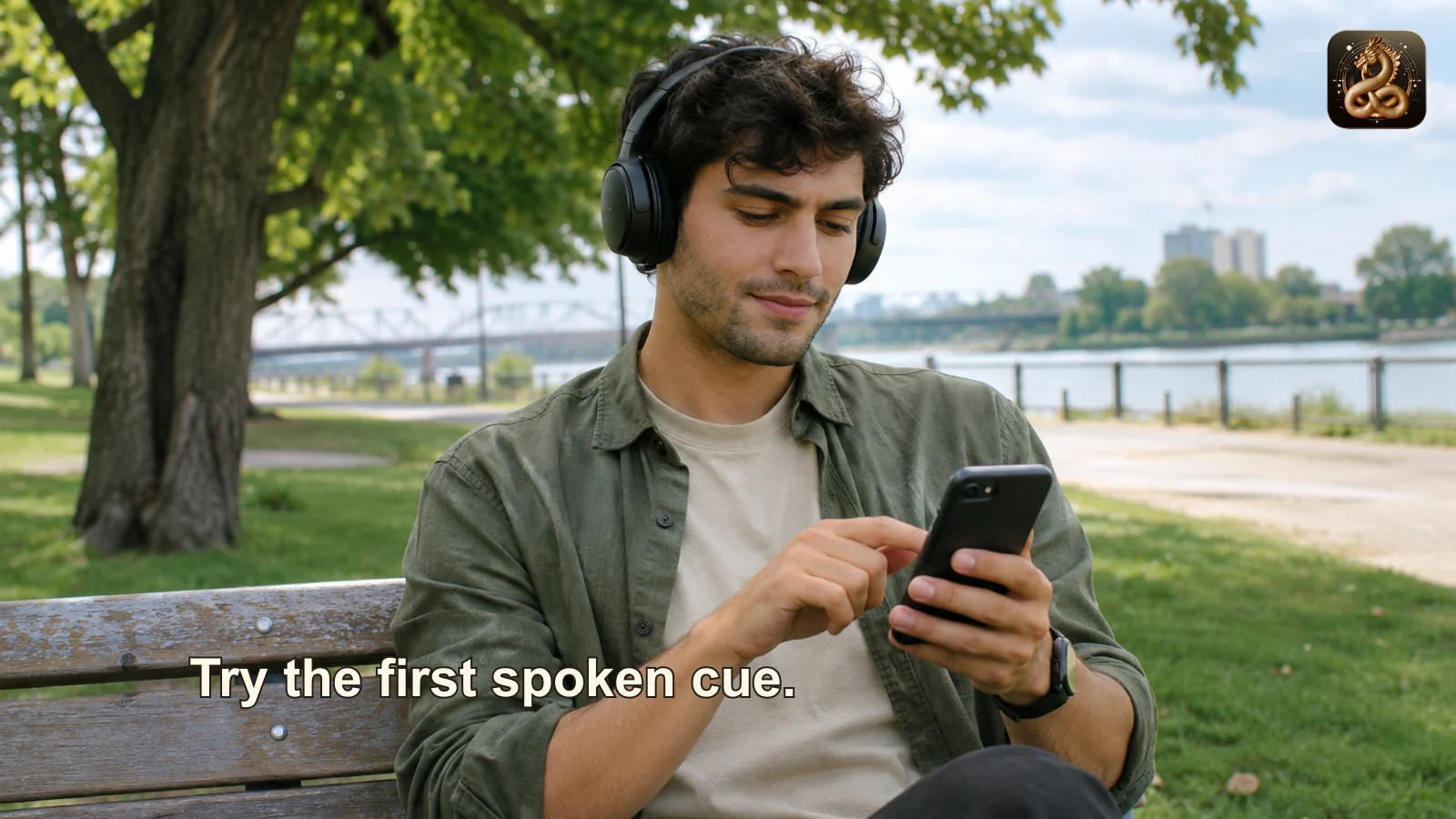
With one question in mind, you can stop browsing as soon as you have an answer. If you want to know whether the voice is easy to hear over the music, you can listen for that. If the sound is clear but the exercise itself is unfamiliar, you can decide whether to try a cue before making up your mind.
If you have no specific concern, start with a simple question. Can I tell what to do when the first instruction arrives? That gives you something concrete to notice without turning the sample into a test of how well you meditate.
Listen past the welcome
An introduction may name the teacher, describe the practice, or invite you to find a place to sit. The actual guidance can sound different. A narrator who speaks briskly during the welcome may leave plenty of time between instructions once the exercise starts. A slow welcome may be followed by a sequence of cues that arrives more quickly.
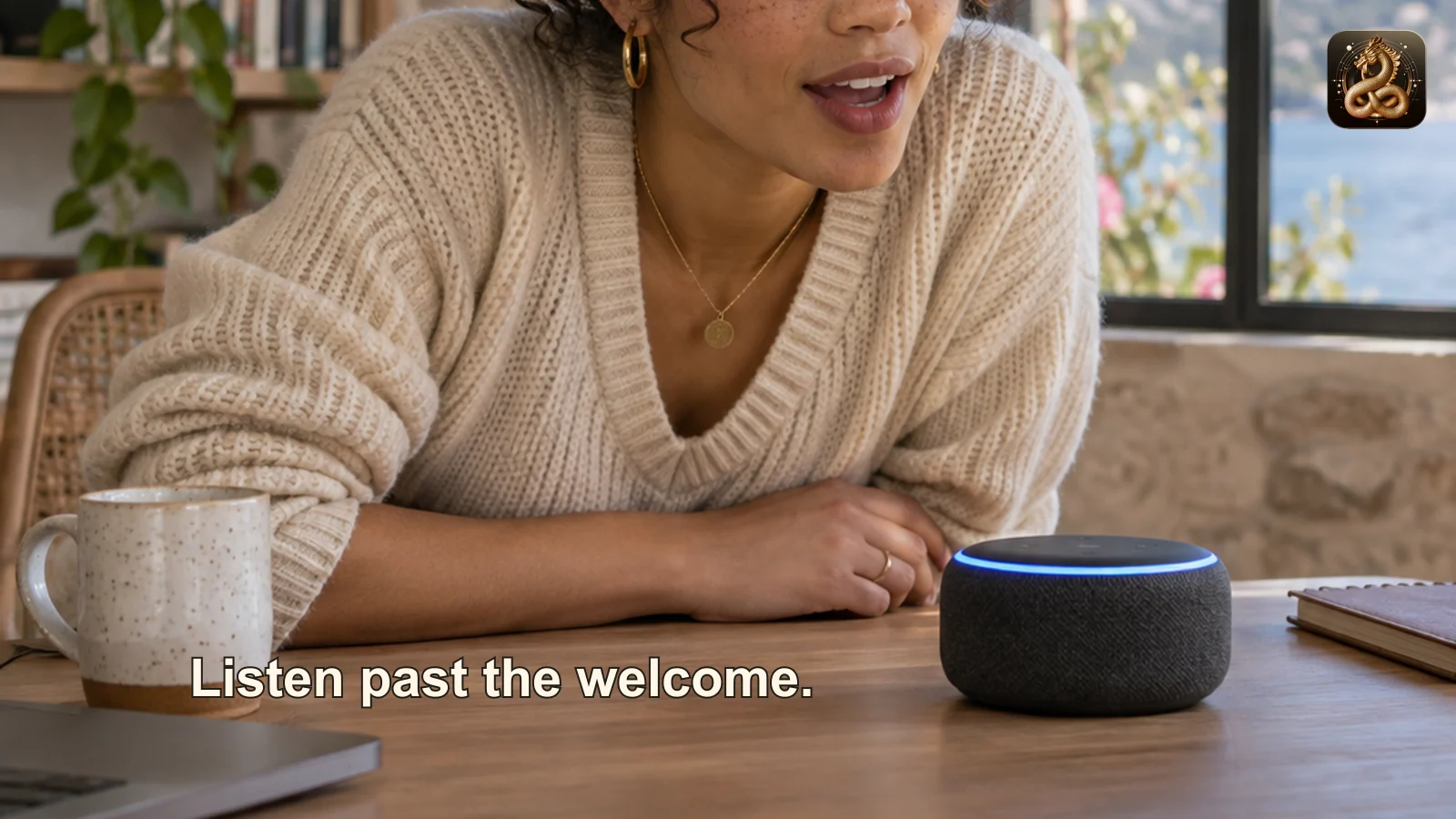
When a player offers a preview, check whether it contains part of the exercise. If it stops before any instruction, try the beginning of the full track when you can do so easily. Give yourself a clear stopping point. You might decide to pause after the first instruction that asks for a specific action, or after the next cue if the first one is very brief.
Some recordings open with setup instructions that are themselves important. The teacher may ask you to move away from a screen, sit somewhere you can rest your hands, or have an object nearby. If that setup is part of the practice and you cannot do it where you are, pause and choose another time or another recording. You already have enough information to make that decision.
Try one instruction at the pace you hear it
Suppose the teacher says to notice where your hands are resting. You can do that in your current position and see whether there is time to notice the contact before the speaker moves on. If you understand the instruction but would need more time, that tells you something about the pacing. If you cannot hear a key word, that tells you something about the mix of voice and background sound.
When the first cue is an invitation you would rather skip, listen for whether the teacher offers a choice. A request to close your eyes may be followed by an option to look down. If a practice repeatedly depends on a position you do not want to take, you can stop and choose a different recording. You do not have to test an instruction that feels wrong for your circumstances.
If you miss a cue because someone speaks nearby, replay it once if that would help. If you still need to keep replaying ordinary sentences, decide whether the recording suits this place and time. A clearer recording or a quieter setting could make the same kind of practice easier to follow.
Notice what is helping you follow
The qualities that make one recording usable can be ordinary. The voice may stay clear when music enters. The speaker may give one instruction at a time. The words may describe a concrete thing you can notice. You may hear a brief pause after each cue and know when the next one begins.
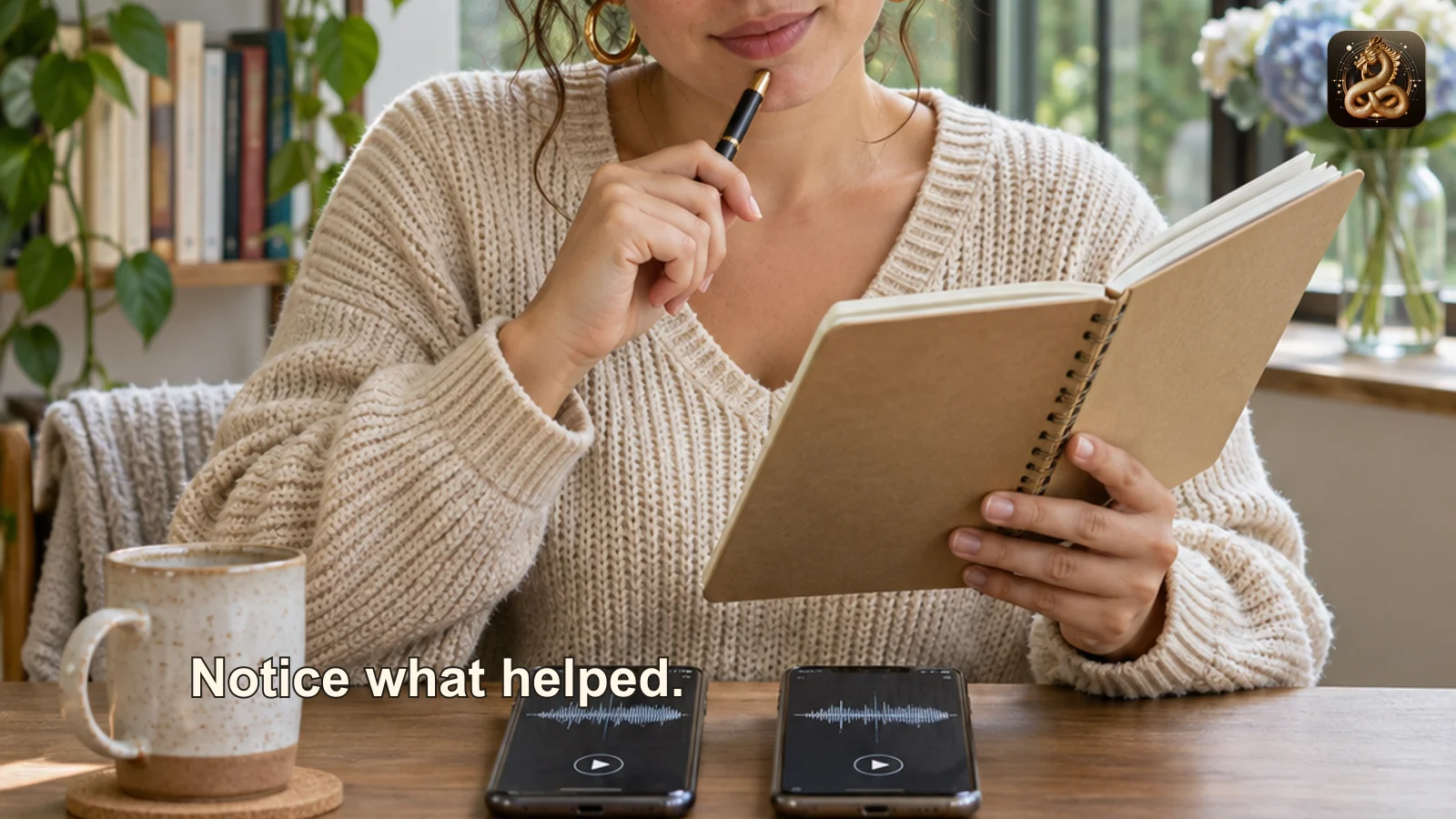
If you find yourself unsure, name the part that was difficult. Was the wording unfamiliar? Did the cue assume you had listened to another recording? Did the speaker move on before you were ready? A specific observation helps you choose what to try next. You might search for simpler wording, a slower pace, or a recording intended to stand alone.
If the instructions refer to a practice introduced elsewhere, check where to start in a guided meditation series. If there is no earlier session you want to hear, choose a recording that explains the exercise as it goes. The sample can tell you whether you have enough context to begin.
Compare two samples without making it a long search
If the first recording is workable, you can keep listening. Comparing more samples is useful when you know what you want to change. For example, if the music covered the voice, try a recording with a simpler background. If the pace felt fast, look for a description that mentions longer pauses and listen for one.
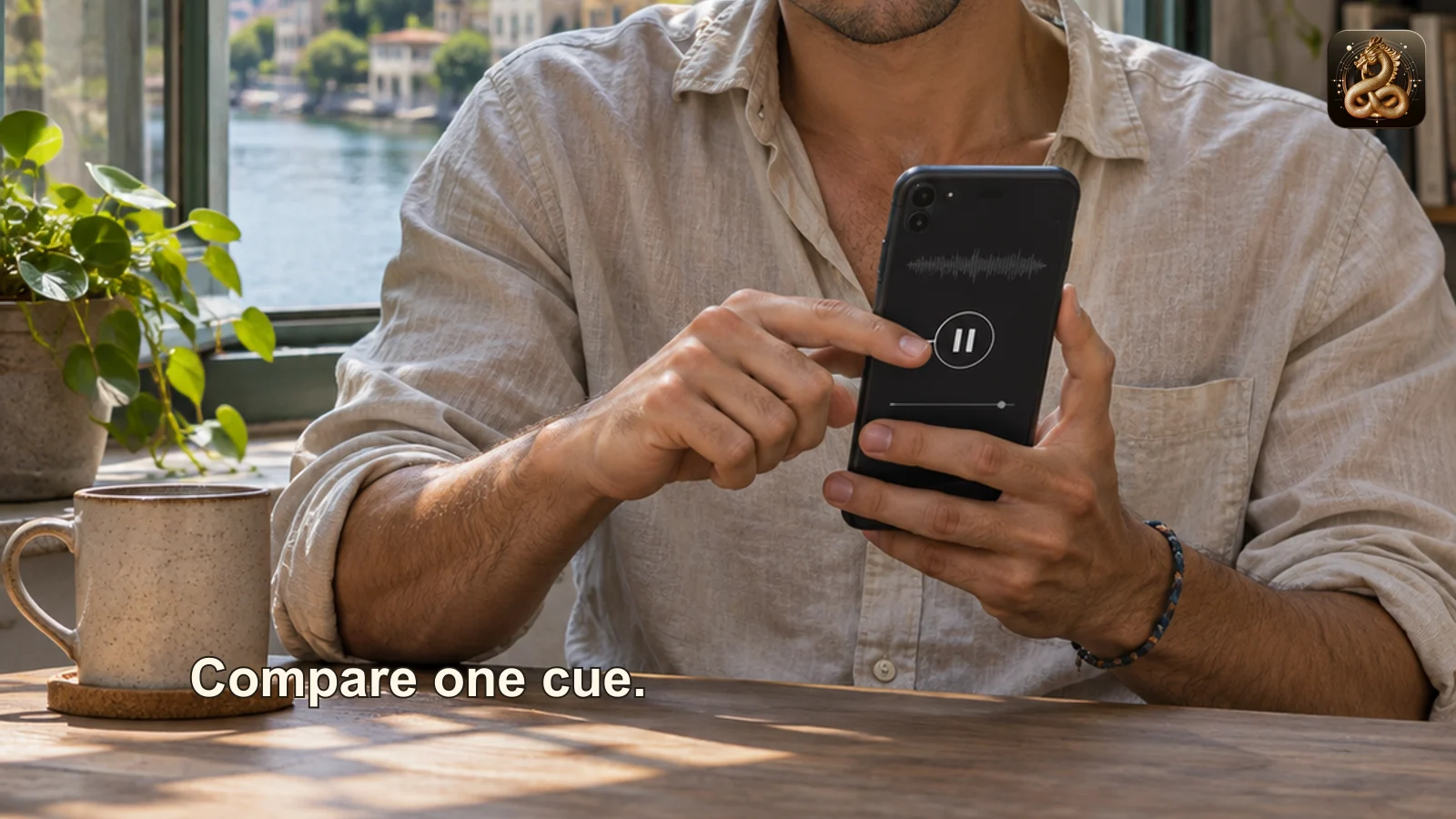
Compare the same part of each recording when you can. Hearing a welcome in one and a complete exercise in another gives you different information. Listen until each speaker gives a cue, then ask how it was to follow it. If both work, choose the one that fits your available time. If neither works, you can stop browsing and take a quiet break.
You can also keep a short note about what you heard. “Clear voice, long pauses, begins with hands” may be enough to recognise a recording later. A description you write for yourself can be more helpful than trying to remember a title. It can also help you find another practice with a similar style.
Try it in two everyday situations
Imagine you have a few minutes before starting work. You choose a short meditation that promises simple guidance. The introduction explains why the speaker likes the exercise and lasts longer than you expected. When the first cue arrives, you can follow it, but most of your gap is already gone. You save the recording for another time and try a track that begins with the first instruction sooner.
On another evening, you are sitting in a shared living room. You want guidance you can use with your eyes open. The teacher says to close your eyes, then adds that you can rest your gaze on one point if you prefer. You try that option, hear the next cue clearly, and keep listening. The opening gave you the specific information you needed.
You may come to a different decision about the same recording another day. A pace that suits you when the room is quiet may be harder to follow when people are moving nearby. The sample helps you decide whether the recording fits the immediate setting. You can keep it for another occasion if it has something you want to try.
Decide whether to continue from where you are
If you liked the opening and still have time, keep playing from the current point. If you paused to compare another track, return to the spot just before the first instruction so you can hear it in sequence. Start again from the beginning if the setup matters or you want to hear the invitation in full.
If the sample used up the time you had set aside, save the recording and finish your break in a way that suits the time left. You can use what you learned later. If the recording is a poor fit, keep one useful detail about why, then move on. You can make a choice based on what you heard without trying to predict how the whole practice would have felt.
Give a familiar recording a fair comparison
If you already have a recording you use often, you can use it to work out what you are looking for. Think of one feature you appreciate. Maybe the speaker gives you a choice about where to rest your gaze, or leaves several seconds after each instruction. Listen for that feature in the new sample. You can like both recordings for different reasons.
Sometimes the familiar recording is the practical choice because you know how it starts and can settle into it quickly. You can put the new one aside for a time when you have room to listen and pause. If you later decide to keep both, give each a purpose you can remember. One might suit a brief break at the desk and the other a quiet evening at home.
Frequently asked questions
How long should I sample a guided meditation?
Listen long enough to hear one actual instruction and the space immediately after it. Some tracks get there quickly. Others have a longer introduction. If your question is whether you can hear the voice clearly, you may have an answer sooner. If you are checking the pace between cues, wait for a second instruction.
What if the preview only contains music?
Check whether you are hearing an introduction or a clip selected by the player. The description may say when the guidance begins. If you can open the full recording easily, sample the opening until you hear a cue. If you are short on time, a recording you already know may be more useful for that particular break.
Should I follow the instruction during a preview?
You can try it if it suits the place you are in and you want to know how it feels to follow. You can also listen without following along. If you are busy, moving through a public space, or waiting for someone to call you, save the actual practice for a setting where it fits.
What if I like the voice but the wording is confusing?
Replay one cue if you think you missed part of it. If the language still seems unclear, try a different recording or look for one with written guidance you can read at your own pace. Liking how someone sounds is a reasonable preference. Understanding the cues is a separate part of choosing a guided practice.
Choose a sample you can stop easily
Before your next session, decide what you want to learn from the opening. Listen for one instruction, try it if it fits, and decide whether the voice, wording, and pace work for you. If the answer is clear, you can use the rest of your time for the practice itself.