
Sharing a home does not mean that every page you write is for everyone to read. At the same time, a notebook on a common table or a note on a shared device may be easier to encounter than you intended. Before writing, it can help to think about what you want to record, where it will live and who can ordinarily access that place.
You do not need to solve every privacy question in order to write an ordinary reflection. You may decide to keep a short paper note, avoid identifying details, use a tool whose actual settings you have checked or leave a subject unwritten. The right arrangement depends on your circumstances; no notebook, account setting or household agreement guarantees privacy.
This guide discusses everyday writing arrangements. It is not security engineering, legal advice or a safety plan for coercion or monitoring. If someone is controlling your access, threatening you or monitoring your devices, an ordinary journaling setup may be unsuitable. Seek appropriate support using a method that fits your situation rather than following a generic concealment technique.
Quick answer
Choose a place and format you can reasonably manage, keep personal entries separate from shared lists and decide which details you do not need to record. For paper, plan where the notebook goes after writing. For digital notes, verify the actual account, sharing and device arrangements before assuming privacy. You can write less, choose another format or not write about a sensitive topic.
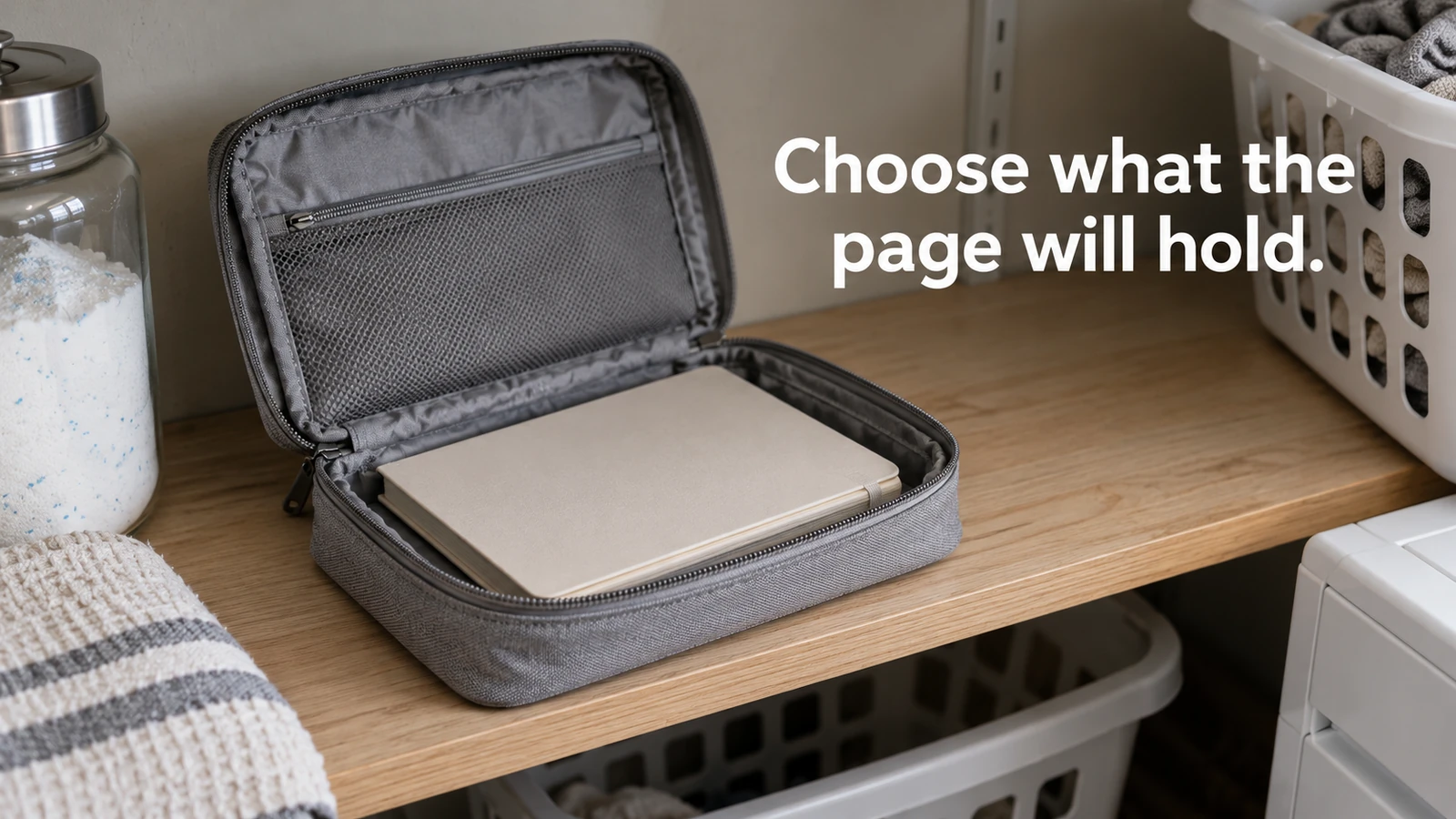
A household conversation about respecting personal belongings may help in an ordinary cooperative situation. It does not make a notebook inaccessible or prove that everyone will respect the request. Treat agreements and storage choices as practical arrangements with limits, not as a promise that private thoughts cannot be seen.
Decide what privacy means for this entry
An entry about a meal may need a different arrangement from an account of a personal disagreement. Ask who you would be comfortable sharing it with and what would matter if someone encountered it. You do not need to classify every sentence as sensitive. The aim is to avoid recording more than you intend without considering where the page will be kept.
Think about other people's details too. An ordinary reflection can describe your experience without copying someone else's contact information, private messages or identifying facts. “I felt uncertain after the conversation” may be enough for the purpose of the page. Including a full transcript or name does not automatically make the entry more useful.
You can write about your response while leaving parts of the event unspecified. This is a choice about the content you keep, not a technique that guarantees anonymity. A detail that seems vague to one reader may be recognisable to another. If that possibility matters, consider whether you want to record the subject at all.
Keep personal writing separate from shared information
Many households have common shopping lists, calendars or notes. Those are useful places for arrangements, but they are not automatically suitable for personal reflection. Before writing in a familiar app or notebook, check whether it is used by anyone else. A tool that feels personal because you often use it may still be shared.
For example, a family tablet may be signed into an account that several people use. A notes folder may have been shared for an earlier project. A paper pad in the kitchen may be treated as a place for anyone to add reminders. None of those arrangements has to be wrong; they simply serve a different purpose from a private entry.
If a reflection produces a practical reminder, move the action to the shared list without copying the personal context. “Check the appointment time” may be all the household needs. Your reasons, feelings and account of the conversation can remain elsewhere. This keeps the two purposes distinct without requiring a complicated writing system.
Plan the ordinary life of a paper notebook
Think beyond the moment of writing. Where will the notebook be while you answer the door, leave for work or finish the session? A common surface may be convenient, but someone clearing it could open or move the notebook. Choose storage that fits your household's actual habits rather than assuming an object will remain where you put it.
An opaque cover or case can keep an open page from casual view, but it does not prevent someone from opening it. A drawer may keep the notebook out of the everyday activity of the room, but it is not a security guarantee. Describe these options realistically to yourself before deciding what to put on the page.
You do not need to buy a special journal to make a short entry. A plain notebook may serve the writing purpose well. If you choose a particular storage method, consider whether you can use it consistently and whether it creates other practical problems. An arrangement that is awkward every time may not fit the way the space is used.
Use a simple household boundary where it fits
In an ordinary cooperative home, you might say, “This notebook is personal; please leave it closed.” Keep the request specific enough that other people understand which object you mean. You may also explain where it belongs if someone needs to move it. You are asking for a behaviour, not requiring them to agree with what you write.
There is no need to disclose the contents in order to justify the request. You can distinguish a personal journal from a shared planner without explaining every reason you want privacy. At the same time, recognise that an agreement is only one part of the arrangement. It does not replace thinking about access or deciding what you want to record.
If asking would create pressure, conflict or risk, do not treat this example as an instruction to confront someone. The guide assumes an ordinary household interaction where a request can be made safely. Different circumstances require different support. A journaling article cannot determine which conversation is safe in your home.
Check the actual digital arrangement
Before using a digital note, identify the account and device in use. Is it your account, a household account or a workplace account? Is the note stored only in one location or synchronised elsewhere? Is it shared with another person? Consult the tool's current documentation and settings rather than relying on its name or a vague memory of how it was configured.
The Federal Trade Commission recommends keeping software updated, using strong passwords and adding two-factor authentication where available. Those are general account-protection measures. They do not establish that a particular journaling app is private, prevent someone with authorised device access from reading a note or verify how a provider stores content.
Read the FTC's personal-information protection guidance
This article does not claim that SoulFul GLO offers encryption, private note storage, password protection or other features that have not been verified. If you want to use a particular product for sensitive writing, confirm its actual capabilities and policies first. A wellness description is not evidence of a security feature.
Include the ways a note can be copied
An entry may exist in more than one place if you email it, take a photograph, export it or place it in another app. Before doing that, consider whether the additional copy serves the purpose you want. You do not need to create a backup of every reflection or share a page to prove that you have done the practice.
If you choose to copy material, check the actual destination and its access arrangements. A shared photo library or project folder may have a different audience from the original note. Avoid assuming that a file inherits your intention simply because you created it. The decision concerns the destination as well as the content.
Deleting one copy should not be treated as proof that every copy is gone. Services may have their own retention and recovery arrangements, which must be checked in their documentation. This guide does not prescribe deletion steps or make promises about recovery. For an ordinary entry, reducing unnecessary copies can be a simpler starting point.
A paper example in a shared kitchen
Imagine Dev writes a short reflection while dinner is cooking. The kitchen table is shared, and other people often move items from it. He chooses a plain notebook for his own writing and keeps shopping reminders on the common pad. Before leaving the table, he closes the notebook and puts it in the place he normally uses for personal belongings.
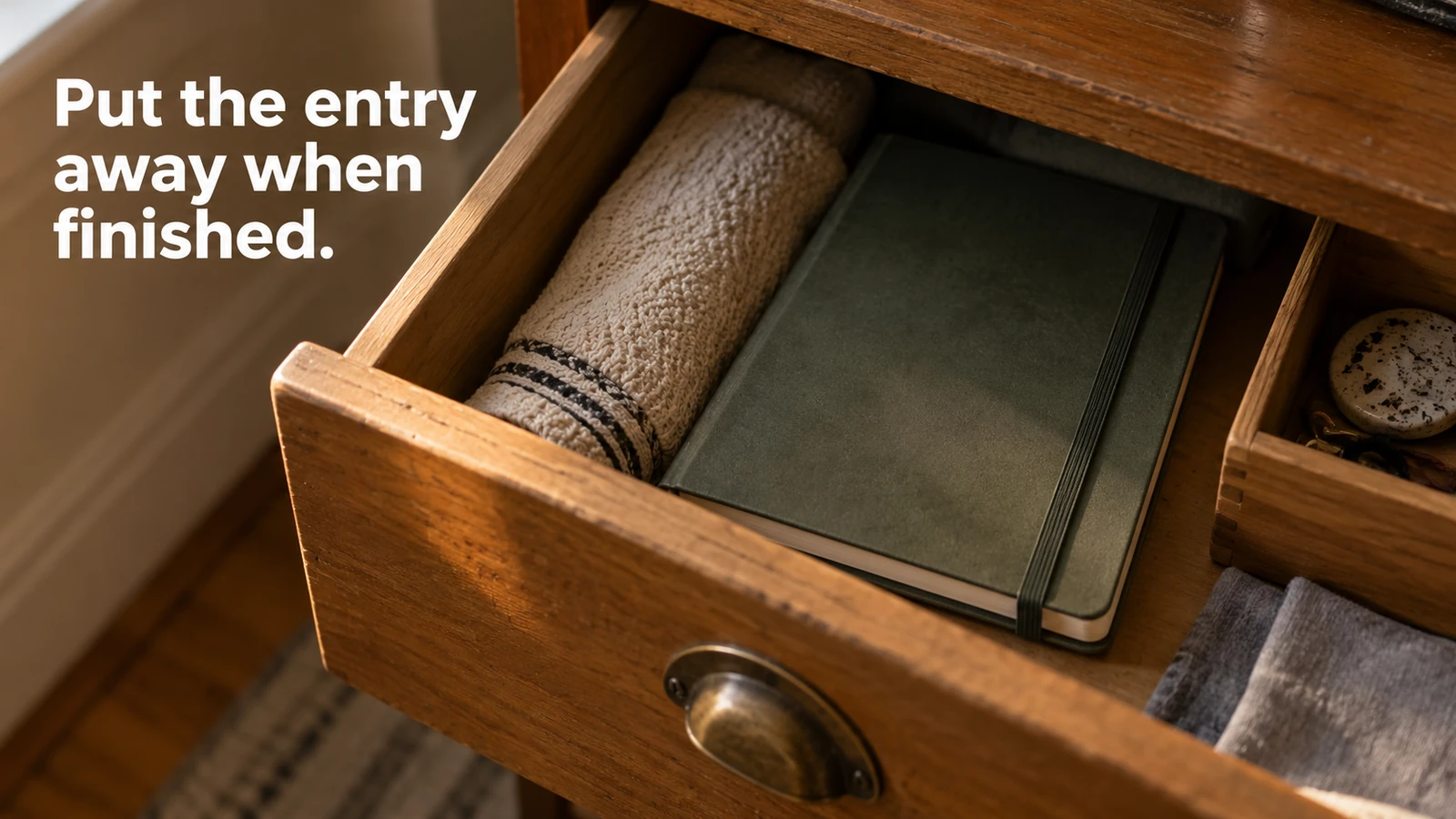
He also decides not to copy a private message into the entry. Instead, he records what he noticed about his response. These choices reduce unintended exposure in this hypothetical setting, but they do not prove that the notebook cannot be read. Dev still decides what he is comfortable keeping, given the household's actual arrangements.
The useful point is the sequence: content choice, writing place and storage after writing. The example does not prescribe his storage method for every reader. Someone else may prefer a different format, need different support or choose not to record the same subject. A practical setup should fit the circumstances rather than resemble an ideal journal photograph.
A digital example on a shared device
Rina begins to write on a tablet and realises it is signed into the household account. She does not assume that creating a new note makes it private. She checks the arrangement and decides to use a paper entry for an ordinary observation instead. She can investigate an appropriate digital tool later without turning this session into a security project.
If she does investigate a tool, she will need its current account, sharing and storage information. A familiar icon or a password prompt alone does not answer every question. The example illustrates choosing not to proceed under an unverified assumption. It does not claim that paper is universally safer than digital writing.
You can make the same kind of decision without finding a perfect solution immediately. Write a less sensitive observation, use another available format or leave the page blank. Privacy limits do not have to be overcome in order to complete a wellness exercise. The choice not to keep a particular record is available too.
Explore an ordinary reflection practice
If you want prompts for a new entry, the existing reflection guide offers a different starting point. Apply your own content and storage choices before writing about personal details.
Read Journaling After Meditation
Choose an activity without a written record
Journaling is optional. You can choose another practice when creating and storing an entry does not fit your circumstances today.
Frequently asked questions
Is a closed notebook private?
It keeps the page from being openly displayed, but someone may still open it. Consider the actual access and household arrangements before deciding what to write. A cover is not a guarantee.
Should I use paper or a phone?
Choose after considering access, storage and your writing purpose. Neither format is universally private. Check actual digital settings and ordinary physical access rather than relying on broad claims about either option.
Can I leave out names?
Yes. Record only the details useful for your purpose. Omitting names does not guarantee that a person or event is unrecognisable, so consider the remaining context as well.
Do I need to explain my journal to others?
In an ordinary safe household situation, you can request that personal belongings remain closed without sharing their contents. This article does not advise confrontation where pressure, monitoring or safety concerns exist.
Can I put journal reminders on a shared list?
Transfer the practical action only if it belongs there. You do not need to include private reflections, messages or another person's information to make an ordinary reminder usable.
What if I cannot verify a tool's privacy?
Avoid assuming it protects sensitive writing. Check its documentation and actual setup, choose a less sensitive entry or use another format. Not writing about a subject is a valid choice.