
An open journal page does not always need a beginning, middle and ending. You might have a few things you want to record but no interest in making them into a story. An acrostic offers a visible starting structure: choose a word, write its letters down the page and let each letter begin a line of your own writing.
The form can hold something ordinary. You could record a few details from a room, a present preference or what you noticed while making something. The letters organise the lines; they do not decide what the occasion meant. A familiar word may provide enough structure for this one page, with no obligation to use the same arrangement tomorrow. You can change the word, leave a line unfinished or return to prose when the arrangement stops helping.
Quick answer
Choose a short word that belongs to the subject you actually want to explore. Write its letters vertically, then begin one original line with each letter. Keep observations, recollections and invention recognisable. Read the lines normally and check their first letters separately. A completed acrostic is a writing form, not proof that its chosen word describes your mood or personality.
What makes this an acrostic
The Academy of American Poets' acrostic glossary entry describes a form in which the initial letters of lines spell a name or word. This guide borrows that visible arrangement for optional personal writing. Its notebook plan and examples are editorial suggestions, not a studied wellbeing method or an endorsed programme.
A word such as ROOM gives you four openings: R, O, O and M. The first letters are part of the form. The rest of each line is yours to compose. You do not need rhyme, equal line lengths, impressive vocabulary or a hidden message. A plain sentence can occupy a line when that is what you want to record.
If you simply list four thoughts under a heading, that can also be a useful journal entry. It becomes an acrostic only when its line beginnings supply the chosen sequence. Neither format is superior. The distinction helps you understand the experiment you are trying rather than making every short list meet a literary definition.
Begin with material, not an ideal description of yourself
Notice what you already want to say before choosing the scaffold. Perhaps you remember a blue cup, an open drawer and the light falling across a table. Those details offer more useful starting material than requiring the page to demonstrate confidence, gratitude or calm. The word can fit your subject without naming an emotion you do not feel.

Choose something manageable and nonsensitive. An ordinary corner of your own room can supply enough material. You do not have to examine a difficult event, reveal private information about someone else or search for a memory that explains your whole day. The page can remain about a small scene that interests you now.
You can jot a few unstructured details first. Keep those notes separate from the finished lines so a word that does not fit has somewhere else to go. The acrostic need not contain everything you noticed. Equally, a detail you want to retain does not need to be discarded merely because it starts with the wrong letter.
Choose a word you can use without forcing it
A short concrete word often leaves fewer awkward openings. ROOM, CUP or NOTE supplies a modest number of lines. A longer word is available if you want more material, but a demanding letter sequence does not make a deeper entry. Choose by what supports your actual writing rather than what looks impressive beside the date.

Write the word vertically with enough space after each letter. You may make the initials slightly clearer or place each on its own line. Decorative lettering is optional. The layout should let you distinguish one beginning from the next without requiring a separate colour, special notebook or complicated page design.
If a letter becomes difficult, change the structure instead of the account. An X can be awkward in an ordinary description; that is a property of the word you chose, not a problem with what happened. You could choose another word, keep a deliberately incomplete attempt or place the remaining thought in ordinary prose.
Give each line something concrete to do
Begin with an observation, a remembered action or a present response you actually want to keep. A line starting with R might say, “Rain marks the outside of the window.” Another could begin, “Remembering the open drawer, I still cannot place the missing handle.” The initial gives you an opening; it does not require a particular kind of sentence.

Keep the level of certainty appropriate to the statement. What you can see now differs from what you think you remember. A pleasing line is not a reason to turn an uncertain recollection into a fact. You can write “I think” or “I remember” within the line, choose a different first word or place the uncertainty beside the poem.
Let repeated initials lead to different details if you want variety. The two O lines in ROOM might concern an open curtain and an ordinary sound. They can also return to the same detail from another angle. Avoid adding an event, emotion or person solely because the second repeated letter seems to demand something new.
A table for choosing a workable response
The table offers composition choices, not a sequence you must complete. Use the row that matches the obstacle actually on your page. You can keep the first attempt and make another on a separate section without deciding that the earlier one was a failure.
| What happens on the page | A practical choice | What to preserve |
|---|---|---|
| A letter has no natural opening | Choose another scaffold word | The detail you wanted to record |
| A line sounds too certain | Qualify it or add a plain note | The real limit of your knowledge |
| A useful thought starts differently | Keep it outside the acrostic | Your original wording and meaning |
| Two lines say the same thing | Change one focus or retain repetition deliberately | Your choice about emphasis |
| The structure stops being enjoyable | Finish in prose or stop | Permission to leave the form unfinished |
A small plan for one entry
First, identify the subject and the writing occasion. An actual date can identify when you composed the page, while a short note can identify the earlier occasion it concerns. This is a private creative entry, not a recordkeeping standard. Avoid making a tidy heading imply that every described detail occurred at the same time.

Second, choose a word and lay out its initials. Try a word connected with the subject rather than a verdict about yourself. If the word turns the page towards a response you do not want, replace it before filling every line. You are allowed to select a more ordinary frame after seeing how the first one feels to write.
Third, draft the lines in any order. You can write the M line before either O line and then put them in the visible sequence. Keep spare thoughts beside the draft. There is no requirement to compose fluently from the first letter downward or to conceal the ordinary editing that makes the page understandable.
Finally, read the lines for meaning before inspecting the initials. Does the entry say what you intended? Are inventions labelled if you included them? Then check the vertical word. You can correct a letter or leave an openly marked partial attempt. Finish at a practical boundary rather than adding another poem to prove you understand the form.
Fictional demonstration: four lines about a room
In this invented example, Amira wants to record a few details from a room after putting a small model away. She chooses ROOM because the word fits the subject and needs four lines. She does not choose REST because she is not trying to say that the occasion was restful. The scene and writing below are original fiction.
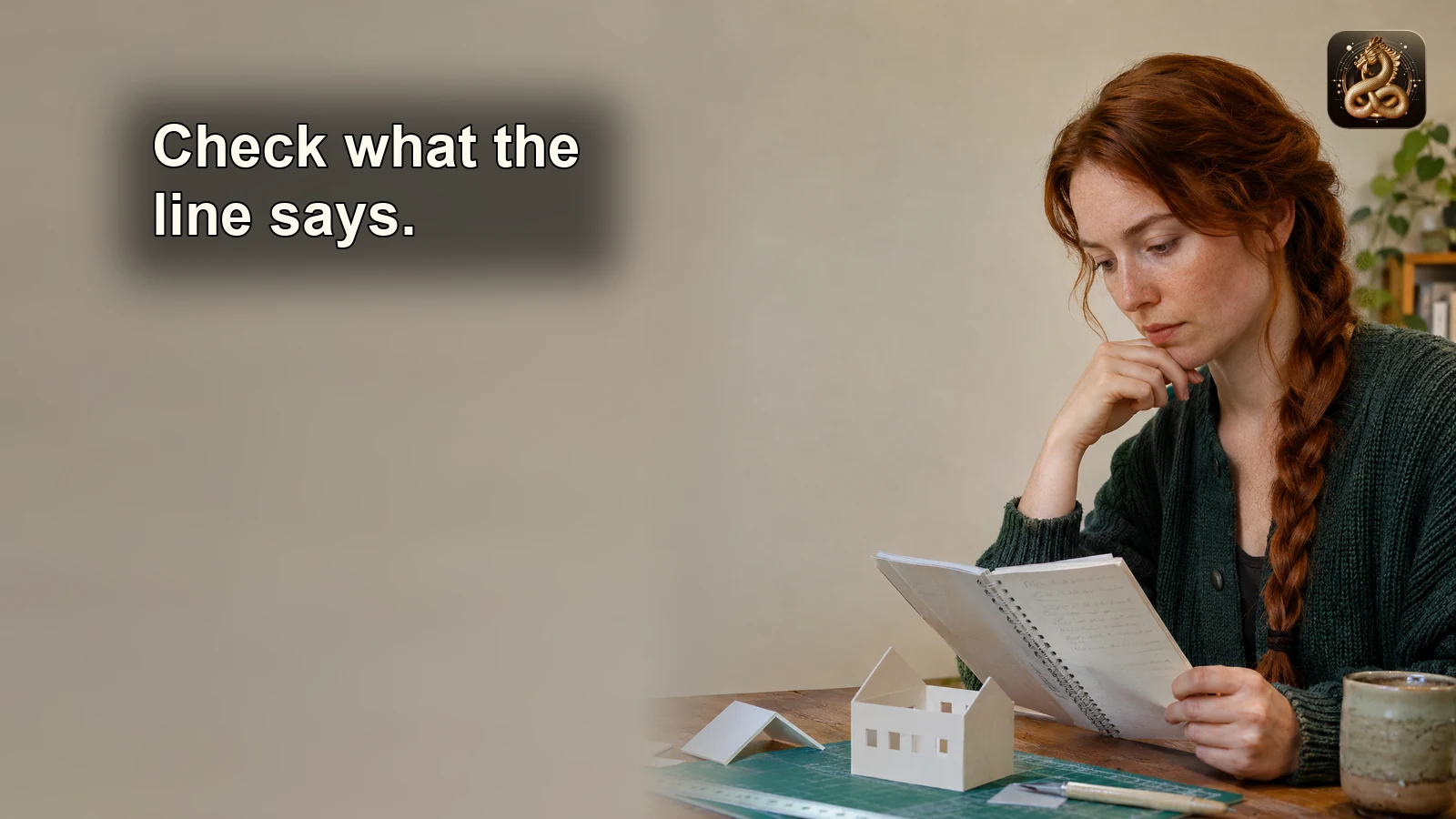
Her first draft reads: “Rain sounds against the window. One paper roof waits on the shelf. Open scissors lie beside the box. My model is finished.” When she reads the last line, she notices that it overstates the situation. The roof is still loose. The initial M has led her to a conclusion she does not actually want the entry to claim.
She changes the last line to “My model can stay unfinished for tonight.” The line records a decision in this fictional occasion, rather than making the object complete. She also puts the scissors away because that is what she wants to do next; the writing did not require the objects to remain arranged for a photograph or a second attempt.
Amira reads the first letters and confirms that they spell ROOM. Beside the four lines she adds a plain sentence: “I liked the small window shape, although that detail did not fit here.” The extra note does not need to join the acrostic. It preserves something she wanted without forcing its wording into an available initial.
Another option: use the form without recording an event
You may prefer a playful invented page. You could choose a word and compose a completely fictional scene around its letters. Label that choice before the lines so a later reading does not turn invention into an apparent account. The word at the margin supplies structure, not a certificate that the sentences concern real events.
Keep actual people out of invented speech or unspoken motives. A private creative page can still contain recognisable details. A made-up name alone does not make a scene anonymous. Choose harmless imagined circumstances when fiction is what interests you, and keep the distinction from an actual recollection visible.
If you want to reshape language you have already written, SoulFul GLO's found-poem guide offers a different task. A found poem selects words from an existing entry. This acrostic method starts new lines around a chosen initial sequence; it does not require cutting, borrowing or replacing your earlier writing.
Keep the page as ordinary as you want
The result can be a few unpolished lines in a normal notebook. You do not need to share it, explain every image or decide whether it qualifies as good poetry. A line may interest you simply because it names something you wanted to notice. That is a modest reason to retain it, without adding a claim about what the exercise changed.

You can return to the page later, but writing it creates no review obligation. If you want a longer reflection, compose it separately rather than expanding every acrostic line into an explanation. The short form and the longer response can have different purposes while remaining connected by a plain title or date.
Questions readers often ask
Does the word have to describe how I feel?
No. It can name a subject, object or ordinary occasion. Choose a word you want to use, not a mood you think the page should prove. Your lines can contain a mixed response or no emotion statement at all.
Must every line be a complete sentence?
No. A phrase can work if its meaning remains clear to you. Keep the initial sequence visible and distinguish fragments from claims that need more context. You can add a plain explanatory note outside the acrostic.
Can I leave a letter unfinished?
Yes. Mark the attempt as unfinished, change the word or continue in another format. There is no need to invent a detail to fill the gap. A partial page can retain what you actually wanted to write.
Does it need to rhyme?
No rhyme is required by this plan. The arrangement concerns the line beginnings. Use ordinary words and line lengths that fit your meaning rather than changing the account to achieve a particular sound.
Choose the writing shape that fits
Use SoulFul GLO's guide to adapting a journal prompt when a supplied question is pushing the entry in an unwanted direction. An acrostic is another optional frame: keep it while it makes writing workable, change it when it does not, and let the page end with what you chose to express.