
A guided meditation asks whether an experience feels pleasant, unpleasant or neither. You begin searching for an emotion word: happy, worried, grateful, irritated. Then you wonder whether you have misunderstood. The instruction may concern something narrower than the whole emotion or the story connected with it.
Feeling tone is a term you may meet in mindfulness teaching. Understanding how a particular teacher uses it can make a recording’s task clearer. This article explains the wording through ordinary fictional examples and a comparison table. It does not provide a complete meditation course, a way to assess mental health or a promise that labelling experience will change it.
Quick answer
In the teaching discussed here, feeling tone concerns whether an experience is felt as pleasant, unpleasant or neither. That is a different question from naming an emotion, explaining a cause or deciding what to do. Check the actual guide’s meaning and which experience it asks you to notice. You do not need to force a category when the wording is unclear, search for an unpleasant experience or continue a practice you do not want to do.
Keep the term attached to its teaching context
Oxford Mindfulness describes feeling tone through the momentary pleasant, unpleasant or neither quality of experience. Its Deeper Mindfulness course explores this within an eight-week programme intended for people who have already completed a mindfulness-based programme. Reading a definition is not equivalent to completing that teaching. This article uses the description to clarify vocabulary, not to reproduce the course or attribute its outcomes to a sound journey.
A separate Oxford Mindfulness article by Victoria Fontana discusses noticing both experience and our relationship to it. It supplies context for distinguishing what is noticed from a further reaction. The examples below are original editorial illustrations; they do not show a tested intervention or establish that a particular listener will respond in the same way.
Separate four questions that can sound like one
The first question is what you are noticing. It could be a sound, a sensation or a thought named by the guide. Keep the scope small enough to identify. “The brief sound I just heard” is more specific than “my whole day.” You need not choose a personal or difficult subject to understand the vocabulary.

The second question concerns feeling tone as the guide defines it. Is the selected experience pleasant, unpleasant or neither? This is not an instruction to rank yourself or make a permanent judgement about the object. The word concerns this encounter, within this particular task. The same ordinary sound may be experienced differently on another occasion.
A third question asks for an emotion name. You might describe irritation, affection or uncertainty. That can be a separate instruction, but do not silently add it when the resource only asks about feeling tone. You are allowed to hear one question without supplying answers to every related question at once.
A fourth question asks what the experience means or what you should do. You may need an ordinary response to a practical situation, but a category does not decide that response. Describing a sound as unpleasant does not prove danger, and describing something as pleasant does not establish that it is suitable to continue.
Compare the words without turning them into a score
| Question | Example wording | What the answer describes | What it does not establish |
|---|---|---|---|
| What did I notice? | A short note near the end of the recording. | The selected experience. | Its source, value or health effect. |
| What was its feeling tone? | Pleasant on this listen. | A quality in this particular encounter. | A permanent rating of the recording. |
| What emotion was present? | I felt curious. | An emotion description, if that is the task. | That curiosity is required. |
| What story did I add? | I expected the note to return. | A thought about what might happen. | What the recording will actually do. |
| What will I do? | Finish when my available time ends. | An ordinary practical choice. | A result dictated by the category. |
A small plan for an unfamiliar instruction
Read what the guide means
Find the explanation supplied with the actual recording or class. Look for what experience is being selected, the terms being used and what the guide asks you to do next. Do not assume that a familiar word supplies every detail. If the resource offers no explanation, asking the teacher is a reasonable next step.

Check whether the instruction changes
A recording may begin with an attention anchor and later introduce another question. Notice the transition in the resource rather than trying to perform both tasks from the opening. If you miss the change, use the actual controls or available transcript when that helps. You can choose other guidance instead of guessing.
Leave uncertainty visible
If you cannot tell what a word refers to, keep that as an unanswered question. You do not need to choose neither merely because you have not understood. Neither, unclear and not noticed are different descriptions. Use the teacher’s explanation about uncertainty when one is provided, or ask rather than creating a new category system.

Retain ordinary participation choices
You can decline this optional practice, pause it or finish. A description of feeling tone is not permission to ignore pain, overwhelm or anything needing an ordinary response. The article cannot determine whether a practice is suitable for an individual. Relevant personal concerns belong with an appropriate professional or qualified teacher.
If a recording changes its attention task, compare SoulFul GLO’s guide to focused attention and open monitoring. Use it to identify directions rather than to rank methods.
An original fictional demonstration: a brief sound
Mira is reading a teacher’s example before choosing a session. The example asks listeners to consider the feeling tone of one ordinary sound. She imagines a quiet chime from a recording she already knows. In this fictional account, she describes that remembered encounter as pleasant. She has identified the question without claiming the chime is pleasant for everyone.
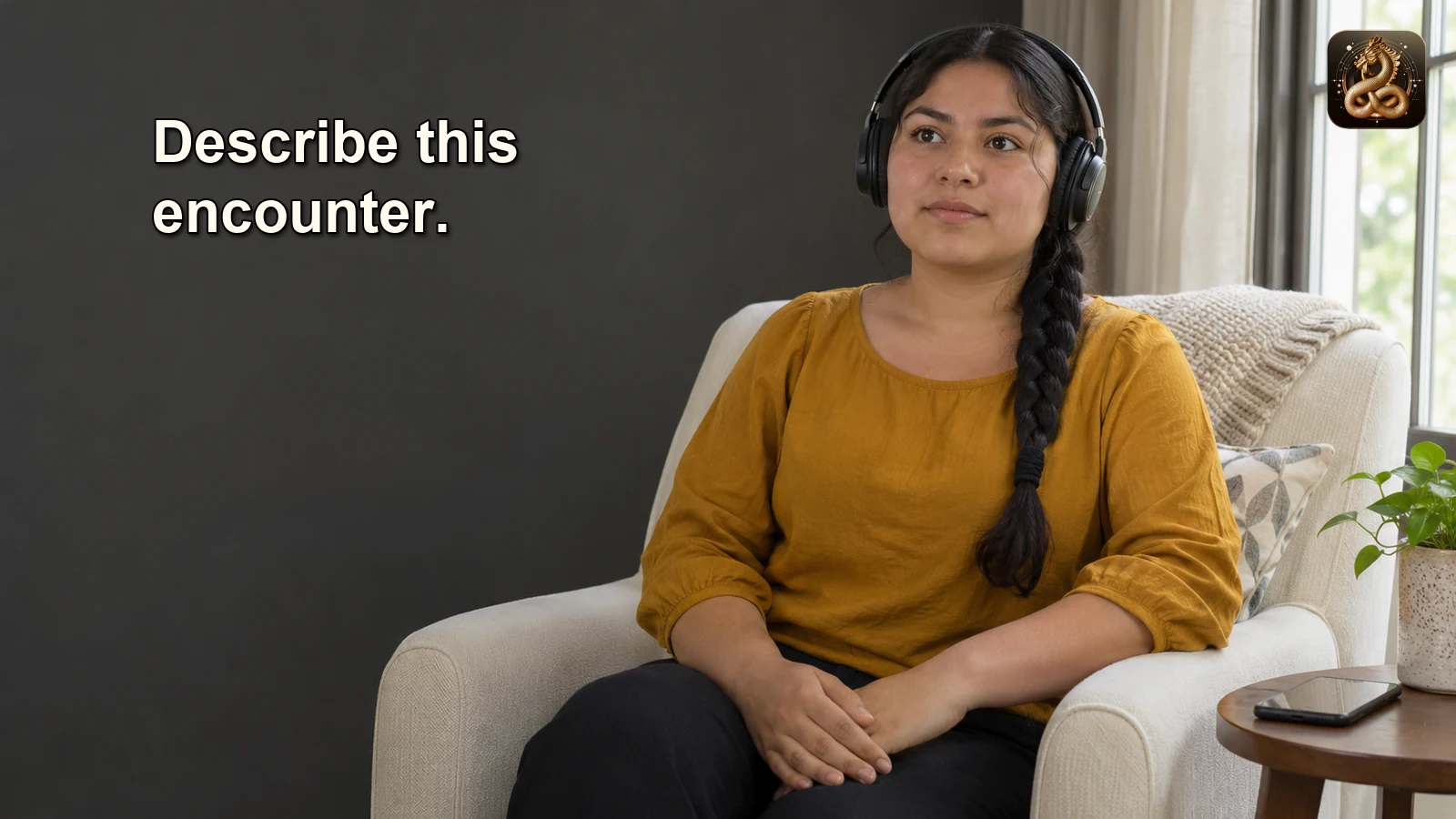
Mira then notices a separate thought: she would like that sound to return. The preference is not another name for the chime. Nor does it reveal whether the next part of the recording will contain it. She can keep the momentary description and the expectation separate when explaining what she understood from the teaching.
If the actual guide asks a different question, Mira would follow its explanation or seek clarification. The invented example does not ask readers to recreate her experience. You might choose neither, find the question unclear or decide not to use that session. There is no target answer hidden in the illustration.
Finally, Mira checks what she wanted from the resource: understandable guidance for an optional pause. A category has not selected the recording for her or proven its effect. She can choose a clear introductory practice instead. Recognising vocabulary is a preparation step, not evidence that she has completed advanced mindfulness training.
Neither is not a missing achievement
A word such as neutral can sound like a judgement that nothing important happened. In this vocabulary discussion, neither is one of the descriptions the teacher may offer. It need not mean empty, pointless, calm or successful. Avoid treating it as a middle score that is always preferable to the other two.

For another invented illustration, Owen hears an ordinary background hum while reviewing a written example. He does not describe that encounter as pleasant or unpleasant. He can leave that description small. He does not have to search harder until the sound reveals a stronger reaction, and this illustration makes no claim about how he should meditate.
If you notice no clear answer, do not conceal that uncertainty inside the label. You may need more explanation of the task or may simply prefer not to analyse this experience. A term is useful when it helps you understand the guidance. It can be set aside when it becomes an unwanted examination.
Do not let a small description become a whole review
Imagine that you hear the same familiar sound on two ordinary occasions. In the first fictional note you call the encounter pleasant. In the second, you do not choose that description. The difference does not prove that the recording changed or that your ability improved or declined. You have two descriptions with different contexts. A comparison would need those contexts and the actual questions asked, not just a row of category words.
If a practical problem matters, record that problem separately. “The device was out of reach when I wanted to pause” concerns the setup. “Unpleasant” does not preserve that detail, identify its cause or explain what you want arranged differently. A small vocabulary can help distinguish a question; it should not make your observations less specific when you need a practical answer.
There is also no requirement to complete a review after listening. The fictional examples are on a page so that the distinctions can be compared. Your own session can end without a form, score or written account. If you choose to discuss an experience with the teacher, use language that reflects what you actually recall. Leave gaps in memory as gaps instead of reconstructing a complete sequence to fit the explanation.
Keep choices about sound practical
Suppose a sound feels unwelcome. You can turn it down, pause it or choose another optional recording using the controls actually available. You do not need to keep listening to prove non-judgement. At the same time, the feeling-tone word does not identify a technical defect or establish why the sound was unwelcome.

Likewise, a pleasing passage does not require repeating it, increasing the volume or extending your session. You can enjoy what you heard and still finish for an appointment. Keep decisions about surroundings, volume and other people separate from a vocabulary exercise. The term does not replace ordinary care or awareness of your setting.
If several sounds occur together, check whether the instruction concerns one selected event or experience more broadly. Do not make yourself catalogue every sound to fill a table. The table in this article is a reading aid for a fictional example, not a required log or a way to measure concentration.
Use a simpler resource when that is what you want
You can choose guidance whose whole task you understand without using feeling-tone terminology. That choice does not make another approach inferior or mean you have missed a required level. If you are participating in a particular course, ask its teacher about the sequence and support rather than replacing it with pieces from an article.
When a phrase raises curiosity, write one specific question: “Which experience does this cue refer to?” or “What should I do if the category is unclear?” Those questions give a teacher something concrete to explain. You do not need an account of every reaction or a theory about your personality before asking them.
Questions readers often ask
Is feeling tone the same as an emotion?
This article distinguishes the pleasant, unpleasant or neither question from an emotion name. A teacher may describe their relationship in more detail. Check that explanation rather than treating a short category as a complete account of a feeling or borrowing a definition from an unrelated recording.
Must I notice all three categories during a session?
No requirement of that kind is established here. Do not search for an unwanted or difficult experience to complete a set. Use the actual resource’s participation guidance and keep the option to pause or stop. This reading guide supplies no required sequence or quota of experiences.
Does unpleasant mean I should immediately stop?
The category alone cannot decide suitability or safety. Keep ordinary stopping choices available and respond to concerns appropriately. You may finish an optional practice without proving that it was harmful. A persistent or concerning issue needs suitable support rather than a decision made from one label.
Does understanding the term mean I can skip a course introduction?
No. A vocabulary explanation is not the preparation or teaching of a programme. The Oxford course described above has its own prior-learning context. Follow the actual provider’s requirements and ask about your circumstances; this article does not establish eligibility or substitute for individual guidance.
For a simpler next comparison, read SoulFul GLO’s guide to sampling a guided meditation. Look for directions you understand and choose whether the actual session fits your occasion.