
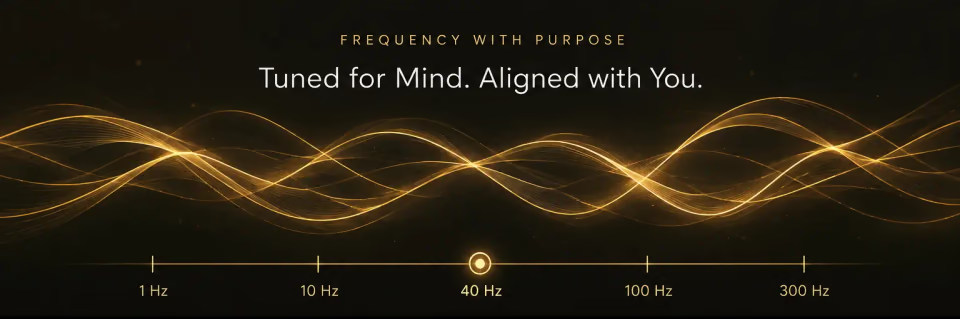
Have you ever noticed how certain sounds can shift your mood - helping you feel calmer, clearer, or more settled? It's not magic. It's the way sound interacts with attention, environment, and perception.
In this guide, we'll gently demystify what people mean when they mention frequencies like 6 Hz and 40 Hz, and we'll explain the idea of "layered tones" without medical claims or complex jargon. If you're new to SoulFul GLO, you can start exploring our approach to sound, meditation, and mindful rituals here.
Quick Links
Understanding Sound Frequencies: The Basics
Imagine sound as ripples on water. When a pebble drops, waves spread outward. Sound moves in a similar way - through vibration and waves in the air.
Frequency describes how often a wave repeats each second. The unit we use is Hertz, abbreviated Hz.
What Are Hertz (Hz)?
- 1 Hz means one cycle per second.
- 6 Hz means six cycles per second.
- 40 Hz means forty cycles per second.
In wellness audio, these numbers may describe a directly generated tone, a pulsing or modulation rate, or the difference between two nearby tones. The label alone does not tell you which method was used, so treat frequency numbers as descriptive information rather than promises.
An Important Distinction: Pitch, Beat, and Modulation
A "6 Hz track" usually does not mean that you are hearing a musical note pitched at 6 Hz. Six cycles per second falls below the usual range of directly audible pitch for most people. Instead, 6 Hz may describe how quickly an audible sound pulses, or the difference between two audible carrier tones.
For example, a binaural design might send a 200 Hz tone to one ear and a 206 Hz tone to the other. With headphones, the listener may perceive a 6 Hz fluctuation created by the difference between the two carriers. Other production methods can create a similar rhythmic effect through amplitude modulation or isochronic pulsing.
Similarly, "40 Hz" might describe a low audible tone, a 40 Hz modulation rate, or a binaural difference. Always check the track description if the production method matters to you.
Low Frequencies vs High Frequencies, in Plain Language
- Lower audible frequencies often feel deep, steady, and grounding - like a distant drum or low hum.
- Higher audible frequencies can feel light, bright, and crisp - like birdsong or soft chimes.
Forty hertz is still near the low-bass end of audible sound; it is not a bright, high-pitched tone. The brightness or softness of a complete soundscape comes from its full mix of carriers, overtones, instruments, textures, and dynamics - not one number alone.
Exploring Specific Frequency Labels: 6 Hz and 40 Hz
Let's look at what these numbers often represent in a gentle, non-medical wellness context.
The Gentle Pacing of 6 Hz
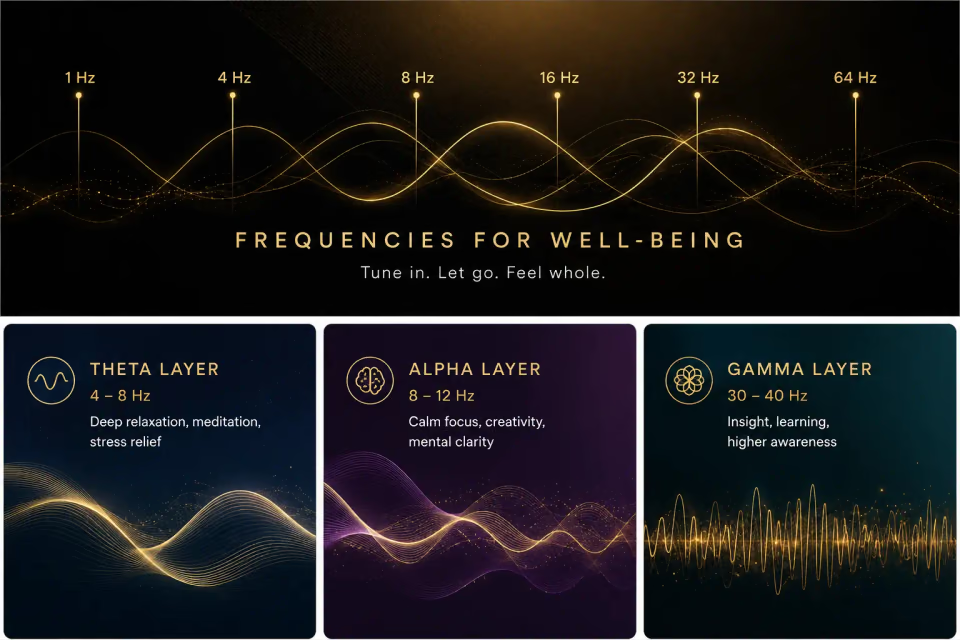
In many wellness-audio conversations, a 6 Hz beat or modulation is placed within the range commonly labelled "theta." Producers may use it when designing an experience intended to feel steady, slow-paced, and grounded.
In practical terms, 6 Hz-labelled content is often designed for quiet listening - the kind of soundscape you might choose when your mind feels busy and you want a softer internal pace. This describes the creative intention, not a guaranteed biological response.
If your goal is calm or wind-down, start by exploring steady, soothing journeys and notice what feels supportive for you: Sound Journey Library.
The More Active Pacing of 40 Hz
In wellness-audio language, a 40 Hz beat or modulation is often placed within the range labelled "gamma." Producers may use this label for designs intended to feel more active, defined, or present than slower-pulsing tracks.
That does not mean a 40 Hz element automatically improves focus, awareness, or learning. Your experience depends on the complete sound design, listening conditions, volume, expectations, and individual response.
If you want a deeper guide to choosing the right kind of practice depending on your mood, read Soundscapes vs Guided Meditation vs Yoga.
Understanding Layered Tones
"Layered tones" simply means multiple sound elements stacked together to create depth - like layers of light in a sunset or harmonies in music.
Instead of one tone playing alone, a layered soundscape might include:
- A low, steady bed for weight and grounding.
- Mid-range warmth for comfort and musical body.
- Gentle high textures for air, sparkle, and space.
- Optional rhythmic modulation to give the soundscape a subtle pulse.
The Art of Sonic Blending
Layering is how sound becomes immersive without becoming busy. It allows a Sound Journey to feel like an atmosphere you can enter, rather than a single note you have to concentrate on.
How Layered Tones Create Depth
Think of it like a film scene:
- The background ambience creates place.
- The mid-layer creates emotion.
- The subtle foreground details give it life.
Layered audio can feel more absorbing, which is why it is often used in Sound Journeys designed for focus or relaxation. To turn listening into a repeatable ritual, follow the habit-first blueprint in How to Build a Daily Wellness Ritual.
The Gentle Impact of Sound Frequencies: What to Expect
Without making medical claims, here is what is reasonable to expect from an intentional listening practice.
Sound Can Shape Attention
If your mind is scattered, a steady soundscape can give your attention a single place to rest - reducing the urge to chase every thought.
Sound Can Shape Atmosphere
Sound can make a room feel calmer, warmer, and more predictable. Many people find a predictable listening environment soothing, especially at bedtime or during stressful moments.
Your Response Is Personal, and That's Normal
Your listening response is unique. Two people can hear the same soundscape and have different experiences. The most useful frequency design is the one that helps you feel more settled and supported - regardless of the label.
Practical Applications: Using Sound Frequencies in Real Life
You do not need to understand every production detail to listen well. Begin with a simple goal.
For Relaxation and Stress Relief
- Choose a steady Sound Journey with minimal changes.
- Keep the volume low and comfortable.
- Pair it with slow breathing: inhale gently, then exhale longer than you inhale.
Try calm-focused journeys in the Sound Journey Library.
For Focus and Clarity
- Choose a consistent soundscape that does not demand attention.
- Use a 25-50 minute timer.
- Turn on Do Not Disturb to protect your focus block.
For Sleep
- Choose minimal soundscapes with fewer dynamic changes.
- Try a 30-90 minute sleep timer.
- Keep devices at a comfortable distance and the volume low.
Your Journey With Sound: A Simple Way to Start
- Pick one intention: calm, focus, or sleep.
- Choose one Sound Journey and repeat it for three nights or three work sessions.
- Notice one change: breathing, jaw tension, racing thoughts, or ease of falling asleep.
- Adjust and continue - gently.
For a broader overview, bookmark Soundscapes vs Guided Meditation vs Yoga. To build consistency without burnout, read How to Build a Daily Wellness Ritual.
Explore Sound Journeys and Unlock Unlimited Access
Experience harmonically layered soundscapes designed for calm, focus, and rest.
Wellness note: SoulFul GLO content supports general well-being and is not medical advice or treatment. Research on binaural beats and brainwave entrainment remains mixed. Keep audio at a comfortable volume and stop listening if you experience discomfort.
Further reading: Systematic review of binaural beats and brainwave entrainment and NIDCD guidance on safe listening levels.