
A class description asks you to bring two bricks and a belt. The photograph shows a cushion, several rectangular pieces and a folded blanket. If those words are unfamiliar, you can clarify the list before deciding what to carry. You do not need to learn a pose from the photograph or buy a collection of equipment.
Yoga props are objects used within particular teaching arrangements. Recognising a category can help you understand a class list, but it does not tell you where to put an item, how much weight it can take or whether a movement is suitable for you.
This guide explains common names and useful preparation questions. It supplies no pose instructions, loading guidance, product recommendations or guarantee that one object can replace another. The instructor's actual requirements and intended use matter more than matching an appealing studio image.
Quick answer: turn unfamiliar names into clear questions
Read the selected class's equipment list. Identify which items are required, their quantity and whether the venue provides or lends them. Ask the instructor to clarify unfamiliar names and the exact item intended. Keep any instructions about use for the class itself rather than improvising from a picture.

A block or brick generally names a shaped support; a strap or belt names a flexible length with a fastening or other stated design; a bolster names a larger cushion-like prop. These descriptions help identify categories. They are not specifications, and names can vary between teachers, regions and equipment lists.
Start with the actual list
Use the information for the class you plan to attend, including its date and venue. A general studio photograph may show equipment used by another teacher or a different session. An old booking message may also differ from the current list. Clarify the current requirement instead of combining several lists into a larger one.
Look for quantities as well as names. Two items are not the same request as one, and an optional item is different from a requirement. If the wording is unclear, ask which pieces you need to have available before the session starts.
Note whether the instruction says bring, provided, available to borrow or available for purchase. Those are different arrangements. A mention of equipment does not automatically mean you must buy it, and a picture of a prop does not prove it will be available for every participant.
For an online class, ask what the instructor needs you to have at your location. For an in-person class, check where supplied equipment is collected and returned. These are ordinary preparation questions, not a test of whether you belong in the class.
Blocks and bricks: recognise the category
Rectangular yoga supports are often called blocks or bricks. Some class lists distinguish flatter foam blocks from thicker bricks, while others use block as a broader label. The word alone may therefore leave the intended shape unclear. Ask the teacher which item they mean if the distinction matters to their list.

Materials, dimensions and firmness can differ. A photograph cannot establish how an object behaves under use. You do not need to compare products here; you need to identify the equipment the teacher expects and whether the supplied or owned item matches that description.
If you already have a prop, describe it plainly when asking. Its stated model or dimensions may help the instructor recognise it, but do not treat a similar colour or outline as proof of equivalence. Let the teacher explain what information is relevant.
Recognising a brick does not tell you how to orient it or whether it should support a particular movement. Leave placement and use to appropriate instruction. Avoid copying a loaded arrangement from a promotional image while trying to work out what to bring.
Straps and belts: ask what the name includes
A yoga strap or belt is a flexible prop, but the fastening, length and intended design can vary. A class list may use one name consistently with its teaching tradition. Ask whether it specifies a particular type and whether the venue supplies it.
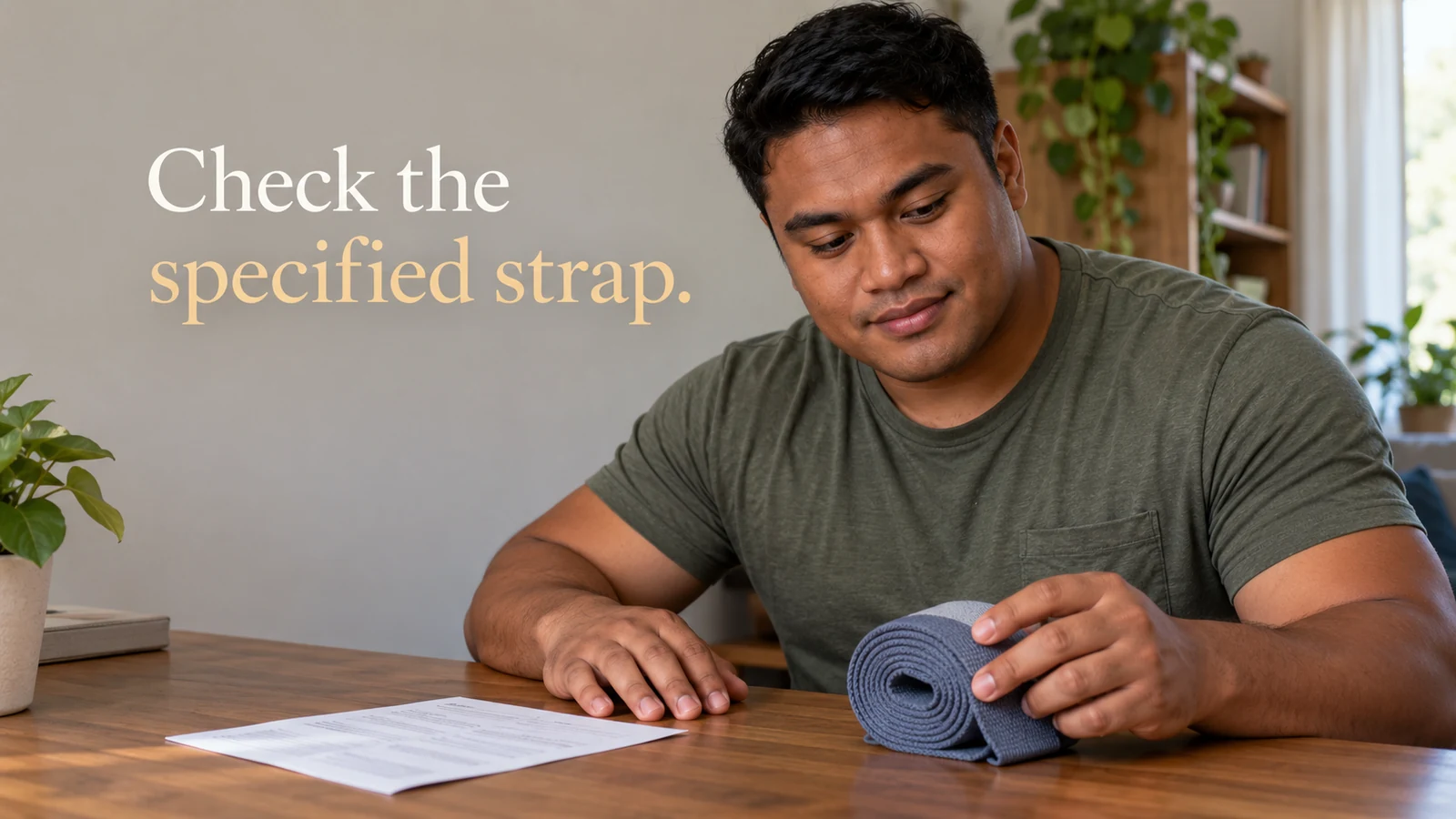
Do not assume that any household belt, scarf or length of fabric is an equivalent substitute. Appearance does not establish strength, fastening behaviour or suitability for an intended use. If the specified item is unavailable, ask the instructor about the class options rather than improvising a replacement.
When describing an existing strap, use information you can actually check. You might identify the fastening and the manufacturer's label. You do not need to pull against it, test a pose or demonstrate a setup to decide which question to ask.
If a strap looks worn, damaged or unfamiliar, ask the provider or teacher about the relevant instructions and condition requirements. This article does not provide an inspection standard or a way to certify equipment. Leave a questionable item unused while seeking appropriate clarification.
Bolsters: a prop name, not any cushion
A bolster is commonly a larger cushion-like yoga prop. Shapes and constructions differ, and a class may specify a particular form. The fact that you own a comfortable household pillow does not establish that it serves the same purpose in that teaching arrangement.
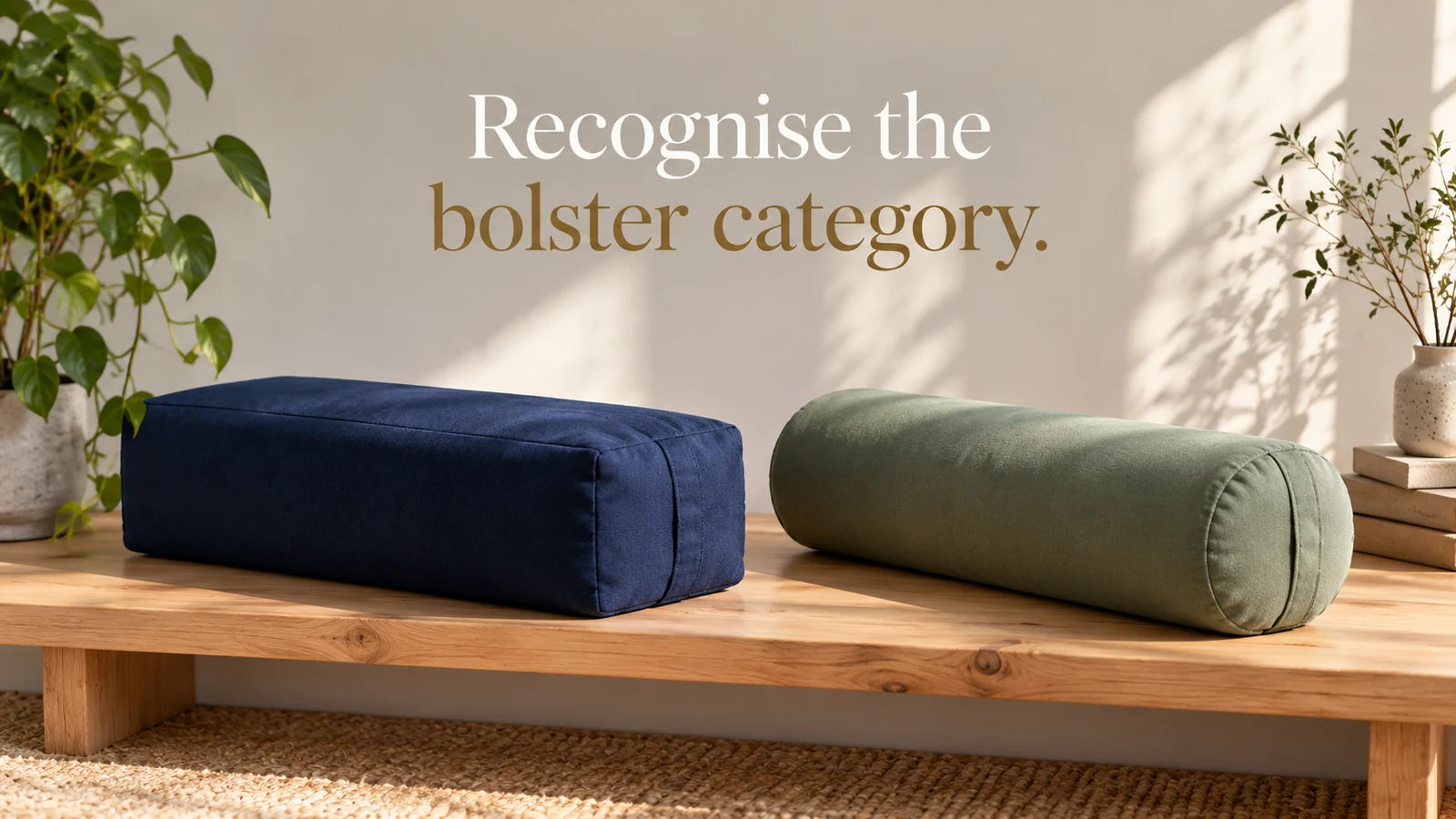
Ask what the class means by bolster and whether one is provided. If bringing an existing prop is an option, clarify which details the instructor needs to identify it. Avoid choosing solely by resemblance to the colour or fabric seen on a website.
The prop's softness does not make every use gentle or individually suitable. This guide gives no directions for lying, leaning or placing weight on it. Those decisions depend on the actual practice, equipment and appropriate individual instruction.
You can recognise the category without owning it. If the class requires an item you cannot obtain or borrow through its arrangements, ask about another class or supported option. There is no need to make a purchase to prove that you are prepared.
Blankets, mats and additional items
An equipment list may include blankets, mats, chairs or other objects alongside the three main categories. Keep each item attached to the exact request. Do not infer a chair specification or a stack of blankets from a photograph when the written list gives no such detail.
A blanket can be included for a particular teaching purpose, rather than simply for warmth. A mat and a blanket also are not interchangeable just because both lie on the floor. Ask what is required and let the instructor explain use within the session.
The Iyengar Yoga UK association's preparation information names several prop categories and directs equipment questions to the teacher. Its description is useful context for that teaching setting. It is not a universal checklist for every yoga style or a reason to collect every item it mentions.
Keep the list proportionate to the selected class. Adding more equipment can create extra carrying and storage work without clarifying the actual requirement. A short confirmed list is more useful than a bag filled from several unrelated tutorials.
Check borrowing and venue arrangements
If equipment is provided, confirm whether you need to reserve it and whether enough is available for the session. Do not assume that a studio's general equipment page answers a particular class's availability. Use its current booking or instructor information.
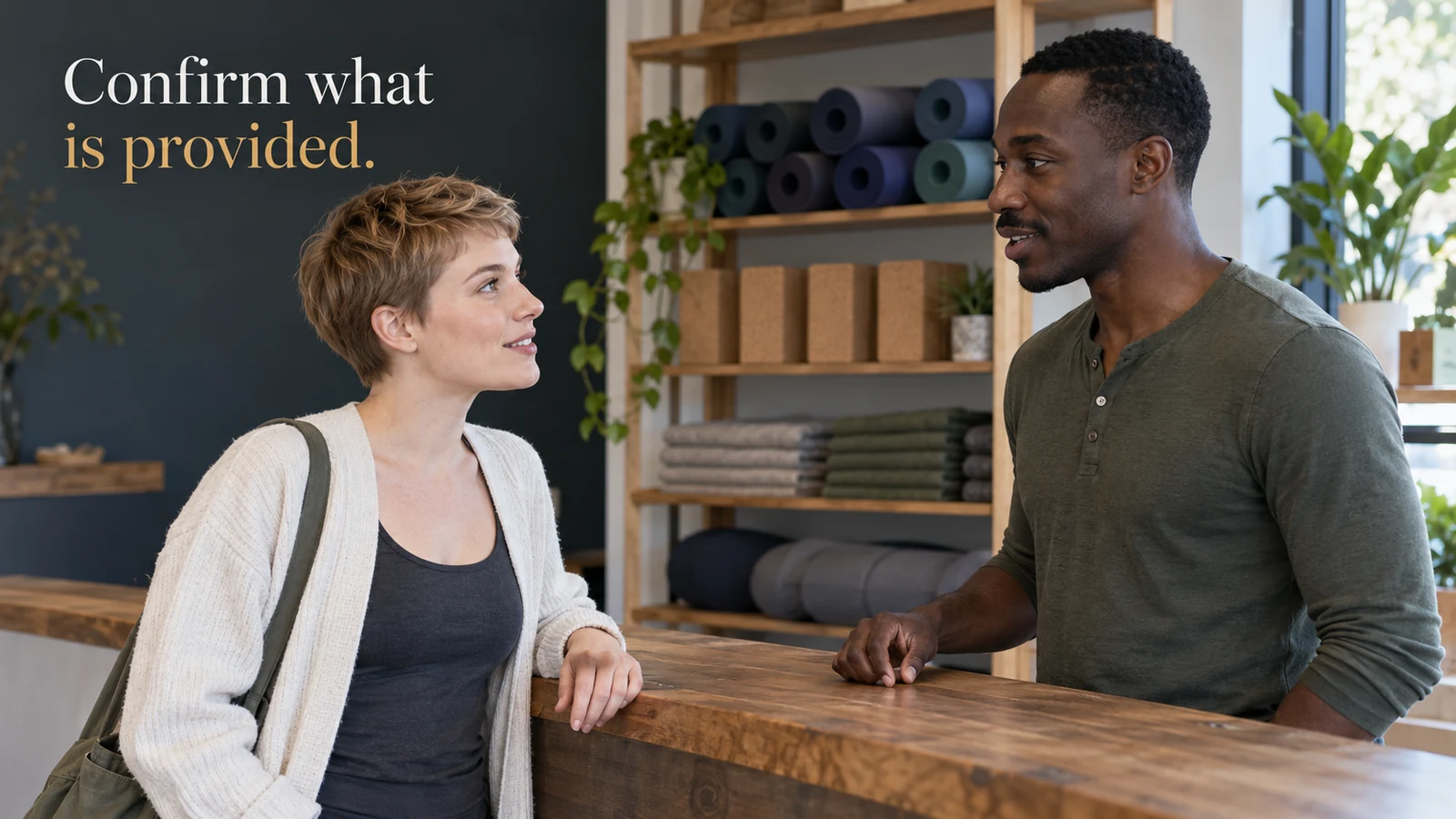
Ask about the venue's care and return arrangements. You may be told where to place used items or how to handle covers. Follow actual instructions; do not invent cleaning methods or apply a product to shared equipment without permission.
For anything you borrow, keep track of which item belongs to the venue or another person. Ask before taking it home or changing its arrangement. Borrowing a prop for one session does not transfer responsibility for deciding how it should be used.
If you need an accommodation, discuss it with the appropriate person before class when possible. The presence of props does not itself establish that the session can meet every access need. A clear answer about the actual teaching arrangements is more useful than a general promise about adaptability.
Ask about intended use without requesting a remote pose diagnosis
You can ask, “Will you explain how these items are used during the class?” or “Does this equipment list assume earlier instruction?” Those questions identify the kind of guidance available. They do not require you to begin practising the movements before attending.
If you have a health concern, relevant professional advice and qualified instruction remain important. NCCIH's yoga guidance discusses safety and the role of appropriate instruction. Owning the listed props does not establish personal suitability or remove the possibility of injury.
Avoid treating a product label as a teacher. An item can come with care information while still requiring context-specific instruction for a class. Equally, a class list identifies equipment without necessarily explaining every use in advance.
When the answer remains unclear, keep the uncertainty visible. You can delay booking, ask a further question or choose another appropriate session. A prepared student is allowed to need clarification; guessing is not a prerequisite for participation.
Two fictional class-list checks
A list that uses both blocks and bricks
Priya reads a class message that lists foam blocks and bricks separately. She owns one rectangular support but does not know which category it matches. She sends its ordinary product description to the instructor and asks what will be provided at the venue.
The reply clarifies that the class supplies the requested items. Priya therefore brings only the things the current message asks her to bring. She waits for the class instructions rather than testing arrangements she has seen online.
This is an invented example of clarifying vocabulary and provision. It is not a recommendation for a product, evidence that every studio supplies equipment or a demonstration of a safe pose.
A home class requiring a bolster
Mateo considers an online session whose list includes a bolster. He has household cushions but no information showing that they match the requirement. He asks the instructor about the exact equipment and whether another suitable session is available without it.
He does not stack cushions to imitate the class photograph. After receiving the available options, he chooses an alternative session and checks its own requirements. The decision concerns preparation, not a claim that one prop is necessary for all yoga.
The fictional examples leave room for different answers. Your teacher may have different equipment, availability and class expectations. Use your own current information rather than copying either reader's outcome.
Leave with one confirmed preparation note
Keep a short note of the actual class, required items, quantities and what is provided. Include unresolved questions rather than turning them into assumed answers. If the class changes, check the relevant information again.

After attending, ask about returning any borrowed items and following their care instructions. Familiarity with names may make the next list easier to read, but it does not qualify you to adapt equipment or teach its use to another person.
Choose the session before collecting equipment
Explore SoulFul GLO's yoga and movement overview for practice information. Read the actual session requirements and seek appropriate guidance; this guide does not establish that every recording uses props or suits every listener's circumstances.
Frequently asked questions
Are a yoga block and a brick always the same thing?
Usage varies. Some lists distinguish shapes or materials, and others use broader terms. Ask the actual instructor which item is meant instead of assuming that the names establish equivalence.
Can I use a scarf instead of a yoga strap?
This guide gives no substitution guarantee. Ask the instructor about the specified equipment and available class options. A household object's appearance does not establish how it behaves in a particular use.
Does a class mentioning props require a purchase?
Not necessarily. The venue may provide or lend them, but availability needs confirmation. Ask what is required and what is supplied before spending money.
Do props make any pose suitable for me?
No equipment list can establish that. Personal needs, the actual practice and appropriate instruction still matter. Discuss relevant concerns with qualified people and do not use a prop to push through pain or an unclear instruction.
Plan the room separately
If you are following a home session, read SoulFul GLO's small-space yoga setup guide for a separate preparation task. Identifying the props comes first; arranging a usable space and understanding the actual session remain their own decisions.