
You arrive before a gentle yoga class and put your mat in an open place. Once other people settle, you notice that a pillar blocks part of the teaching area. You can hear the teacher, but you cannot see the demonstration from where you are. The useful question is about access to the instruction, before you try to follow an activity you have not understood.
This guide concerns a practical sightline problem in an in-person adult class. It does not assess your vision, prescribe a movement adjustment or identify the safest position for every participant. A better view may make an explanation easier to follow. It cannot tell you whether a particular movement suits you, and it does not replace qualified teaching or any care you need.
Quick answer
Before the activity begins, tell the teacher what you cannot see and ask where the demonstration will happen. Ask whether there is a place with a clearer view that leaves walkways and other participants' space open. Do not move someone else's mat or strain to copy an incomplete view. If the view changes during class, pause the unclear activity and ask for the instruction you missed at an appropriate moment.
You do not need to decide whether the room is badly arranged or whether you chose the wrong place. Describe the immediate problem: a column covers the teacher's hands, another participant blocks the floor, or the teacher has moved behind you. Each gives the teacher something concrete to address. An explanation of one obstruction may be enough for the next decision without turning the whole class into a seating puzzle.
Check where teaching will happen
A room can have several possible fronts. The reception door, mirrors and direction of the rolled mats do not necessarily identify where the teacher will stand. Ask before you unroll if the arrangement is unfamiliar. A simple question is, “Where will we need to look when you demonstrate?” The answer may describe one place or explain that the teacher moves around.
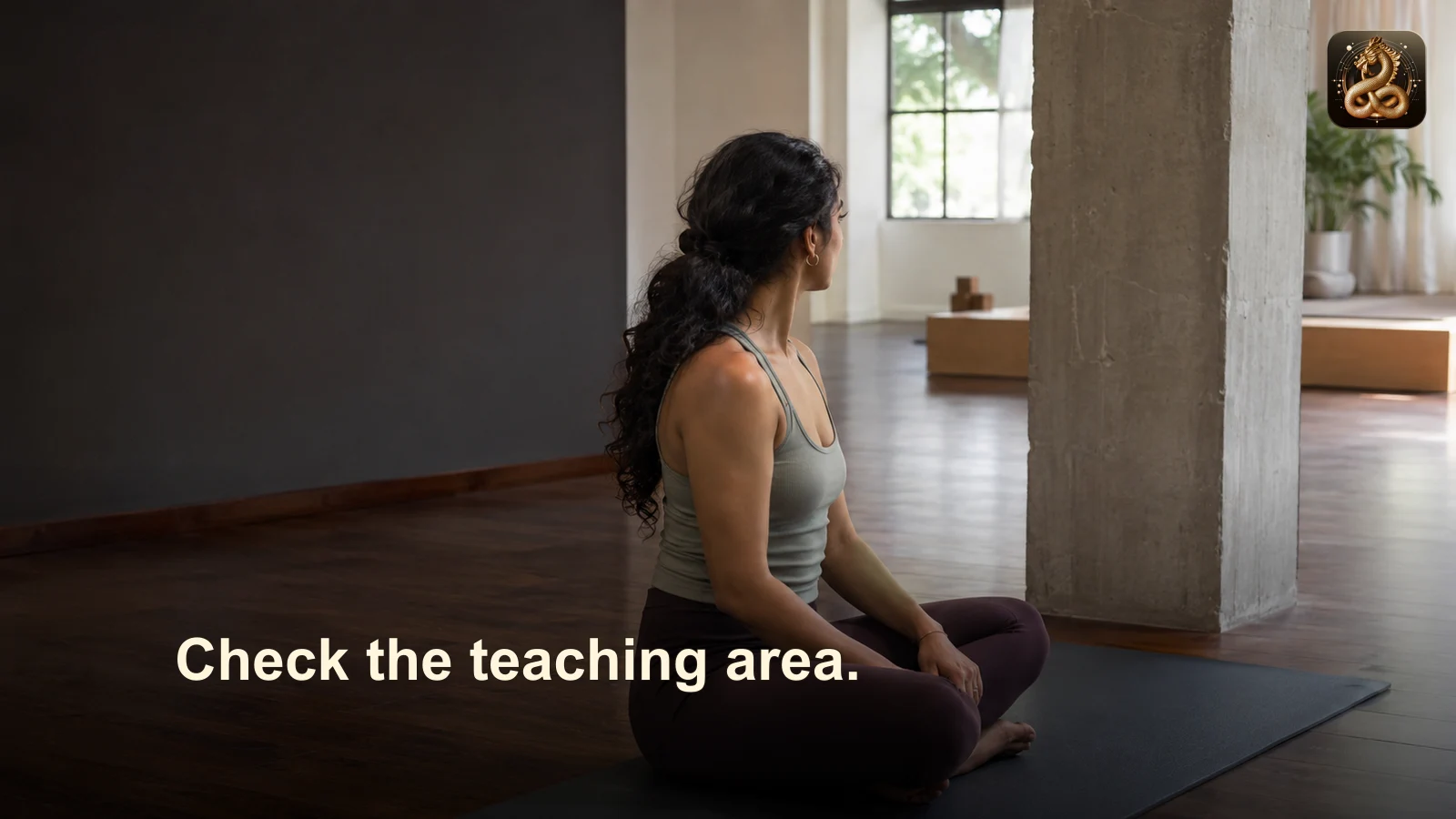
Keep the actual class format in mind. Some sessions rely mainly on spoken instructions; others use a demonstration for particular explanations. You are finding out how this teacher presents this class, rather than deciding that seeing every moment is always essential or never needed. If the description and the room differ, ask about the actual session you have joined.
Look from the height at which you are currently comfortable, without rehearsing the sequence. A clear standing view may not tell you what will be visible later. You can ask whether a demonstration will be repeated from another angle, rather than testing every possible posture yourself. The teacher can explain the teaching arrangement without asking you to perform unfamiliar actions to earn a better place.
Name the missing part of the demonstration
“I cannot see” is a useful beginning, but a little detail can make the question easier to answer. You might say that you can see the teacher's upper body but not where a prop goes. Alternatively, you may see the equipment but not the hand position being explained. Identify the information you are missing rather than guessing it from the rest of the picture.
Separate a blocked view from unclear wording. If you can see the demonstration but do not understand the cue, moving mats may not solve the problem. Ask what the instruction means. If a familiar cue is clear but an object blocks its demonstration, ask about the view. Both difficulties can occur together, and you can say so without needing a technical description.
Avoid using another participant as the missing illustration. You cannot know whether that person is following an individual option or responding to a different instruction. Their visible position does not establish what the teacher asked you to do. It is more useful to pause the uncertain activity than to construct a movement from someone else's partial example.
Ask before changing your place
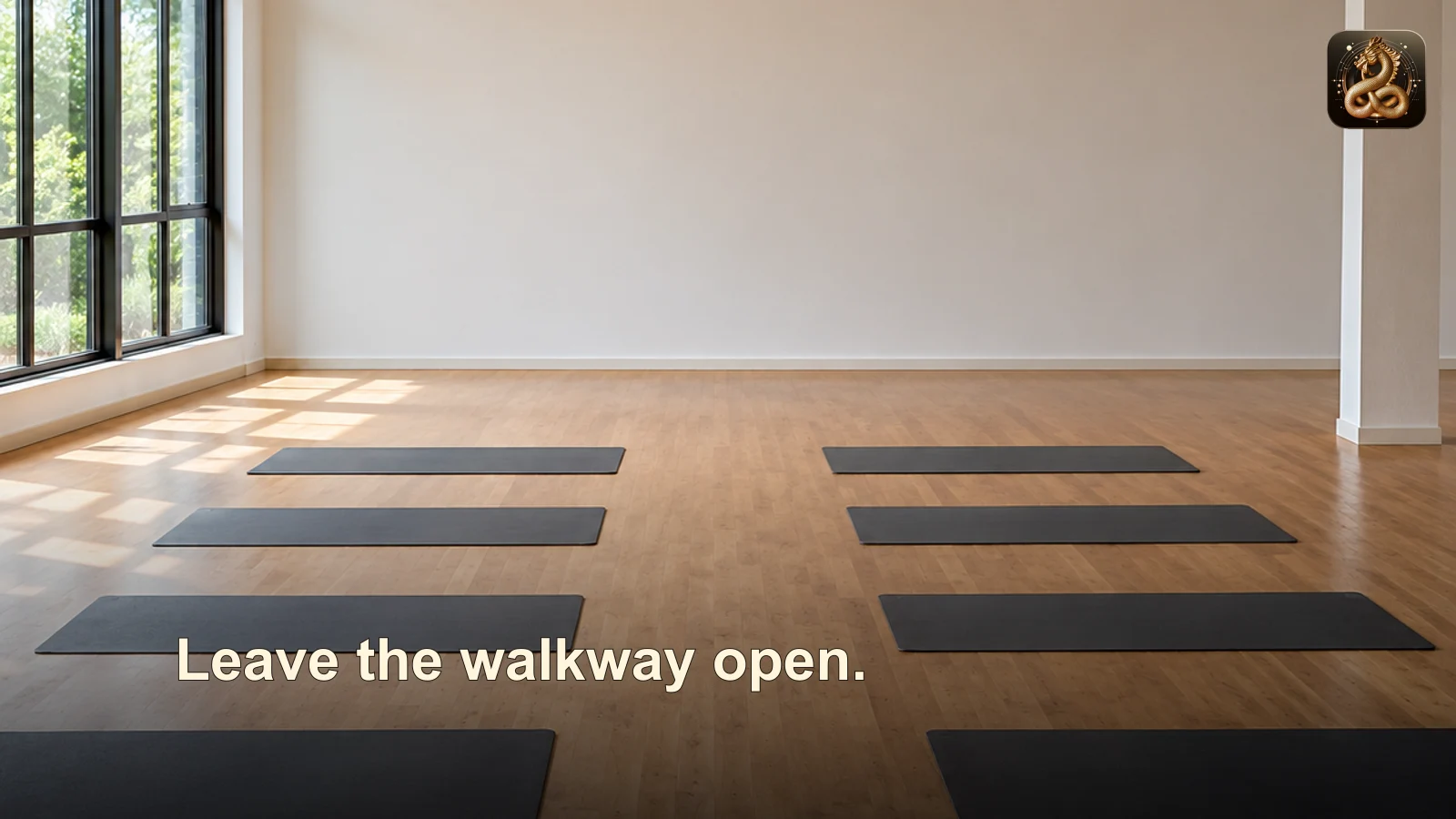
Tell the teacher which part of the room is blocking your view and ask where you can move. Leave the studio's designated paths open, keep belongings where directed and respect the space already in use. An apparently empty area may be reserved for teaching, equipment or access. Moving there without asking can create another problem while solving the first one.
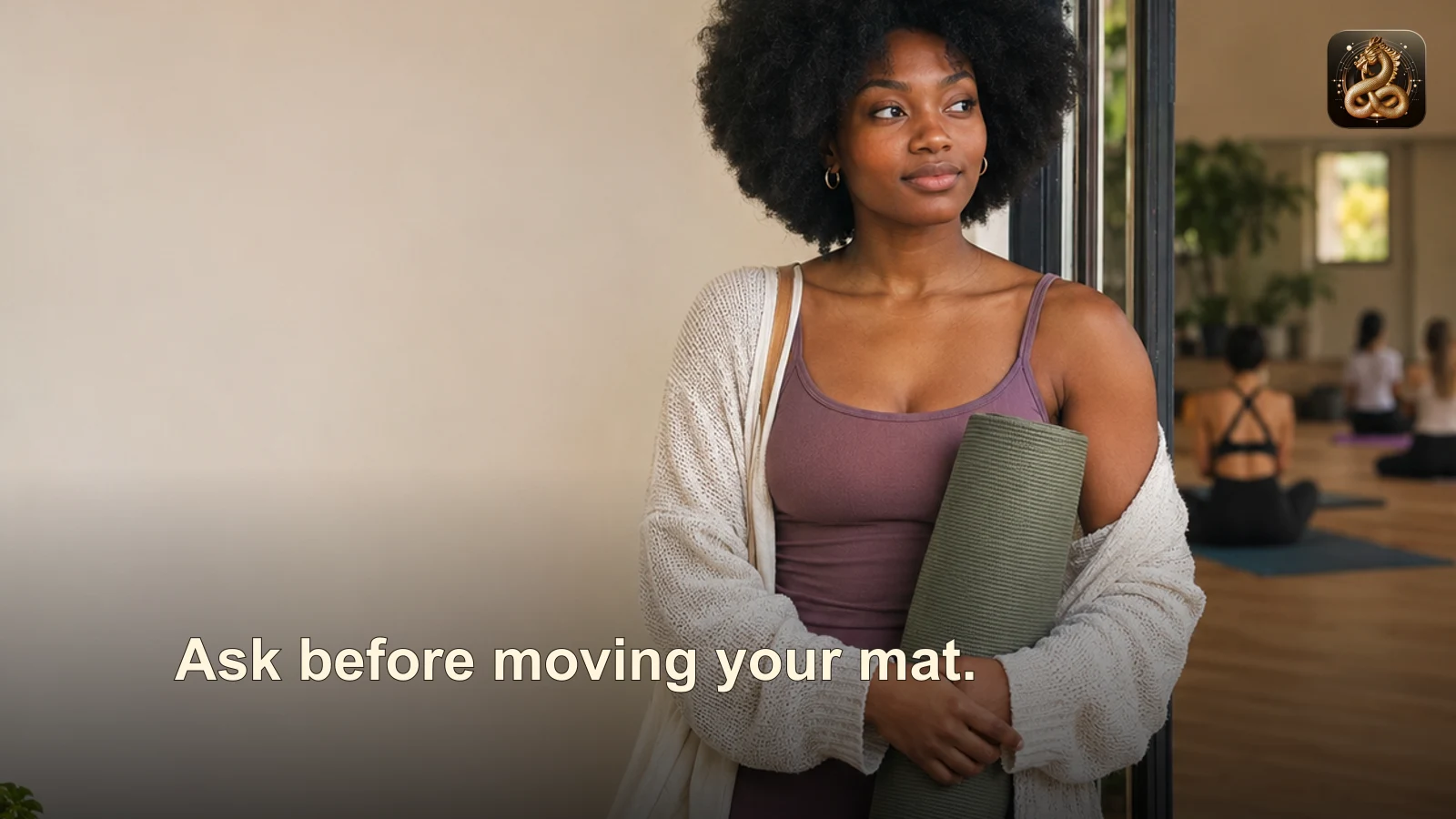
If the teacher suggests a different place, look at the actual arrangement before settling. Check whether you can reach it without crossing an active demonstration or moving other people's property. There is no universal rule here that the nearest mat, the centre or the front row is best. A location needs to work within the particular room and teaching arrangement.
You can ask whether a demonstration can instead be shown where you are able to see it. That may be possible without changing your mat position. It may also be impractical at that moment. Keep the question open rather than treating a rearrangement as something the teacher has already promised. You can decide what to do when the available support is clear.
If you arrive with someone else, ask about your own view. Two neighbouring mats can have different obstructions, and moving together may not address both people's questions.
For the separate issue of personal space, read SoulFul GLO's guide to room around a yoga mat. It covers reaches, props and walkways; a clear sightline does not establish that an area has enough room for the class activity.
Keep your body out of the viewing problem
If you are trying to turn or lean just to watch a demonstration, stop that extra effort and ask for a clearer explanation. This article does not prescribe how to position your neck, eyes or body. The practical aim is to avoid treating an obstructed view as an instruction to keep finding a more awkward viewing angle while attempting an unfamiliar activity.
Hearing the teacher does not oblige you to continue when the visual information you need is missing. You can leave the particular activity unfinished while you ask. Likewise, seeing a demonstration does not resolve a personal movement concern. Let the teacher know if your question has changed from understanding the explanation to deciding whether the action is appropriate for you.
The NCCIH overview of yoga discusses qualified instruction and safety considerations. That general context does not certify a particular mat position or sequence. Use suitable professional guidance for individual health questions, rather than treating a better view as evidence that every movement will be suitable.
Deal with a changing view during class
A view that was clear at the start may change when the teacher demonstrates elsewhere or the group turns. If you lose the part of the instruction you need, pause. Wait for a suitable opening to say what happened. “I missed where the block goes when you moved to the side” gives more useful context than trying to recover the detail from the next movement.
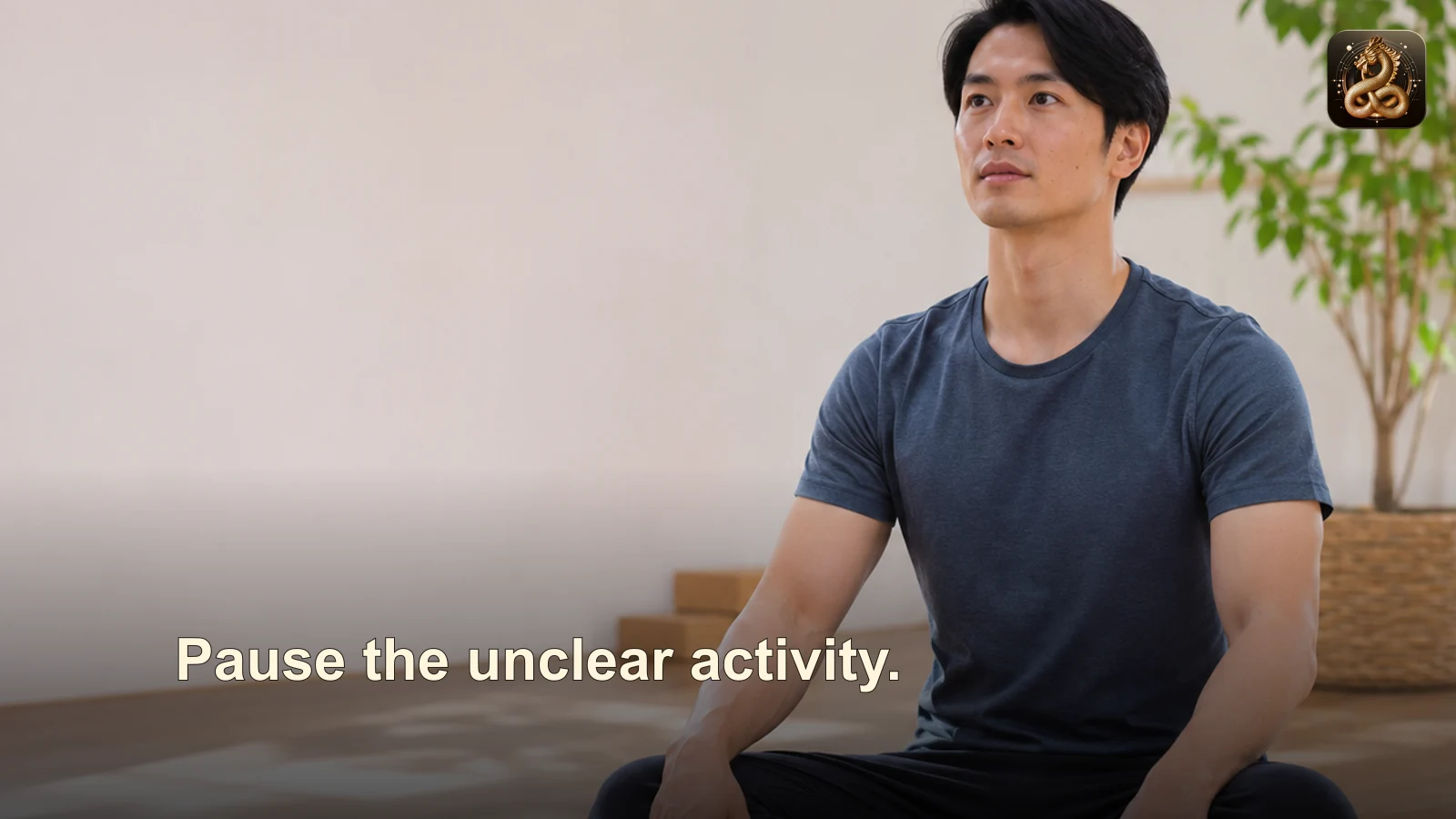
Ask whether the current instruction can be explained or shown again. The response may concern a later pause rather than the instant you ask. You can remain out of the unclear activity while that is arranged. Do not cross the room during an active movement simply because you can see a gap elsewhere; follow the teacher's direction about when and how to move.
If the arrangement repeatedly leaves you unable to follow, discuss the teaching format before another booking. You might ask whether the same room is used, whether the teacher demonstrates in different places or whether a smaller class offers a workable view. These are questions about information access, not claims that a different class size will produce a particular wellness result.
Ask for the detail, not a whole repeated class
A bounded request identifies the activity and the missing information. “Could you show the prop placement once from this side?” is clearer than asking the teacher to repeat everything. They may be able to answer the narrow question, offer another way to explain or say that the current format cannot provide what you need. Listen for which of those answers you actually receive.
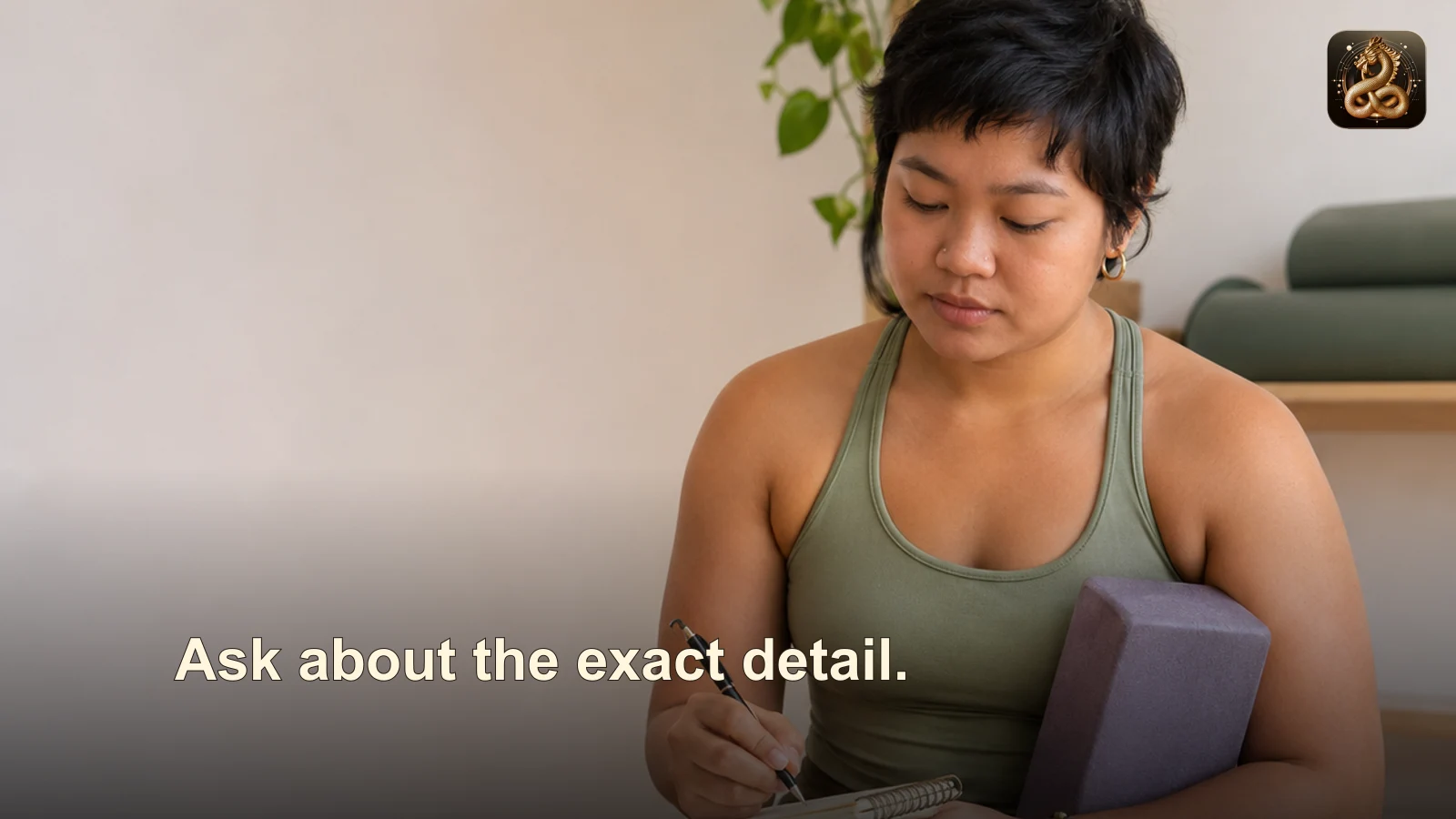
If the answer uses a new term, ask what that means before following it. A demonstration from another angle can remain confusing when its spoken direction is unclear. You do not have to pretend that the second explanation settled the first question. Keep the request about the activity in front of you and stop if the remaining uncertainty matters to your choice.
An answer for one activity does not become a rule for the whole session. A teacher might explain a prop at the front, then use spoken guidance later. Recheck when the instructional need changes. The skill that carries forward is being able to describe what is missing; the answer remains specific to the teacher, room and point in that class.
Two fictional room decisions
In an invented example, Mira arrives early and notices a pillar between her mat and the teaching area. She asks where demonstrations will happen. The teacher points to a clear space and suggests another available mat position that preserves the walkway. Mira moves before class starts. The example illustrates a question and a room arrangement, not a promise that moving will prevent injury.
In another fictional example, Owen can see the teacher at first but loses sight of a prop demonstration when the group turns. He pauses that activity and explains the part he missed. The teacher shows the detail at the next suitable moment. Owen still has a question about the cue, so he asks that separately rather than treating the improved view as complete understanding.
Neither person needs to evaluate how well everyone else can see. A neighbour's different view or confidence does not establish their own access to the instruction. The examples also do not require personal disclosure. A concrete description of the obstruction can be enough to begin an ordinary conversation about the room.
Questions about seeing the teacher
Should I always choose a mat at the front?
No universal position is established here. Ask where teaching will happen and follow the studio's room arrangement. A front space can still have an obstruction, a limited angle or an access purpose that is not apparent. Choose from the places actually available with the teacher's guidance.
Can I copy someone with a clearer view?
Their actions may reflect an individual option or a different instruction. Ask the teacher for the missing detail instead. If you cannot obtain the explanation you need, leave the unclear activity unfinished rather than assuming another participant supplies a reliable demonstration for you.
What if I can see but still do not understand?
Describe the wording or action that remains unclear. Sightline and meaning are separate questions. A clearer view can help you ask more precisely without resolving the instruction by itself. SoulFul GLO's guide to unfamiliar yoga pose names addresses another kind of clarification.
Must I explain personal vision information?
You can start by saying what you cannot see and what explanation you need. If you want to discuss an individual access arrangement, ask the provider about a suitable conversation. This guide does not decide what information a provider needs or replace personalised professional advice.
Choose teaching you can follow
Read SoulFul GLO's current yoga information when comparing the guidance available. A practical next step is an understandable explanation in a workable setting, with room to pause and ask before you try an activity you have not followed.