
At the entrance to a studio, you may be able to see where the mats go without knowing how the class will use the space between them. A place against the wall can feel quiet but limit the direction you can reach. A mat beside the aisle may have more room on one side but need to stay clear for people coming through. Where you unroll can affect how easy it is to follow the class.
Ask about the movements and the room together. Some classes stay mostly within the mat. Others invite people to step to the side, turn, extend their arms, or bring a chair or other prop nearby. The answer helps you choose a spot or ask for an option before everyone is settled.
Quick answer
Ask the instructor whether the class uses floor space outside the mat and where you should set up if you want extra room. Check the sides and both ends of the mat, including space for any props. Follow the studio's layout and leave walkways clear. If the room is fuller than you expected, ask about a smaller movement or a different place before trying to make the full movement fit.
Start with what the class asks you to do
“Gentle yoga” can describe the pace or effort of a class. It does not tell you whether each movement stays directly over the mat. An instructor might use a slow movement with arms extending sideways. A quiet floor sequence could still involve lying down with your arms open. A class with chairs might require room behind or beside the mat for the chair, even if the movement itself is small.
Ask about one concrete example. “Do we step off the mat?” is easy to answer. So is “Do we reach both arms out to the side while standing?” If the instructor says the class mostly stays in place but uses a wall or chair for one part, you know which space matters. You can then ask where the prop goes or how people normally turn for that section.
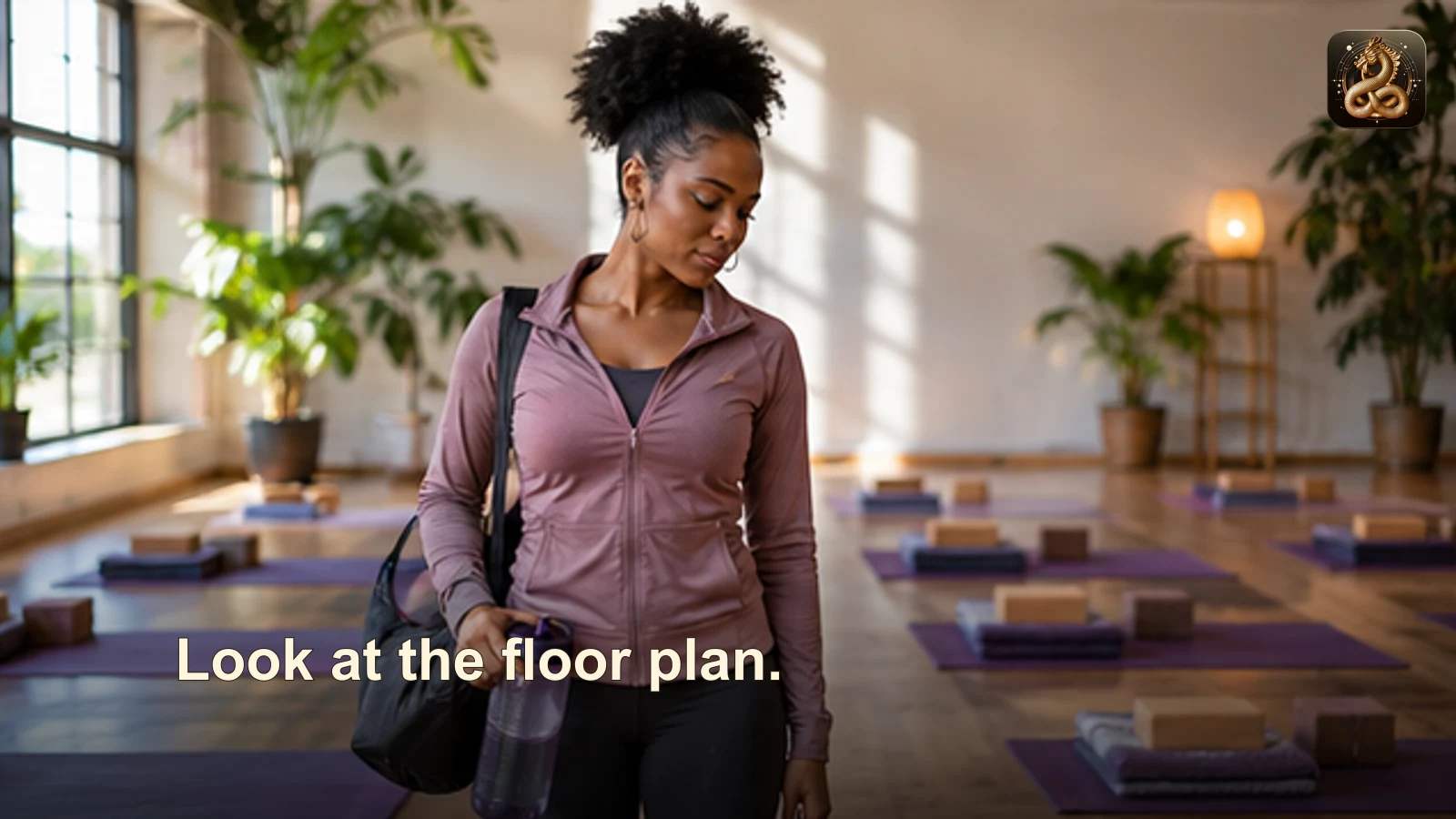
You can ask before booking if space is an important part of choosing a class. The instructor may not know exactly how many people will come, but they may know whether mats have marked places or whether an extra-wide spot is sometimes available. If the answer depends on attendance, plan to check again when you arrive.
Look at the layout before you unroll
Look for lines, mat markings, or spaces left open on purpose. A clear strip of floor may be an exit route or a place the teacher uses to demonstrate. Follow the room arrangement before treating an open space as somewhere to set up. If you cannot tell what an open area is for, ask.

Check what is next to the space as well as how large it looks. A bench can limit access along one side. A wall may make a spot narrower even when there is nobody on that side. Nearby bags and blocks can take up floor space that looked free at first. Consider where you would put your own props without making the path harder to use.
If mats are already set out, the long edges give a useful sense of side-to-side clearance. Also look along the short ends. You may need to sit near one end, step forward, or turn to watch the teacher. The best spot depends on how that room is used. The space next to an empty mat is also likely to change when its owner arrives.
Check clearance without rehearsing the whole class
Once you have a place, check that you can get onto the mat and reach your props without crossing into someone else's space. You can picture the direction of an arm movement before trying it. If you want to test a small reach, do it slowly and only in the area you know is clear. Let other people finish setting up before assuming a spot beside you will stay empty.
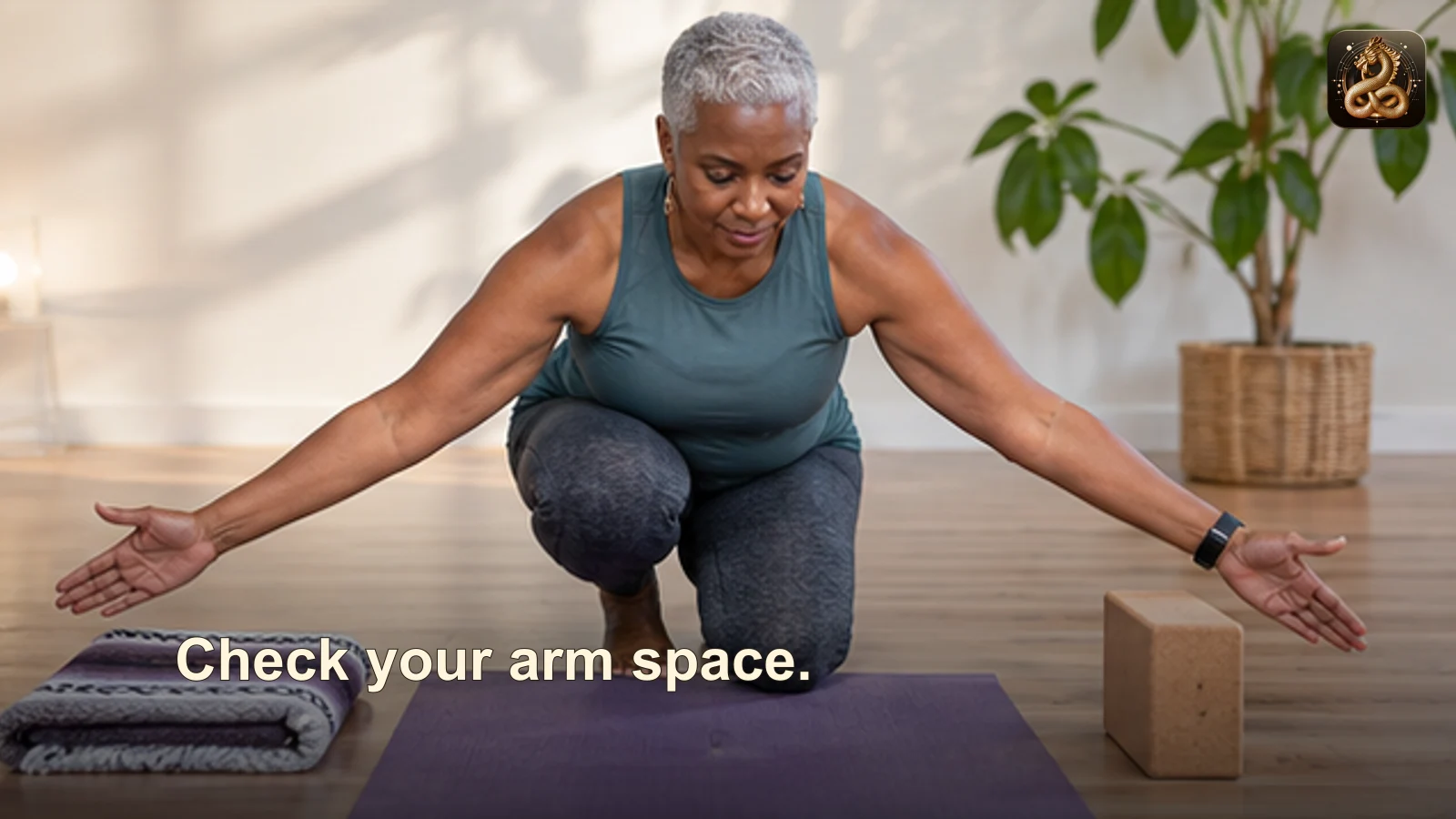
You can ask the instructor where the main movement goes. “Will we need more room at the front or at the side?” may lead to a specific answer. For a class that uses a chair, ask which direction the chair should face and where it should go between sections. For a class that uses blocks, see if there is an agreed place to keep them when they are not in use.
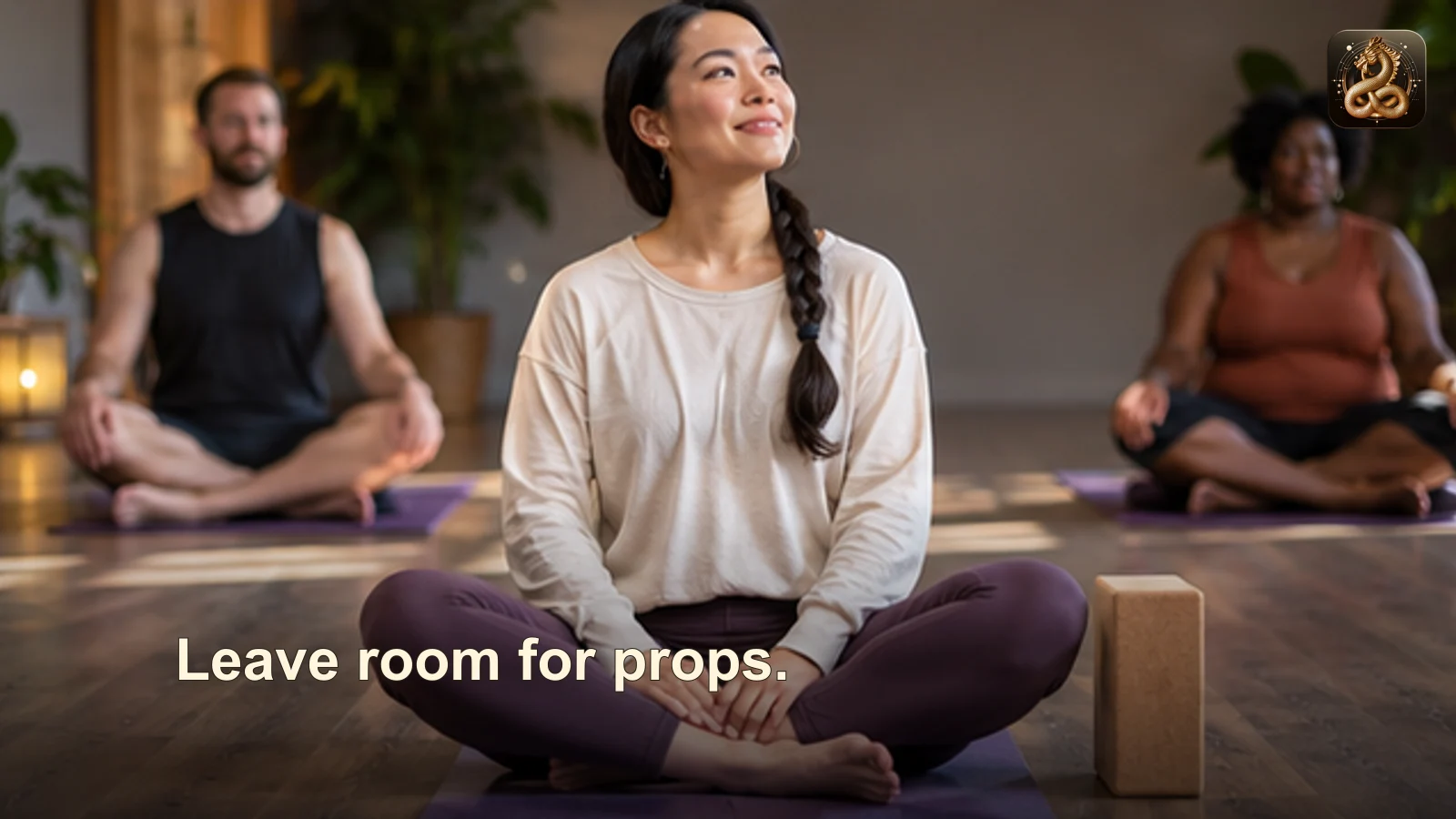
Home practice gives you more control over where the furniture goes. In class, the space also belongs to other people. If you want to practise the same sequence at home, the guide to setting up a small space for gentle yoga can help you think through the setup. At the studio, use the teacher's guidance about where to unroll and which directions are free.
Ask for the option you actually need
If you know you want extra room on one side, say which side and why it matters for the movement. You could say, “I’m more comfortable if I can turn to my right without reaching over the next mat. Is there a spot you’d suggest?” That gives the instructor something practical to work with. You can make the request without describing personal details you would rather keep private.
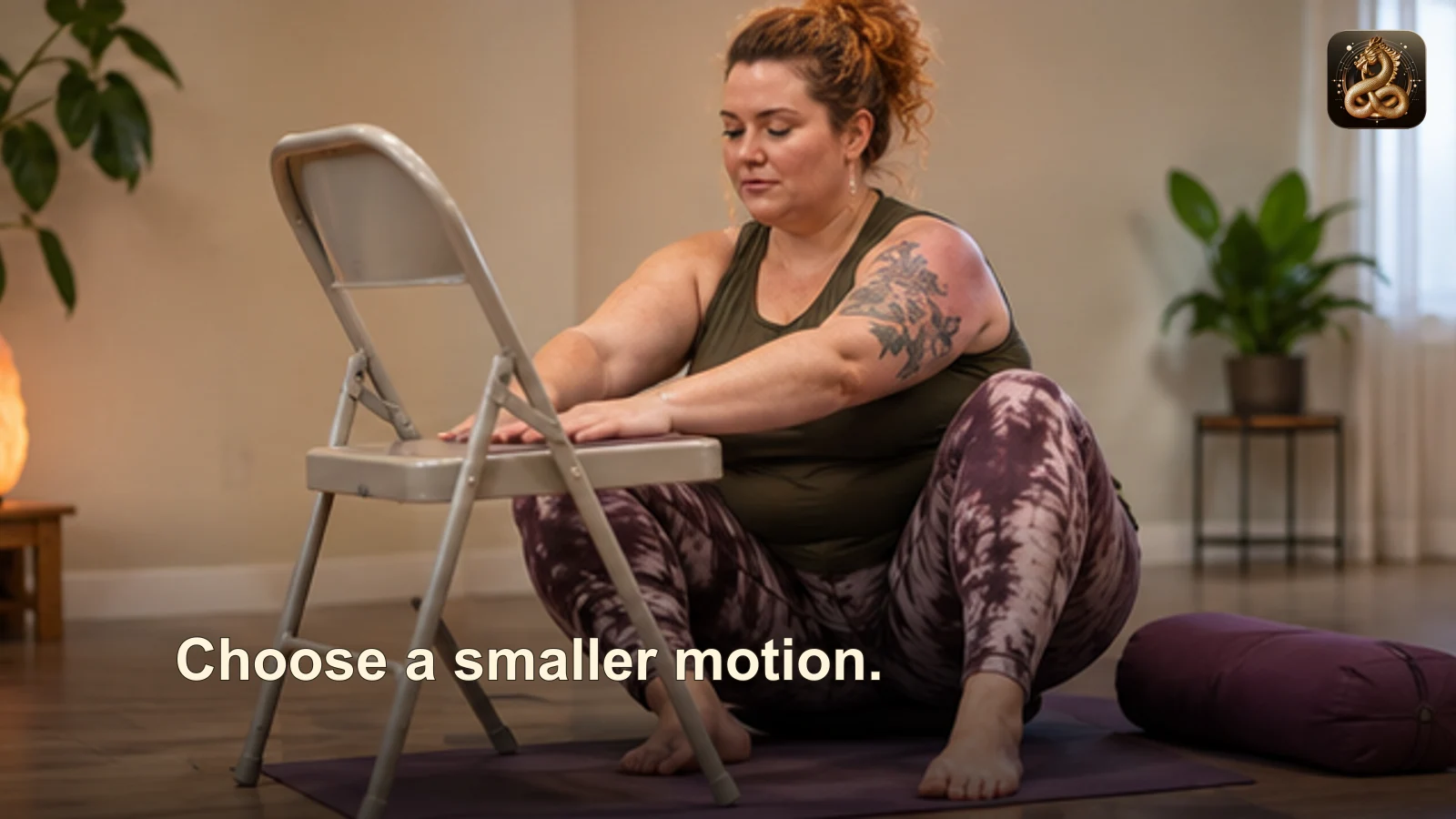
If there is no wider spot, ask how the instructor suggests reducing the movement in that room. It might be possible to keep your hands closer or choose a version that stays over the mat. Let the instructor explain the option for the actual pose. A smaller range can still let you follow the sequence without guessing how to change every instruction yourself.
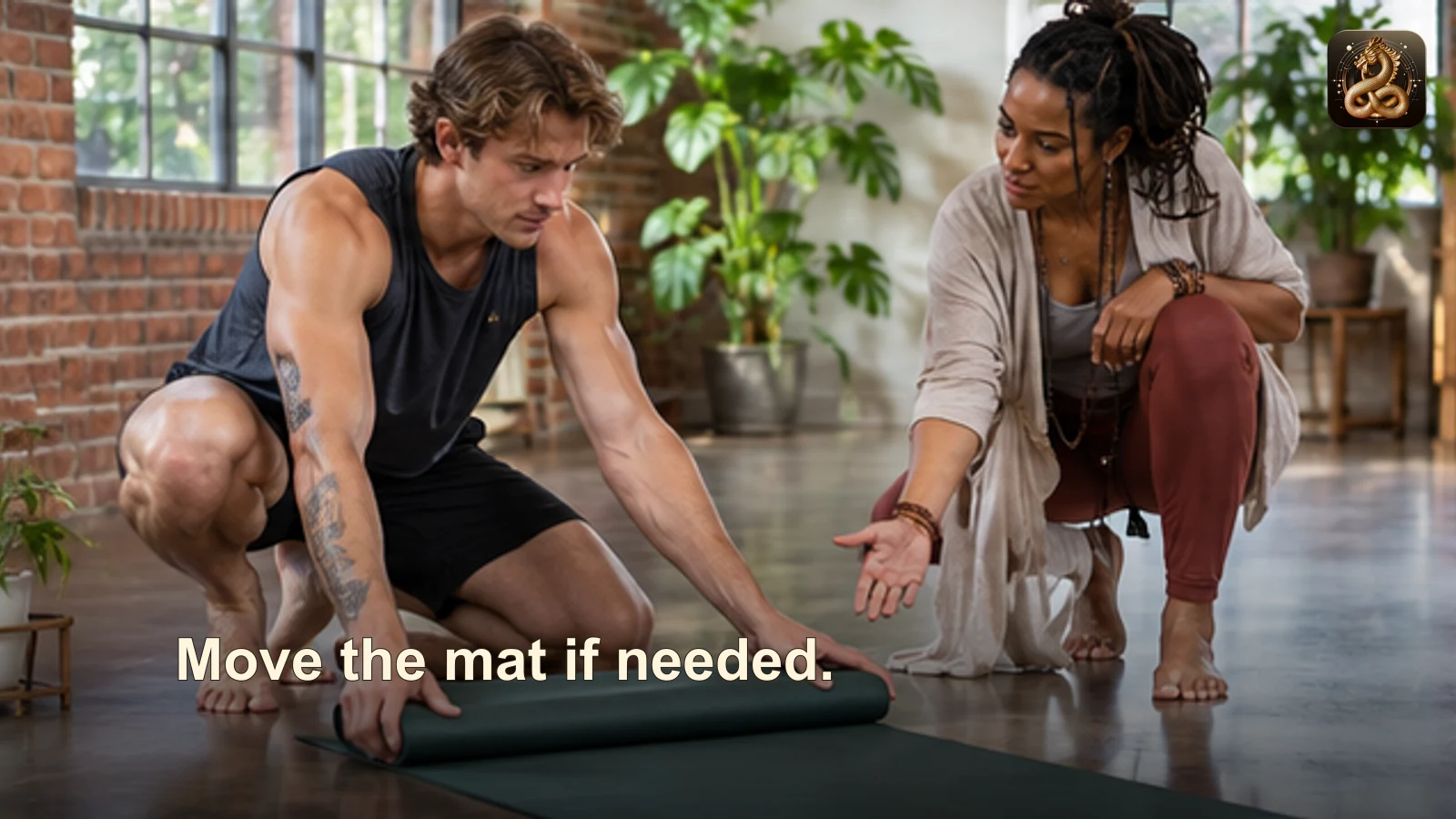
Sometimes you may prefer a different class time. If a busy class leaves little space and the layout matters to you, ask whether another session uses fewer mats or a larger room. The answer can be useful even if you decide to stay for the class you have already arrived for.
Change the setup if the room changes
A place that looked good before class can feel different when several more people arrive. If you see that someone has set up closer than you expected, check before moving your mat into another open spot. There may be a reason that spot is empty. The instructor can help you choose a place or show how the group is meant to share space for the movement.
If the first time you notice the problem is during a cue, pause before reaching or stepping. Keep your place while you ask the instructor for a smaller option or wait until you can move safely. You can leave out a movement that does not fit. That gives you time to see how the next part of the class uses the room.
If you move, bring props with you and look again at the space around the mat. Keep bags out of walkways and leave access for other people. The aim is a place you can use comfortably without creating the same problem for somebody else.
Compare two common situations
In a nearly full class, a spot at the edge might have one free side and a clear way to enter. You ask about the side reach, and the instructor explains that everyone can keep their arms closer when needed. You choose that spot, check where the block goes, and listen for the smaller option when the cue arrives. The plan works because it fits the layout the group is actually using.
In a less crowded class, the mats might face a wall that everyone uses briefly later. You see plenty of floor between people but little space at the front. The instructor explains that the wall section is done separately and shows where to leave a chair. You can set up in the usual place and move only when asked. The useful information was the sequence and the prop position, not just the distance between mats.
You may also find that two classes in the same room use different layouts. If you return with another teacher, ask again about the part of the setup you care about. You can remember what worked the first time and still check whether it applies to the class in front of you.
Take the first cue as another chance to learn how the room works. If everyone faces the same way, you can often see the direction of a reach before you try it. If the teacher asks people to turn, check where that puts your mat in relation to the others. A setup that works while facing forward may feel different after a turn.
If you attend with a friend, you can ask whether setting up next to one another leaves each of you enough space. You might choose two different spots once you know how the room will be used. That can be easier than trying to adjust together once the class has started.
Frequently asked questions
How far apart should yoga mats be?
There is no single distance that fits every class and room. Check whether the class uses side reaches, steps, or props, and follow the studio's layout. Ask where you can set up if you need more space for a specific movement.
Is an edge spot always roomier?
An edge spot can give you room on one side, but a wall, door, bench, or walkway can limit where you move. Check both the open side and the space you need to keep clear. Ask the instructor whether that spot works for the planned sequence.
What if I need a chair or more room to get onto the mat?
Tell the instructor what setup you need before choosing a place. Ask where the chair can go and how you can get to the mat without stepping over props or blocking a path. If the room is already full, ask what alternatives are available.
Can I move my mat halfway through class?
Ask the instructor when and where it is appropriate to move. If you cannot make a movement comfortably where you are, pause or use a smaller option while you wait. Check the new place for walkways and props before resuming.
Ask one question when you arrive
You can start with “Which movements need space beyond the mat today?” Listen for a direction, a prop, or a place the group is expected to keep open. Then choose a spot using that information. If you would like more space on one side, ask while there are still options.
Once you are set up, leave what you need within reach and keep the agreed paths clear. If the room or the movement changes, give yourself time to ask again. The useful spot is the one that works for the class as it unfolds.