
You have booked a gentle yoga class and then see a photograph full of matching outfits. Before deciding that your ordinary clothes are wrong, look at what the class actually requires. A useful preparation check can begin with the wardrobe you already have.
The questions are practical: can you move comfortably in the clothes, manage their layers and fastenings, and follow the venue's stated requirements? You do not need to look like the teacher, hide a body shape or buy a particular style to ask those questions.
This guide is an ordinary clothing check, not a movement lesson, a shopping list or advice about individual exercise suitability. A comfortable outfit cannot establish that a class is appropriate for your health or needs. Keep those separate questions for suitable professional and instructor guidance.
Quick answer: check comfort, movement and the actual venue
Read the class's clothing and footwear information. Choose familiar clothes that allow ordinary comfortable movement without constant adjustment. Check waistbands, hems, seams and fastenings, consider a removable layer, and put aside loose accessories that interfere. Ask the venue about an unclear requirement before attending.

Use clothes that you are comfortable wearing in that setting. An outfit is not a test of body shape or yoga experience. If an item distracts you or the class requires something you cannot arrange, change the item, ask about an option or choose another occasion.
Read the requirement before copying the photograph
Start with the actual class information rather than a general image of yoga clothing. An outdoor session, a shared studio and an online class may have different practical arrangements. Check whether the venue gives clothing, footwear, changing-room or storage instructions relevant to the session.
The Iyengar Yoga UK association's preparation page offers ordinary clothing examples and tells new students to direct equipment and clothing questions to the teacher. That is guidance within its teaching setting, not a universal dress code for every class.
If a listing says comfortable clothing without explaining more, you can ask what a participant needs to know. A useful question is whether there are venue-specific requirements and where shoes or extra layers are kept. You do not need to send a photograph of your body to ask.
Keep a provider's stated requirement separate from a person's outfit in a video. The teacher may be wearing a preferred garment rather than demonstrating a rule. A brand logo, matching set or colour scheme is not evidence that participants need the same things.
Start with a familiar top and bottom
Choose items you already know how to wear and manage. Familiar trousers, leggings, shorts or another suitable garment may be possibilities depending on your preferences and the actual class. This guide does not select one cut for every body or setting.
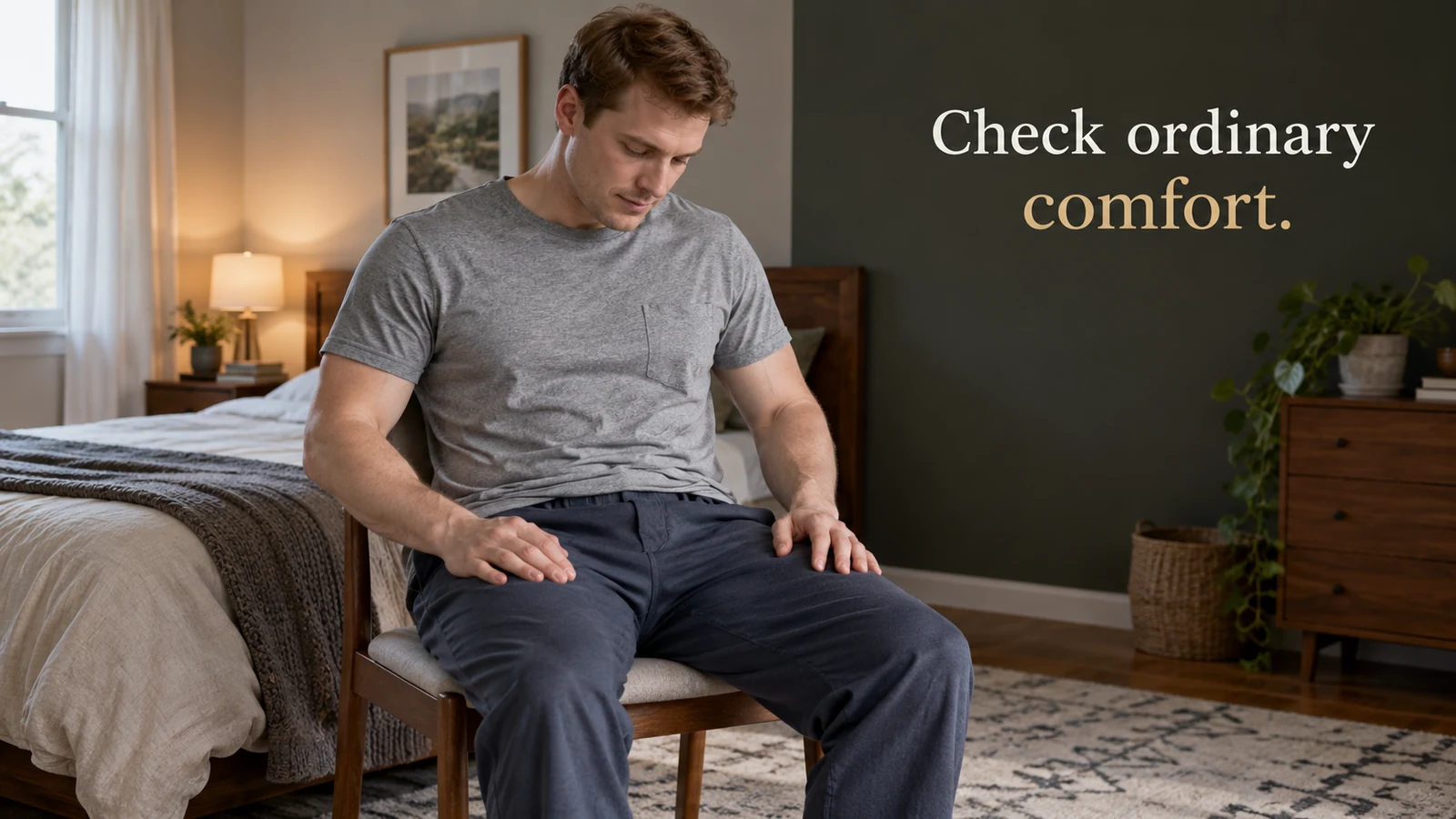
Check whether you can sit, stand and make ordinary comfortable movements without the clothing pulling, catching or needing repeated adjustment. This is a clothing check within your usual movement, not an instruction to rehearse yoga poses or test the limits of a garment.
Notice how the waistband feels in different ordinary positions. A fastening that is comfortable while standing may press when sitting. If it is bothersome, try another item you already own rather than treating discomfort as a necessary part of the class.
Check the top in the same practical way. You may want it to stay where you expect as you move, or you may prefer a layer that gives the coverage you want. The relevant standard is your comfort and choice, not a judgment about which bodies should wear a particular shape.
Notice seams, pockets and fastenings
An ordinary garment can include details that become distracting in a different setting. A bulky pocket, hard zip pull or thick seam may be noticeable when you sit. Identify the actual issue instead of assuming that the entire outfit is unsuitable.
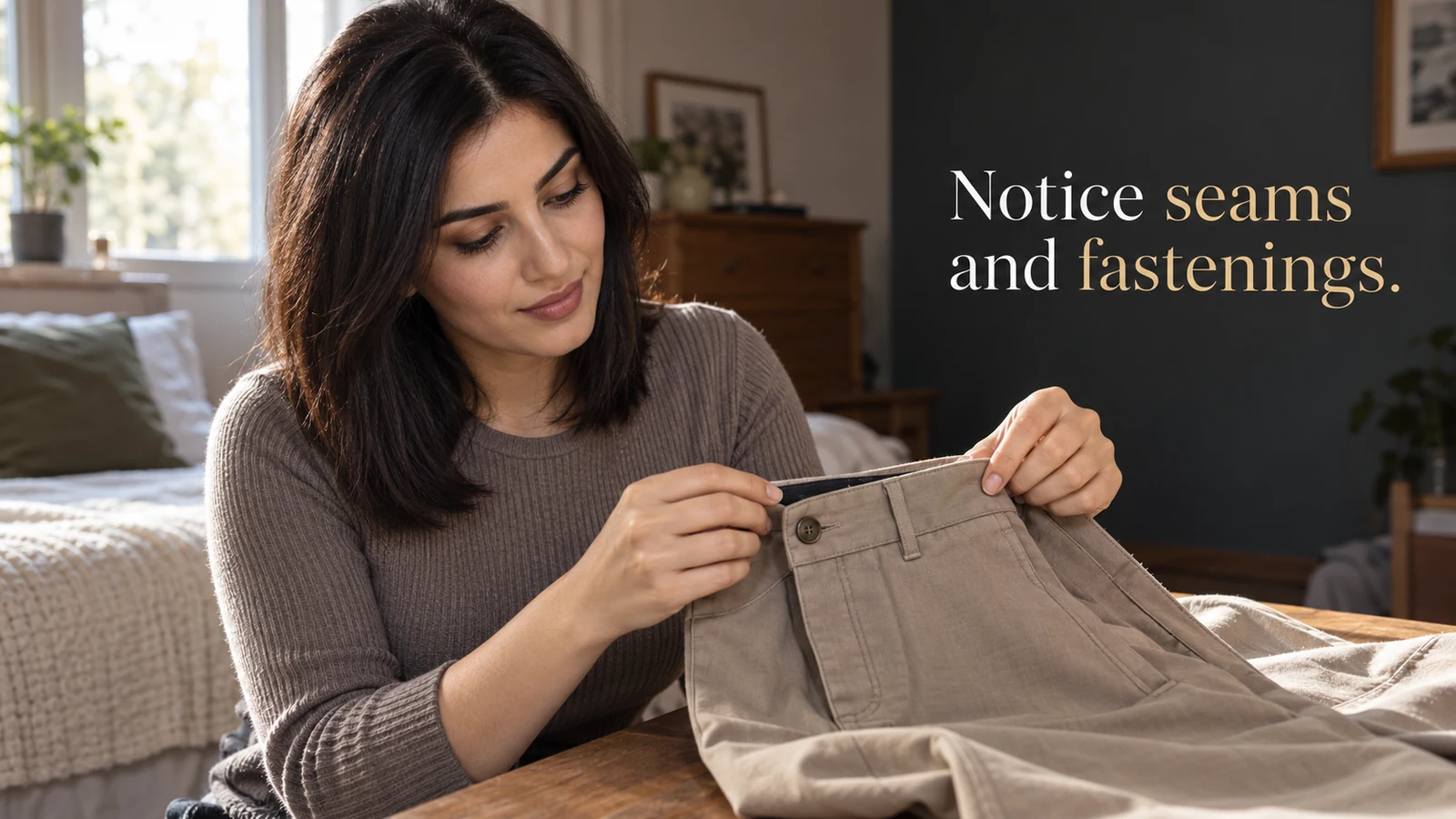
Empty items from pockets when they could interfere, and keep them somewhere appropriate at the venue. A phone, keys or a hard object can shift as you move. Check the storage arrangement rather than leaving belongings in a place that blocks access.
Look at cords, drawstrings and loose ties. Secure or choose alternatives as appropriate without tying something so tightly that it creates discomfort. If managing a detail becomes complicated, another familiar garment may be the simpler choice.
This is not a laboratory fabric assessment. You do not need to determine a material's technical performance, make a purchase based on a label or infer suitability from how expensive the clothing was. Attend to the details you can actually notice in the items you have.
Decide what coverage feels comfortable to you
Clothes can shift during ordinary movement. Notice whether the outfit leaves you repeatedly checking a hem or adjusting a neckline. You can choose another combination if you would rather give attention to the instruction than to that adjustment.

Your preference may depend on the setting. What feels comfortable at home may differ from what you want in a shared class, and that difference needs no defence. Choose coverage according to your own preferences and any actual venue requirements.
Avoid using mirrors or photographs to judge whether your body looks sufficiently like a yoga participant. You are checking how clothing behaves and whether you want to wear it. Appearance comparisons do not answer those practical questions.
If a concern remains, you can ask the instructor about the class format without disclosing more than is necessary. For example, knowing whether a session includes floor work may help you prepare, while the actual movement directions still belong to the class.
Use a removable layer when it fits the setting
Consider the room and your journey there. A removable layer can be useful if you expect different conditions before, during or after class. That is an ordinary preparation option, not a rule that every session needs several layers.
Choose something you can put aside without creating an obstruction. Ask where extra clothing and bags are kept. A layer draped over shared equipment or placed in a walkway may interfere with other people's use of the room.
If you are attending online, look at the actual space and what is convenient to reach. Do not rearrange the entire room just to match a studio image. Keep any layer you put aside away from the area needed for the session.
Temperature preferences differ, and no fabric guarantees comfort for everyone. You can adjust clothing when appropriate, ask about conditions or choose another arrangement. Do not treat enduring discomfort as evidence of commitment.
Ask about feet and footwear rather than assuming
Check the teacher's stated arrangements for footwear. The Iyengar Yoga UK preparation page mentions bare feet for its classes, but that does not establish every venue's rule or determine an individual person's needs. Ask the actual provider.
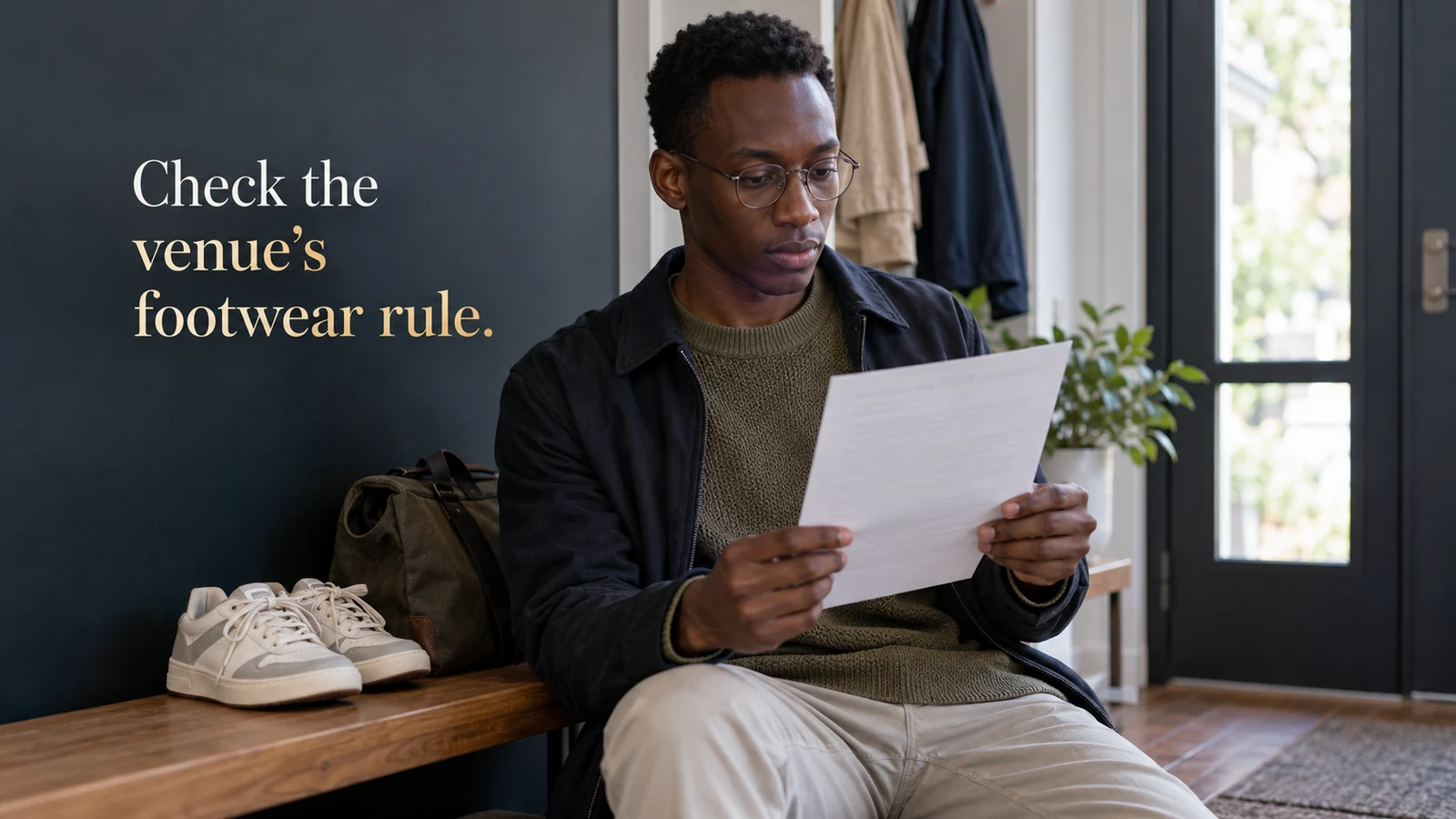
Find out where shoes are removed and stored if that is part of the venue's process. Consider the ordinary journey to and from class separately from what the teacher expects in the practice area.
Do not infer that a pair of socks or another item is suitable simply because it appears in a home-practice photograph. If footwear, an aid or a personal requirement raises a question, discuss it with the appropriate instructor and relevant professional rather than guessing from this article.
You can ask about an accommodation before booking or travelling. A clear answer about the actual setting is more useful than a broad reassurance that everything will work. If the arrangement is unavailable, consider another appropriate option.
Put aside accessories that get in the way
Loose necklaces, watches, bracelets, belts or other accessories can be inconvenient in some movements or positions. Think about what you actually wear and whether it interferes with comfortable participation. This guide supplies no universal jewellery ban.
Remove an optional accessory when you prefer to practise without managing it, and use suitable storage. You do not need to remove meaningful clothing or an essential item automatically because a generic checklist mentions accessories.
Manage hair in whatever ordinary way is comfortable and practical for you. There is no required hairstyle. A fastening that presses when you sit or rest may be inconvenient, so consider an alternative if that issue applies.
Keep personal aids and individual requirements outside casual assumptions. Ask qualified people when a change affects something necessary for you. An editorial wardrobe guide should not override relevant individual advice.
Keep outfit readiness separate from class suitability
A label such as gentle does not establish the demands of a session. Read the actual description and clarify instruction, participation options and any relevant personal needs. Clothing comfort is one preparation detail among others.
NCCIH's yoga guidance discusses qualified instruction and the possibility of injuries. It does not certify a class because the clothes are comfortable. Seek appropriate individual advice for health concerns instead of relying on a wardrobe check.
You can also stop or decline an instruction during class even if you prepared carefully. Preparation does not obligate you to continue through pain, concerning symptoms or something you do not understand. Ask for appropriate guidance rather than using clothing adjustments to solve an unrelated problem.
If you want a separate guide to interpreting course descriptions, SoulFul GLO's yoga class-level article explains questions about prerequisites and pace. A level badge and a clothing choice answer different questions; neither substitutes for the other.
Two fictional wardrobe decisions
A familiar outfit needs one change
Asha chooses an ordinary top and trousers she already owns. While sitting in a chair she notices that a hard waistband fastening presses. She tries another familiar pair with a more comfortable arrangement, without performing a yoga sequence to test it.
She also checks the venue's message about shoes and bags. Her preparation ends with a combination she wants to wear, not a decision to buy a matching set. She can ask the instructor if another requirement becomes unclear.
This invented example illustrates a specific clothing adjustment. It is not a product recommendation, a statement about every body or evidence that an outfit makes a class safe.
The venue information changes the plan
Ellis plans to go directly from another activity to a class. The information says where shoes and belongings are kept but leaves a footwear question unanswered. Ellis contacts the provider before travelling rather than assuming that the photograph settles it.
The response helps Ellis decide whether the arrangement fits. A removable layer goes into the ordinary bag, with a plan to store it where instructed. If the class cannot meet an important requirement, another session remains an option.
These fictional choices have different practical questions. One concerns a garment's fastening; the other concerns the venue. Neither reader needs to look like an image of an experienced participant to seek a clear answer.
Make the next preparation simpler
After class, remember one concrete clothing detail if it would help: the layer was convenient, a seam was distracting or the bag arrangement worked. You do not need an outfit score or a permanent rule based on one occasion.

Keep what worked and change a specific inconvenience when needed. The same clothes may remain useful. A new session or venue can call for a fresh check without turning every class into a wardrobe project.
Explore the actual practice information
Use SoulFul GLO's practice chooser to consider the activity you want. Check current session descriptions and requirements rather than assuming a photograph establishes clothing, equipment or individual suitability.
Frequently asked questions
Do I need to buy yoga clothes?
This guide makes no purchase a condition of preparation. Start with suitable familiar clothes and the actual class requirements. Ask about an unclear requirement before deciding that you need something new.
Must my outfit be fitted?
There is no single cut prescribed here. Choose clothing that behaves as you want during ordinary comfortable movement and meets actual venue requirements. Repeated adjustment or discomfort can be a reason to try another owned item.
Can I wear socks?
Ask the actual instructor about footwear arrangements and any individual requirement. A general article or photograph cannot establish what is appropriate for every practice area or person.
Does the right outfit make gentle yoga suitable for everyone?
No. Clothing comfort does not assess the practice or individual health needs. Seek appropriate guidance, check the session and keep participation choices separate from completing an outfit checklist.
Arrange the space as a separate task
For home practice, SoulFul GLO's small-space yoga guide addresses the room and playback arrangement. Use it after choosing an actual session; comfortable clothing alone does not establish that the space accommodates its requirements.