
You wrote down an intention to draw more often. A week later, you have one sketch, a few days you meant to draw, and a page that still says “make time for art.” You could leave the words as they are. Before deciding, look at one part of the week you can describe. When did you open the sketchbook, and what helped you do it?
A weekly review gives you a regular time to check whether an intention has a workable action attached to it. You can use the word manifestation if it is part of how you think about intention setting. For the review itself, look at what you did, what was within your control, and what you want to try next. A single week can help you adjust the arrangement you chose.
Quick answer
Write down the intention and one action you planned. Look for the occasions when you did that action and what made it possible. If it happened less often than expected, choose one small adjustment to test during the next week. If the action worked, keep it. Use the review to learn about your plan and the conditions around it. Leave unrelated events and other people’s decisions outside the result.
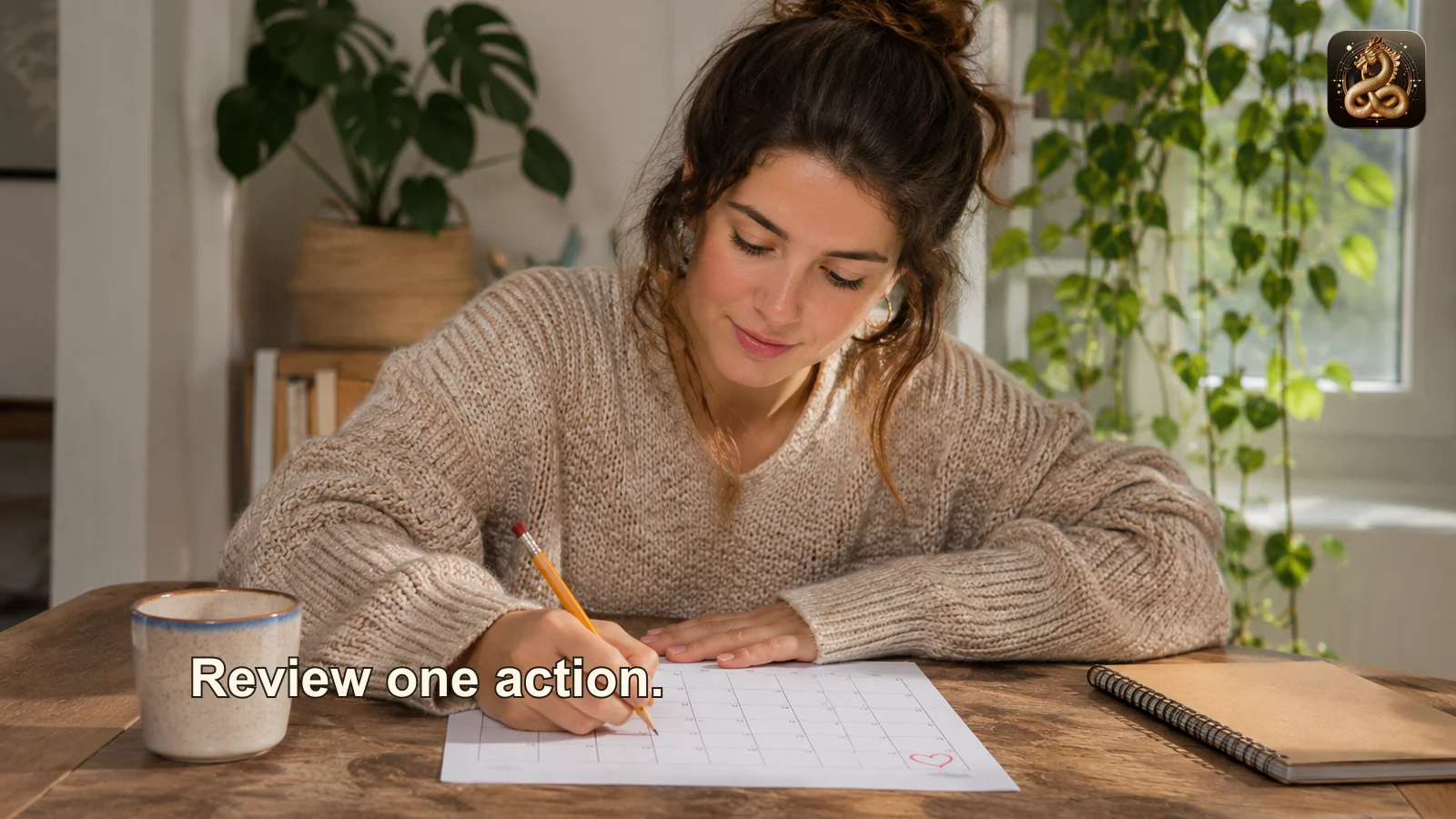
Start with the action you actually planned
An intention can be broad because it describes something that matters to you. “Make room for drawing” is broad enough to apply in many circumstances. The action can be smaller. You might plan to open the sketchbook after lunch on Tuesday and Thursday, or draw one object while the kettle boils. You can recognise when either action has happened.
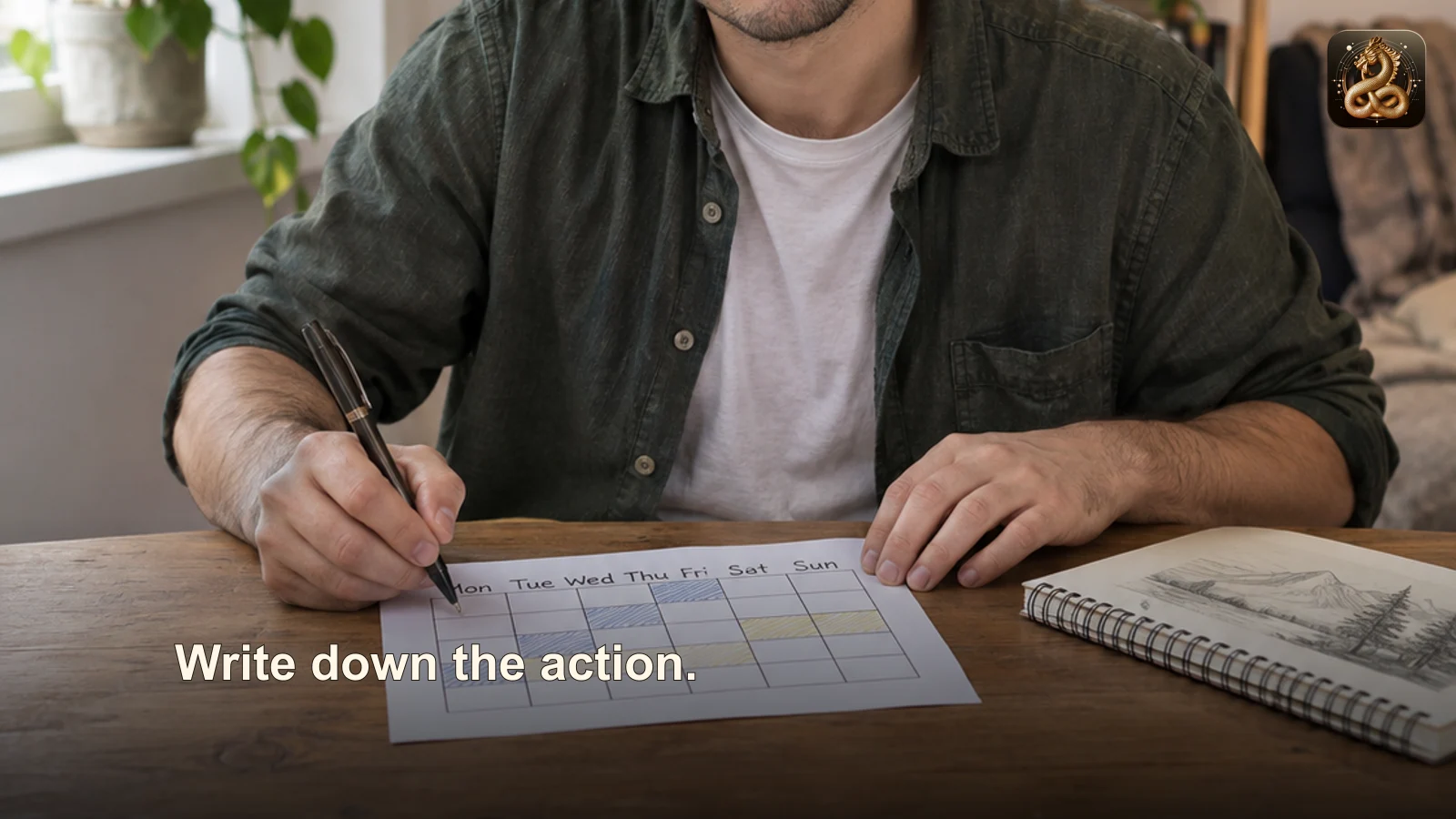
If the intention is the only thing you wrote down, use this week’s review to choose an action for next week. You can still ask whether you did anything related to the intention during the past seven days. Treat what you remember as a starting point. The next review will be easier if you have a specific plan to compare with what you did.
Choose an action that can happen under ordinary conditions. “Draw for an hour whenever I feel inspired” may be difficult to fit into a busy week. “Put the sketchbook on the table and draw one object after lunch” gives you something you can begin. The amount you draw can vary. You can keep the action small even when you sometimes want to continue.
Describe the week without filling in the gaps
Start with what you know. You opened the sketchbook on Tuesday and drew a mug. On Thursday you ate lunch away from home and the sketchbook stayed in the drawer. On Saturday you drew while waiting for a friend, even though Saturday was outside the plan. Write those observations in plain language. They describe several different conditions around the same action.
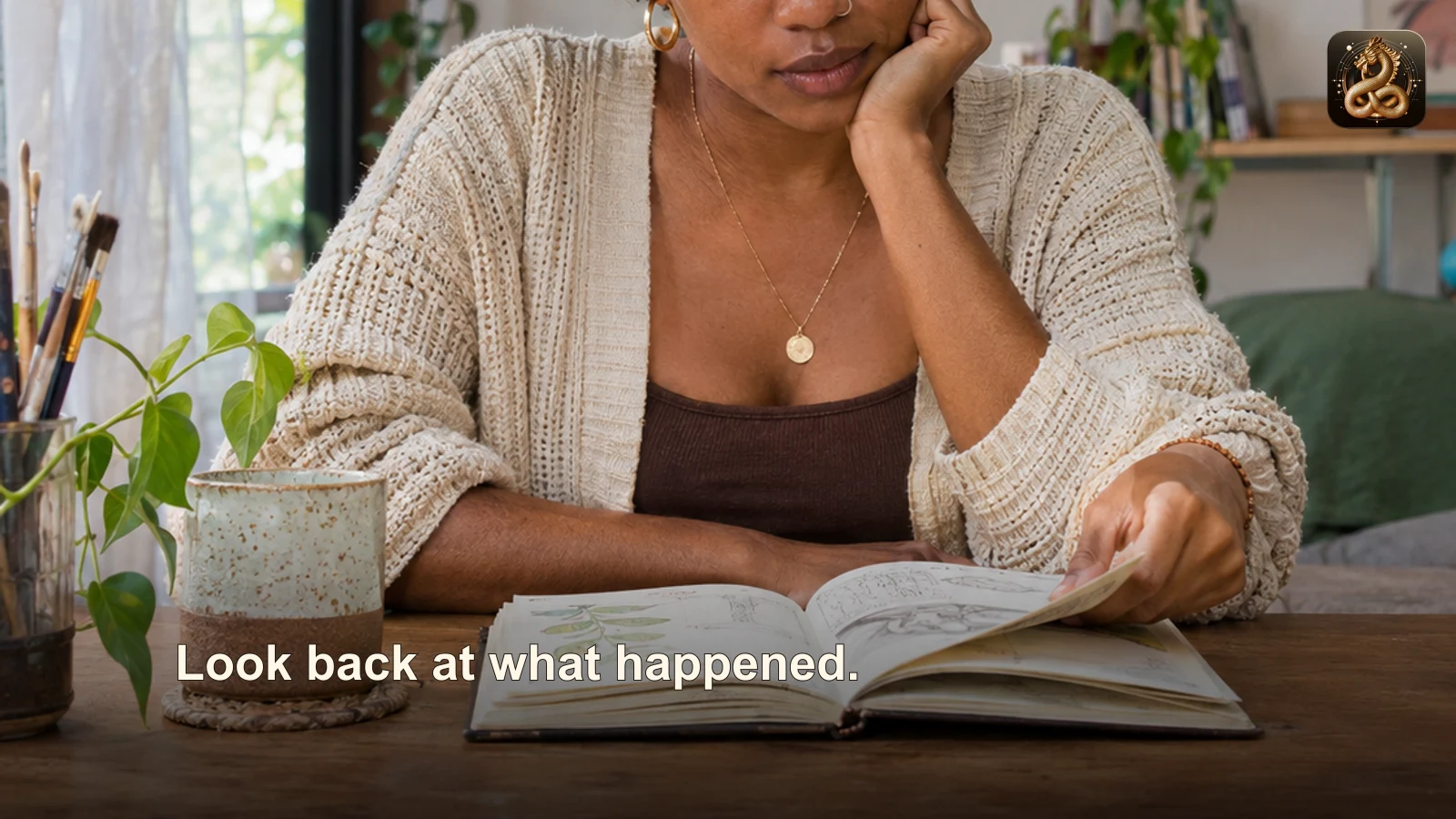
If you cannot remember what happened on a particular day, leave that day open. You can use a page you drew, a calendar entry, or a short note if you already have one. There is no need to reconstruct a detailed timeline from fragments. You are looking for enough information to make one practical decision about the coming week.
Notice the difference between an observation and an explanation. “I opened the book after lunch” is an observation. “I only draw when I have a good morning” is an explanation you might be tempted to infer. You may have other reasons to think it is true, but one example leaves room for several possibilities. Start with the detail you can use, such as where the book was or how much time you had.
Ask what made the action easier or harder
Look at one occasion when the action happened. Was the material within reach? Did a familiar event remind you? Did you have fewer things to do at the time? If you can identify a useful condition, see whether you can make it available again. You might put the sketchbook where you eat lunch or choose a different time when there is usually more room.
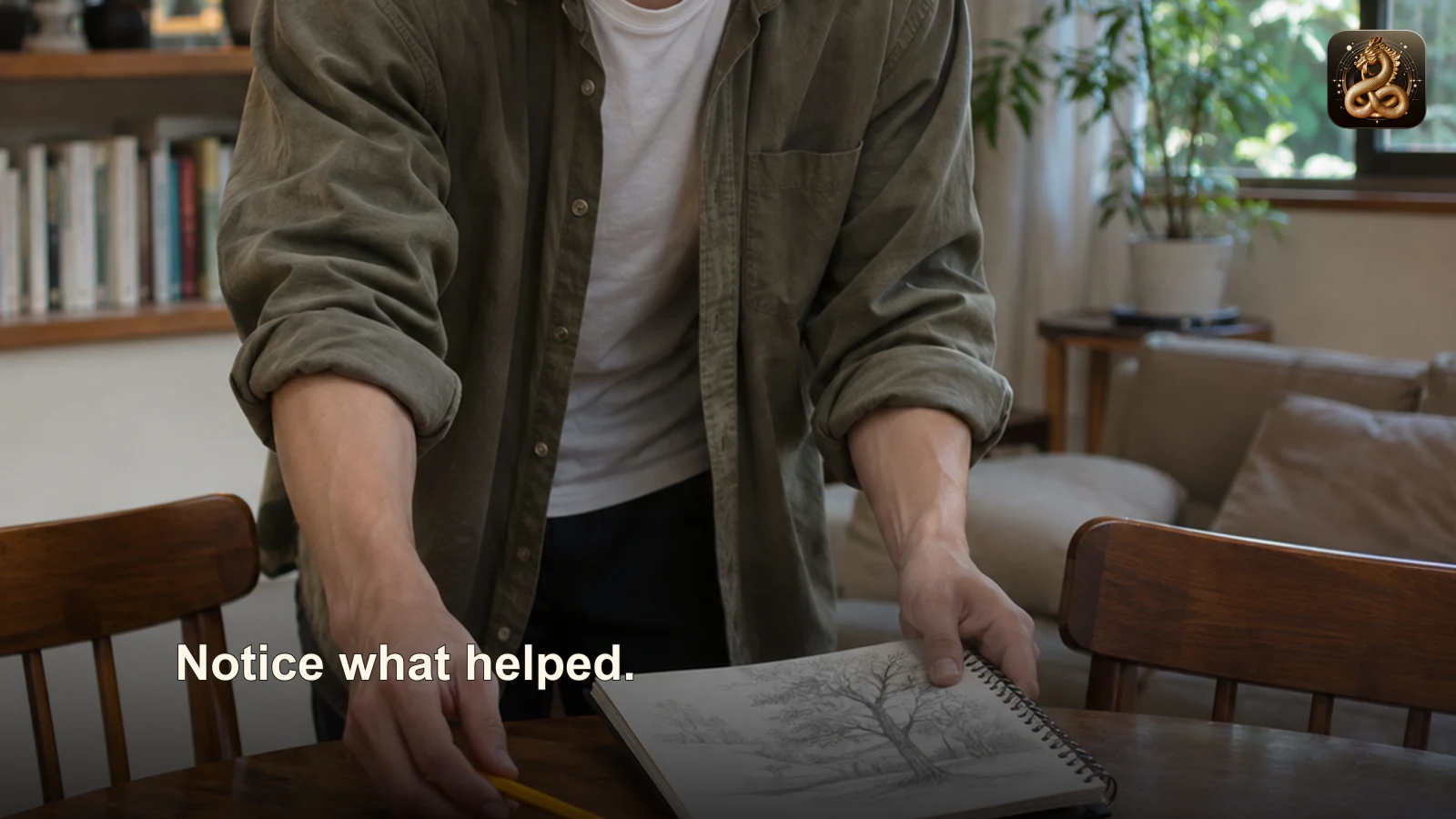
Then look at an occasion when the action did not happen. Perhaps lunch moved, you could not find a pencil, or you remembered the plan only after putting everything away. A small obstacle can suggest a small change. Put a pencil with the book. Attach the action to making tea instead of eating lunch. Choose one adjustment that addresses what you observed.
Some days will be difficult for reasons the plan cannot solve. You may be busy, need to rest, or decide that another activity matters more. When that happens, you can leave the missed action in the record and decide what is reasonable for the next week. A plan you can adapt is easier to use than one that depends on every day following the same pattern.
Decide whether to keep, shrink, or move the action
Keep the action if it is workable and serves the intention. You may only need to repeat the arrangement that already helped. If you opened the sketchbook on both planned days and liked the amount of time, use the same plan again. The review can end with a decision to keep it.

Shrink the action if starting is the part that takes too much effort. You might plan to draw one line or open the book and pick a subject. If you want to keep drawing, you can. If you stop there, you still carried out the smaller action you chose. The point is to make the first step available in the time you have.
Move the action if it fits better somewhere else in the day. A lunchtime plan may be unreliable if you often eat away from home. An evening plan might work if the supplies are already out. Choose a time or cue you actually encounter. If a larger change has made the original intention hard to use, consider revising it to fit your circumstances.
Leave unrelated results outside the review
Suppose a friend asks to see your drawings on the same day you had planned to sketch. You can enjoy the conversation and still keep your review about whether you opened the sketchbook. The friend’s invitation may have encouraged you. It does not tell you whether the intention caused the invitation. You can write down both events without drawing a conclusion about how they are connected.
The same applies when something disappointing happens. If you hoped to draw more and the week turned out to be crowded, describe the time you actually had. Decide whether there is a smaller action you want to try. Other people’s choices, delays, and chance events can affect your week. The action you plan should be something you can decide to do within those conditions.
You can notice results that follow directly from the action. If you draw one object, you have a sketch. If you put the book on the table, you can see whether it is there when you sit down. These are useful observations because they give you something concrete to review. You can value other outcomes without treating them as a test of your intention.
Write one change you can check next week
End with a plan that is easy to recognise later. “I will draw one object after tea on Wednesday” gives you a moment and an action. “I will be more creative” describes a wish without saying what you would observe. You can keep the wish as your intention and use the specific action for the next review.

If you change several things at once, you may find it hard to tell which part helped. For one week, try one adjustment if that is enough. Move the book to the table, choose a different time, or make the drawing smaller. At the next review, ask whether that change helped you begin. If it did, keep it. If something else mattered more, use that information to choose again.
You can use the same approach for an intention to walk, read, or contact a friend. Choose an action you can take, such as putting shoes by the door or sending a message when you have time to write it. Review whether you did that action. A response from someone else can matter to you, while your review still stays focused on the part you could choose.
Frequently asked questions
Do I have to review the intention on the same day each week?
Choose a regular time if that makes it easier to remember. A Sunday review may fit your schedule, or you might prefer to look back after the last planned action. Use a span you can describe. A day more or less does not change the purpose of the exercise.
What if I did the action once when I planned to do it twice?
Look at the occasion when it happened and the one when it did not. If a small change could help, try it. You can also decide that once a week is a workable plan. Choose the amount that serves the intention in the week you are likely to have.
Can I change the intention itself?
Yes. You may find that the intention no longer describes something you want to pursue. You can revise it, set it aside, or keep the purpose and choose a different action. A weekly review is an opportunity to make that choice based on what you know now.
What if I cannot remember the week clearly?
Use any simple record you already have, and leave uncertain details open. For next week, you can put a small mark next to the action when it happens. Choose a way to remember that takes little effort. The mark is there to help you review the plan.
Suppose your intention was to make room to read, and the action was to put a book beside your cup before breakfast. You put it there twice and opened it once. Those are separate observations. The book was easy to reach on the day you read, but on the other day you left the house before breakfast. Next week, you could try placing it next to your bag instead. That gives you a new cue to test without requiring yourself to make up for the missed morning.
It is also reasonable to retire an intention. You may have chosen the action for a week that no longer resembles the one ahead. Write down what changed: “I chose this when I was working at home. Next week I will be commuting.” Then decide whether the original purpose still matters and whether there is another practical way to serve it. If you cannot see one yet, leaving the intention aside is a clear decision. You can return to it later without treating the intervening weeks as a backlog.
On a busy week, try writing the review on the same page as the original intention. Seeing the two together helps you check whether you quietly changed the task halfway through. If your original plan said to write one sentence, a week of short entries still counts as following that plan. There is no need to judge it against a longer practice you never set out to do.
Close the review with one workable choice
Look at what you did and choose what you want to carry into next week. Keep an action that works, adjust a detail that got in the way, or choose a different action if the first one no longer fits. Give yourself a clear way to tell what happened. You can return to that observation when it is time to review again.