
You remember a person through a small scene: sorting materials for a class, trying a recipe together or waiting while a shared project dried. You might want to write directly to that person without beginning a conversation. An unsent journal letter gives the entry an addressee while keeping its purpose on your own page.
The letter can concern an ordinary memory, a detail you appreciate or something that remains unfinished in your account. It does not need to contain a confession, a request or a dramatic ending. Addressing someone as you can be a writing choice, even when you have no intention of delivering the words.
Quick answer
Choose one person and one ordinary shared moment. Label the entry as a private unsent letter, add the date and begin with a greeting if you want one. Describe what you remember and what you think about it now. Leave the other person's perspective unknown unless you have evidence for it. End without requiring a reply or an action.
This guide offers an optional personal writing format. It is not therapy, a trauma-processing exercise, a way to obtain forgiveness or a method for resolving a relationship. Choose a subject you are comfortable recording, and stop if it becomes unsuitable. The two letters below are original fictional examples, not real correspondence or customer stories.
Give the letter a private purpose
Before writing, decide what you want this particular entry to hold. Perhaps you want to describe an afternoon you still enjoy remembering. Perhaps a shared activity ended before it felt complete to you. Keep the scope small enough that you can write about the occasion without explaining the whole relationship or evaluating the person.

Mark the page with a date and an ordinary description of its purpose. A heading such as Private unsent reflection can distinguish it from correspondence you plan to deliver. That label expresses your intention; it does not prevent someone from seeing or copying the page. Consider the actual place where you are writing and storing it.
Use your journal or another writing space whose arrangements you understand. Keep the greeting on the journal page, away from message composers and recipient fields. That lets you address someone directly while keeping the writing in the place you chose for reflection.
Choose a person and a single scene
Select a scene you want to describe. A former classmate, a friend from an activity or someone who helped with a small project may provide a starting point. Choose an occasion with a few details you can recall.
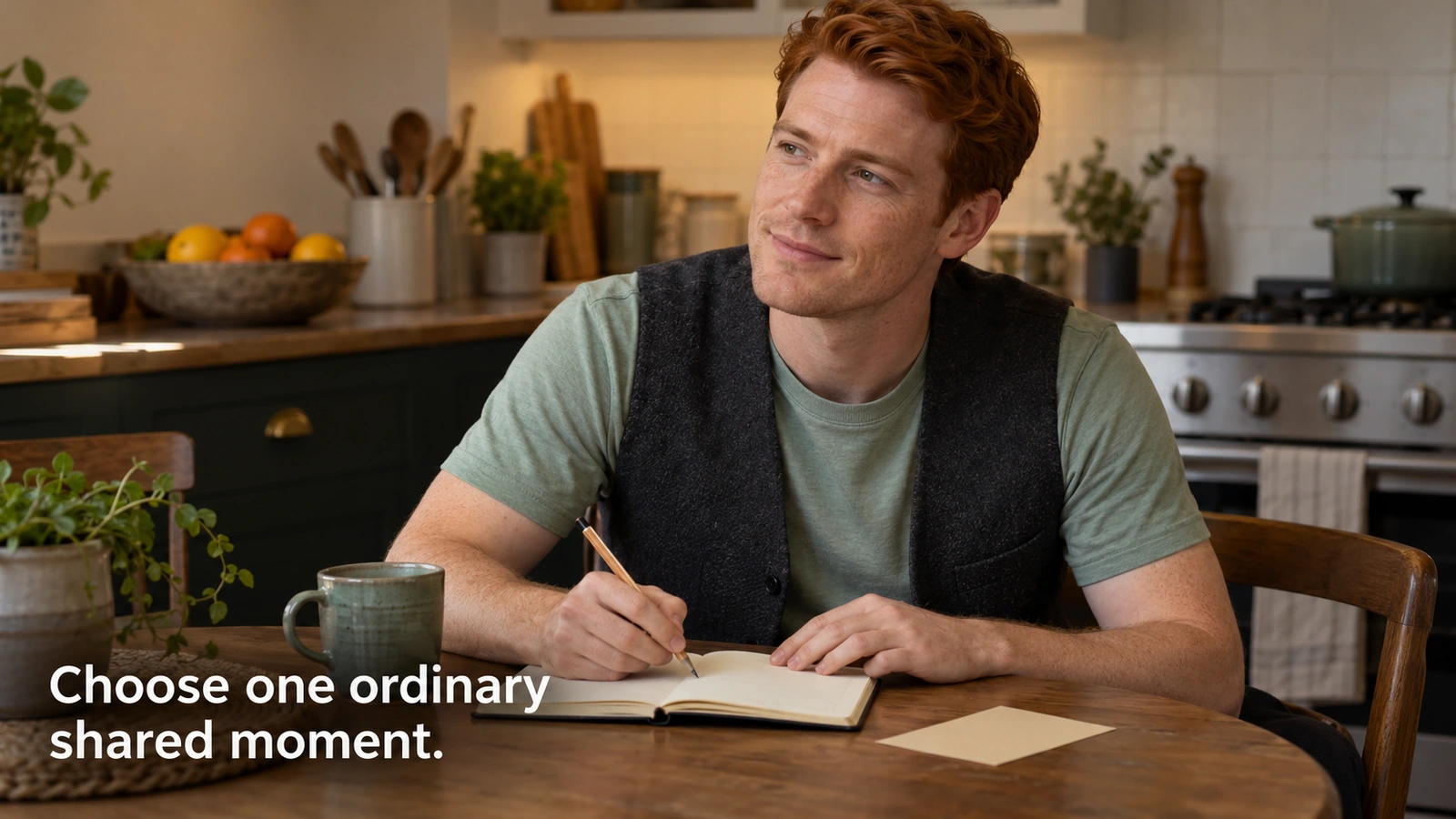
An opening can locate the scene in your own memory. You might describe the table where you worked, a material that was difficult to use or the sequence of a shared task. These details can keep the letter specific without turning it into a complete history. Leave names and identifying information out when they are unnecessary.
Binghamton University's Journal-keeping page includes an unsent letter among possible journal forms. That listing supports the choice of format here; the page's broader claims about journaling benefits are outside this guide's purpose of ordinary addressed writing.
Let you-language keep its limits
You can write directly to someone while still owning your account. Describe what you noticed, remembered, enjoyed or found disappointing. A shared event may have mattered differently to the other person. Addressing them on the page does not give you access to their thoughts or require you to explain their experience.

For example, you can record that you enjoyed working beside them without deciding that they felt the same. You can describe noticing them return to a practical task without supplying a motive. If you want to include a guess, identify it as your guess. The letter can remain personal without presenting every interpretation as a fact.
Remembered speech needs the same care. Use quotation marks only for words you can establish as exact. Otherwise, describe your recollection as a summary or impression. You do not need a quotation to make the scene recognisable. A short account of what happened can be enough for the writing you want to keep.
Before beginning the greeting, you could jot three details from the occasion on a separate line. For the greenhouse scene in the first letter below, these might be curled paper, the dry end of the table and the handover of labels. Choose the detail you can actually describe. A draft saying the afternoon meant a great deal to both of us would make a claim about Mara; a sentence about liking the repeated handover stays with Leila's experience.
This preparation can also reveal what to leave out. An uncertain duration need not become an invented number of hours. Leila can use the order she remembers, cutting and then passing a label, without reconstructing the entire afternoon.
Keep their imagined response separate
An addressed page can make you wonder how the other person might answer. You can leave that answer unwritten. This exercise concerns your own entry, and it does not require a second voice. An invented response would be your writing too, not knowledge of what the addressee would think or say.
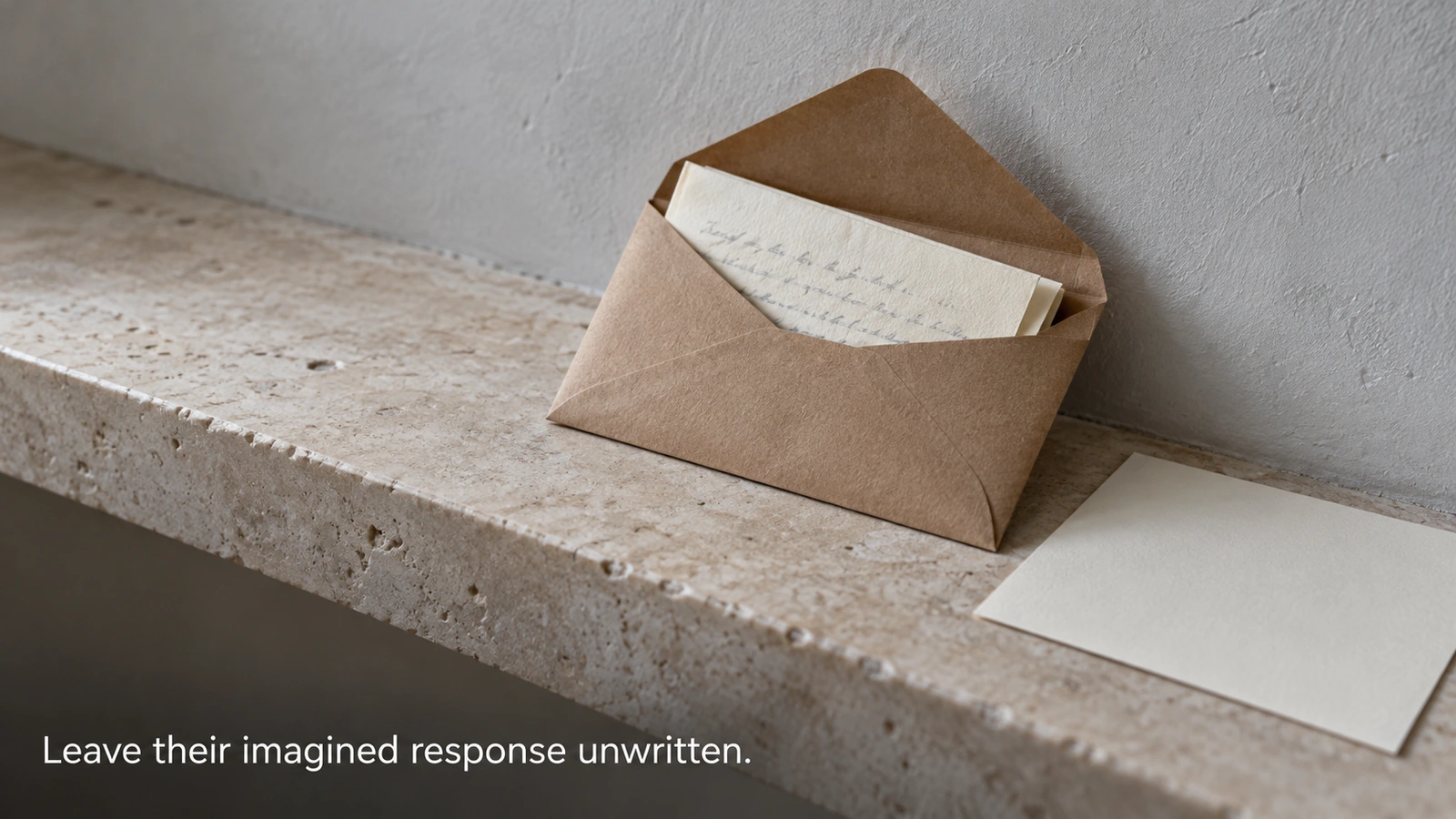
Likewise, you do not need to make the letter persuasive enough to win agreement. Appreciation can remain an observation you chose to record. Disappointment can remain part of your account without becoming an accusation or a demand for repair. The page does not need to settle who was right before you close it.
If your practical purpose changes to preparing an actual request or response, treat that as a separate writing task. This entry can remain as it is. You do not have to turn private reflection into a message draft, and the work you have already written does not require you to decide about contacting anyone.
Original fictional letter: a shared class project
Leila writes about an afternoon making labels with Mara. Like both letters in this guide, the people, event and details are original fiction.
Private unsent reflection, written today. Dear Mara,
I remembered the afternoon we made labels for the class greenhouse. The paper curled at the edges, and I kept trying to flatten it with the side of a ruler. You moved the finished labels onto the dry end of the table while I cut the next sheet. That arrangement is the part I can picture most clearly now.
I liked having a task we could do together without making much conversation. I remember being pleased when the first row of labels was finished. I do not know which part of that afternoon you would remember, or whether the labels would appear in your account at all. These are the details that returned to me while I was sorting my own stationery.
I cannot recall the exact words we used or how long we stayed. I am leaving those parts uncertain. I wanted to keep the table, the curled paper and the small rhythm of handing one finished thing across to you. That is enough for this page. From Leila.
Leila closes on the detail she wanted to preserve. Her account names the task she enjoyed and leaves Mara's memory open. Notice how the curled paper and the handover of finished labels give the appreciation a particular scene.
Original fictional letter: an unfinished display
Ravi writes to Jonah about a display they started together. His account includes disappointment about the unfinished project alongside enjoyment of the work.
Private unsent reflection, written today. Dear Jonah,
I found my sketch of the display stand we planned for the evening workshop. I remember us measuring the cardboard pieces and setting the smaller ones aside. We did not finish the display before the series ended. I was disappointed about that, although I still liked the making part of the evenings.
I do not know how you remember the unfinished stand. I remember wanting to see the pieces together, then carrying my small stack home in a paper bag. I am not recording a reason for the ending because I do not have a clear account of one. The unfinished shape is what came back when I opened the folder.
I can keep both parts here: I enjoyed working alongside you, and I wish I had seen the assembled display. I do not need to make either sentence cancel the other. I am leaving this note with the sketch because they concern the same ordinary project. This is where I am stopping today. From Ravi.
Ravi distinguishes the outcome he wanted from what he knows about Jonah. His final action concerns his own note and sketch. The appreciation and disappointment remain together at the end, with neither assigned to the addressee to resolve.
Choose an ending that belongs to this entry
An ending can identify the detail you wanted to keep, acknowledge something uncertain or simply mark that you are stopping. You do not need to finish with thanks, forgiveness or a lesson. Use a sign-off if it suits the addressed form. A short letter can be complete without summarising everything you think about the person.

When you reread, check three passages: the opening scene, any sentence beginning with 'you', and the ending. Can you locate the shared moment? Does a 'you' sentence describe an action you remember, or assign an unverified feeling or motive? Does the ending preserve your intended purpose, or ask for a response you did not mean to request? For example, 'you enjoyed every minute' claims another person's experience; 'I enjoyed working beside you' identifies your own. Keep uncertainty explicit. You can put the page aside or stop if the subject becomes unsuitable; finishing the letter is optional.
For another optional reflection format, explore SoulFul GLO's guide to journaling without a to-do list. It considers keeping a description from automatically becoming an assignment, which can help when you want this letter to remain a record rather than a plan.
Consider what you want to keep
An unsent label does not establish privacy. Before retaining the letter, consider its content, the notebook or device and who can ordinarily access it. You can describe your experience without copying private messages or keeping unnecessary identifying details. The addressee is not automatically the only person who might encounter the writing.
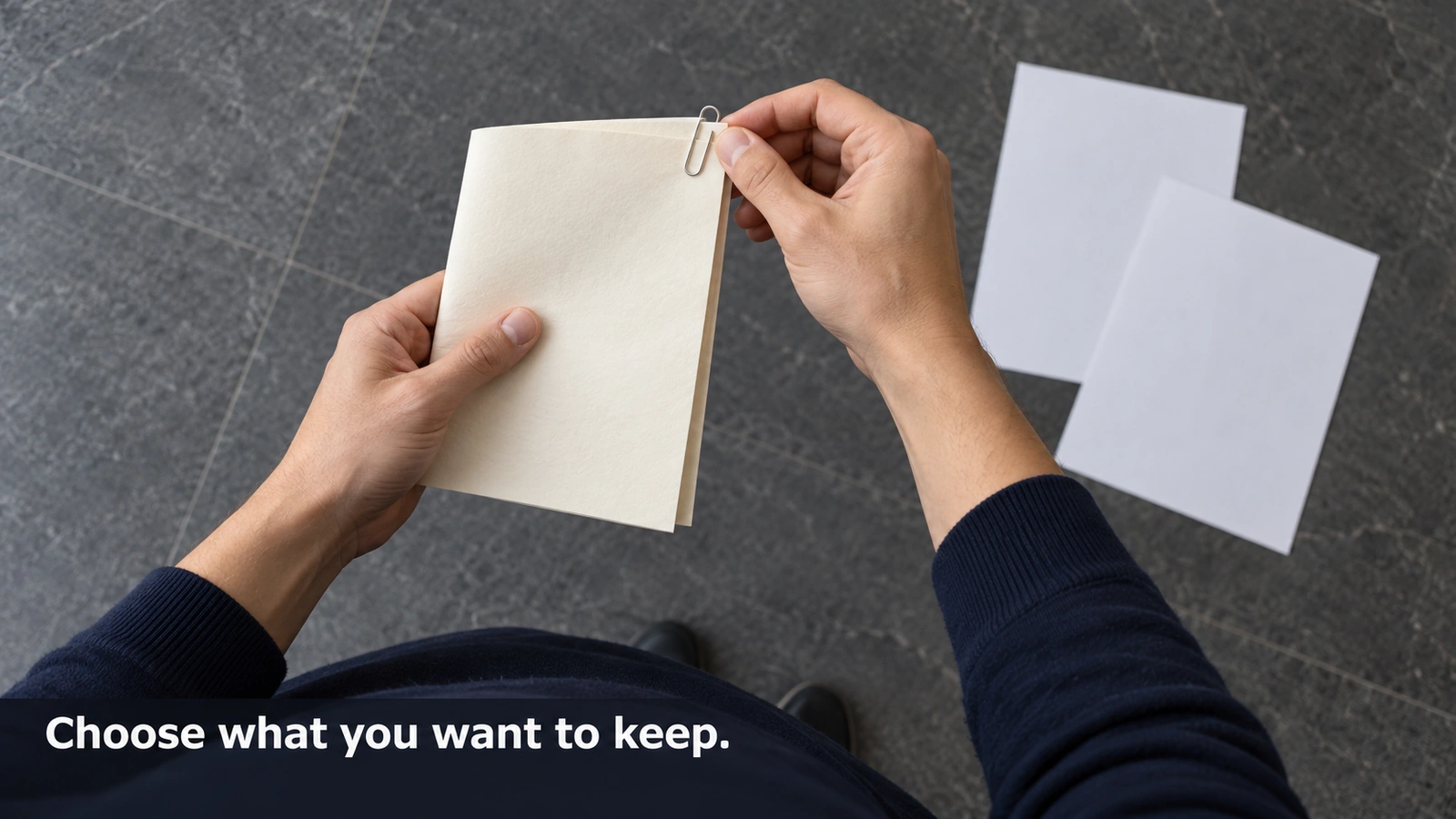
You can keep the entry, set it aside or choose not to retain it. Consider whether related sketches or notes belong with it, as Ravi does in the example. Choose an arrangement that fits the information involved. This guide does not prescribe a deletion method or promise that every copy disappears.
If access and storage are your main questions, explore SoulFul GLO's guide to private journaling in a shared household. It discusses the actual life of a notebook or digital note after writing, without treating a cover, label or household agreement as a guarantee.
Frequently asked questions
Does the person have to read the letter eventually?
No. This entry is written with no delivery intention. It can remain a personal record. Any later wish to communicate would be a separate choice requiring its own purpose and context; the existence of this page does not create that decision or make it necessary.
Can an unsent letter be positive?
Yes. You can write about an ordinary memory you appreciate without making it a gratitude exercise or asking the addressee to respond. Keep the details specific to your experience. You do not need to explain what the memory should mean to the other person.
What if I do not remember their exact words?
Use a labelled recollection or describe the scene without reproducing speech. Do not make an uncertain phrase appear exact through quotation marks. The letter can preserve what you remember and what you do not, without requiring you to reconstruct a conversation line by line.
Do I need to write a reply in their voice?
No. Leave their perspective unknown. This guide's format contains your addressed entry only. An imagined response would remain your invention and should never be treated as evidence about their thoughts. You can finish with an unanswered question or omit questions entirely.