
A recording says three-step breathing space, and you prepare to count three equal minutes. Then the guide spends longer introducing the first part than you expected. You wonder whether you missed a step or should hurry your breathing to catch up. Before turning the practice into a timing problem, check what the three steps actually describe.
The useful distinction is between the sequence of attention and the duration of this particular recording. This guide helps you recognise that sequence in an existing introductory resource. It does not provide a replacement therapy exercise, prescribe a breathing pattern or promise that a short pause will produce calm. Choose guidance you understand and want to follow.
Quick answer
In the named three-step breathing space, attention first acknowledges current experience, then gathers around breathing, and then broadens again. Follow the actual guide's transitions rather than dividing a clock into compulsory equal sections. Breathing attention is not an instruction to force deeper or slower breaths. If that focus is uncomfortable or the sequence is unclear, pause and ask the teacher or choose another practice.
Start by looking for a complete explanation rather than a short title. A title can identify a practice without supplying its instructions. The same phrase can appear on a course handout, an audio recording or a general description. Find out which of those you have before expecting it to carry you through a session.
Recognise the source and its setting
The Sussex Mindfulness Centre's introduction to mindfulness describes the three-step breathing space as awareness of present body and mind, attention to breath, and expansion to the whole body and surroundings. That is a description of a particular teaching sequence. It is not simply a synonym for taking three deliberate breaths or pausing for exactly three minutes.
The centre presents the practice in a mindfulness teaching context. An isolated article cannot reproduce the learning, discussion or individual guidance of a course. If you are using a practice supplied in healthcare, discuss changes with the relevant professional. A short duration does not make a clinical resource interchangeable with a general wellness recording.
For an optional personal session, keep the source beside the title in your notes. Record the teacher or organisation and the particular resource you actually chose. You do not need an elaborate research spreadsheet. A recognisable reference helps you return to the same explanation instead of mixing steps remembered from several different recordings.

Notice when the instructions change
Before starting, listen for the words that move the practice from one part to another. You may be invited to notice what is present, bring attention to breathing, and later widen attention. The task is to understand those transitions. It is not to manufacture a specific thought, feeling or bodily sensation so that every part has something impressive to contain.
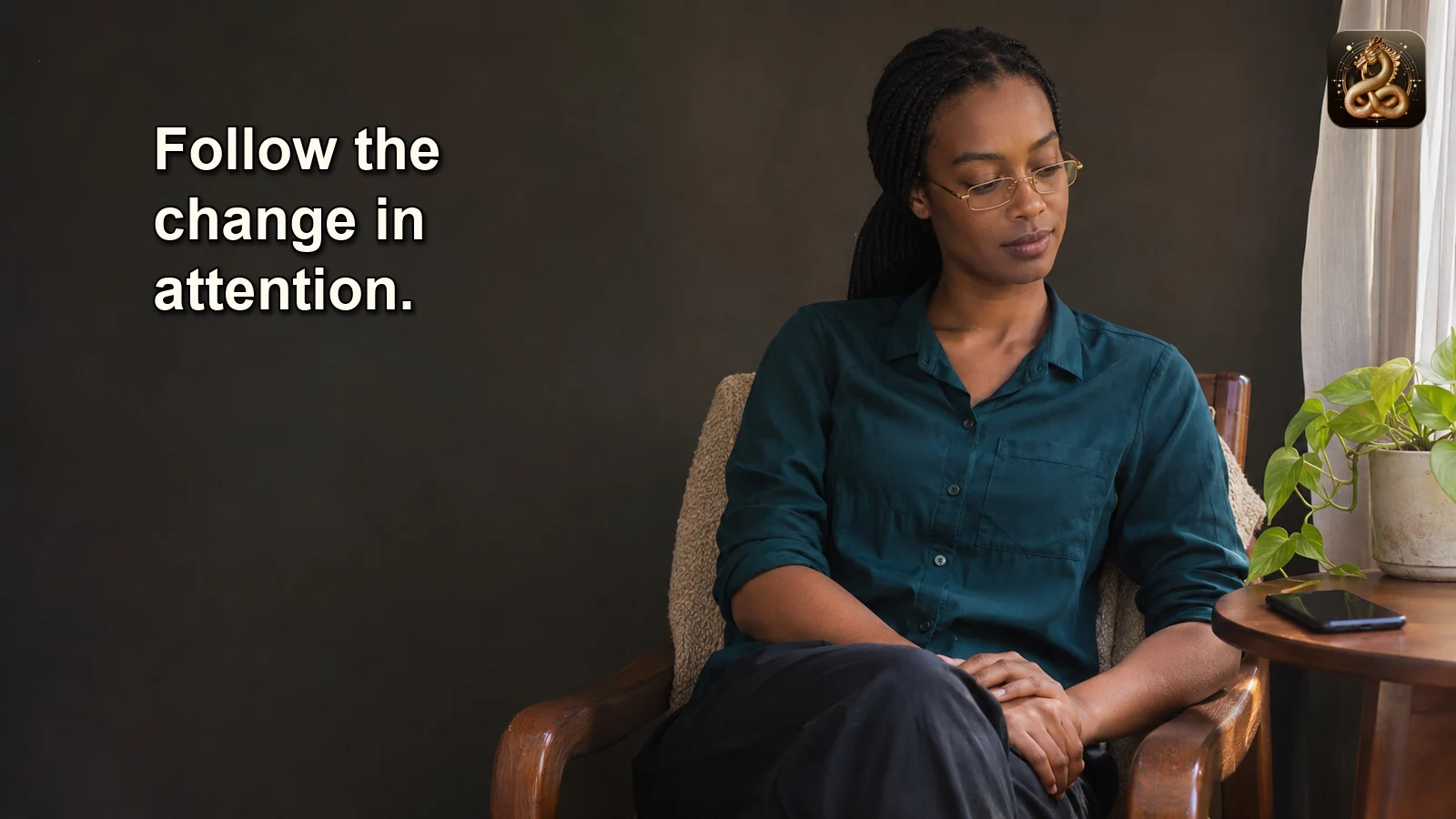
Your experience can be ordinary. You might notice a plan for later and the contact of a chair. That observation does not need to become a complete inventory of everything happening inside you. If a guide's wording seems to require an exhaustive search, ask what scope the teacher intends rather than filling the pause with a private checklist.
Similarly, the change to breathing attention does not require an announcement to yourself that every thought has stopped. You are following a new invitation within the sequence. A thought about the next appointment can still occur. Follow the guide's explanation of returning, and preserve any real responsibility that needs your attention.
Leave your breathing unforced
Listen carefully for whether the recording asks you to observe ordinary breathing or deliberately change it. Those are different activities. This article concerns understanding an attention sequence; it does not supply breath holds, counts or a target pace. Do not add those features because the word breathing appears in the title.
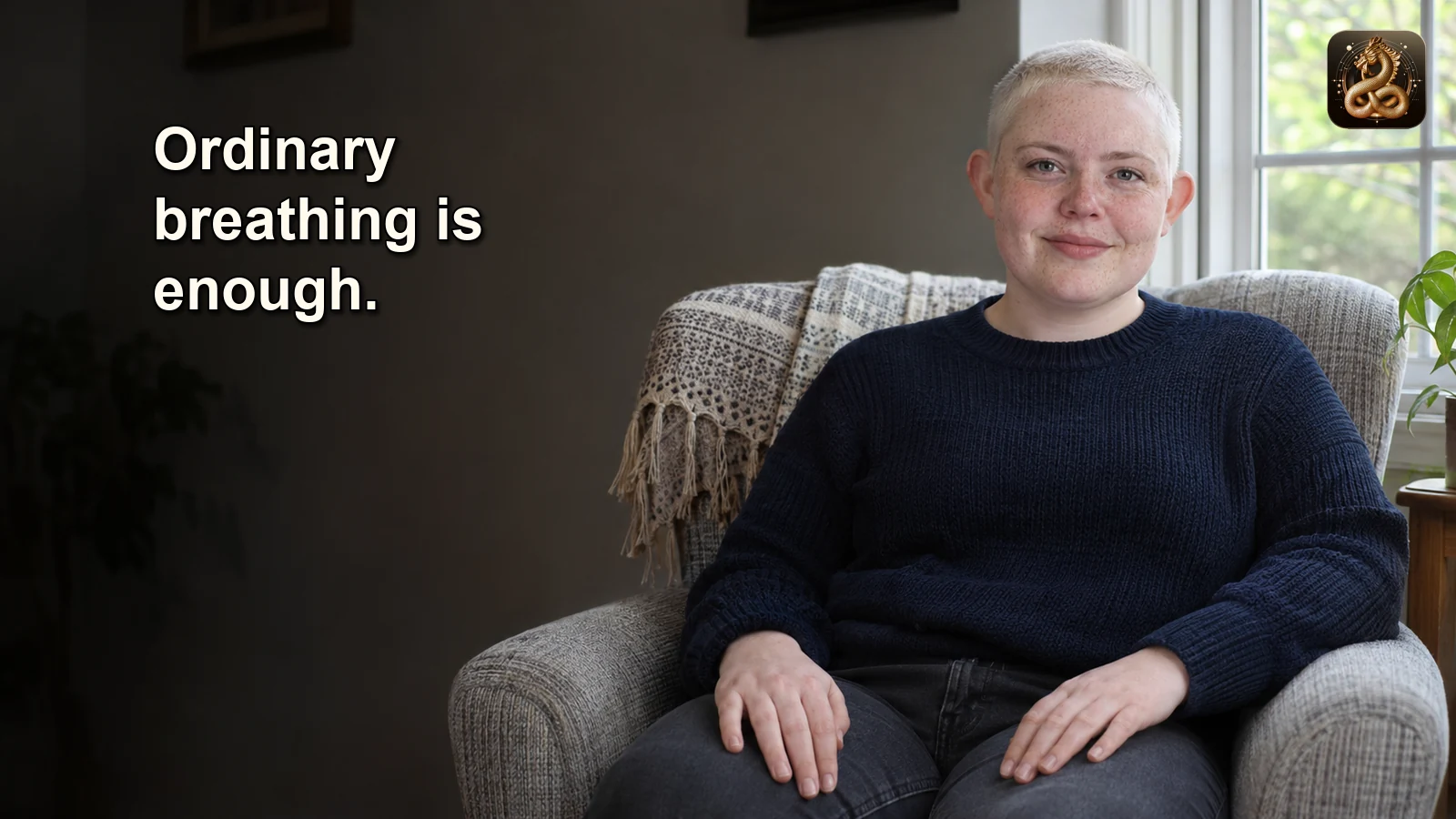
If you notice yourself taking unusually large breaths to make the practice feel more definite, pause the exercise. Return to ordinary activity and decide whether you want clarification before another attempt. You do not need to produce an obvious sensation as evidence that you completed the middle step correctly.
If breath-focused practice is unwelcome, a different resource may be a clearer choice. Do not silently replace the central instruction and assume the altered practice is identical. Read SoulFul GLO's guide to choosing an anchor when breath focus is uncomfortable for a separate selection question, then check what your actual teacher offers.
A small plan for choosing a usable recording
First, identify a complete introductory resource whose language you understand. Check whether it is intended for independent use or accompanies a course you have not taken. Missing context is a practical information gap, not an invitation to improvise the rest from a familiar label.

Second, preview the transitions without attempting to perform them. Notice whether the guide explains what changes and what stays available. If the opening is all you can preview, leave later instructions unknown. A clear first sentence does not establish the contents of the entire recording.
Third, choose an occasion when pausing is possible. Leave driving, equipment use and active supervision outside the session. Keep the player accessible enough to stop without scrambling. Comfortable ordinary support can be sufficient; you do not have to create an elaborate meditation setting to inspect a short practice.
Fourth, follow one source as offered, including its actual choices and stopping options. You can finish before the closing cue. Afterward, describe whether the sequence was understandable, rather than scoring how relaxed you became. That note can guide your next selection without turning the session into a performance review.
| What needs clarification | Useful question | A possible next choice |
|---|---|---|
| The title only says three minutes | Where are the complete instructions? | Read the description or ask the provider |
| The parts seem to change quickly | What marks each transition? | Preview the full sequence before practising |
| Breath attention feels unwelcome | What alternative does this teaching offer? | Stop or choose a different resource |
| A course handout assumes earlier learning | Is independent use appropriate here? | Obtain the missing teaching context |
| The practice is clear but not wanted today | Do I want to continue this activity? | Finish without a timing test |
Fictional demonstration: following the sequence
Ravi has found an introductory recording from a clearly identified teacher. This invented example illustrates a resource decision, not a customer result. Before practising, Ravi listens to the explanation of its three parts. He realises that the speaker is describing changes in attention, not three separate breathing techniques.
He chooses a supported chair during a break with no immediate responsibility waiting. When the guide begins, he notices that he is thinking about a later errand. He does not solve the errand or search for several additional thoughts to fill the first section. He follows the actual invitation as he understands it.
When the recording moves on, Ravi brings attention to ordinary breathing as instructed. He notices that he has started watching the clock on the wall. Instead of calculating how many seconds belong to this part, he returns to the spoken explanation. The guide, rather than his invented schedule, marks the next transition.
At the widening cue, he follows the supplied directions and later ends the session. He still remembers the errand. His useful note is that the transitions were understandable and that the clock was an unnecessary distraction. He does not claim that the short practice solved the rest of the afternoon.
The simpler option would have been to stop after the preview and save the recording for another occasion. Understanding what a resource asks is worthwhile even when you decide not to practise immediately. No completed session is required to justify that choice.
If you lose track of the current part
Pause when you are unsure which instruction is active. If the player supports it, return to the last clear transition and listen without trying to catch up. Avoid racing through remembered steps so that your private sequence reaches the same point as the audio. That adds a task the teacher may never have set.
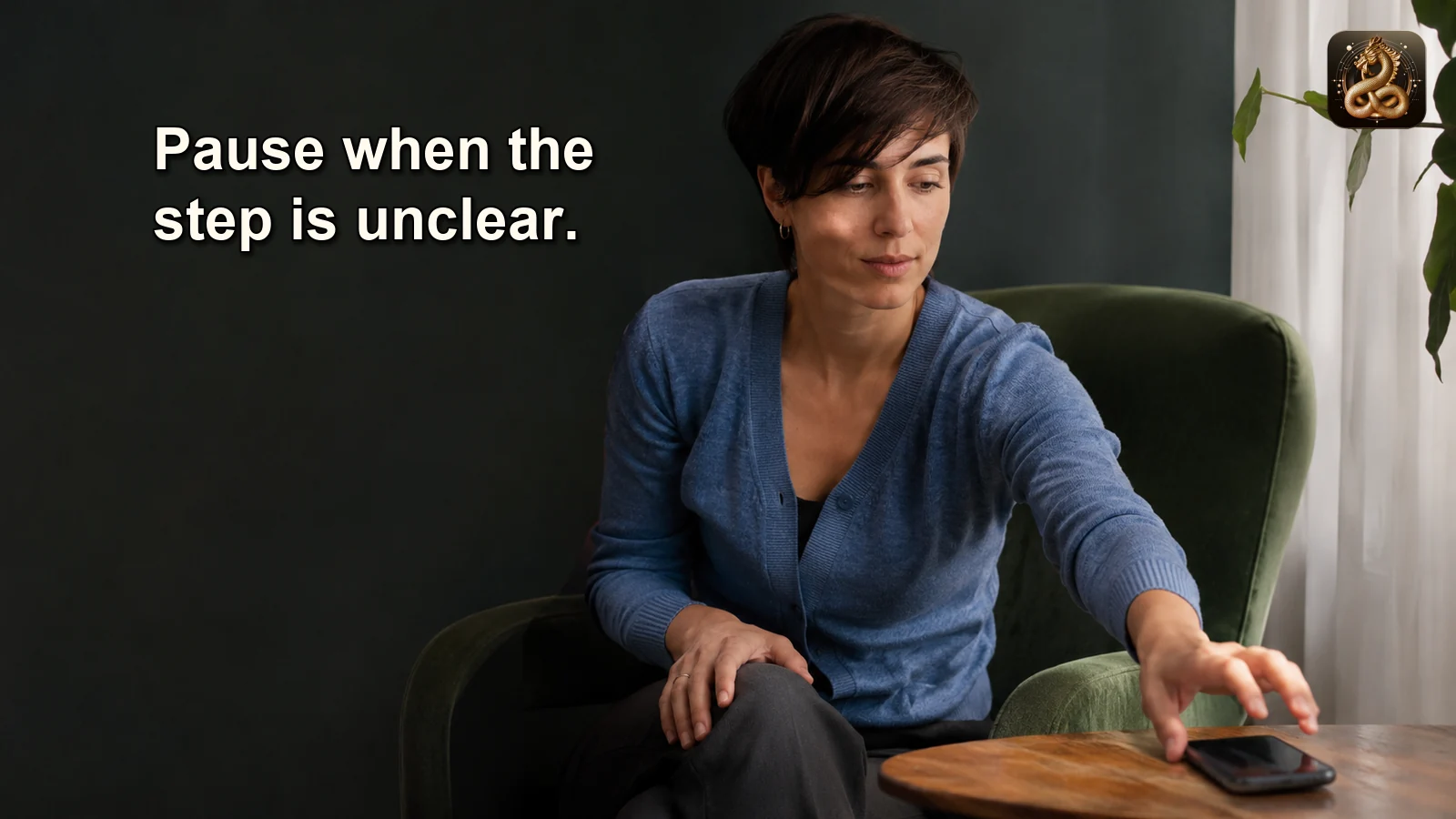
A transcript can help when one is genuinely supplied. Check the relevant passage in its surrounding section, because a heading alone may omit the change in attention. If neither transcript nor replay resolves the uncertainty, ask a specific question. State the resource and unclear transition rather than asking whether you are generally doing meditation correctly.
You can also choose a different format. Written guidance or an introductory taught session may be easier to inspect. This is a preference about access to instructions, not a ranking of meditation ability. The best next action can be leaving the question open until you have a reliable explanation.
Separate a short introduction from a course assignment
A friend may send you an audio link with no explanation beyond the practice name. Before treating it as an assignment, ask where it came from and whether there are accompanying instructions. You can appreciate the suggestion without assuming the sender knows what guidance is appropriate for you. Their familiarity with a resource does not supply your missing context.
If you already attend a course, keep questions attached to that course's version. Tell the teacher which transition was unclear and what you understood the direction to mean. They can clarify their own teaching; a different online recording may use wording that adds another uncertainty. Comparing many sources at once is optional and can wait until the current instruction is clear.
For independent listening, keep the first trial modest in purpose: decide whether the source is understandable and welcome. You do not need to build a daily schedule, promise a particular number of repetitions or combine it with a longer session. If the practice remains unfamiliar, reviewing the explanation is a legitimate next step.
When sharing the link afterward, describe it accurately as the resource you tried or considered. Avoid telling another person that three minutes will fix their situation. They can decide whether they want a breathing-focused practice, a different kind of attention or no meditation at all. Useful sharing leaves that choice intact.
Keep the ending ordinary
When you finish, allow yourself to return to the room and the activity ahead. A broadening instruction is part of the chosen practice; it does not erase practical decisions. You may still need to stand, collect belongings or check when to leave. Attend to those tasks with ordinary care.

The NCCIH overview of meditation and mindfulness notes limits in safety research. This guide does not promise that the breathing space suits everyone or replaces needed care. Stop if a practice is unwelcome, and seek appropriate support for health concerns rather than treating repeated attempts as an obligation.
Frequently asked questions
Must each step last exactly one minute?
Follow the timing and transitions of the actual resource you chose. This article does not impose equal segments or ask you to adjust breathing to a clock. If timing is important within a course instruction, ask its teacher how that instruction should be understood.
Is this the same as taking three deep breaths?
The named sequence concerns changes in attention. It should not automatically be converted into a breathing count or a deliberate deep-breathing exercise. Read the supplied explanation and avoid adding a different technique merely because the title sounds familiar.
Can I skip the breathing part?
You can stop an optional practice. Whether a particular alternative preserves its teaching is a question for the provider, not something this article can establish. Choose another resource if its central focus does not fit your preference or circumstances.
Does a short practice have to make me calm?
No outcome test is set here. The practical question is whether the instructions were clear and whether you wanted to continue. Remaining busy, neutral or uncertain does not create a duty to repeat the recording until a particular feeling appears.
For a separate question about inspecting a recording before starting, read SoulFul GLO's guide to sampling guided meditation. Keep the distinction between understanding a preview and knowing the complete practice, then make a choice that fits this occasion.