
An ordinary moment can have a sequence worth keeping: putting a cup down, noticing a small spill and reaching for a cloth. Three simple drawings can hold that sequence without requiring a long written account. The page can stay private, rough and small enough to finish when it has recorded what you wanted.
A journal comic does not need a joke, a dramatic discovery or a recognisable portrait. Here, the task is to arrange three original pictures of one everyday event. Short captions are optional. The drawings remain your selected account, with the same uncertainty and limits as a written entry.
This is a creative journaling exercise, not art therapy or a method for establishing memory accuracy. Choose a nonsensitive occasion you are comfortable recording. If the subject becomes unwelcome, change the subject, use another format or stop. Nothing about completing three boxes makes difficult material necessary.
Quick answer: choose a moment, then three views
Pick a small event and identify three actions or stages you remember. Draw three roomy boxes in an order you can follow, sketch one stage in each and add only words that clarify the sequence. Mark uncertainty rather than filling a missing moment with an invented transition. Finish when the strip preserves enough for your purpose.
You can draw the same object in all three panels. You can also use basic figures or show only the part of the scene that matters. A changing arrangement of cups, papers or shoes can carry an event without a detailed picture of every person present.
Choose one small moment you can keep bounded
Begin with something specific, such as moving a plant to another windowsill or packing away materials after a hobby session. Identify where your account starts and where it ends. A whole weekend may contain too many events for this particular exercise; one small episode provides a clearer selection.

For example, a strip about changing a reading lamp's position could begin with the lamp beside a chair, continue with moving it and end with checking where the light falls. You do not need to explain the history of the room or decide whether its new arrangement improved your life.
Choose details you are willing to retain on paper. A small picture may still reveal a place, an activity or another person. Leave out private identifiers that add nothing to your own record. A closed notebook and simplified faces do not automatically make its contents anonymous or secure.
If a single detail is all you want to keep, SoulFul GLO's simple-sketch journaling guide offers that separate format. The three-panel exercise suits a different task: showing a short sequence through several pictures.
Lay out three panels with room to draw
Draw three loose rectangles with space between them. They can run across a wide page or down a narrow one. Choose an order that is clear to you, and add small panel numbers if the arrangement could be confusing. Straight borders and identical measurements are unnecessary for this private exercise.
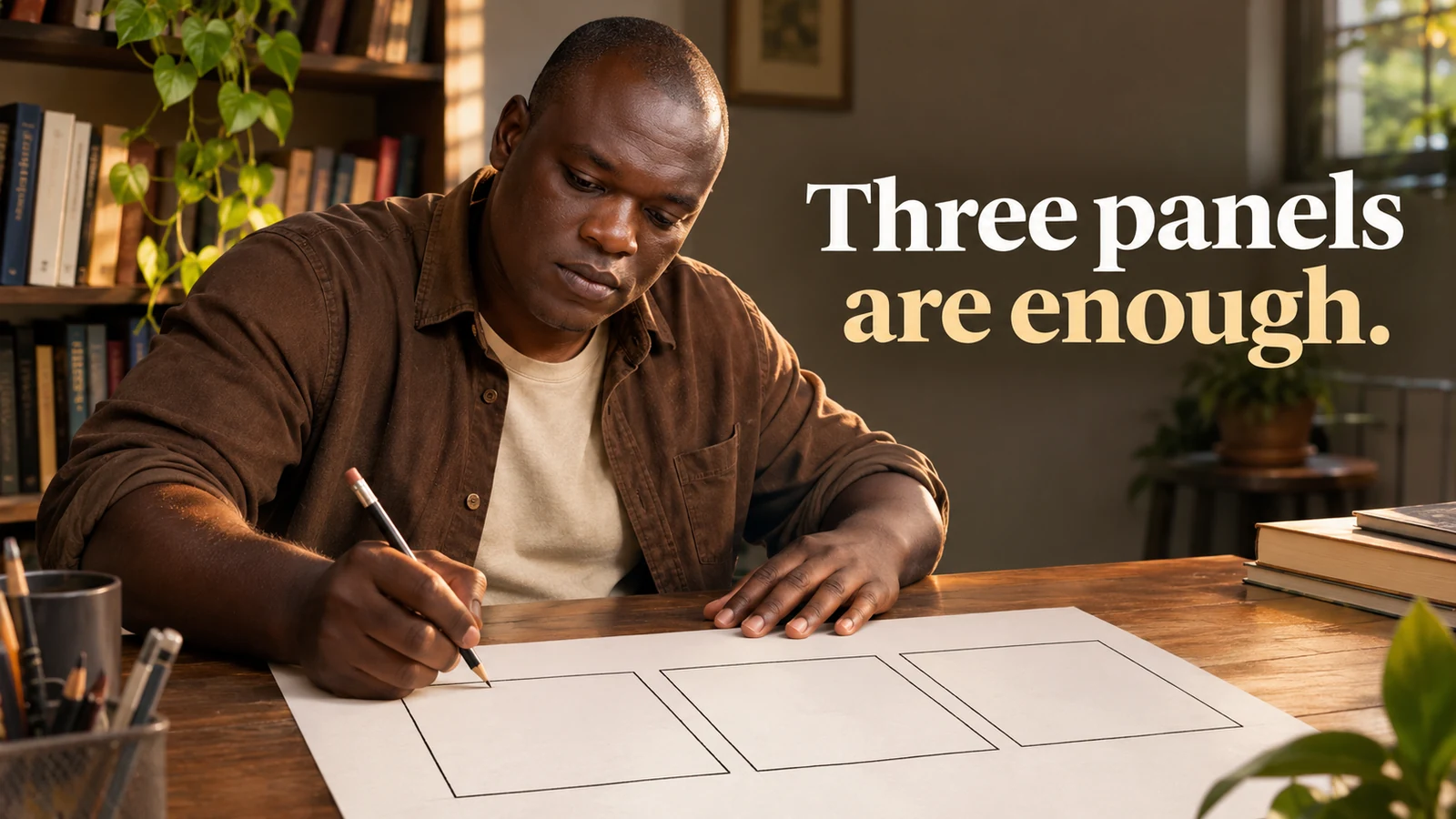
Leave some room for a short note beside or beneath each drawing. You can keep the boxes larger than your first marks suggest you need. A cramped panel can make it harder to distinguish the action from its caption, particularly when you decide to add a useful detail later.
Try the layout on ordinary paper before spending time on a finished page. Pencil, a pen you already use or another familiar drawing tool can serve the exercise. This guide supplies a paper workflow; it does not assume that a journaling service includes a drawing canvas, panel template or image-upload feature.
The borders organise your account rather than setting an artistic standard. If drawing boxes is irritating, three clearly separated areas can serve the same local purpose. The important choice is that each area has a job in the sequence, instead of becoming another version of the same unchanging picture.
Let remembered actions organise the sequence
Before drawing, name the action for each panel in ordinary words. For a small watering task, that might be looking at the pot, pouring water and putting the container away. These are possible selections, not a required story pattern. Use the stages of the event you actually remember.
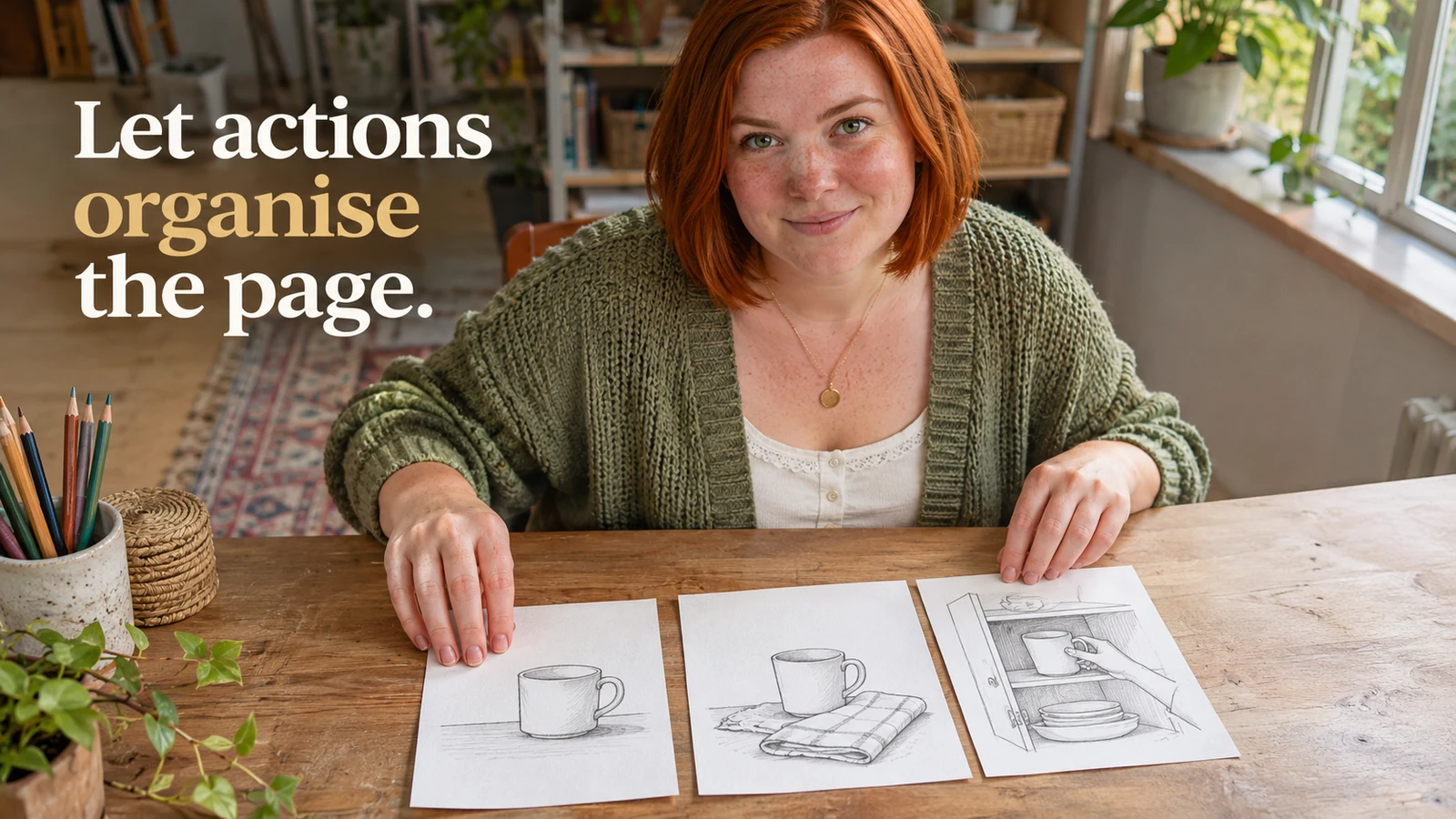
Draw enough to distinguish one stage from the next. A container beside a plant, a tilted container and an empty space where it stood may be sufficient. Keep an identifying detail consistent when useful, such as the pot's outline, so that a changed shape does not accidentally suggest a different object.
You may repeat the viewpoint across all three panels. That can make the changing action easier to see. Alternatively, a closer view can show a detail that the larger scene would hide. Make that change for a practical reason, rather than adding a dramatic angle because the page seems too ordinary.
Avoid turning every movement into a panel. Three pictures are a selection. You can omit the walk across the room if it adds nothing, while keeping a short note about a relevant time gap. An omitted interval does not have to become a claim that the actions happened immediately one after another.
Explore the available journaling formats
SoulFul GLO's current journaling overview describes text and voice options. Check the actual features available to you. A paper comic can remain a separate practice; the overview does not establish a drawing or comic-making feature in the service.
Keep gaps and uncertain order visible
If you remember two actions but not what came between them, keep that limit on the page. A short note such as “intervening step not remembered” can sit in the space between panels. You can also choose a smaller event whose sequence you remember more clearly.
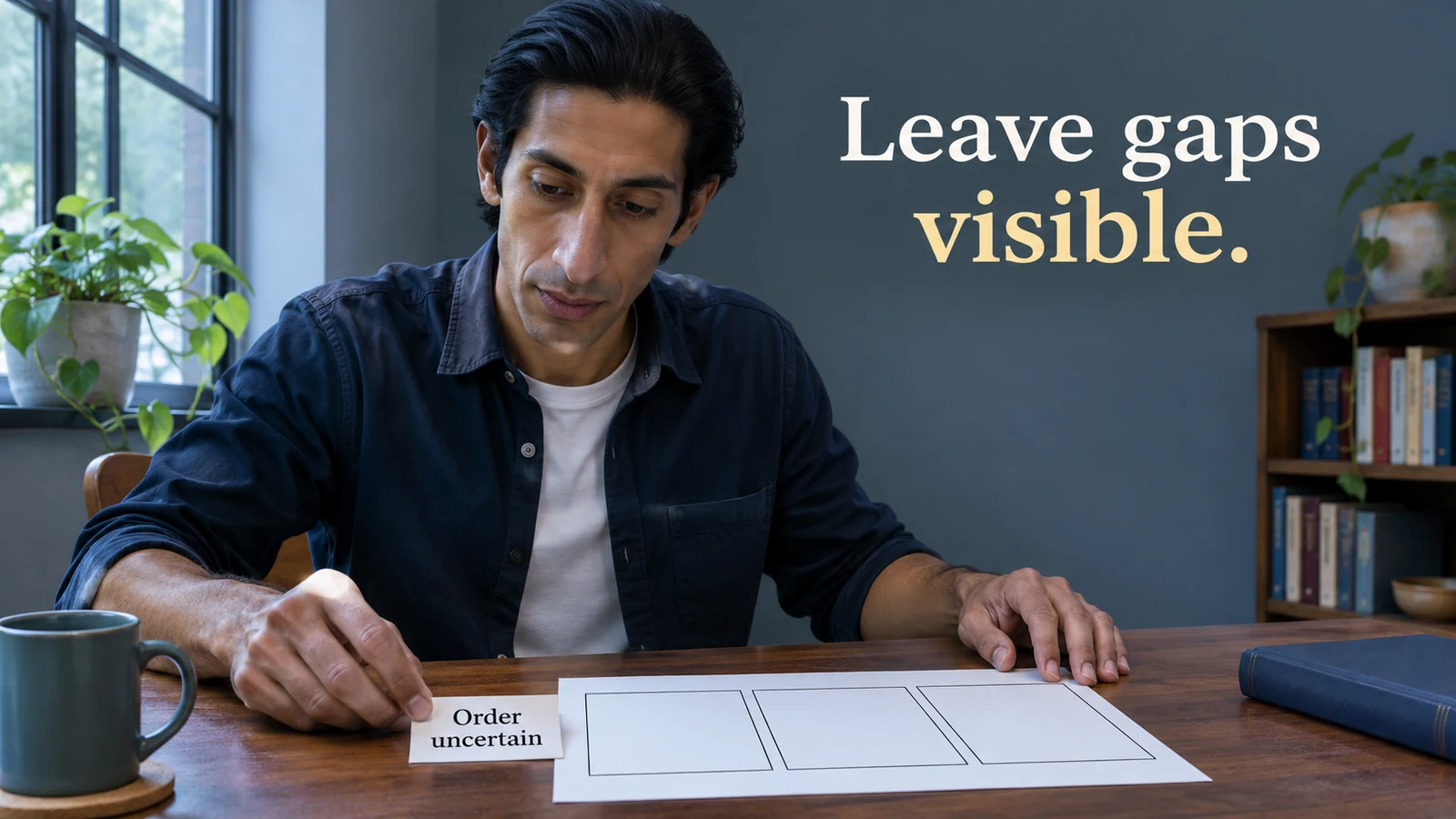
If the order itself is uncertain, say so beside the affected pictures. “Order uncertain” is enough when that is what you mean. Panel numbers can otherwise make a tentative arrangement look settled. Use them to explain how to read the page, without treating them as evidence that the event happened in that exact order.
Resist adding an action merely because it makes the strip flow. You may know that a mug ended up on a shelf without remembering who put it there. Show the remembered arrangements and label the gap. A neat visual transition is optional; the unknown action can remain unknown.
Likewise, expressions and thought bubbles can quietly add claims. Draw your own remembered response if you want to include it, while keeping another person's unspoken thoughts out of their bubble. An observed look or gesture does not establish a motive. A neutral outline and a plain description can serve the scene.
Add words that do a separate useful job
Look at each panel before writing a caption. Ask which necessary detail the picture cannot carry: a place, a brief time interval or a qualification about your recollection. Add that detail in your own words. You can leave the rest of the action in the drawing instead of describing it twice.
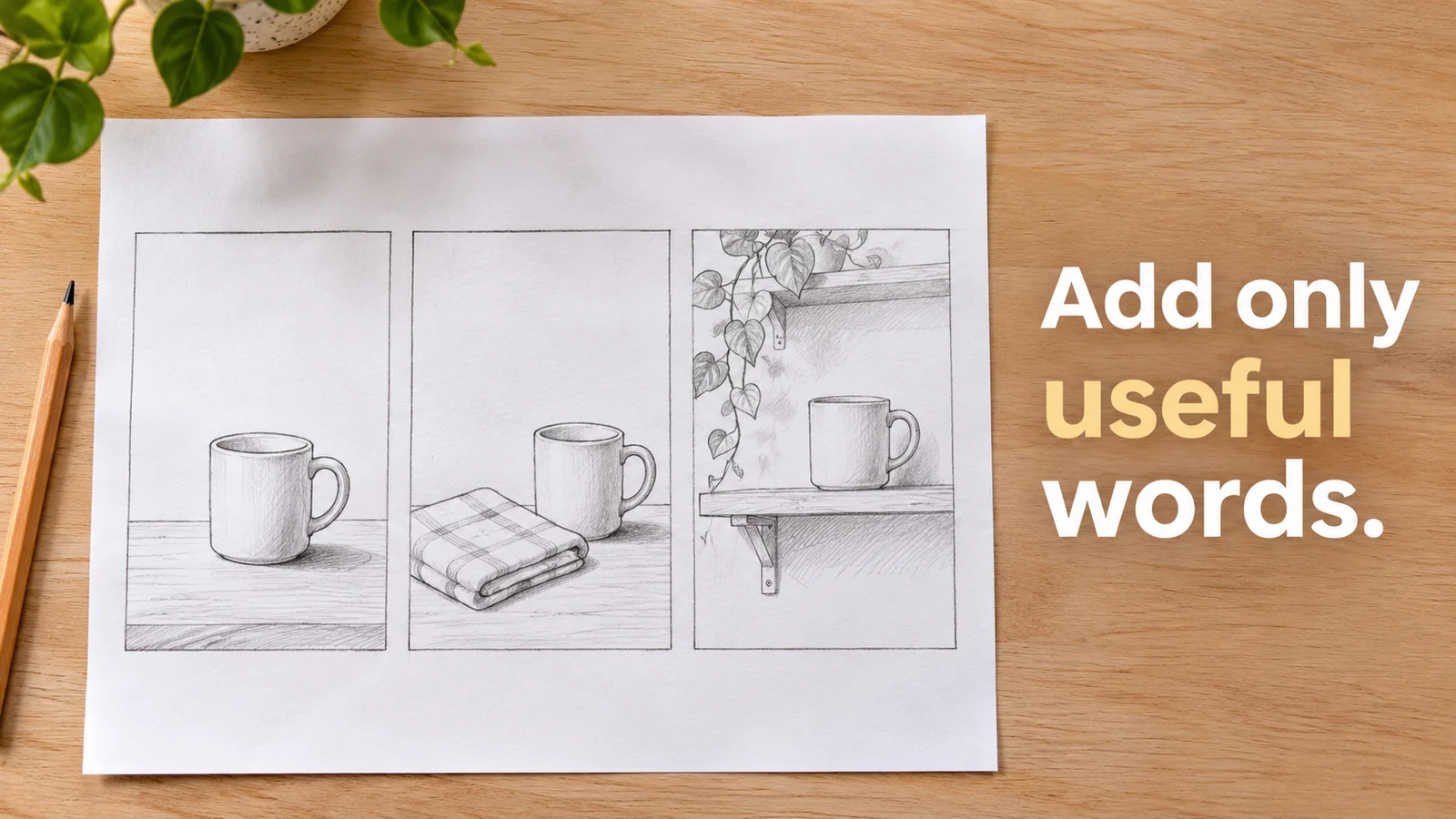
A caption such as “later that afternoon” can clarify a gap without supplying an exact time. “I remember the cup here” may express a boundary more honestly than a confident account of how it arrived. Keep the wording attached to the correct panel so the qualification does not drift to a different action.
Speech is optional. If the exact words are uncertain, a summary outside a speech bubble can keep that distinction visible. Avoid presenting reconstructed dialogue as a quotation. The event does not need a clever final line, and nobody in the strip needs to say something simply to fill the space.
Keep lettering large enough for your own later reading. If the panel is crowded, shorten the note or move it into nearby blank space with a clear connection. Redrawing every picture is unnecessary when one plain label would prevent confusion. The useful amount of text depends on this page's purpose.
An original fictional example: a loose stack of papers
The following writer and event are invented to illustrate the choices, not drawn from a customer account. A fictional writer, Bea, wants to record sorting a small stack of household papers. She remembers starting at the kitchen table, finding a folded map and leaving the unfinished stack beside it.
Her first panel shows a simple rectangle for the table and several overlapping paper outlines. In the second, she draws the folded map opened enough to distinguish it from the stack. In the third, the map rests beside the remaining papers. No detailed room background is needed to follow those changes.
Bea adds “order uncertain” beside the second panel because she cannot remember whether she opened the map before or after setting other papers aside. She leaves that qualification visible. The strip preserves her selected recollection without making the drawn sequence a verified record of the afternoon.
The ending remains unfinished as a household task. Bea does not add a fourth picture of an organised drawer or a caption about becoming more disciplined. Three panels can finish the journal entry even though the sorting itself stopped. This example offers one possible composition, not a result you should reproduce.
Finish with a readable small strip
Read the three panels in their intended order. Can you tell what each one contributes? Check that the captions match their pictures, that uncertainty is attached to the right moment and that a drawing has not invented somebody else's intention. Make a small correction if it helps the account you meant to keep.

Then choose whether to leave it there. You can close the notebook without adding a lesson, a gratitude list or a plan for tomorrow. A page can preserve an ordinary event without proving that you learned something from it. Drawing practice is also optional once this particular record is complete.
If you later add a detail, identify it as a later addition where that distinction matters. The new recollection does not need to look as though it was part of the original drawing. For events that need an accurate formal record, use the appropriate process separately from a personal comic.
Source context for the drawing format
MoMA's introductory comics resource discusses working with panels and suggests a small panel count for first attempts. That is an arts-education context. It does not evaluate this journal exercise, certify memory accuracy or establish a wellbeing benefit. The paper-sorting example and knowledge checks here are original editorial suggestions.
Questions about a three-panel journal comic
Do the drawings have to be realistic?
No. Use simple shapes, basic figures or recognisable objects. The page needs enough distinction to serve your own purpose. A short label can explain an unclear mark, and choosing a different format remains available if drawing is getting in the way.
Does the final panel need a punchline?
No. It can show where your selected account stops. Putting an object away, leaving a task unfinished or returning to the same arrangement can all be possible endings when they match the event you want to record. Humour is optional.
Can another person appear in the strip?
Keep the account within what you observed and are comfortable retaining. Avoid unnecessary identifying details and invented private thoughts. A simplified drawing can still be recognisable. Consider the contents and who may see the page, rather than assuming that a drawing guarantees privacy.
Will three panels help me recover a missing detail?
This guide makes no such claim. Drawing does not establish that an uncertain memory is accurate or require you to search for missing material. Label the gap, select a different moment or stop. Needed professional care belongs outside this creative exercise.
Keep the format that serves the entry
Revisit SoulFul GLO's journaling overview if you want to consider a written or spoken format for another occasion. For this page, three original pictures and any necessary qualifications can be enough. Keep the ordinary moment at the scale you chose.