
You press play and hear a few seconds of near silence. You wonder whether the recording started, whether the volume is too low, and whether you are supposed to close your eyes already. Before trying to answer all three questions at once, look at the playback indicator. If the track is moving, give the opening a moment. You can adjust the setup after you hear enough to know what it needs.
The first minute of a recorded sound journey gives you information you could not get from its title. You can hear how it begins, find out whether it contains spoken guidance, and check how the sound carries in the room where you actually are. You can use that information to keep listening, make one adjustment, or stop and choose another recording.
Quick answer
Set the player within easy reach and start at a comfortable volume. Listen to the opening in whatever position lets you stay reasonably still or move when you want to. Notice when the first clear sound arrives and whether the recording asks you to follow a spoken instruction. If you can hear easily and want to continue, leave the controls alone. If something is uncomfortable or the recording is different from what you expected, pause and change the setup or pick a different track.
Put the controls somewhere you can reach
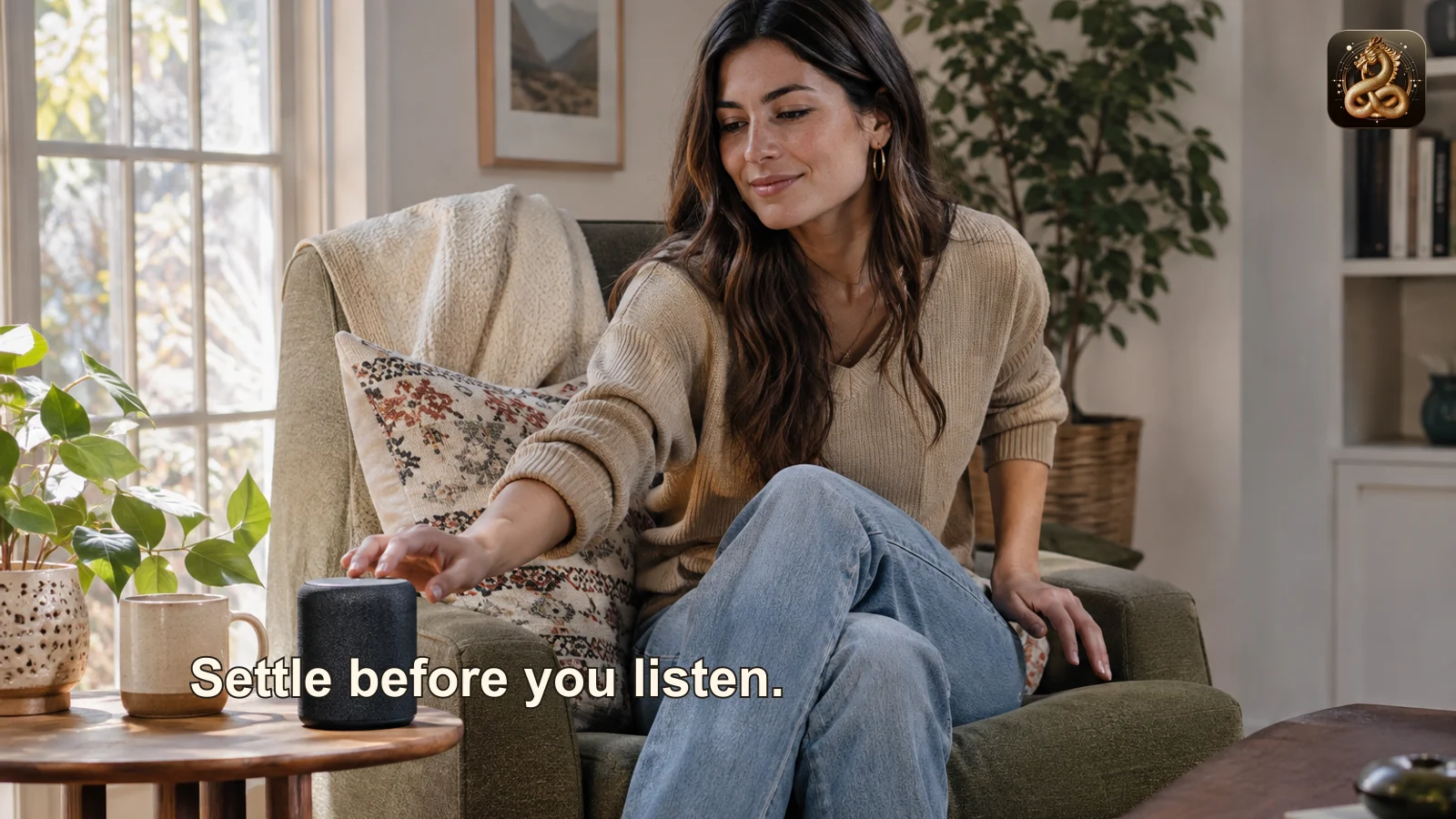
Before you sit down, decide how you will stop the sound if you need to. With a phone and speaker, that may mean leaving the phone face up beside you. With headphones, it may mean finding the pause button before putting them on. If the player is across the room, bring it closer or choose a seat where you can get to it easily. It takes only a moment to arrange, and you can change the volume without spending the opening searching for a control.

Check where the sound will come from. If you have been using a wireless speaker, the phone may still be connected to it. If you expect headphones to work, check that they are connected before pressing play. You can do this with a brief sound at low volume. Once you know which device is playing, set it down. The point of this check is to make listening easier, so stop checking once the setup works.
Suppose you are sitting on a sofa, with the speaker on a shelf behind you. The sound is clear, but you have to reach around the arm of the sofa to find your phone. Move the phone to the side table. You do not have to rearrange the speaker or search for the best seat. Fix the part that would make it hard to respond if the audio changes.
Let the first clear sound set the level
Start with a volume you expect to be easy to listen to. Some recordings have a very quiet opening, so give it a moment before turning up the sound. A low drone can be followed by a sharper chime or a voice. If you raise the volume while there is very little to hear, the next sound may land much louder than you wanted.
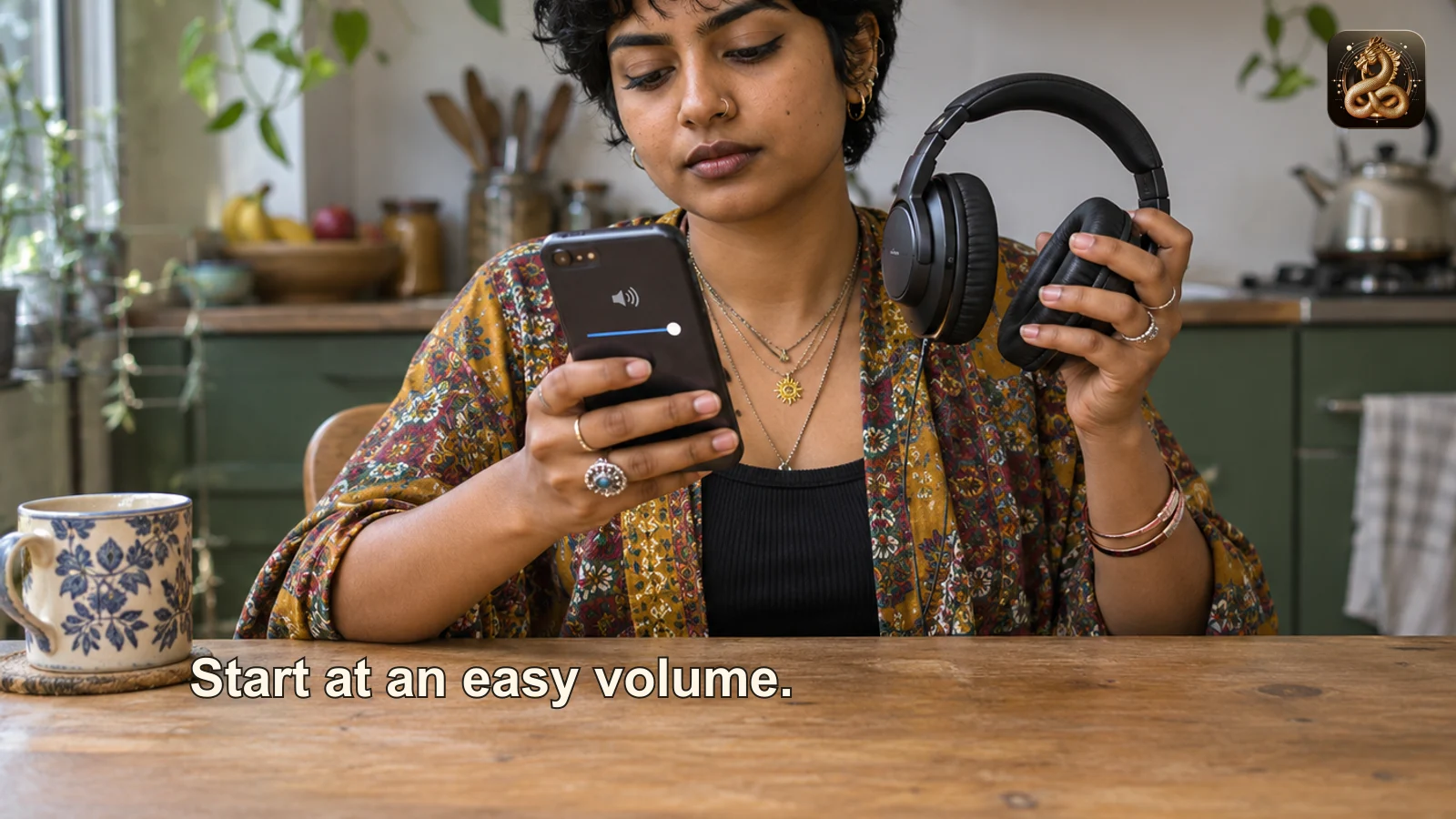
When the first clearly audible sound arrives, ask whether you can hear it without leaning toward the speaker or concentrating on every faint detail. If the sound is already clear, leave the volume where it is. If it feels sharp or intrusive, turn it down. If the room is busy and the only way to follow the audio seems to be turning it up substantially, you can wait for a quieter time or choose a different setup.
You might be using the same track you played yesterday and still find that today’s level is different. The speaker may be closer, the room may be quieter, or you may have switched from speakers to headphones. Start from what you hear now. There is no need to match a previous setting to make the session count.
Give the opening a chance to show what kind of track it is
A sound journey may start with a single tone, a layer of music, or a few words about what follows. It may also have a few seconds of silence before the first sound. When you can see that the player is running, you can allow a short pause without trying to fill it. If the player is stopped or buffering, fix that before drawing a conclusion about the track.
When a voice enters, listen to the first thing it asks. An introduction might describe the session without giving an instruction. A guided opening might invite you to find a comfortable position, notice a sound, or breathe in a particular way. You can try a cue if it fits. If you wanted uninterrupted instrumental audio, the voice is useful information about your choice. You can switch to a recording described as instrumental or preview the beginning of another one.
If the opening introduces the instruments or asks you to prepare something you do not have, decide whether you need that preparation. Some tracks explain what will happen next and then leave you to listen. Others depend on following instructions throughout. Your first impression can change as the session begins, so use the description and what you hear together when the opening is unclear.
Choose a position that suits the room
You can start in the position you are already in. If you are sitting at a table, move a glass or a stack of papers out of the way and rest your hands where they are comfortable. If you are on a sofa, shift if you need to. In a shared room, you may prefer to keep your eyes open so you know what is happening nearby.
Notice whether your position makes it hard to listen. You may be straining to see the player or sitting in a way that makes you want to move immediately. Adjusting once can give you a clearer sense of whether the recording itself suits you. If you would rather stand or walk away from the device, pause first so the sound does not keep playing while you decide.
You can also leave the room sounds in the picture. A fan, a closing door, or someone walking past may still be audible. You can hear those sounds and the recording in the same room. If you need to respond to something in the room, do so. If it is just a familiar sound that comes and goes, you can keep listening without trying to remove it.
Decide whether to continue, adjust, or stop
Once you have heard enough of the opening, decide what would make the next few minutes worthwhile. If the sound is comfortable and the track suits the occasion, keep it playing. If a small change would help, make that change and listen again. If you already know the track is a poor fit, stop and choose another option.
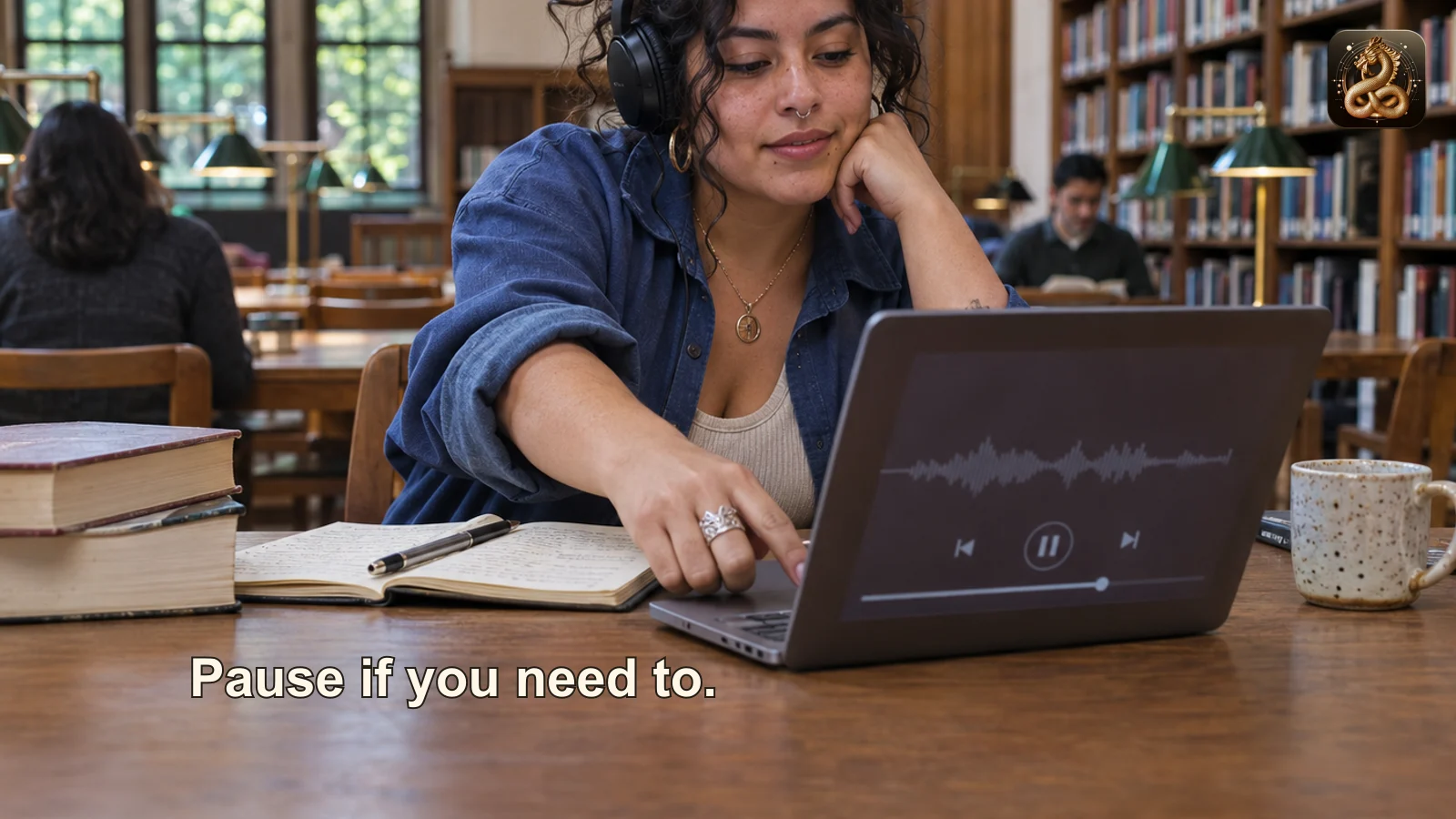
For example, you have a few minutes before you need to start dinner. You find an eight-minute recording, put the speaker beside you, and press play. The narrator spends the opening describing a longer session and asks listeners to settle in for a period of silence. You were looking for a short piece of instrumental audio. You can stop as soon as you understand the mismatch. The listening you did helped you make a choice.
On another day, the recording begins with a faint texture and a clear note follows. You notice that the note is easy to hear and would still be comfortable if a similar sound returned. You have no particular reason to change anything. Let the session continue. If you later want to give your attention a place to return, try following a sound that comes back. You can make that choice after the opening rather than doing it while you are still figuring out the controls.
Try one ordinary opening
Imagine you have just come inside after a walk. There is a kettle running in the kitchen, and you want to listen for a few minutes before making tea. Put the player beside your chair. Choose a track that appears to fit the gap and begin quietly. For the first few seconds, you hear the kettle more clearly than the track. When the first full note arrives, it is easy to hear even with the kettle on, so you leave the volume alone.

A spoken introduction begins. The voice invites you to settle and listen to the next sound. That is close to what you wanted, so you continue. When the kettle clicks off, the room becomes quieter. The recording now feels a little louder than before. You turn it down once and leave the player alone again. You have made two ordinary judgments about the setting and have enough time to listen without checking the display.
You could make a different choice with the same recording. If you have to leave the room as soon as the kettle finishes, pause the audio and go. If you want a session that fits a fixed gap, choose a shorter recording next time. The opening minute gives you an opportunity to notice that sort of mismatch early.
Frequently asked questions
Do I need to set a timer for the first minute?
No. Use the minute as an approximate opening period. A useful point to decide might come after the first audible note, the first spoken cue, or the first noticeable change in volume. If you are spending more time checking the clock than listening, put it down and decide when you have heard enough.
What if the opening is mostly quiet?
Check that the player is running and connected to the device you mean to use. If it is, give the recording time to begin. Keep the volume modest until a clear sound arrives. If the description gives no indication of a quiet intro and you still cannot tell whether the audio is playing, pause and test the setup separately.
Should I close my eyes as soon as I start?
Choose what suits your surroundings and what you are doing. You may want to keep your eyes open while you find the controls or listen to the opening instruction. Once the setup is settled, you can keep them open, soften your gaze, or close them if you are in a comfortable place to do so.
What if I want to turn it off almost immediately?
Pause if the sound is uncomfortable, the recording is different from what you wanted, or you need to attend to something else. You can decide whether to try again, choose a different track, or go on with your day. You do not owe the recording a full minute.
Use the first minute to make one decision
Before your next session, put the player within reach and begin at an easy volume. Give the opening enough time to reveal one clear sound or instruction. Then decide whether you want to stay with it, change one thing, or stop. That is a complete use of the opening, whatever you choose to do next.