
Quick answer
Pick one part of the recording you can recognise easily, such as a soft chime or a repeating plucked note. Listen as it arrives and fades. When your attention moves elsewhere, you can return to the overall recording and notice the sound again if it returns. Leave the exercise open enough to change anchors or simply listen if searching for the sound becomes distracting.
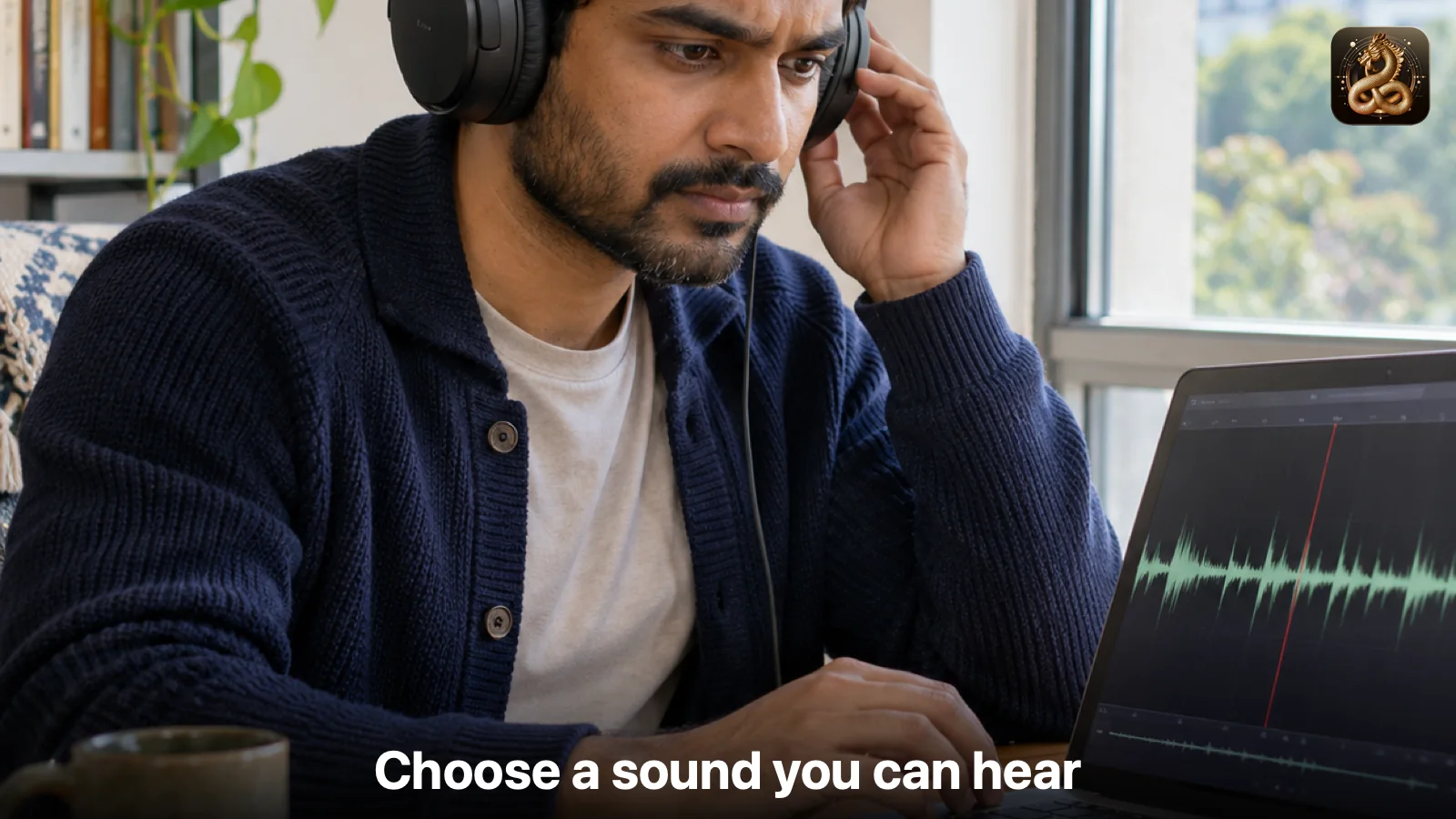
Begin with something you already hear
Some recordings offer a sound that comes forward from time to time. It may be a low note, a soft strike or a short pattern you remember after a few seconds. Start by listening to the whole recording at a comfortable level. Let the possible anchor become apparent before you choose it. You do not need to identify the instrument, match a note or count the intervals.
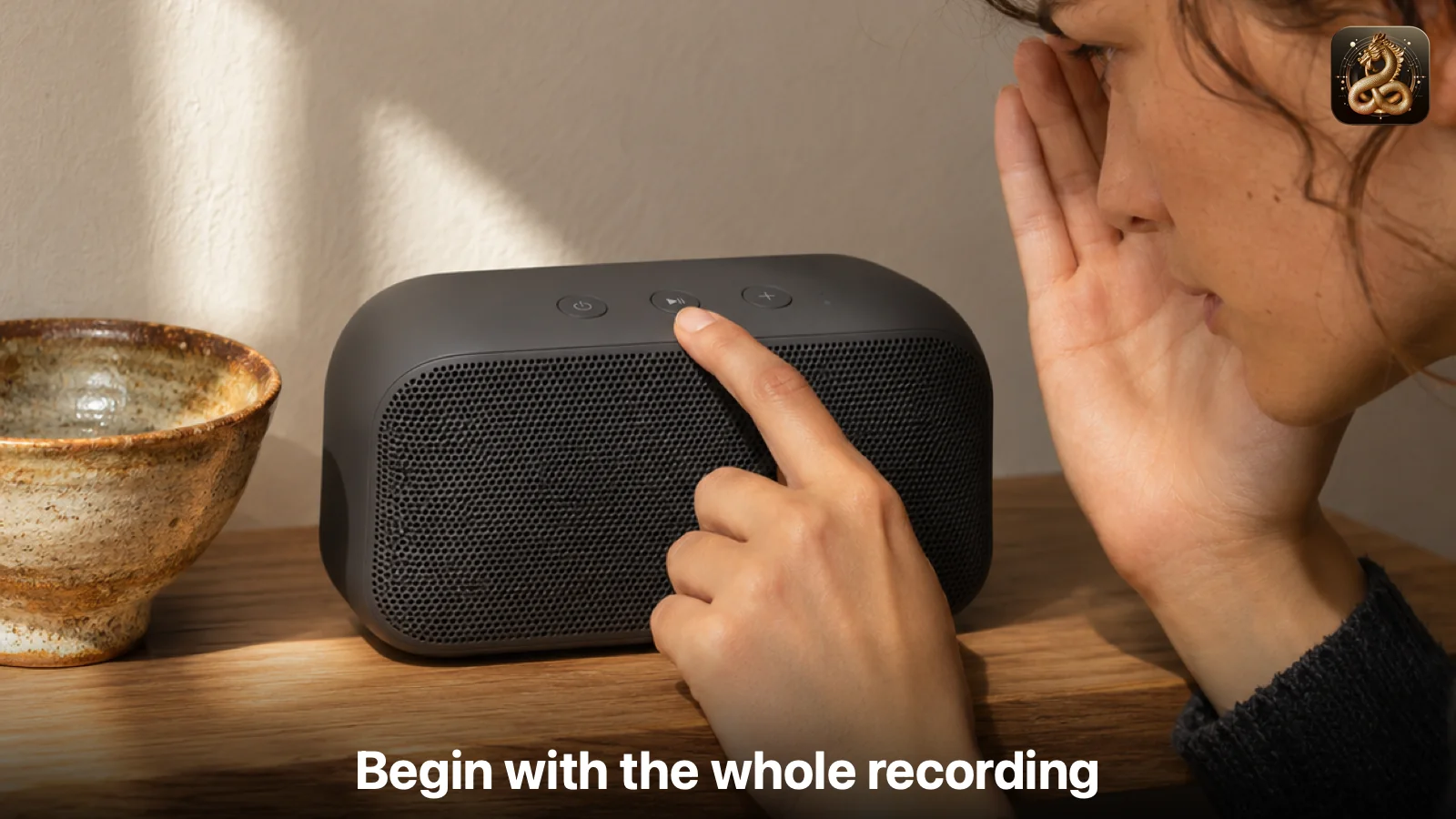
Choose an element that feels easy to hear without extra effort. A bright accent may stand out, but it may also feel abrupt. A quieter sound can work well if you hear it without straining or raising the playback level. If nothing feels suitable, hearing the general texture is enough. The anchor is a way of listening, and the recording does not owe you a particular feature.
Hear the arrival and let the sound go
When you hear the chosen sound, give it an ordinary amount of attention. Notice something simple: the beginning was clear, the end was softer, or the sound seemed to sit alongside another layer. Then let your attention open to the recording again. You can stay with what is audible while leaving room for the next moment.
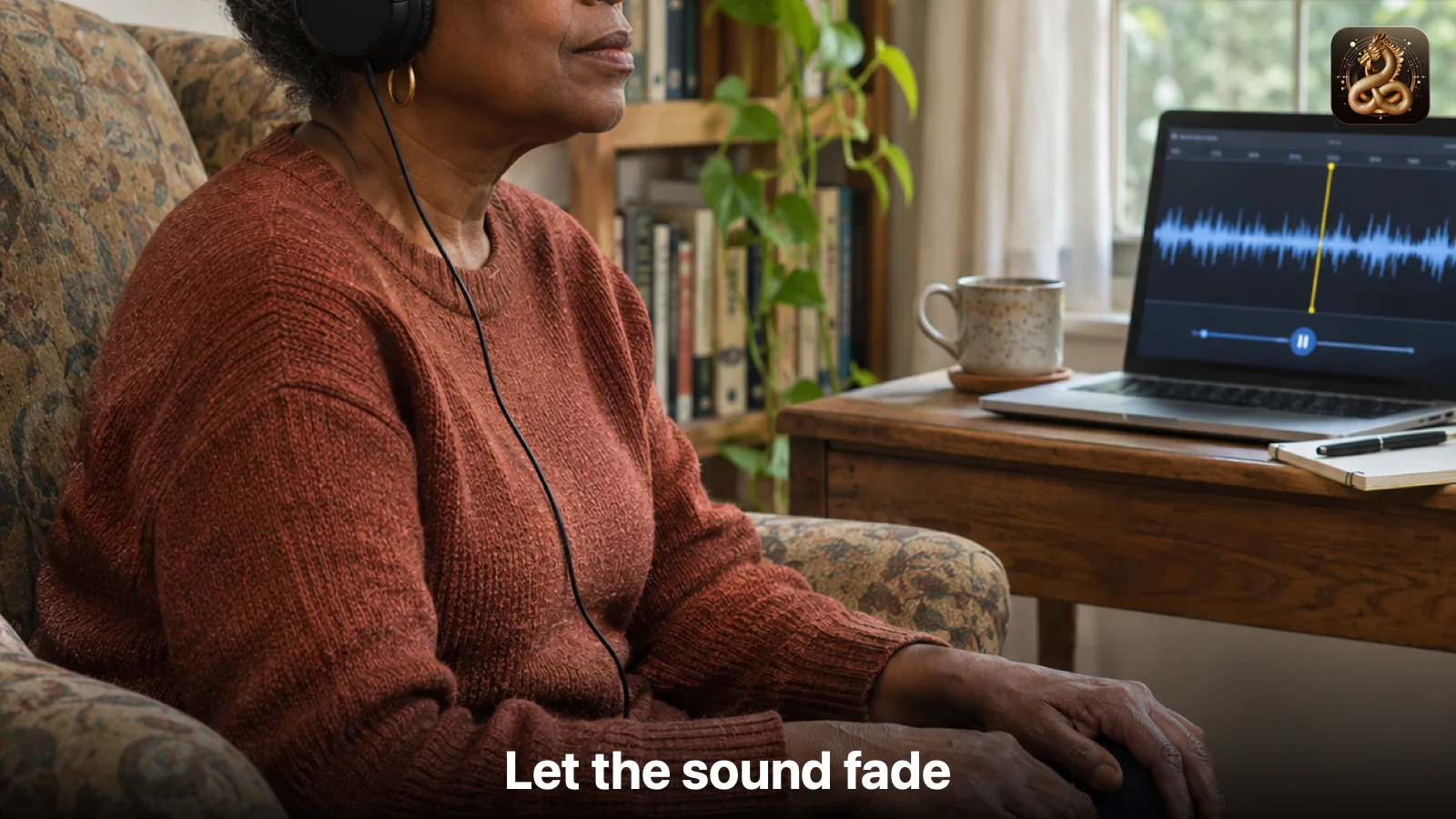
If you find yourself preparing for the next strike, you can loosen the task. Listen to the part that is here now. The next occurrence might turn up quickly or it might never arrive. An open stretch still gives you something to hear: a longer tone, a change of texture or the room around you. You can leave the moment unlabelled if describing it becomes more work than listening.
Return without keeping score
Attention can move to a chore, a line from a conversation or the sensation of sitting in one place. When you notice that shift, start with the sound that is actually audible. If the anchor comes forward again, follow it as briefly as you did before. If you need to wait for it, give yourself permission to hear the whole track instead.
A count of how many times you returned can turn this practice into a different activity. If counting is enjoyable, you may choose it on another listen. Here the modest benefit is having somewhere obvious to put attention when you feel like returning. Some sessions will feel easier to follow than others. That tells you something about the recording and the occasion, with no need to grade your ability.
Choose a recording for the occasion. If you are new to the format, start with sound journeys for beginners and give yourself time to hear the opening before deciding how you want to listen.
Two ways the practice can change while you listen
Ari notices a plucked phrase in the first minute of a sound journey. It returns twice and then becomes hard to distinguish from a fuller passage. Ari switches to listening to the combined layers. When the phrase returns clearly near the end, Ari notices it without trying to account for the time when it was less audible.
Dev picks a strike that is easy to hear at first. After a few repetitions, it feels sharper than expected. Dev turns the playback down and checks how the whole recording feels. The strike still stands out, so Dev stops and chooses a track with a steadier opening another day. Choosing a different experience is a practical use of what Dev noticed.
Try the same idea with a shorter listening window
You can use a brief stretch of an existing recording. Start the track when you have room to listen, spend a little time hearing the whole sound and notice one event when it arrives. When your available time ends, stop even if the sound has only appeared once. Trying to hear it a certain number of times can leave you listening longer than you meant to.
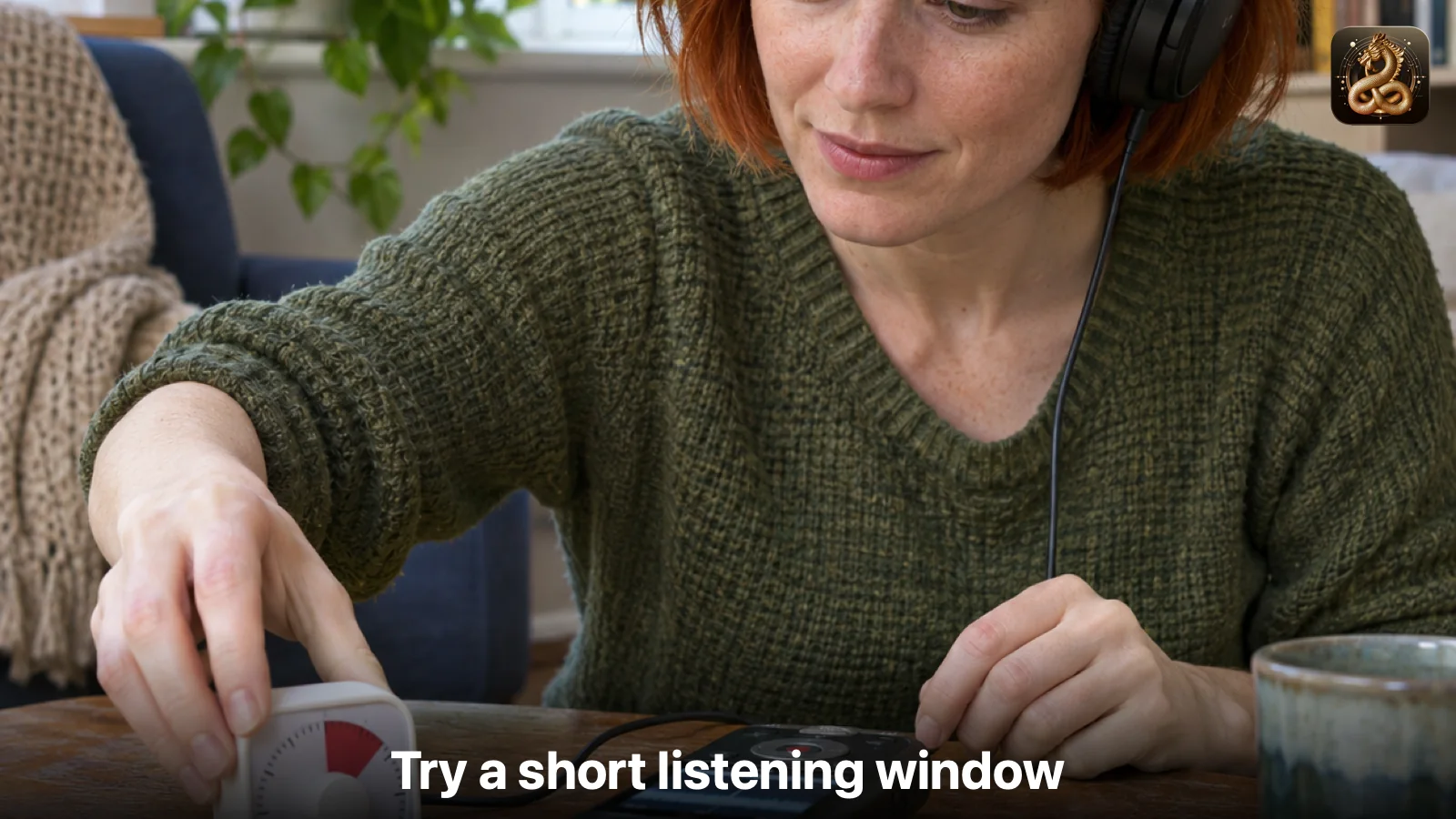
A short session can also help you notice a preference. You might enjoy an anchor when sitting in a quiet room and prefer a broad listen when there are household sounds nearby. Try to describe the difference in terms you can use next time. “I liked the slower change in the opening” gives you more information than “I did better today.”
Make room for ordinary surroundings
A door closing or a neighbour speaking may interrupt a quiet part. Check whether the sound needs your attention. If it does, pause the recording and deal with it. If it does not, you can let it be part of what you hear before returning to the track. The environment can stay audible while the recording remains your chosen focus.
If you listen with someone else, you can share the recording while giving each person their own attention task. One might listen for a returning note and the other might follow the sound as a whole. Agree on how to pause before you start. A shared listen works even when the details each person notices are different.
Explore a different way to listen. Read sound journey meditation for a broader introduction, then choose the listening style that suits your next session.
Set up a listen you can stop
Pick a place where you can hear the recording without turning it up to compete with everything else. If the room is busy, you might wait for a quieter moment or choose a different activity. Keep the player within easy reach. The aim is to listen in a way that suits this particular place and time.
Before starting, decide what will end the session. It could be the end of a short track, the moment you need to get ready for something else, or simply the point when you have had enough. If you use a timer, choose one you can check without interrupting the recording repeatedly. Letting a track end is also a workable choice.
Give yourself a few moments to hear the opening as a whole. You can sit on a chair, stand near the window or use another position that feels ordinary for you. There is no need to arrange a special room. It is enough to know you can pause or turn the sound off without having to get up in a hurry.
Try one pass without naming the sound
A returning sound can be familiar without having a name. You may recognise the way a tone lifts above the recording and then softens again. When it appears, listen through its audible ending and let the rest of the recording come forward. If you cannot tell when it ends, notice the point at which it becomes hard to separate from the background.
You might picture a small bell when you hear the sound. That picture is fine if it comes easily, but you do not need to decide whether it is a bell. If identifying it becomes a puzzle, let the name go and return to what you can hear. There is a difference between being curious about the instrument and choosing a sound to attend to in the moment.
If the sound disappears for a long time, stay with the track as it is. You can notice a steadier layer, feel how you are sitting or give your ears a short break. When the chosen sound comes back, you can recognise it and listen again. An interval with no return is still part of the listening experience.
Notice whether the anchor is helping you listen
At some point you may be listening for the sound so intently that you stop enjoying the recording. An easy check is to notice what you do in the gap. If you are waiting tensely or turning up the volume, listen to the track as a whole for a little while. You can come back to a sound when it is clear, or keep listening without one.
On another day, the same sound might be welcome. It can give you a simple place to return after a thought about work or a noise outside the room. You do not need to feel especially calm to use it that way. The practical question is whether following the sound feels more comfortable and workable than scanning the whole recording.
When the recording changes, you may need to make a new choice. A plucked note that was easy to recognise at the beginning might be buried under other sounds near the end. You can notice the fuller passage without trying to locate the earlier sound inside it. A sound journey can be worth hearing even if you use different ways of listening from one passage to the next.
Leave a note you can use next time
If you would like to remember what worked, record one observation after the track ends. It might be that the opening was easy to follow, that a chime felt too sharp, or that a short session was enough before dinner. A useful note describes something you can recognise later when choosing what to play.
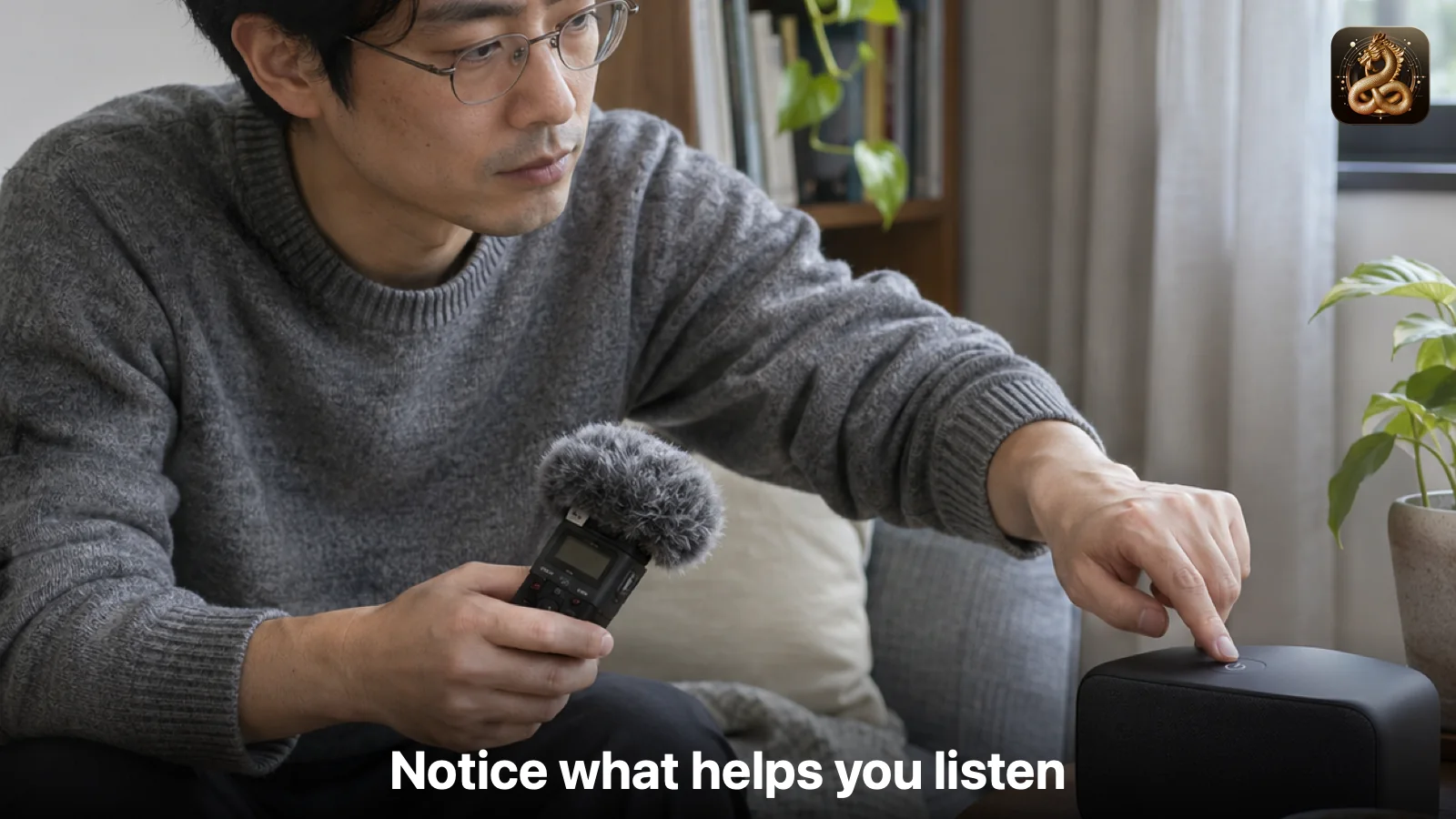
You can also leave the session without keeping a note. Take a moment to hear the room after you stop the recording, then move on to the next part of your day. You do not have to repeat the session until you get the same result. If you return to it, start by hearing the recording as it is that day.
When you are deciding what to play again, consider whether the recording gives you enough room to choose your own focus. A fast sequence of new sounds can be enjoyable when you want variety. For this particular practice, you might prefer a track in which one feature stays recognisable for a while. Listen to a short preview if there is one, then choose based on what you actually hear.
Frequently asked questions
Must the sound repeat regularly?
No fixed pattern is required. A sound that returns irregularly can still be easy to recognise. If trying to anticipate it is distracting, listen more broadly.
Can I switch to another sound halfway through?
Yes. Pick another feature you can already hear, or follow the recording as a whole for a while.
Do I need headphones?
Use a setup that lets you hear comfortably and remain aware of anything that needs your attention. The exercise works with speakers when the space and people nearby make that suitable.
What if the recording has very little variation?
You can attend to a sustained sound for a moment and then notice the rest of the recording. There is no requirement for a distinct chime or repeated phrase.