
The working day can end before the work feels complete. There may be a document you want to improve, a conversation you keep replaying or a task that belongs on tomorrow's list. If you wait for all of that to feel resolved before taking a break, there may never be an obvious moment to stop.
A sound journey can be one optional activity after you have actually finished work for now. You listen to a recording you have chosen, rather than continuing to review the working day. The recording does not complete the task, change your availability or guarantee a relaxed evening. It gives this part of your time a different activity.
This guide concerns an ordinary transition into personal time. It does not address an emergency, provide workplace advice or decide when someone with an ongoing duty can stop responding. Establish those practical conditions before choosing a listening session.
Quick answer
Confirm that you can finish work for now, leave any necessary handover and put the next work action somewhere you can find it. Then choose a sound journey for an amount of personal time you genuinely have. Keep it separate from work messages, let unfinished thoughts remain unfinished and stop when the listening period ends. You do not need a particular feeling before moving into the rest of your day.
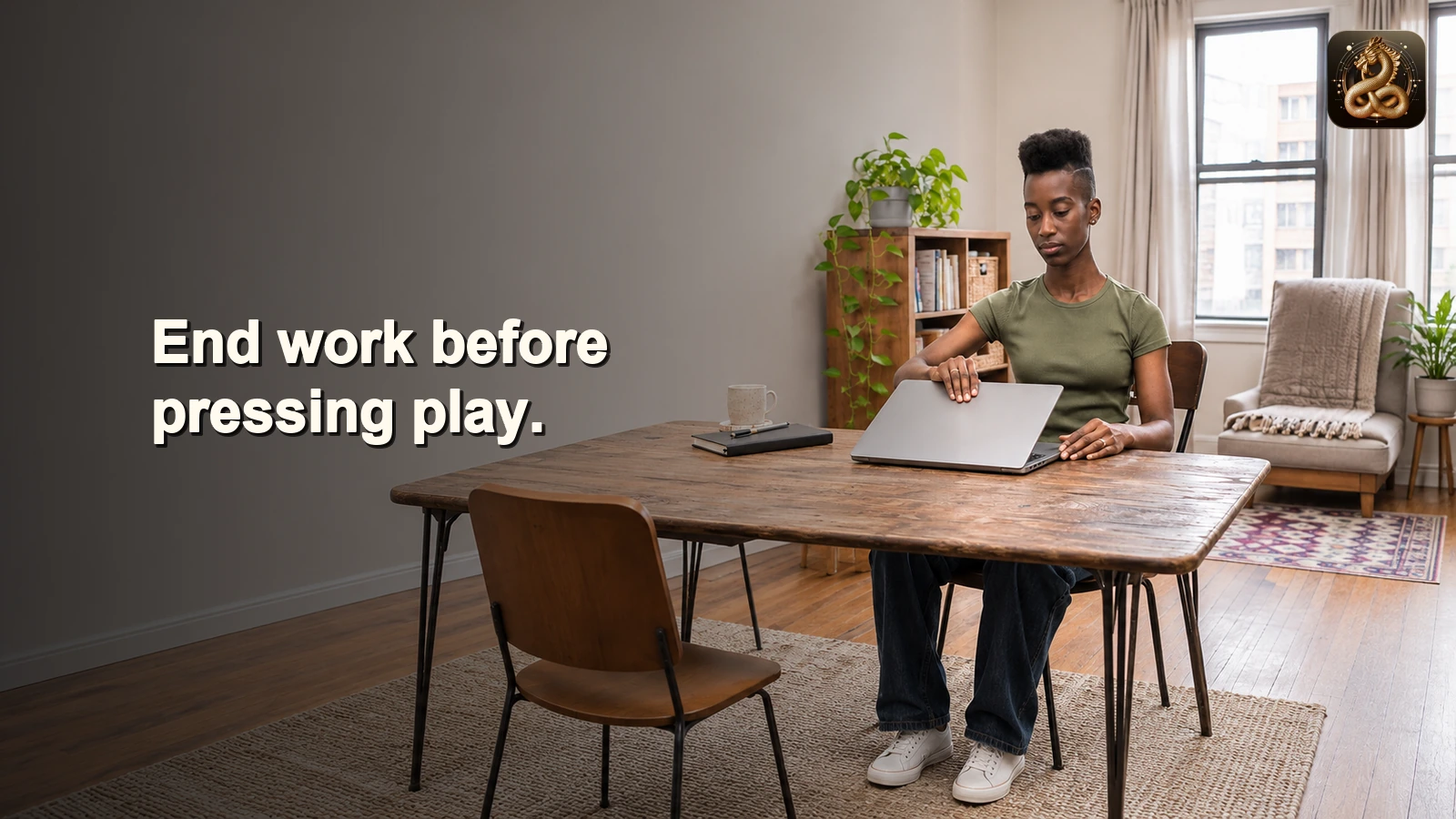
The useful distinction is between being finished with today's working period and feeling finished with every issue. A listening session can follow the first without proving the second. Silence, food, company or ordinary rest are equally available choices.
Make the work boundary real before adding sound
First check what ending work actually means in your circumstances. You might have a clear finish time, an agreed handover or a task that needs to reach a defined stopping point. A calendar reminder or a closed laptop does not by itself resolve an obligation to someone waiting for you.
Handle the necessary practical communication through the normal route. If another person needs to know where a task stands, give them that information before stepping away. Keep the message specific enough to be useful without writing a complete history of the day just to justify taking personal time.
Some evenings include an agreed period of availability. In that case, decide whether a listening session would conflict with the response you must notice. If you cannot make the two fit, choose another activity or wait. Headphones are not a substitute for an arrangement about who is responsible for what.
Make the handover explicit enough that nobody has to interpret your headphones. An ordinary message might say where the draft is, what remains open and when you will next be available. Keep those details in the agreed work channel, then begin the personal activity you chose.
Leave tomorrow a useful starting point
Before leaving the task, record the next practical action in the place you actually use for work. One line might be enough: open the draft at the comparison table, check the missing figure or ask a named question. Use the detail that will help you resume rather than a vague instruction to finish everything.
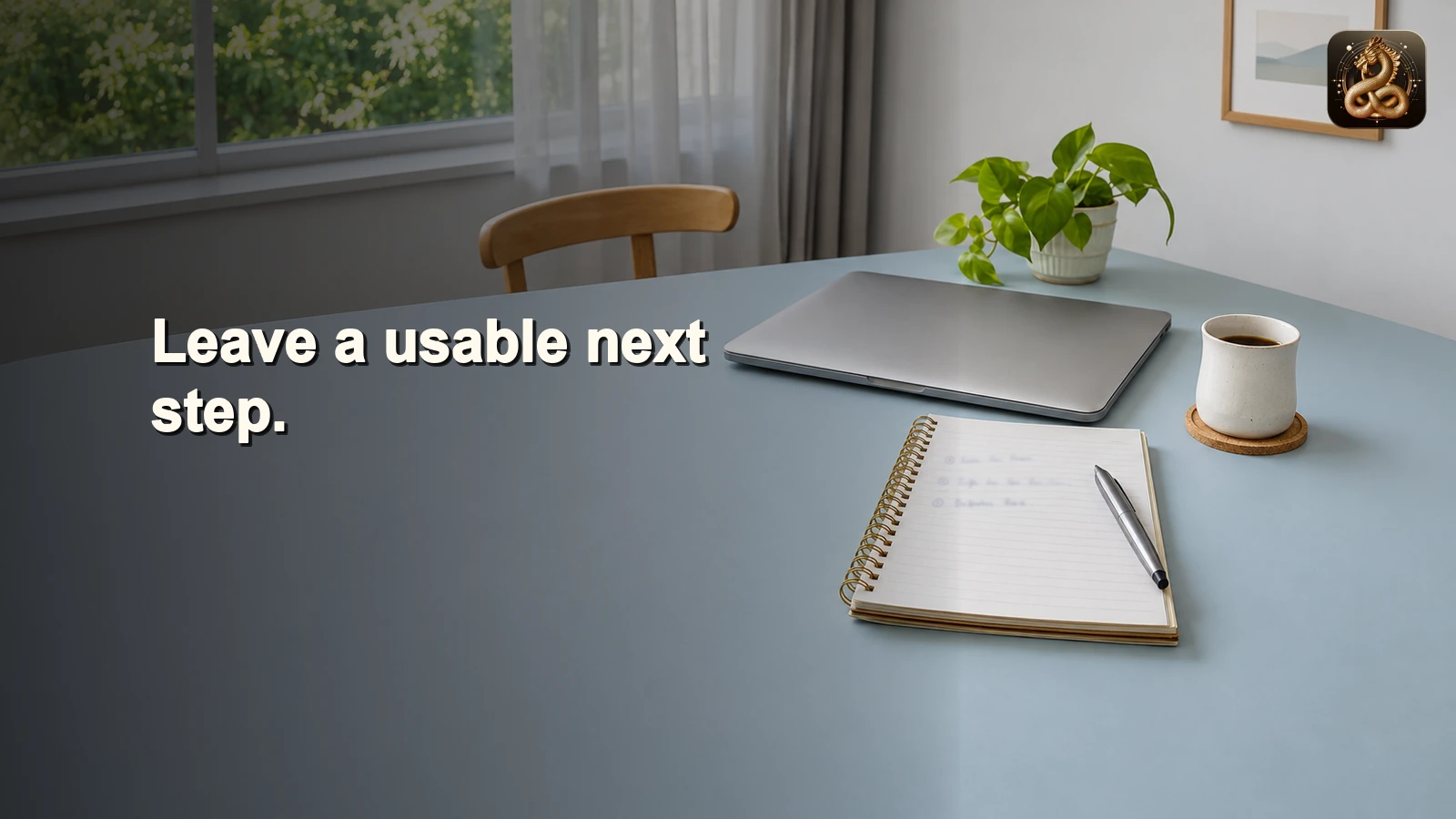
Include a genuine dependency where one exists. A task waiting for another person's reply is different from a task waiting for your own first step. Keeping that difference visible can prevent tomorrow's note from implying that you can complete something before the necessary information arrives.
Then leave the note in the working system. This is a handover to your future working period, not a demand to keep the task mentally available throughout the evening. You do not need to remember the exact wording while listening, because you have chosen where to return to it.
Check the note from tomorrow's perspective. Does it name the file or task, the next action and anything you must wait for? A line saying 'continue report' may leave you searching; 'check the totals in the saved comparison table' gives you a more usable starting point.
Decide what this listening period is for
You might simply want to spend some time listening after using words and screens all day. That is a sufficient reason. You do not need to call the session a reset, a reward for good performance or a method for getting ready to work harder later.
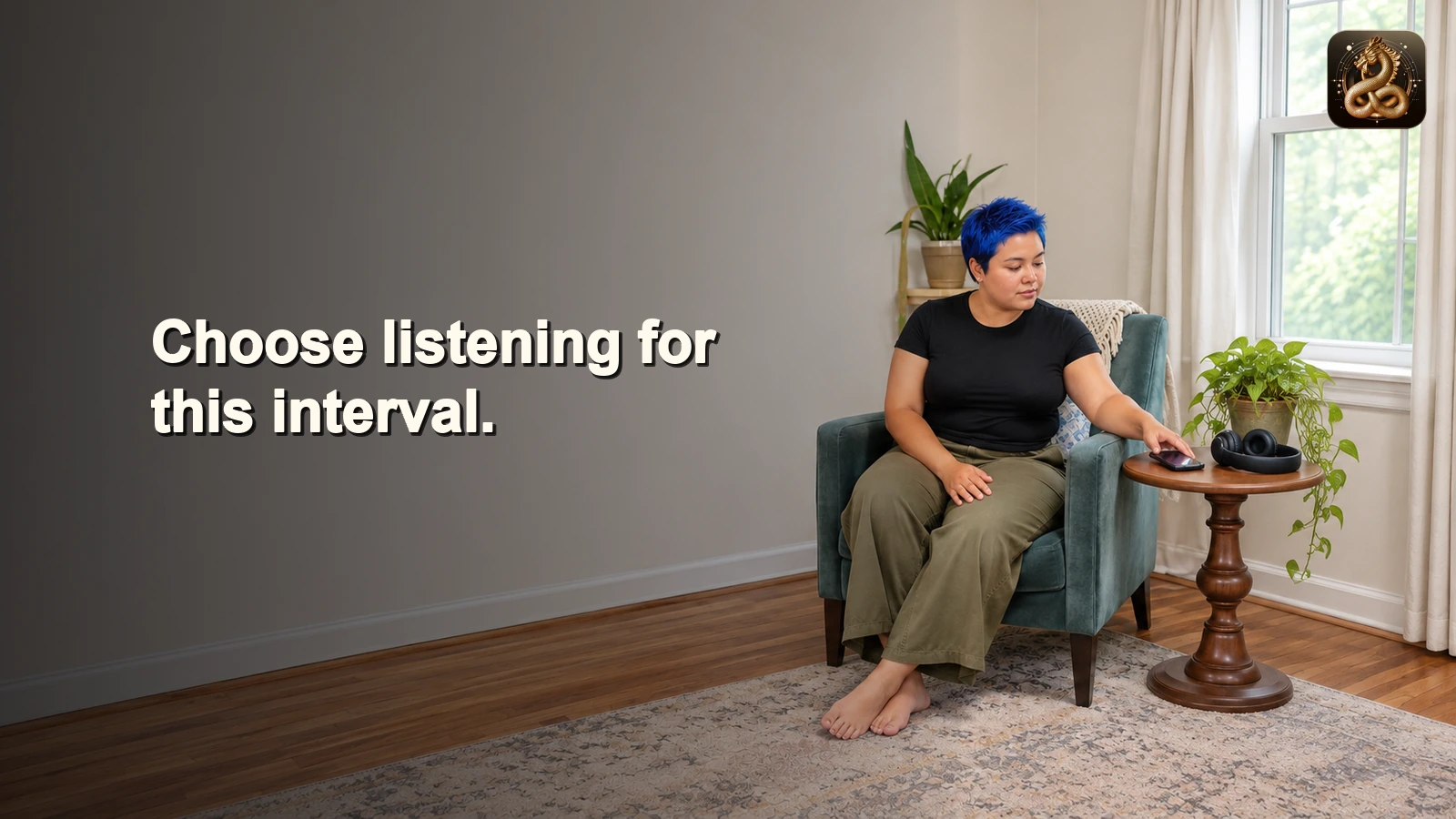
Choose according to the activity you want now. A sound journey asks for listening; a guided meditation adds spoken instructions. If you want neither instruction nor a particular attention exercise, ordinary music or quiet may suit you better. A wellness label does not make one option compulsory.
Give this particular session a simple description: a familiar recording in the armchair before dinner, for example. That describes an activity you can arrange. Keep the description separate from an emotional target such as becoming completely relaxed; work thoughts can return while you are still following the sound.
For the wider choice between formats, read SoulFul GLO's guide to soundscapes, guided meditation and yoga. Use the actual activity you want as the starting point, without treating any format as a promised result.
Give the session a place in your actual evening
Look at what comes next. You may have a meal to prepare, a household arrangement or someone expecting your attention. Choose a listening period that leaves room for those things. Ending paid work does not mean that the rest of the day has no practical structure.

Make any shared-space arrangement in ordinary words. You could say that you would like a short period to yourself and agree when you will be available again. The other person may have a different need. Discuss that rather than presenting the recording as something the household must automatically accommodate.
Choose a suitable stationary place where attention can be available for the session. Do not use this exercise while driving, operating equipment or doing something that needs active supervision. If you are still travelling home, wait until you have reached a place where listening in this way fits.
If you work and listen in the same room, make the change of task visible to yourself. Put the saved work materials where you will find them next time, leave the listening controls within reach and choose a comfortable place to sit. A separate room is unnecessary.
Pick a recording without opening another project
Choose a sound journey whose length and general character you understand. You might use one you have heard before or preview a small part before deciding. You do not need to find the exact sound that supposedly matches the emotional meaning of your working day.
Check the ending and the actual playback controls. If another item may start automatically, use the supported control that gives you the stopping arrangement you want. Check it rather than assuming that every player, device or account behaves in the same way.
Set a comfortable listening level before settling in and keep the pause control reachable. Preview an unfamiliar recording long enough to notice whether you want its general character today. If you prefer less sound, choose a quieter recording or ordinary quiet rather than continually adjusting playback through the session.
Use one selection question: do I want to listen to this now? Once an available recording fits your time and preference, close the browsing view if practical. You can return to exploring the library on another occasion; this evening's listening does not require comparing every possible track first.
Let work thoughts be thoughts rather than new assignments
A reminder about work may arrive while the recording plays. Notice the difference between a genuine new responsibility and a thought about something already left for tomorrow. The thought alone does not decide which it is. Use the actual circumstances and your existing arrangements.
If you remember a small detail you genuinely need to retain, you can stop briefly and add it to the appropriate note. Then decide whether to return to listening. Avoid treating every passing thought as a reason to reopen the whole task or inspect the work inbox.
Keep a work reminder in the system where it belongs. For example, adding a missing question to tomorrow's existing task is different from opening a private journal and copying work material into it. Use the approved work route, retain only what is necessary and leave unrelated ideas unrecorded if you wish.
If you decide to stop, name the next activity rather than searching immediately for a better sound journey. You might put on the kettle or join the household meal. That gives the evening an ordinary continuation and avoids turning an unsuitable recording into a longer search for the right one.
Notice when the activity has changed
Perhaps you begin listening, then open a work message and spend several minutes composing a reply. At that point you are doing work again. You can recognise that change without criticising yourself or claiming that the sound journey continued unchanged in the background.
Decide what the situation now needs. A real issue may require attention. Another message may be able to wait under the arrangement you already made. Where appropriate, return to that arrangement rather than asking the recording to drown out uncertainty about your obligations.
The planned listening period may end when someone arrives home or a meal is ready. Stop the player before joining that activity. A track left partway through can stay there; deciding whether to resume it later is a separate choice from being available to the person in front of you.
The same applies to feelings. You can still feel interested in a project, annoyed about an exchange or tired from the day. Those observations do not automatically reopen your shift. Work availability and emotional completion are different questions.
Two fictional endings to a working day
In this invented example, Nia leaves a draft with a clear note about the next section to revise. The agreed working period has ended. At home she chooses a familiar sound journey, then notices herself mentally rewriting a paragraph. She remembers where the draft and next-action note are, and returns to listening when she wants to.
Nia does not wait for the paragraph to stop occurring to her before making dinner. The practical achievement is that she left work in a usable state and chose how to spend part of her personal time. The example does not establish a change in stress, sleep or performance.
Another fictional worker, Arun, is waiting for an agreed handover confirmation. He realises that using headphones would compete with the alert he needs to notice. He leaves the sound journey for later. When the handover is complete, he decides that ordinary quiet is what he wants instead.
Arun's next-action note stays with his work materials. The handover confirmation, rather than the choice of audio, establishes that he can leave the work period. Nia and Arun therefore reach different personal activities through the same practical step: check what responsibility actually remains before choosing how to spend the interval.
Finish the listening without testing whether it worked
Stop playback at the ending you chose or earlier if the situation changes. Notice what you are about to do next and allow enough time to do it ordinarily. You do not need to repeat a declaration that the day is complete or check whether your mind feels sufficiently clear.
If you want to remember anything, keep it practical: the recording was easy to stop, the chair was comfortable or the timing competed with dinner. These observations can inform another choice without becoming a daily emotional score.
When a future session ends before another working period, SoulFul GLO's guide to returning to work after meditation addresses that separate transition. For tonight, choose the next personal activity that actually belongs in your evening.
Frequently asked questions
Must I listen every evening to make this useful?
No daily schedule is required here. Use a sound journey when you want that activity and it fits your responsibilities. Keeping the same arrangement can be convenient, but missing a day does not create time you must repay.
Can a sound journey make unfinished work stop bothering me?
This guide promises no such result. It describes an optional listening period after a practical work boundary. If a work issue needs action, handle it through the appropriate route rather than treating sound as a replacement for that decision.
What if I want to think about a project while listening?
You can choose that activity. Be clear that you are thinking about work with sound present, rather than taking the separate listening break described here. You may prefer to leave project reflection for another occasion.
Does the session have to happen at bedtime?
No. It belongs wherever an actual work ending and available personal time meet. That may be afternoon, evening or another part of your schedule. This is not a sleep routine or a recommendation to alter your sleep arrangements.