
A poem can be something you attend to without turning it into advice. You can notice the words, their order, the movement of a sentence and the point where a line ends. You may find an image interesting, or simply prefer the sound of one phrase. Understanding every reference is unnecessary for this small reading practice.
Choose a poem you willingly want to spend time with. The activity here is reading an existing piece, rather than making a poem from your journal or following a written meditation script. There is no requirement to write, memorise, discover a message about your life or feel calmer afterward.
Quick answer
Choose a short poem from an identifiable source and read it once for its ordinary meaning. Read it again, silently or in your own voice, noticing one feature such as a repeated word, sound or line break. Pause without demanding an interpretation. Return to the whole poem if you want, then finish. A few lines can be enough, and another activity remains available.
Decide what you want to attend to
Reading for this purpose differs from preparing an explanation for somebody else. A classroom discussion may ask you to identify a form, compare interpretations or support an argument. Here, you are choosing a small encounter with language. You can understand a detail and leave another unresolved without treating the session as an unfinished assignment.
An instruction page asks you to perform what it describes. A poem may describe a person opening a window without asking you to open yours. Keep that distinction clear. The narrator's feelings are also part of the writing; they do not tell you what you ought to feel while reading.
Oxford Mindfulness shares poems selected by its teachers and says they often appear in its live meditation sessions. That provides a real example of poetry used in a mindfulness setting. It does not establish that a particular poem treats distress, or that this independent reading exercise reproduces the organisation's teaching.
Choose a piece you are willing to revisit
Start with material short enough to see as a whole. An identifiable author, title and source help you return to the same wording. A book you own or a legitimate publisher's page can be convenient. Choose the poem itself rather than an unattributed quotation on a decorative image.
A welcoming title cannot tell you everything the poem contains. Read through before deciding to use it for a pause. Some poems contain loss, conflict or material you do not want to revisit today. You can choose another without first explaining why the original should have suited you.
Familiarity is optional. A known poem may let you notice a detail you previously passed over. An unfamiliar piece may make its wording more visible because you cannot anticipate the next line. Neither choice establishes a better practice. Decide whether discovery or familiarity interests you on this occasion.
Make the words available without changing the activity
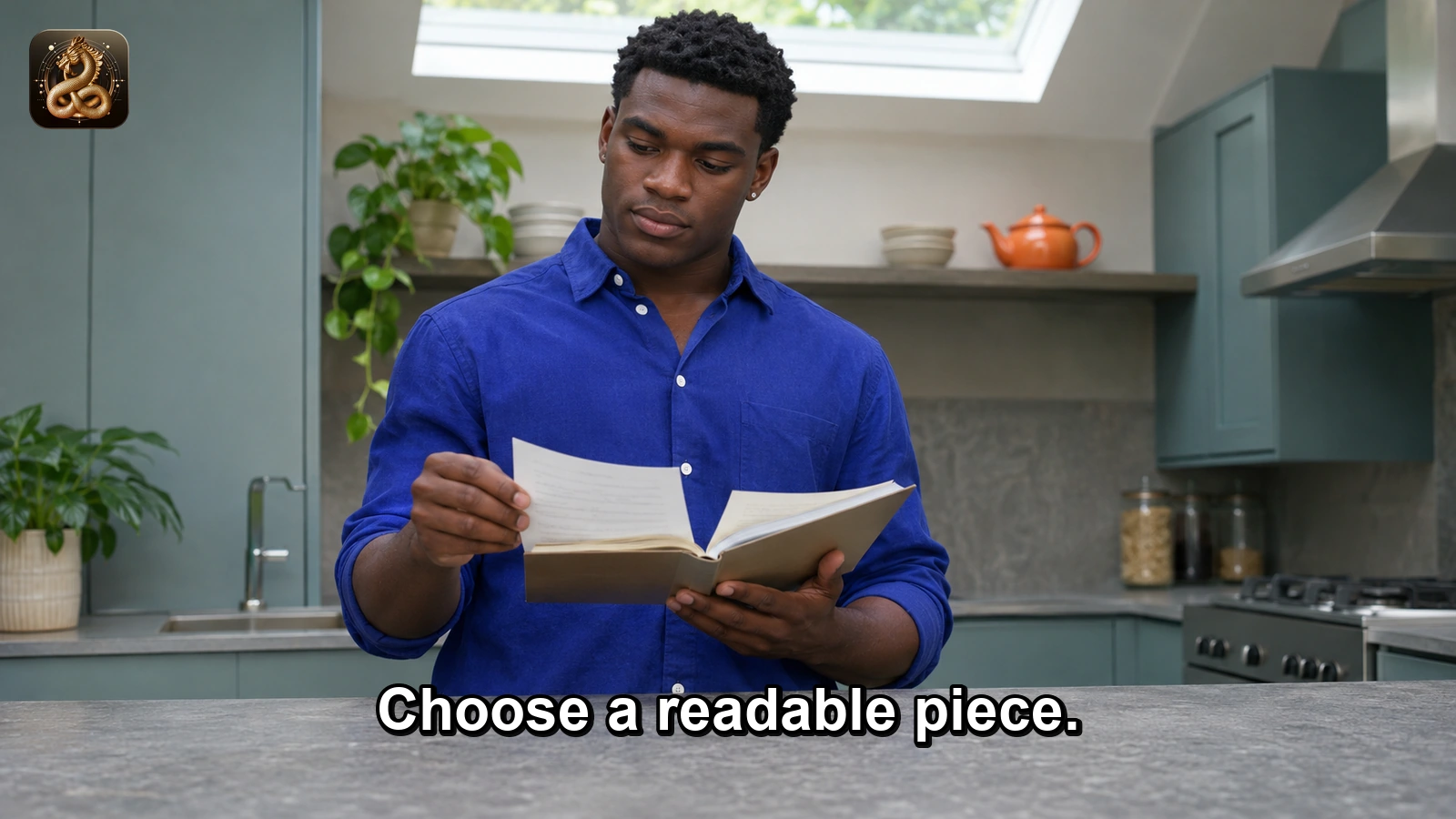
Use a copy you can read comfortably. Enlarge text with the controls actually available, choose a readable printed edition or place the book where it is easy to see. There is no required posture or distance. Reading through strain adds a difficulty that this exercise does not need.
Keep a page's original line breaks where possible. A narrow screen may wrap a long poetic line onto two display lines. That is a formatting change, not necessarily a break chosen by the poet. If line endings are what you want to notice, use a view that makes the original arrangement clear.
An audio performance offers a different encounter with the same work. You may attend to the reader's pacing and emphasis, but their pauses are interpretive choices. If you want to compare them with the printed lineation, keep the text available. Avoid assuming that every pause in a performance is printed punctuation.
A small reading plan
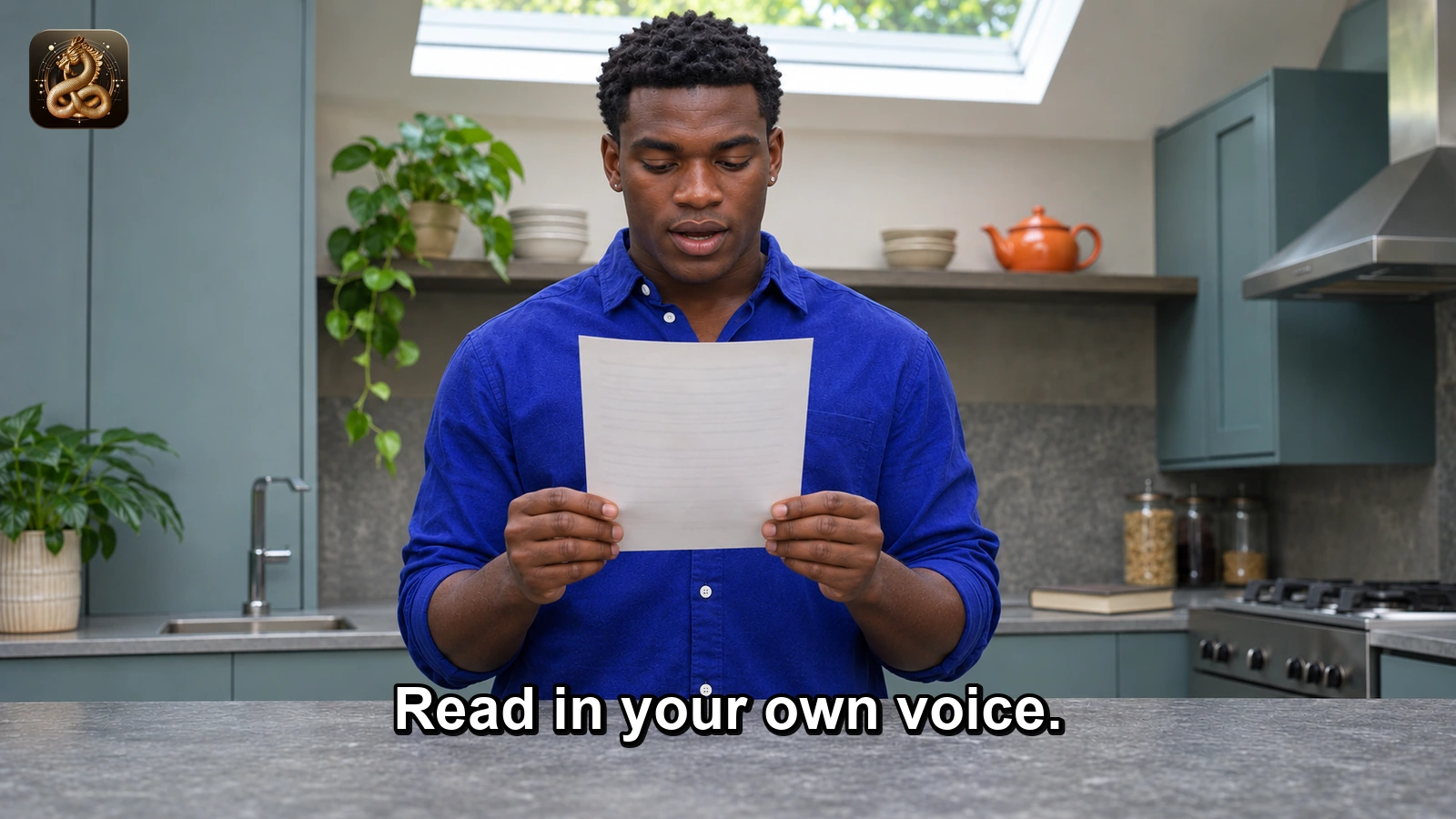
Read the whole piece once
Let the first reading establish what is on the page. Notice the speaker, objects or actions only as far as they are understandable. If an unfamiliar word is essential, you can look it up before continuing. Checking meaning is a separate practical action, not a failure to remain attentive.
Choose one feature for another reading
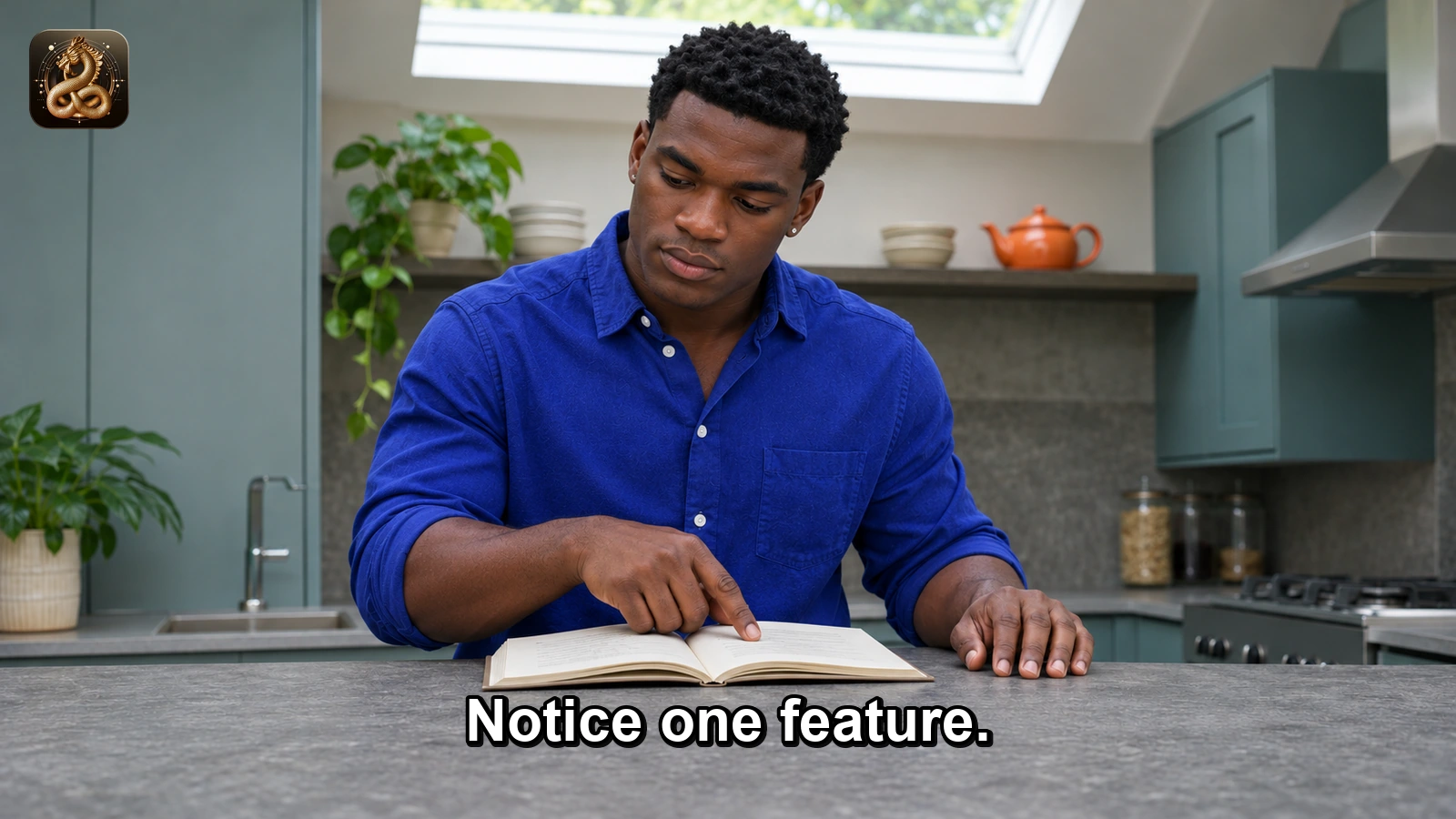
Select something actually present: a repeated sound, a concrete image, a change of tense or a line ending. Keep the choice narrow enough to recognise. Trying to track every sound, image and possible meaning at once can turn an optional pause into a larger analysis task. You can choose by pointing to a word on the page. In the original example below, spoon is an object you can locate immediately; once is a word beside a visible line ending. Either gives the next reading a specific place to return. If you choose sound, say the relevant phrase quietly or hear it in silent reading. You do not need a technical term for what you notice. Describe the feature in ordinary language before deciding whether you want another reading.
Pause and leave room for an ordinary response
After that reading, pause if you want. You might remember a phrase, notice that you disliked the rhythm or have no clear response. You need not fill the gap with an explanation. Let breathing continue naturally; do not make a line fit a breath count or hold your breath to reach its ending.
Return or finish
Read the whole poem again if that helps keep the chosen detail in context. Alternatively, close the book or leave the page. A useful ending can simply be knowing which feature you attended to. Finishing does not depend on remembering the poem or finding a personal lesson.
Choices for a second reading
The table gives options, not stages to complete. Choose the row that interests you, or keep an ordinary whole-poem reading. A feature can be noticeable without becoming a symbol for something outside the text.
| Feature | A possible reading choice | Keep this distinction |
|---|---|---|
| Sound | Notice one repeated consonant or vowel. | Sound does not establish a hidden message. |
| Image | Attend to one concrete object or action. | The written scene is not your own memory. |
| Line break | Try a pause, then read across the ending. | A reading choice is not a compulsory breath pattern. |
| Whole poem | Read once and close the page. | No analysis or written response is required. |
A fictional demonstration with an original short poem
The following four-line example was written for this guide. It is not a quotation from a published poet or a claim about somebody's private experience:
The kettle rests beside the sink.
A spoon catches the window light.
I fold the towel once,
then leave the kitchen quiet.
Nora is an invented adult who chooses to read this small domestic scene. On the first reading, she notices the objects and the sequence of actions. She does not need to decide that the kitchen represents her mind or that the towel carries a lesson about finishing work.
For the second reading, she chooses the break after “once.” The sentence continues into the next line, so she tries reading across the break, then allowing a slight pause there. She notices a difference in pacing. She is comparing two ways of reading the actual words, not finding the correct emotional reaction. She can compare the two readings without changing the printed words. First she reads the sentence continuously, carrying once into then. Next she gives the line ending a brief pause of her own choosing. The distinction is audible in pacing even though the page stays the same. If neither version interests her, she can leave that feature and notice the spoon instead. Her reading choice is a way of exploring the wording, without deciding how another reader must perform it.
Nora then rereads the whole piece so the single line does not become detached advice. She might remember the light on the spoon or decide the poem does not interest her further. Either response leaves the demonstration intact. No improvement in wellbeing, concentration or memory is inferred from the attempt.
The simpler version is one reading of the four lines followed by closing the page. Someone else could choose only the concrete image of the spoon and leave line breaks aside. These are voluntary choices about attention, rather than a test whose answer the poem is hiding.
Keep reading and writing as separate options
SoulFul GLO's found-poem journaling guide offers a different activity: selecting your own earlier words and arranging a new piece. Use it when you want to compose. For the practice here, the existing poem can remain unchanged, with no requirement to produce a written response.
Work with a difficult word or reference
An unfamiliar word can draw attention away from the piece. Decide whether knowing its meaning matters to the reading you want. If it does, consult an appropriate dictionary or source and return. If a historical reference needs extensive research, you can save that investigation for another occasion.
Avoid using an uncertain definition as a foundation for a personal conclusion. You may enjoy a sound while not knowing the reference, but that enjoyment does not establish what the author intended. A note can preserve the difference: “I liked this phrase; I have not checked its context.” For a practical note, separate the visible wording from your question about it. You might write: this unfamiliar word appears beside the window image; check its meaning before describing that image to someone else. That note preserves your place in the poem. It also lets you finish the present reading without presenting a guess as the definition. On returning, reread the sentence around the word so the new information belongs to the actual passage.
Translations add another useful distinction. The translator's words are the text you are actually reading, while another translation may make different choices. You can identify the translator when the edition supplies one. Comparing versions is optional; it need not become a prerequisite for spending a few moments with one clear copy.
Let a response remain different from a conclusion
A poem might remind you of a place or occasion. You can recognise that association without claiming the poem proves something about the event. Your memory and the written scene have different sources. Keeping them separate lets you return to either without rewriting one as evidence for the other.
You might also feel impatient, indifferent or unsettled. Stop or change material when you want. This is optional self-care reading, not an instruction to remain with difficult feelings until they change. Concerning or persistent distress calls for appropriate support, rather than a more determined interpretation of a poem.
Sharing and keeping a small note
For a private reminder, the title, author and source may be sufficient. You could add the feature you noticed in your own words. That creates a route back without copying the whole work. If a quotation matters, keep its exact wording and attribution, and respect the source's reuse terms.
Reading a poem privately and redistributing it are different activities. A piece being available online does not automatically authorise reproducing it in a post, email or public handout. You can share a legitimate source link where appropriate without presenting somebody else's lines as your own writing.
Frequently asked questions
Must the poem be about meditation?
No. An ordinary scene can provide words, sounds and line breaks to notice. Choose material you are willing to read. A meditation-themed title does not guarantee that its content or style will suit the occasion.
Do I need to read aloud?
No. Silent reading is a complete option. If you read aloud, choose a place where doing so is practical and does not expose another person's private conversation through an unnecessary recording. No recording is required.
What if I cannot explain the meaning?
You can keep the activity with a feature you actually notice. If uncertainty makes the reading unhelpful, choose another poem or investigate the wording separately. You do not have to invent an interpretation to finish.
Is this poetry therapy?
No. This guide describes an optional attention exercise with language. It offers no diagnosis, treatment or guaranteed emotional result, and it does not replace professional care or a structured programme.
Choose how you want to spend the next pause
Explore SoulFul GLO's practice-selection guide when deciding among listening, meditation and movement. A short poem can remain one available reading choice. Keep the piece, source and stopping point clear, then choose whether you want to return.