
You and another person can listen to the same recording while noticing quite different things. One follows a repeating phrase; the other keeps returning from thoughts about tomorrow. A shared sound-journey meditation can make room for both. The shared part is the arrangement you choose together, rather than a feeling you must produce.
This guide is for two willing adults using an existing recording during an ordinary seated listening period. It offers a practical way to begin, retain individual choices and finish without comparing inner experiences. It is an optional self-care activity, not relationship therapy or a method for resolving a disagreement.
Quick answer: agree on a listen, not an outcome
Choose one recording both people want to hear, a manageable stopping point and a setup that lets either person pause or leave. Use the audible recording as an attention anchor. When you notice that your attention has moved elsewhere, return to something you can currently hear. Afterwards, sharing is optional; neither person needs to become relaxed, explain their thoughts or match the other's response.
An invitation could be, "Would you like to listen to this together for a little while? We can stop whenever either of us wants." That describes the activity without promising closeness or calm. Give the other person room to decline or suggest another time before opening the recording.

Choose one recording both people want
Start with a resource you can actually inspect. Look at its title, description, duration and any available preview. Check whether it contains speech as well as music, whether there are abrupt changes and how the ending works. A poetic title does not tell you everything about a recording, so leave uncertain details uncertain.
If one person already uses SoulFul GLO, they can show the other its sound-journey description rather than presenting a favourite as the correct choice. The sound journeys are existing listening resources. This guide adds a shared arrangement; it does not claim that the app supplies a two-person mode, synchronised accounts or private session controls.

Ask about preferences directly. "Would you rather have speech or just sound?" is easier to answer than "Which journey do you need?" Someone might prefer a familiar recording or want to hear a short preview. If you cannot find an option both people welcome, choose a different activity instead of treating agreement as the first meditation challenge.
You can stop the preview without explaining why. A voice, rhythm or texture can simply be unwelcome today. There is no need to infer a personal issue from another person's preference, or to persuade them that continuing would be beneficial.
Arrange the shared space without making it a performance
Pick a place where both adults can sit comfortably and remain aware of relevant responsibilities. Two ordinary chairs can work. Sitting face to face, closing your eyes, matching posture and holding hands are unnecessary. Each person chooses a position and gaze that suits them.
If using a speaker, ask whether everyone who will hear it agrees to room sound. Keep the device stable and the controls easy to reach. Start quietly rather than raising playback to cover other sounds. The existing headphones-or-speakers guide discusses equipment choices in more detail; this session concerns what you do with a workable arrangement.
Include an ordinary ending in the plan. You might choose one short recording or a portion that ends before another commitment. Neither is a proven therapeutic dose. Choosing a smaller period can simply make the invitation easier to fit into the day, without requiring a permanent routine.
The World Health Organization's safe-listening guidance treats sound level and listening time as relevant to hearing risk. A peaceful recording does not remove those considerations. This shared activity needs no louder playback, universal volume percentage or special equipment to make it count.
Make stopping straightforward
Discuss what stopping means before sound fills the room. Either person can say "pause," use an agreed simple signal or leave the session. Choose a signal both people can recognise with their selected gaze and seating; a hand gesture is unhelpful if nobody will see it. Keep spoken communication available.
Decide what happens to shared playback. A simple default is to pause first, then ask whether the other person wants to finish too. If one continues later, that can become a separate listening choice. Avoid requiring someone to remain present so the other's experience stays uninterrupted.

Permission to stop includes changing your mind after starting. "I thought this would suit me, but I would rather finish" is sufficient. The listener need not identify a feeling, tell a private story or offer a health explanation. An invitation remains voluntary throughout the activity.
An interruption can also be practical. A delivery, an uncomfortable chair or a responsibility may require attention. Stop the recording and deal with it. There is no unfinished meditation debt, and restarting from the beginning is not necessary unless both people actually want that.
Attend to the recording in your own way
Once you begin, let the recording provide something to listen to. You might notice a sound's arrival and fading, or follow a phrase without naming its instrument. Ordinary breathing can continue. There is no instruction here to change breathing, chase a bodily sensation or imagine a scene.
When a thought takes your attention, notice that you have drifted and return to the sound now playing. The other person can be doing something quite different internally. You cannot inspect their attention from a still posture or a closed eye, and your own wandering does not tell you how theirs is going.
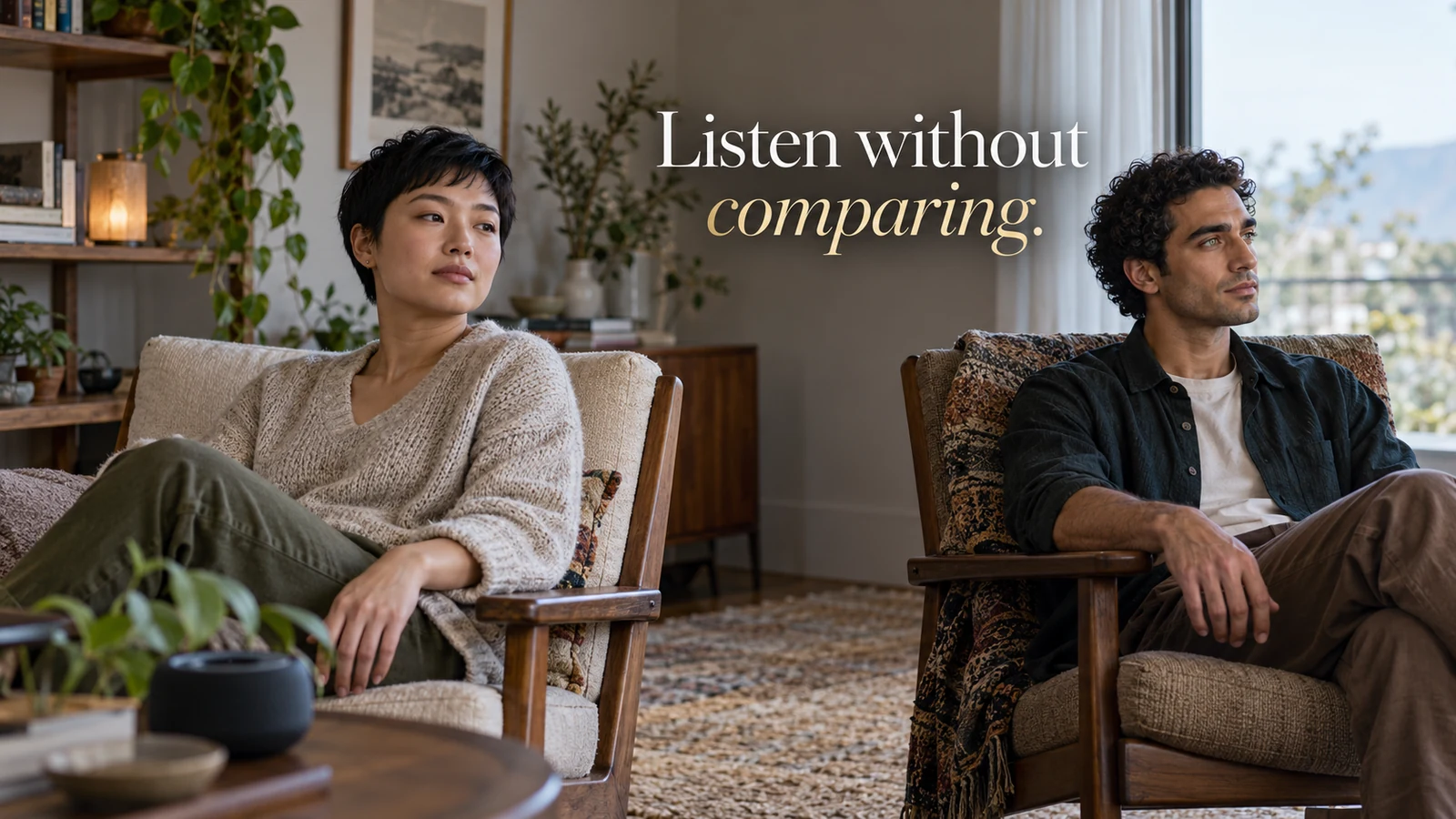
Keep spoken reminders to the agreement you made. If nobody requested coaching, avoid correcting posture, whispering instructions or asking whether the other person feels calmer. Those comments turn a shared listen into supervision. You can each follow the agreed simple listening task without monitoring the other.
The presence of another person may feel welcome, distracting or fairly neutral. Treat those as possible experiences, rather than evidence that the session succeeded or failed. If being observed makes listening uncomfortable, separate listening or another shared activity may fit better.
Explore an existing sound journey
SoulFul GLO's sound-journey overview describes the available listening approach. Read the resource information together and choose only a recording you both want to try. Shared use does not require matching expectations about what it will feel like.
Afterwards, leave experience with its listener
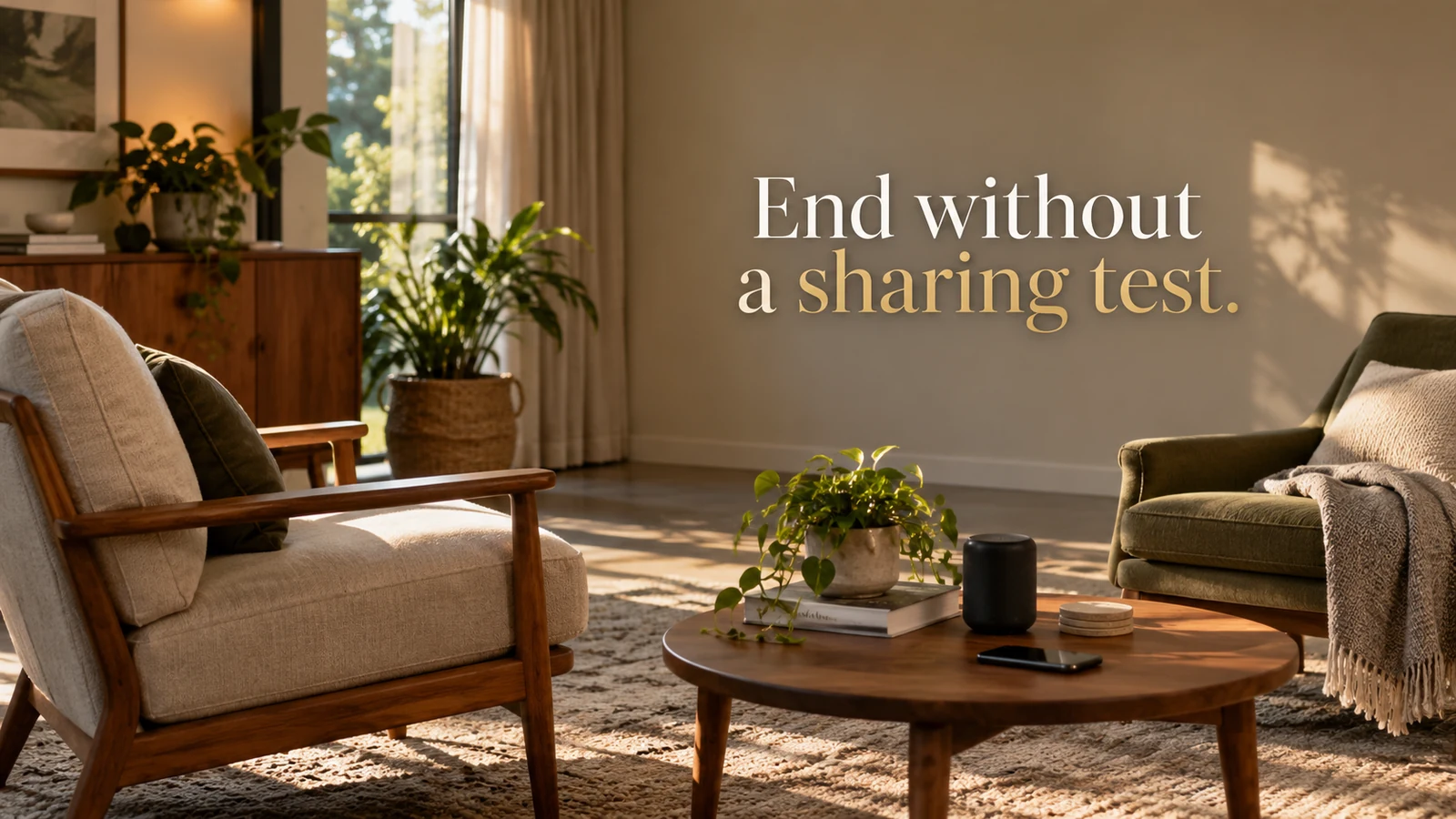
Let playback end or stop it at your chosen point. Give each person time to move, look around or attend to the next activity. A quiet ending does not need a discussion round. Ask whether conversation is welcome before beginning a personal account.
If you do share, speak from your own experience: "I kept noticing the pauses" or "I was thinking about work." Avoid turning a response into a measure of the other's attention. Feeling restless does not establish that someone failed to listen, and enjoying the recording does not prove it produced a health effect.

Keep interpretations modest. If a sound reminded your companion of a place, they choose whether to explain that association. Their account need not match yours. A difference can remain a difference without being analysed as a relationship pattern, a personality trait or a spiritual sign.
The same applies to silence. Someone may prefer to keep the experience private or may have little to say. Do not read a lack of commentary as rejection. You agreed to a shared listening period, not a disclosure requirement.
Two fictional arrangements
A familiar recording with a first-time listener
In this fictional example, Hana asks Ellis whether they want to hear part of a recording she already uses. Ellis asks to preview it first. They choose separate chairs and agree to pause if either speaks. Hana leaves the phone between them rather than keeping control beside her own chair.
During the session, Ellis asks to finish because they want to return to an afternoon task. Hana pauses and they both stop. Later, Ellis says the preview was enough to make an informed choice. They do not assess whether their breathing or emotions changed together. The arrangement worked as a voluntary invitation, without requiring another session.
Two listeners who enjoy different details
In another fictional example, Dev and Rowan choose a recording neither has used. Afterwards, Dev mentions a repeating sound, while Rowan says their attention wandered. Dev does not replay the passage to test whether Rowan heard it correctly. They move on to making lunch.
Their next practical conversation concerns the chairs and timing. Rowan would prefer an earlier session and a different seat if they try again. This is information about their arrangement, not evidence that sharing sound improves relationships or that one listener has a better meditation technique.
Keep the possible benefits proportionate
Shared listening may offer welcome company and a reason to set aside a period for meditation. A familiar person may make the arrangement easier to try; another listener may prefer being alone. Those possibilities concern personal fit. They are not promises of synchronised feelings, improved relationships or relief from anxiety.
NCCIH describes important limits in meditation research and notes that negative experiences can occur. General meditation studies do not validate this particular two-person exercise or a specific recording. If listening feels distressing, stop and choose appropriate support rather than using another person's presence as a reason to push through.
This activity should also stay separate from attempts to repair a conflict. If one person wants to discuss a disagreement and the other proposes sound instead, clarify what each wants. Optional meditation is not consent to postpone a necessary conversation, and it cannot replace professional care or suitable help with safety concerns.
Decide whether this arrangement suits another day
A useful review can stay practical: did both people want the recording, could each reach or request the controls, and was the stopping arrangement clear? You can keep what worked and change one inconvenient detail. There is no need for a score or a report about emotional depth.
Repeat only if both people want to. One person may like the recording alone while the other prefers a different shared activity. That leaves the original session intact as something you tried. It need not become a daily commitment or a test of willingness to spend time together.
Frequently asked questions
Do we need to sit together in the same position?
No. Choose separate comfortable positions and keep the controls accessible. The activity is shared through the recording and agreement, not matching posture, gaze or breathing.
What if one of us wants to stop first?
Pause the shared recording and respect the request. Decide separately whether anyone wants to listen later. Nobody needs to explain private thoughts to end an optional session.
Should we discuss what the recording meant?
Only if both people welcome that conversation. Describe your own experience without assigning meaning to the other person's reaction. Different responses can remain different.
Can shared listening help our relationship?
This guide does not establish a relationship benefit. It offers an optional way to spend a listening period together. Consider whether you both enjoy the arrangement without using it as a substitute for addressing an actual concern.
Choose a workable listening setup
For practical equipment, fit and shared-room considerations, read SoulFul GLO's headphones-or-speakers guide. Keep the next session small enough for both people to choose freely, including the choice to leave it for another day.