
You come home from a short errand and remember the end most clearly: a shopkeeper sliding a paper bag across the counter, or a friend holding the door while you searched for your keys. An entry can begin there. Write what you remember about that last moment, then move to the one just before it. You can work back to the beginning without having to find a neat opening first.
Reverse-order journaling changes the order in which you tell a scene. It does not change the order in which the scene happened. That distinction gives you room to try a different shape on the page without turning a guess into a fact. The exercise is useful when an ending gives you a way into a small, ordinary moment and you want to see what you remember before it.
Quick answer
Choose one everyday scene with an ending you can describe. Put that ending first. Ask what you remember immediately before it, then write that as a separate short paragraph. Repeat until you reach a workable starting point or a gap you cannot place. Use words such as “before that” or “earlier” so a later reader can follow the direction. If two details cannot be put in order, keep the uncertainty visible rather than deciding on an order for the sake of the page.

Pick an ending you can point to
An ending does not need a decision, lesson or surprise. It can be a small visible action: you set a borrowed umbrella by the door, shut a drawer or watched the person in front of you leave a queue. Choose an ending that belongs to a scene you can hold in mind without having to explain the whole afternoon.
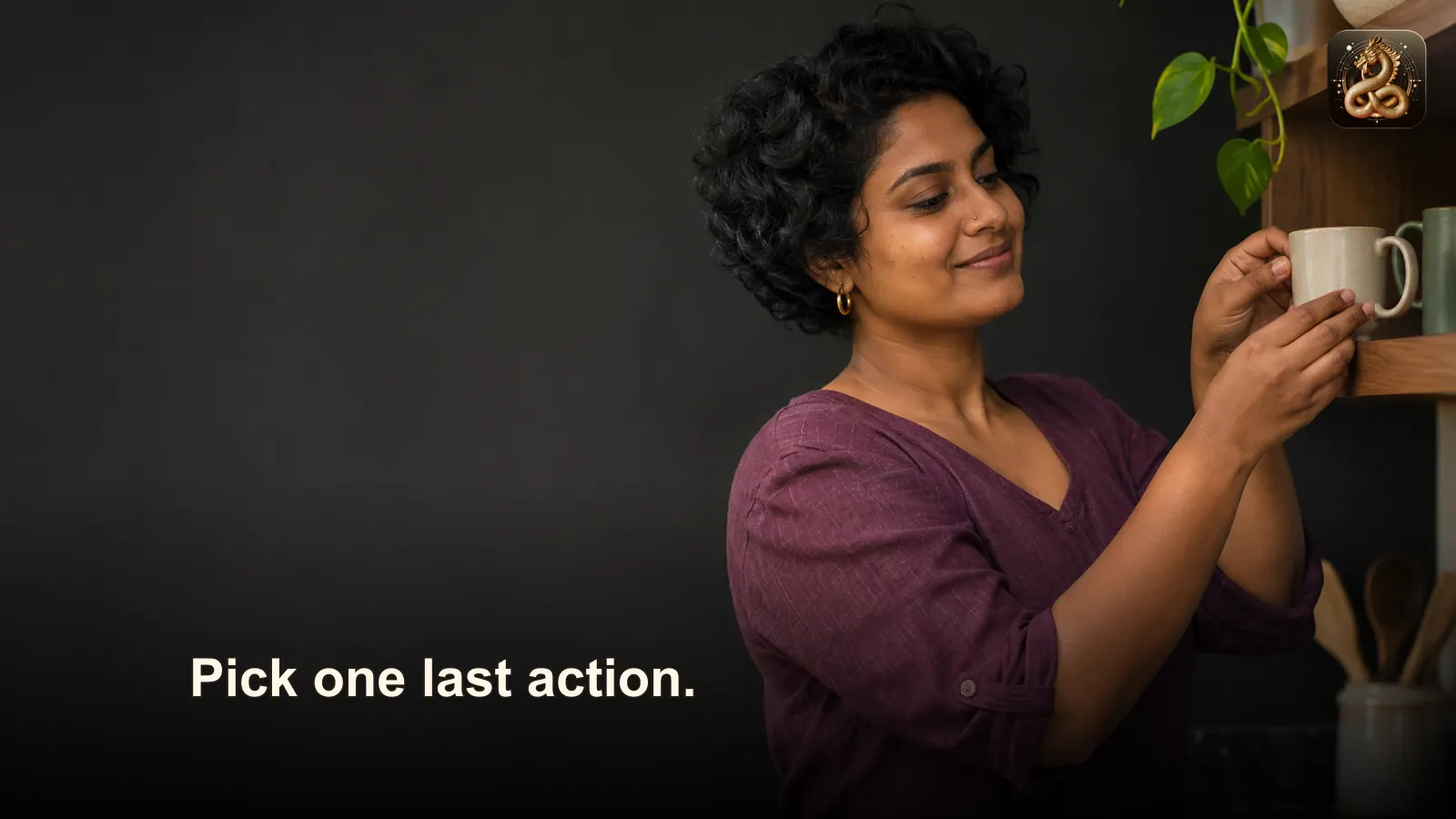
Write one or two plain sentences. For example: “I put the last mug back on the shelf. The handle faced the wall.” That is enough to establish the endpoint. You might be tempted to explain why the shelf mattered or how you felt when you saw it. You can add that if it helps, but the action itself is already a place to begin.
If you have two possible endings, pick the one that fits the size of entry you want. Putting the mug away may be the end of the kitchen scene. Locking the front door may be the end of the visit. Neither is the official ending. Each gives you a different span of events to work with. Choose the span you can describe without making a second account of everything around it.
Go back one step at a time
Look at your first paragraph and ask, “What do I remember happening just before this?” You may recall rinsing the mug, picking it up from the table or hearing the cupboard door open. Write down the step you can actually place. If a different detail comes to mind first, ask whether it belongs immediately before the ending or only somewhere earlier.
Use a new paragraph for each move backward. The first time you do this, an explicit phrase can help: “Just before that, I wiped the shelf with a cloth.” On the next line: “A little earlier, I had taken the mugs down.” You can vary the wording when the direction is obvious. Keep enough signposts that you do not mistake the written order for the event order when you read it later.
You do not need an equal amount of detail at every step. The last action may need two sentences and the previous action only a line. A longer paragraph makes sense when you remember a small exchange or a detail about where you were standing. If you remember only that you were already in the kitchen, leave that step as simple as it was.
Leave the order open when it is uncertain
Sometimes two details return together. You remember setting down your bag and opening the window but cannot say which came first. Write them together in a paragraph marked “earlier, order uncertain.” This leaves both details available without making the line breaks do more work than they should.
If you remember that there was a gap between two actions, you can name the gap. “I don’t remember what happened between taking the bag from the counter and getting to the door” is a complete sentence. It may be all you need to keep. You can stop there, or you can move back to an earlier step you remember and use a phrase such as “Before the part I can’t place.”
For a different way of shaping a small scene, try the SoulFul GLO three-panel journal comic exercise. Its panels give you a place to separate remembered views. In a reverse-order entry, the paragraphs have a different job: they guide you from the detail you already remember toward the beginning of that same scene.
Try it with a familiar example
Imagine Priya wants to write about leaving the library after returning a book. She starts where her memory is clearest: “At the end, I pushed the door open with my elbow because I was carrying my umbrella.” She knows what happened before that: “Just before leaving, I had picked up the umbrella from beside the return desk.” She writes one earlier line: “Before that, I handed the book over and heard it slide into the return tray.”
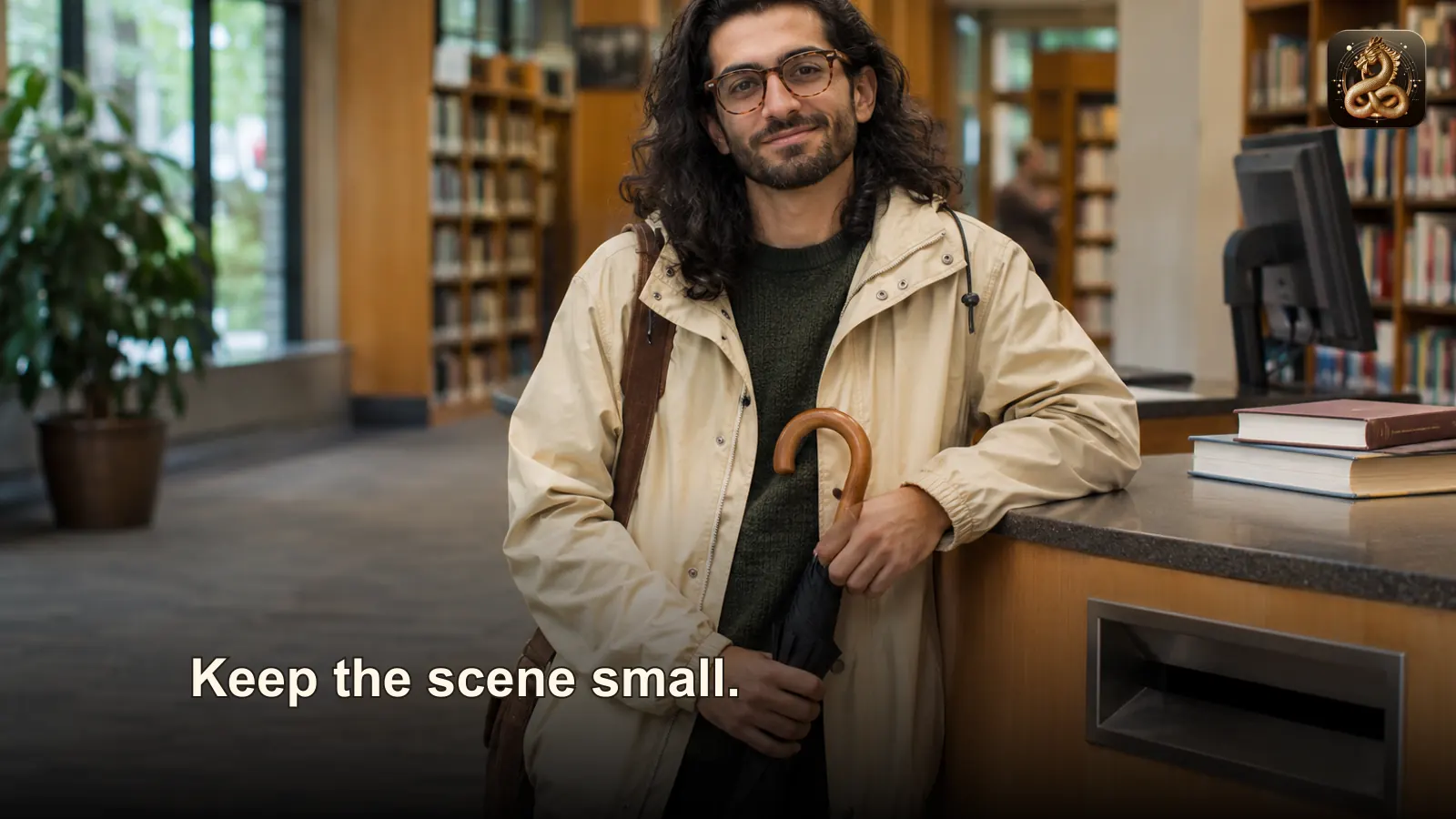
Priya remembers looking for her library card and checking the title on the book, but she cannot place those two actions. She adds them to the same paragraph: “Earlier, I checked the title and looked for my card. I’m not sure which came first.” That still takes her to the beginning she needs. She can leave out the trip to the library because the entry is about the return desk and the door.
If Priya decides later that the entry is hard to follow, she can add a short note at the top: “This starts at the door and moves back to the desk.” She does not have to rewrite the whole piece in forward order. A single orientation line can give the reader enough information to follow the structure she wanted to try.
Notice when the beginning is far enough back
You may reach the beginning when the actions stop belonging to the same scene. If the entry is about putting away the mugs, “I opened the cupboard to make space” may be a useful place to stop. It does not need to go back to choosing the cupboard, buying the mugs or moving into the room. A scene can begin after many relevant things have already happened.
A good stopping point can also be the first detail you can place with confidence. If you remember being at the counter but do not remember how you got there, you can end with the counter. That ending to the written entry is also the earliest event the entry contains. A line that says “This is as far back as I can place it” can prevent a later reader from mistaking the boundary for a claim about the entire occasion.
If the exercise opens another story, keep that story separate. You might realise you want to write about who lent you the umbrella, or what you noticed on the way to the library. You can make a short note and leave it for another entry. The reverse-order scene still has a useful shape on its own.
Check the page once
Read the first sentence of each paragraph in the order you wrote it. You should be able to tell when you are stepping back, pausing over an uncertain detail or reaching the beginning. If a paragraph seems to move forward by accident, you can give it a clearer transition. You can also move it if you know where it belongs. Avoid moving a paragraph merely because it would make the page smoother.

Then read for distinctions you want to keep. A sentence about what you heard belongs beside the step you remember hearing it. A later thought about what someone might have meant can stay separate and be marked as your interpretation. You can retain both without asking the entry to prove an explanation.
Finally, decide whether the unusual order still serves the scene. You may like the way the last action provides a point of entry. You may prefer the sequence in the order you lived it. The exercise has done its job if it helped you make a small account you can understand. You are free to use a different shape next time.
Give the entry a title that helps you find it
A concrete title can tell you more than “reverse exercise.” Try “Putting the mugs away” or “At the library door.” If the order matters to how you will read it, add a short note beside the title. You can leave the date or occasion uncertain if you did not record it at the time. The title is a finding aid, not another detail you have to prove.
Frequently asked questions
Do all the paragraphs have to go backwards?
The main actions should be recognisably arranged from later to earlier. Within one paragraph, you can describe a small action in its natural order. You might say that you turned the key and then pulled the door shut, even if the paragraph about the door comes before the paragraph about putting on your coat. A paragraph can hold one action with its own short sequence.
What if I only remember the middle?
Start with the latest moment you can place, even if you know the scene continued after it. You can write “This is the last part I remember clearly.” From there, work back as far as you can. You do not need to invent the true ending to use the exercise.
Can I write it from an old entry instead?
Yes. Keep the old entry available, and label the new one as a reordering of what you wrote earlier. If you add a detail you remember now, distinguish it from the original account. The difference may matter when you return to the page and want to know when each detail was recorded.
Will writing backwards make the memory more accurate?
The exercise changes how you arrange a written account. It gives you no way to establish that a remembered detail or its order is correct. Use the words that fit your level of certainty. Where accuracy matters beyond a private journal, refer to an appropriate record or source rather than relying on the shape of the entry.
Use the format for one small moment
Choose one ending and write two earlier steps. If the order of any detail is unclear, leave a note beside it. Stop at the first starting point that belongs to this scene. If you later want to try a visual version with fewer sentences, explore the three-panel journal exercise and give the new format its own page.