
A written entry can contain words you would like to hear in your own voice. Perhaps it describes a small project, preserves a particular turn of phrase or records an ordinary afternoon you want to revisit through listening. Reading it aloud into a recording creates another version of that entry, with choices that deserve a little attention.
The written page remains the source. The audio contains the reading you actually made. A spoken addition, an omitted sentence or a description of a sketch can be useful, provided the relationship between those versions stays clear. You can make one short audio edition without converting your whole notebook.
This guide concerns your own personal writing and your own voice. It offers a practical editorial approach, not a therapeutic exercise, a voice assessment or instructions for creating guided meditation. Choose material you are comfortable reading and retaining, using a recording arrangement whose actual controls you understand.
Quick answer: choose the passage and the kind of reading
Select one passage from your own journal. Decide whether the audio will follow its wording or openly adapt it for listening. Plan how to handle headings, visual marks and any omissions, then read in a manageable ordinary voice. Replay the saved audio while following the selected source. Check that the beginning, ending and intended wording are present, and label any meaningful changes accurately.

Reading an entry is different from speaking a new reflection about it. Either may interest you. Naming which activity you are doing helps prevent a present-day explanation from sounding like something you wrote earlier. Keep a later comment separate if you want both.
Select a passage that works as a listening task
Start with a small entry whose source you can read clearly. Find its beginning and ending before recording. A paragraph about moving a houseplant may be easier to prepare than pages mixing lists, arrows, private messages and several writing dates. The manageable passage can still be a complete choice.
Consider the information that becomes audible. A page you keep closed can include another person's name, a location or words from a private conversation. Reading those details aloud creates a second form of the material. Choose a less sensitive passage or leave the exercise aside when the recording arrangement does not fit.
Use your own writing. If an entry includes a quotation from someone else, distinguish that material and consider whether it belongs in the reading. This personal method is not permission to record other people, republish protected writing or create an audio edition for public distribution.
Give the source a reference you can actually use, such as the entry date and notebook page. A loose note can have a description that lets you find it again. The reference serves the comparison; it need not include personal information in a filename or become an elaborate catalogue.
Decide between a close reading and an adaptation
A close reading follows the source wording as far as a spoken version can. An adaptation changes wording or arrangement for a stated purpose. For example, you might turn a written list into connected sentences or leave out an unrelated paragraph. Choose the approach before a smooth spoken change quietly becomes part of the apparent original.

An opening note can be plain: "Reading my entry dated 4 June, opening two paragraphs; wording retained." An adapted version might begin: "A shortened reading of that entry; I have left out the shopping list." These are original suggested labels, not professional archival standards.
Leave ordinary uncertainty meaningful. A written "perhaps" or "I had not decided" belongs in a close reading. Removing it can change the account even when the sentence sounds more fluent. If your current understanding differs, explain that in a separate present-day comment rather than altering the earlier sentence invisibly.
You may prefer a fresh spoken reflection after inspecting the page. In that case, describe it as a reflection prompted by the entry. Its value does not depend on being a faithful reading. The important distinction is whether the audio represents written wording or a new account you are composing while speaking.
Work out what visual marks need in speech
A page can show relationships that a listener cannot see. A heading may separate two occasions. An arrow may connect a margin note to one phrase. Before recording, identify the features that matter to understanding the selected passage and choose a brief way to represent them.
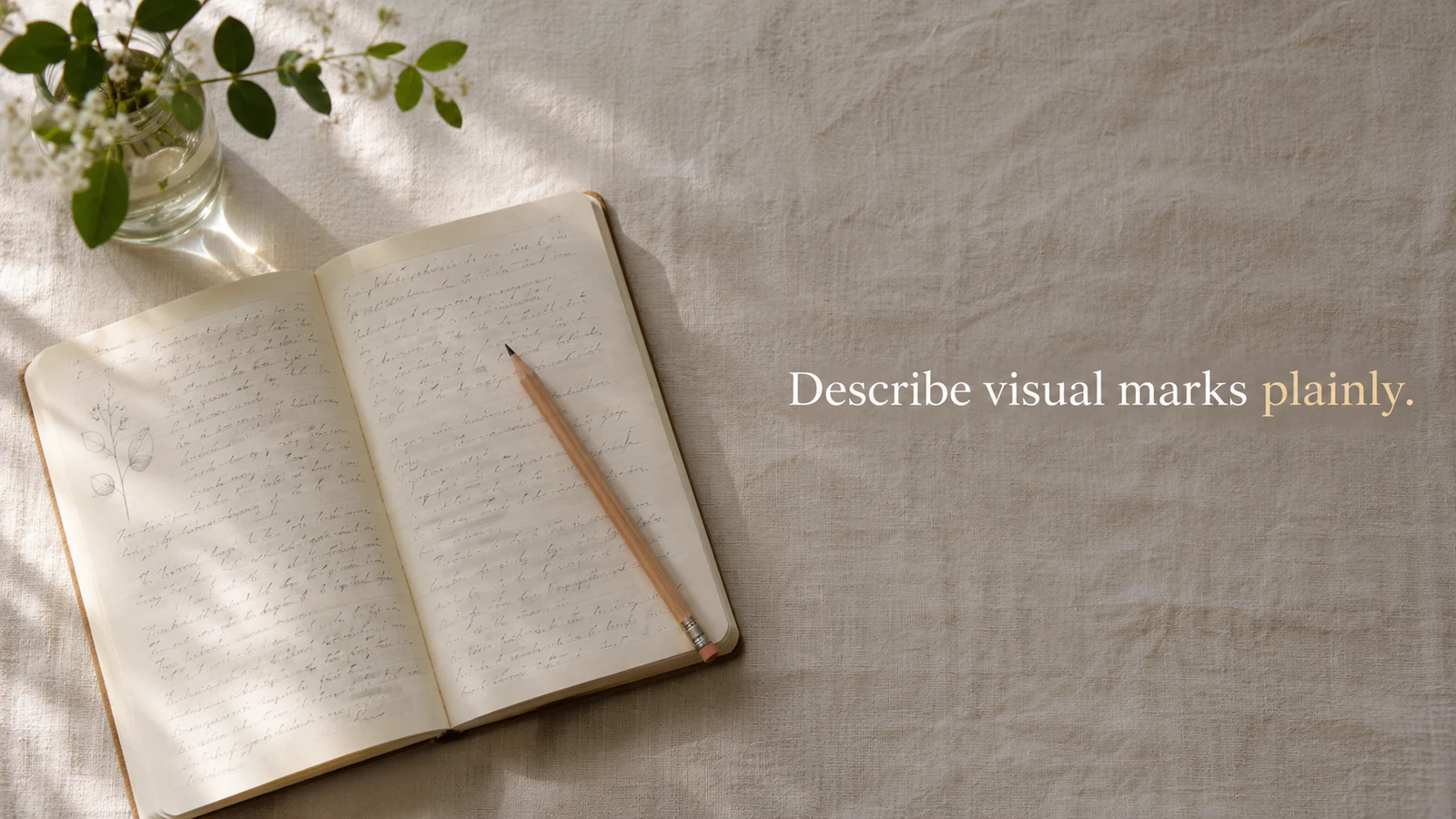
For a heading, a short pause and a spoken heading may be enough. For a clearly attached margin note, you could say "Margin note" before reading it, then return to the main paragraph. Explain an uncertain attachment as uncertain instead of putting the words where they make the most satisfying story.
Crossed-out words raise another choice. If you are reading the final visible wording only, state that approach when it matters. If a revision itself interests you, describe it briefly before reading the retained phrase. Spoken punctuation for every mark would usually be a different project; select the detail your listening purpose actually needs.
A sketch can remain outside the audio edition. Alternatively, add a short description labelled as today's description. "There is a small drawing beside this paragraph" identifies a feature. A new interpretation of what the drawing means belongs to your present commentary, not automatically to the earlier entry.
Arrange the page so the reading remains ordinary
Place the source where you can follow it without holding an awkward position. A familiar table or an ordinary seated arrangement may fit. Keep the recording device where its actual instructions allow and where you can use its controls comfortably. This exercise requires no new microphone or studio setup.
Check the real start, stop and saved-playback controls before using personal material. If you want a separate preliminary check of whether a saved recording is audible, use the voice-journal audibility guide. That checks the recording arrangement; this article's task is representing the written source.
Choose a place where your reading and playback will not capture or disclose other people's conversations. If the circumstances are unsuitable, another time or a written format remains available. The article does not establish that a service keeps a recording on one device or that a private label supplies a technical access safeguard.
Check which source you are working from
For the separate audio-to-text task, explore SoulFul GLO's voice-transcript checking guide. Choose it when a recording is your source, rather than applying a transcription process to a reading you have not made yet.
Read at a pace that lets you follow the page
Use an ordinary voice and a pace at which you can keep your place. You are making a personal audio edition, not performing a polished narration. Pauses, a natural breath and a moment spent finding the next line can remain in the recording when they do not obscure the passage.

If you lose your place, pause through the actual control if available, or stop and decide where to resume. Avoid guessing the missing sentence from memory. A readable source gives you somewhere to return. If you start a new take, keep track of which saved recording you intend to compare.
A spoken correction can be simple: "I read blue; the page says green." That makes the reading error visible to a later listener. If you prefer to redo the passage, check your tool's actual behaviour first. A trim, replacement or deletion may affect a different span from the one you intended.
When you reach the selected ending, stop the reading. A present-day thought can be recorded separately or clearly introduced as a new comment. Finishing the passage does not require an interpretation, a lesson or a verdict on the person who wrote it.
Compare the saved audio with the selected source
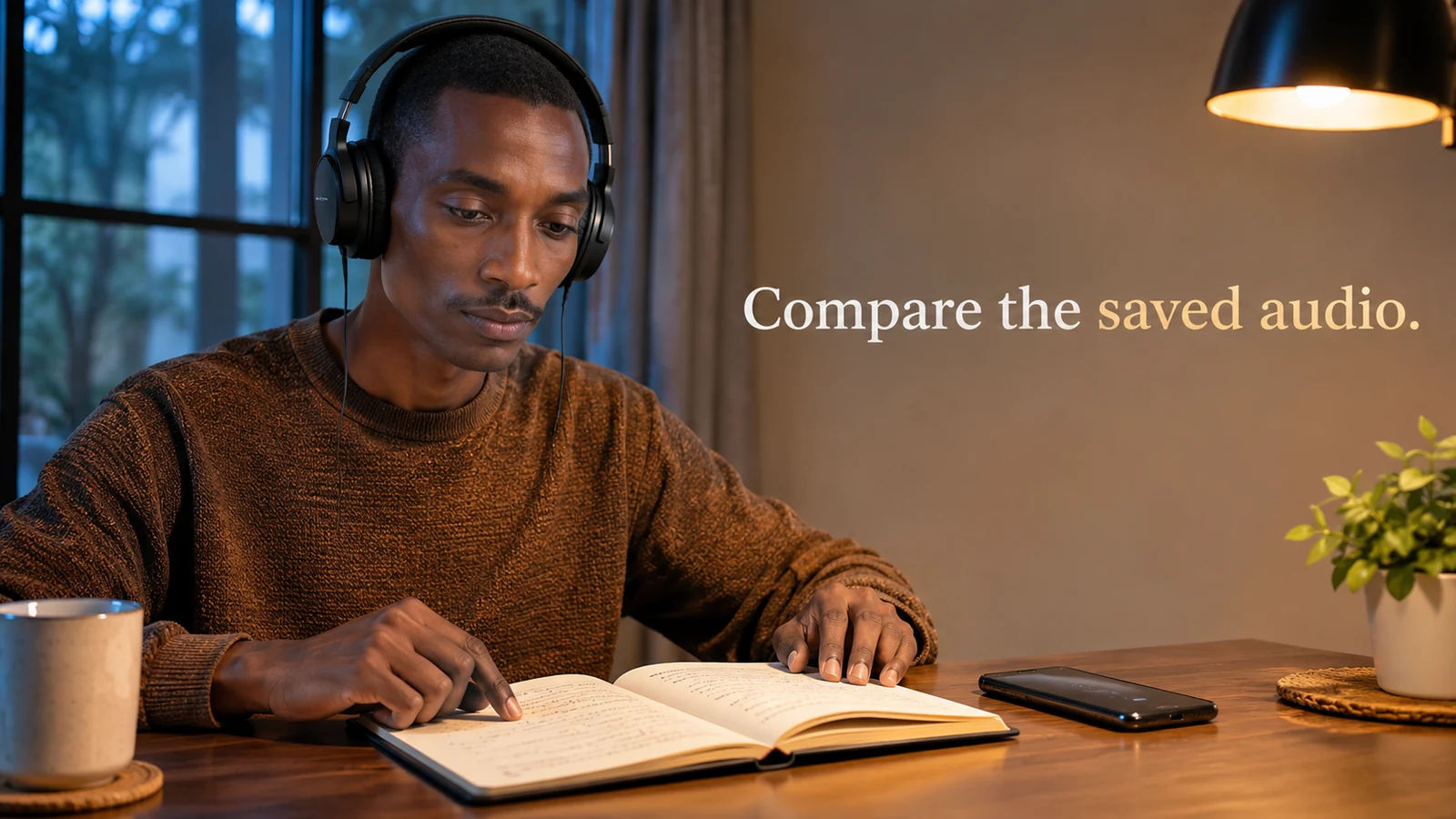
Open the actual saved recording, rather than relying on what you remember saying. Listen while following the page from the selected beginning to the selected ending. Check for a skipped line, a repeated section or a small word whose omission changes the meaning.
The University of North Carolina at Chapel Hill's Writing Center handout on reading aloud discusses hearing written work in an educational revision context. It also notes that a reader can unconsciously smooth over wording. That is relevant context for checking what was actually read, not evidence that this personal audio-edition method produces a health benefit.
Look deliberately at negatives, qualifications and sequence words. "I did not move the plant" differs from "I moved the plant." "Before" and "after" can change the order of an account. The comparison concerns the relationship between the page and the recording; it does not certify the accuracy of the event described in either.
Check your treatment of visual features and omissions too. Does the spoken label identify the adapted passage accurately? Could a later listener mistake today's sketch description for an earlier written sentence? Make a modest correction or a separate clarification when it serves your purpose, then replay that affected part.
A fictional example: reading a project note
The following writer and entry are invented. Eva selects two paragraphs about a paper model she made at home. She chooses a close reading. The page includes "I might try a wider base," but she hears herself say "I will try a wider base" in the saved audio.
She returns to the source and records the selected passage again, keeping "might." Her purpose is retaining the earlier tentative wording. She has made no new promise about the model, and the correction says nothing about whether one base would work better than another.
Eva also notices a small sketch beside the paragraph. She leaves it outside this audio edition and says so in the opening note. One chosen passage can have a clear boundary even when the notebook contains other material she might someday want to hear.
A fictional example: making an adapted reading
Another invented writer, Arun, chooses an entry about a library visit. The page contains a paragraph, a book list and a separate later note. He wants only the paragraph in audio. He introduces it as a selected reading and leaves the other two parts out openly.
During playback he finds that a personal aside interrupts the reading. He decides to keep the aside as separate current commentary, using the actual editing arrangement he understands. He checks the resulting saved version instead of assuming that the intended edit affected only that sentence.
These fictional choices illustrate the difference between a close reading, a selection and a later comment. They are not accounts of customer results or evidence that listening is better than reading. Your preferred edition may retain more pauses, more source detail or no commentary at all.
Keep the source and edition distinguishable
Retain a short description of what you made: selected entry, reading date and whether the wording was adapted. Use a storage arrangement you understand and consider what material you want to keep. This guide supplies no universal retention rule or promise that a recording replaces the page.
For a separate check of access and content choices, read the shared-household journaling guide. Audio and text can expose information differently; choose what fits your circumstances before multiplying personal copies.
Frequently asked questions
Does the reading have to sound professional?
An understandable personal reading can contain ordinary pauses and corrections. Check the parts that matter to representing your selected source. A polished performance is a separate aim, with extra work this exercise does not require.
Can I change a sentence that sounds awkward?
Yes, if you choose an adapted version and identify it accurately. For a close reading, retain the original wording or separate a later explanation. The label should describe what the saved audio actually contains.
Is this the same as transcribing a voice journal?
No. Here a written entry is the source and your spoken reading is the new edition. A transcript represents an existing recording as text. The direction of the task determines which source you compare against.
What if recording or replaying becomes uncomfortable?
Stop or leave the edition unfinished. Choose a less personal passage, keep the written entry alone or use support appropriate to your circumstances. Personal journaling is optional and is not a substitute for care.
Explore a format for your own entry
Visit SoulFul GLO's journaling overview to inspect the formats described there. Check current controls directly before relying on a recording, export or access feature. This personal reading exercise can also use an ordinary tool you already understand.