
Quick answer
Before moving, check the description and watch the opening explanation. Look at the starting position, the space and props it uses, and how the teacher demonstrates transitions. Set the device where you can stop it easily. Follow a section only if you can understand how it begins and ends. A recording can be useful for seeing the sequence in advance, and you can choose another one if the preview raises questions you cannot answer.
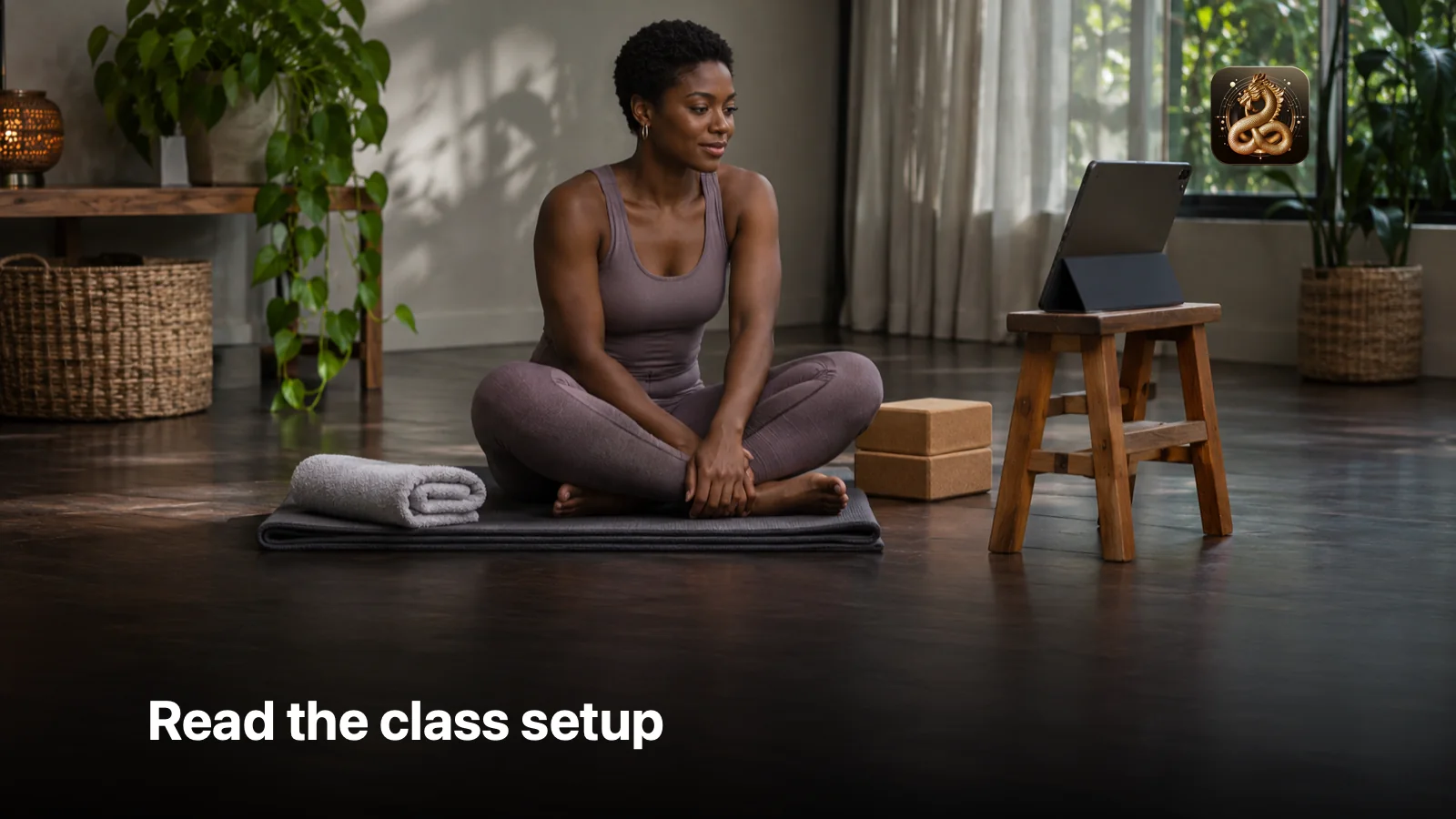
Find out what the video expects you to bring
The title may tell you that a class is gentle or short. Read a little further. Does it start on the floor, in a chair or standing? Are props listed? Is there a separate demonstration? If the description names a block, have the right prop available or choose an option that clearly explains a suitable alternative. Guessing what a prop is for while following the class makes it harder to see the teacher's next instruction.
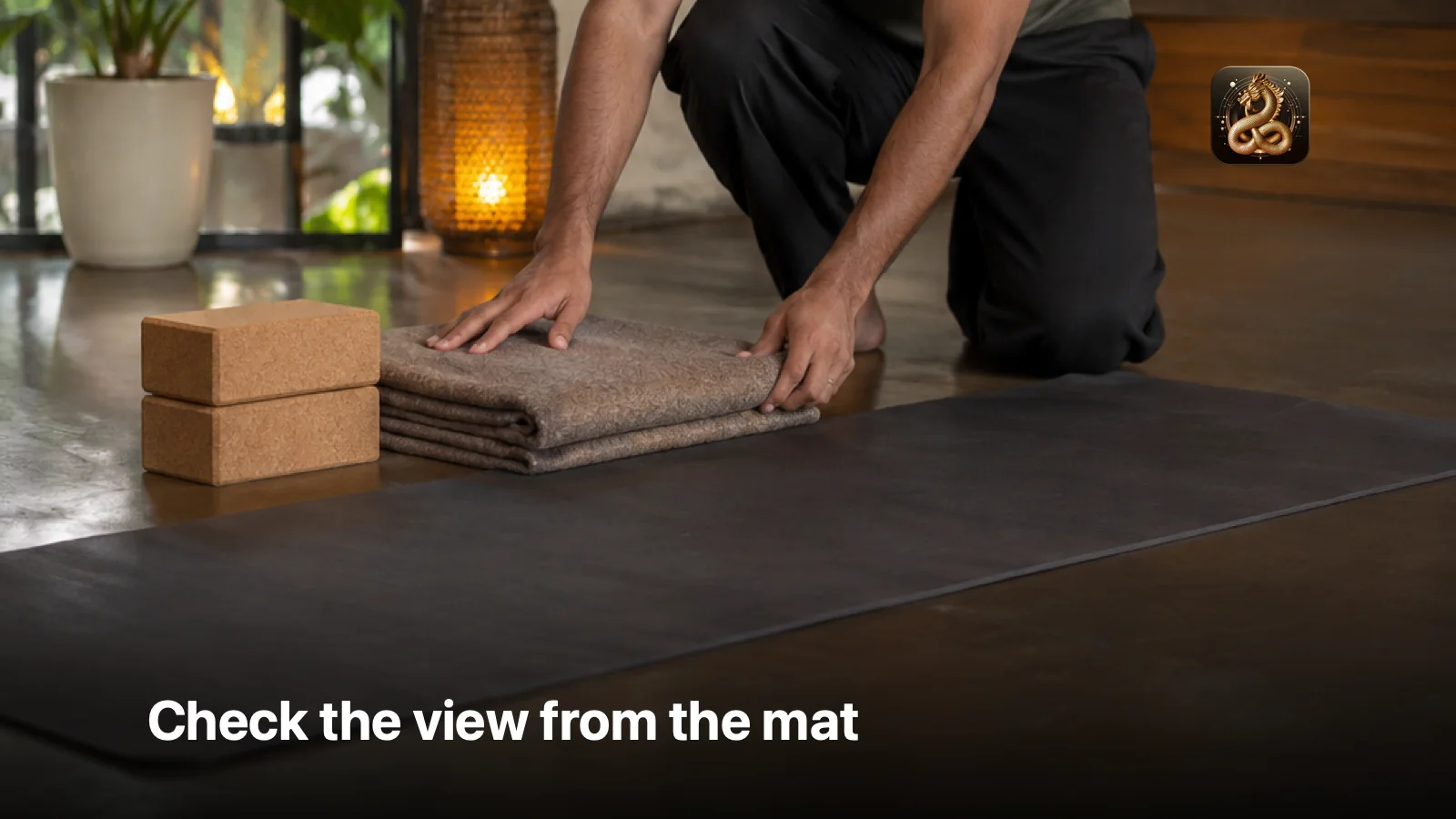
Check how you will watch. A phone leaning against a wall may be fine for the first seated explanation and impossible to see once you stand. Set it down securely and check the screen from the places where you will actually need it. Keep enough room around you to stop, turn or move the device without navigating around furniture.
Preview a transition as well as a pose
A clear still image can show what the final shape looks like. The part you need may be how the teacher gets there. Watch one transition without moving. Notice where the teacher puts a hand, whether they move a prop, how much time is given, and where the next instruction begins. If the clip cuts directly to the final shape, look for an explanation elsewhere in the recording or choose a different class.
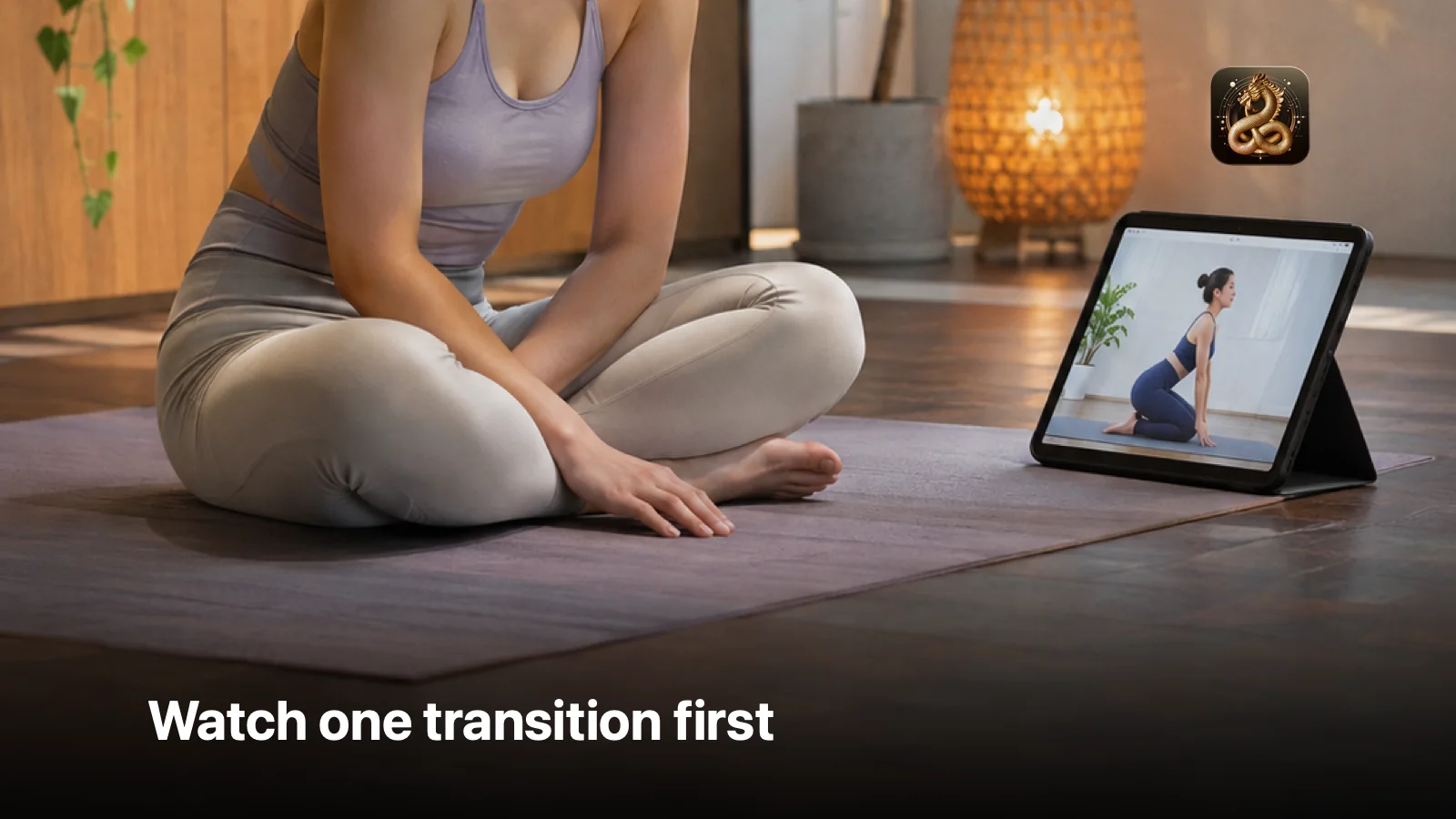
The same check works near the end of a sequence. A section may end with the teacher saying “come back the way you came.” If you cannot reconstruct the movement at a pace you can follow, stop the video and watch the return before you decide to try the section. This is especially useful with a small screen or an unfamiliar camera angle.
Use pause before you need it
While you are still seated or standing comfortably, test how you will pause. Tap the screen once if it hides the controls. If you are casting to a television, put the remote somewhere accessible. Know what playback does when you go back a little. Some players jump in large steps, which can make replaying a single instruction awkward.
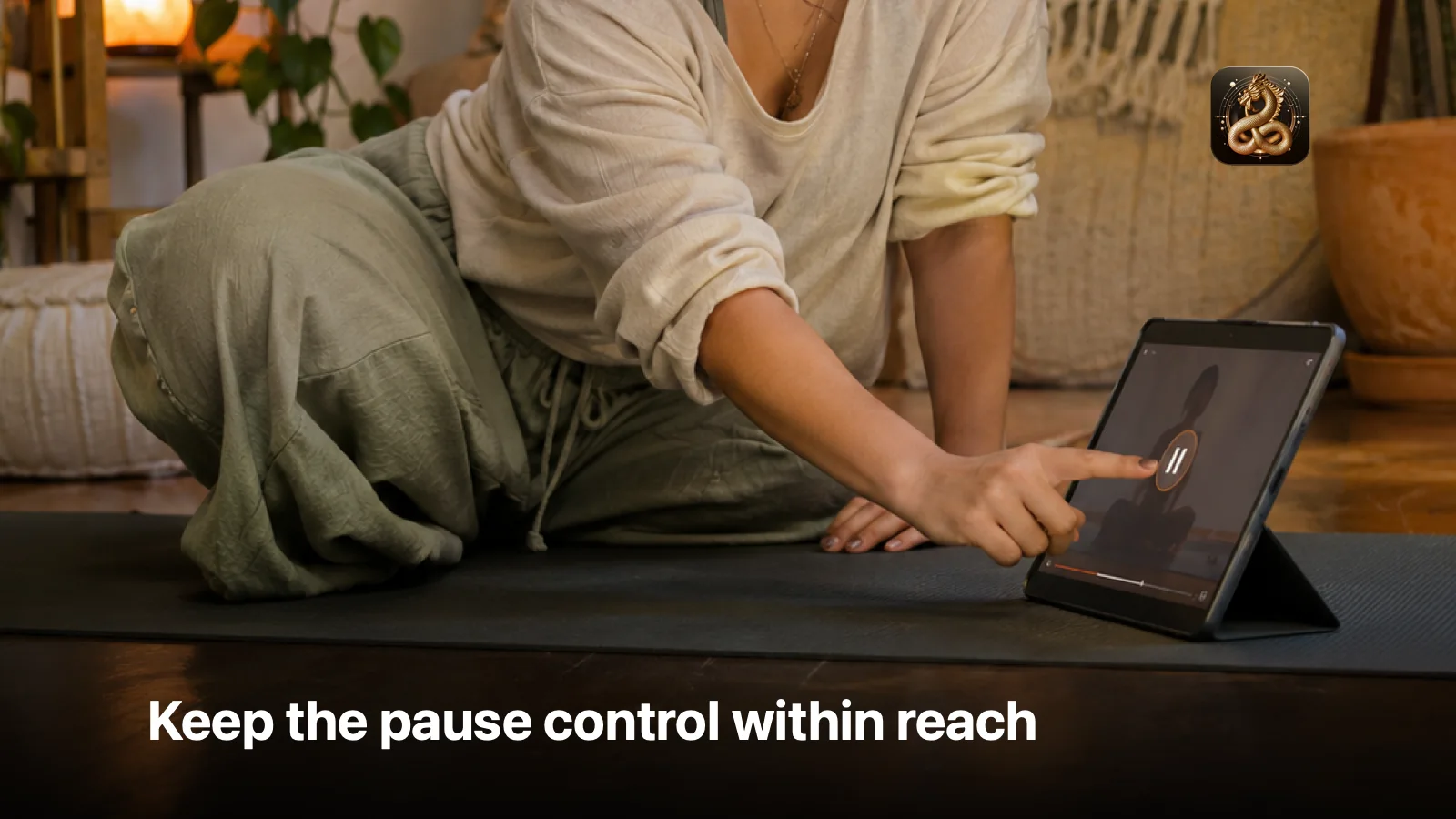
Start with one part that you can follow. If you miss a cue, stop where you can do so comfortably and check the recording. There is room to replay from the last clear instruction or to end the sequence there. Playback speed is a convenience only when it preserves understandable cues and the time you want for your own movements.
Check the equipment list. If the teacher names unfamiliar items, use what to ask about yoga props before class to decide what you need to find out before attempting the video.
Two ways a preview can change your choice
Asha opens a twenty-minute class on a laptop. The first pose is easy to see, but during a transition the teacher turns away from the camera and gives a quick verbal cue. Asha watches that passage from the chair and decides the sequence would be hard to follow in the available space. A different video has a clear side view and uses a chair already available.
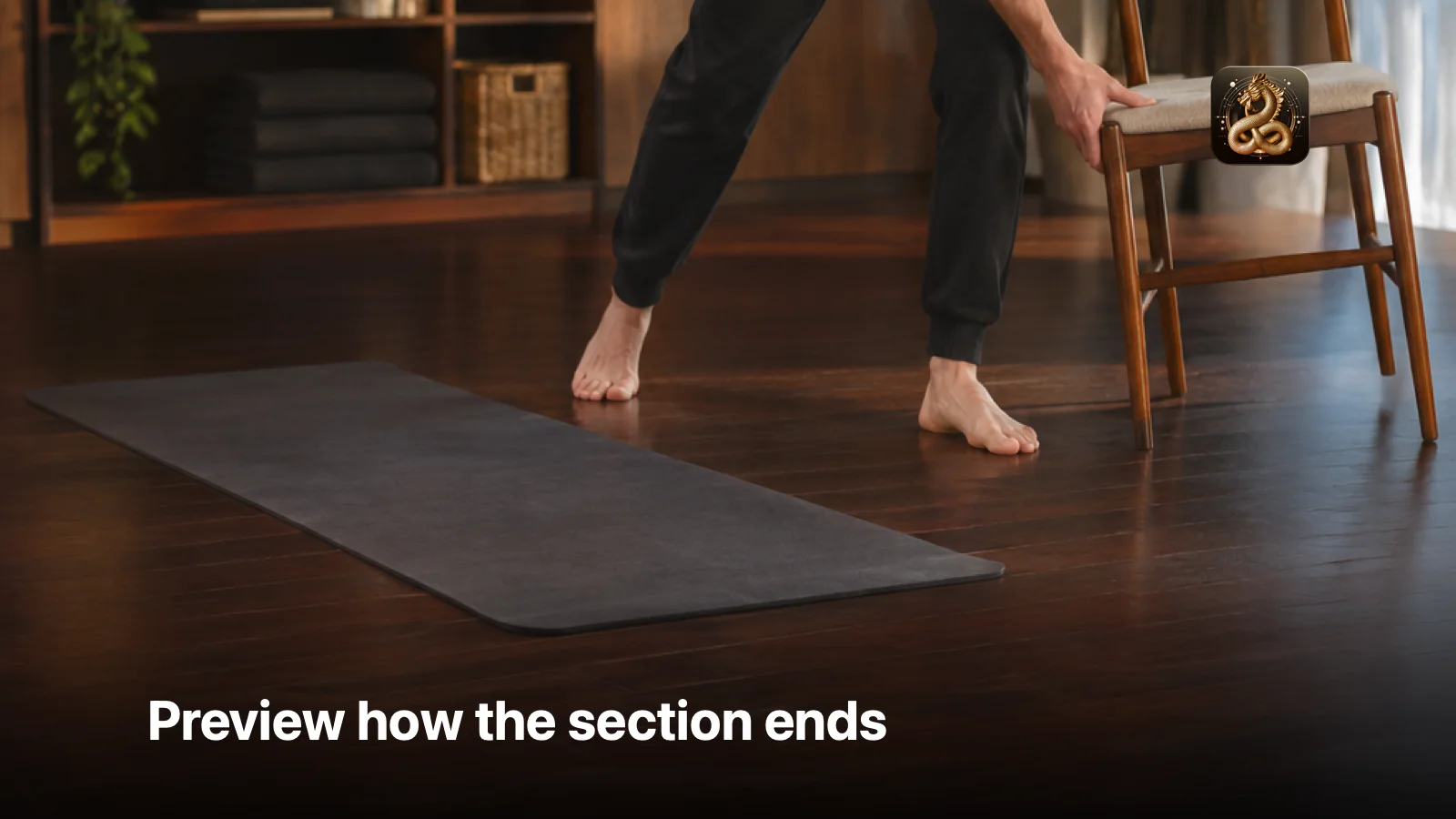
Lee selects a short standing class and puts the device on a stable shelf. The preview shows when the teacher steps back and where the section ends. Lee clears a bag from the floor and follows the first section. When the next sequence introduces something unfamiliar, Lee stops and watches. Ending there is a workable result of the preview and the first attempt.
Keep a useful note for a later session
If you want to try the video again, leave yourself a note that helps with setup. “Put the screen to the left before the standing section” is more useful than “hard video.” You might also note that the prop demonstration starts before the class does. Keep only details you can act on.
If the instructions repeatedly require guesswork, record that too. A labelled level may be accurate for another participant and still leave you without enough information. Choose a video that fits how you want to learn today. When personal movement questions need a qualified answer, a recording cannot observe your movement or respond to you individually.
Check the directional cues. If the main issue is the view of the instructor, see left and right cues in a yoga video before trying a new arrangement.
Check the preview before setting up the room
Start by finding the beginning of the actual practice. Some recordings include a greeting, a sponsor message or a description before the first movement. Notice where the teacher starts giving instructions and whether the video shows the whole position clearly. You can leave the mat rolled up while you decide if the sequence suits your space.
Look for the parts that are likely to affect your setup. A seated beginning can lead to standing movement, a turn toward the short edge of the mat, or time spent lying down. A video that begins quietly may still need more floor space than its opening suggests. The useful question is how you would set up for the movements you can actually see.
If the instructor has a brief equipment list, use it as a starting point. Then check when the props appear and how close you would need them. If the video uses a chair in the middle, find out whether the chair is used for sitting, support or something else. You can choose another recording if you cannot set up what the instructor demonstrates.
Decide what you need to see and hear
A clear camera angle helps when you want to know where a hand or foot goes. If the teacher moves out of frame or the cut removes part of a transition, note where that happens. Replay the short section to see whether the spoken instruction supplies the missing detail. If it still feels unclear, choose a different segment.
Pay attention to the time between a cue and the movement that follows. A phrase can be clear on its own and still arrive later than you expect. When the teacher demonstrates first and names the movement afterwards, you can watch once before following. A recording is useful only if you can use the information at a pace that works for you.
Check the position of your screen before you begin. If you would have to turn your head sharply to look up from the mat, move the screen or use a section with instructions you can follow by listening. You can also pause to look, then set the device down before trying the movement. The preview is a chance to notice these practical details.
Make a plan for the first transition
Choose one moment where the sequence changes position, and watch what happens immediately before and after. You might notice that the instructor spends a moment arranging a prop, or turns the mat before standing. A transition becomes easier to plan when you know what the teacher asks you to do first.
Think about where you could stop if you need more time. A clear stopping point might be standing still, sitting down or staying in the previous position. You can pause the recording from that point. Avoid relying on a later explanation to clarify a movement you have already started.
If you are considering an alternative that the instructor shows, preview its transition as well. A different version of a pose may be introduced quickly and followed by a separate instruction. Watch that part once so you know whether it is included in the next cue. If the recording does not explain it, you can skip that section.
Use a short test instead of committing to the whole video
Try a few minutes only when the room is ready and the opening instructions make sense. You can begin with the parts you have already watched and stop at your planned point. Check whether you could hear the cues and whether the screen was easy to see when you needed it. These details help you decide what to try next time.
A useful test can end before the first unfamiliar move. You may discover that the video works for a different time of day or a room with more space. You can also choose a shorter sequence from the same instructor. A preview gives you information about a recording, and it is fine if that information leads you to set it aside.
Keep the note brief if you want to return to it. Write the title and one time marker, such as the first change to standing or the point where a chair is used. Record what you needed to check at that moment. A practical note is easier to reuse than trying to remember the whole sequence.
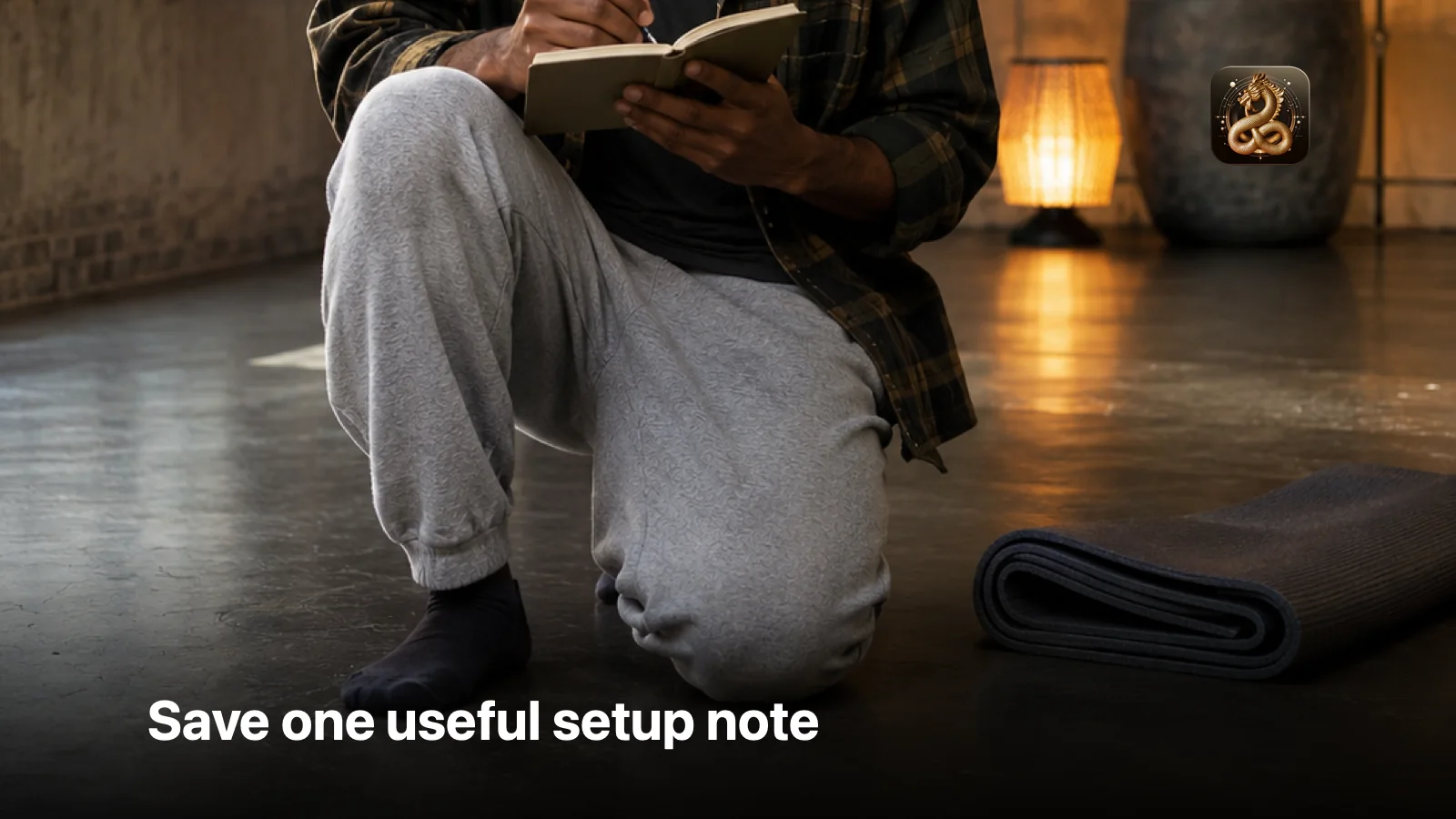
When you choose another video, use the same short preview. Find the actual start, check a transition and identify a place you can stop. If you already know the instructor or the type of class, you may need less time. A few minutes of looking can still tell you whether the next recording fits the room and the practice you want.
For a second preview, imagine where you would be during the first unfamiliar movement. Would you be able to pause from there? Would you see the instructor when the camera changes? If the answer is unclear, watch the transition again while you are still off the mat. You can then start at a section you already understand, or choose a recording with clearer cues.
Frequently asked questions
Do I need to preview the entire video?
Begin with the opening and the first section you want to follow. Preview more when the format changes or a new transition appears.
Can I pause during the class?
Use pause as a normal part of following a recording. Pause when you can do so comfortably, then watch from a stable position.
What if the description says no props but the teacher uses one?
Watch how it is used and listen for a clear alternative. Choose another section or recording if the prop is essential and you do not have it.
Can a good preview tell me whether every movement is suitable?
A preview helps you see the instructions and setup. Suitability also depends on your own circumstances and how the movement feels. You can skip a movement or seek individual guidance as appropriate.