
A plant outside your window has changed, but you cannot quite remember how it looked last week. A dated observation journal gives you something specific to compare: the outline of a leaf, a patch of colour or a count from one view. You can begin with a plant you recognise even while its species name remains unknown.
The purpose here is a dated record of one external subject that you can recognise again. Keep what you actually observed beside the circumstances of that observation. On a later occasion, return to the same subject and compare the records. You can write entirely in prose; drawing and personal reflection are optional.
Quick answer
Choose one accessible plant or natural feature that you can observe without handling or disturbing it. Give it a practical reference, record the date and viewing context, then describe a few visible details. Keep possible explanations and identification guesses separate. If you return, make a new dated entry before comparing it with the earlier one.
Use this four-part framework: subject, occasion, observation, open question. The subject tells you what the entry concerns. The occasion records when and from where you looked. The observation preserves a detail you could actually see. The open question holds what you cannot yet establish. These labels organise an ordinary personal notebook, not a scientific monitoring programme.
Choose a subject you can recognise again
Start small enough that the reference stays clear. One plant in a particular pot is easier to revisit than every green thing outside a window. A visible branch beside a gate can also work. Choose a place you may use normally and a view that does not require climbing, leaning over a barrier or entering private ground.
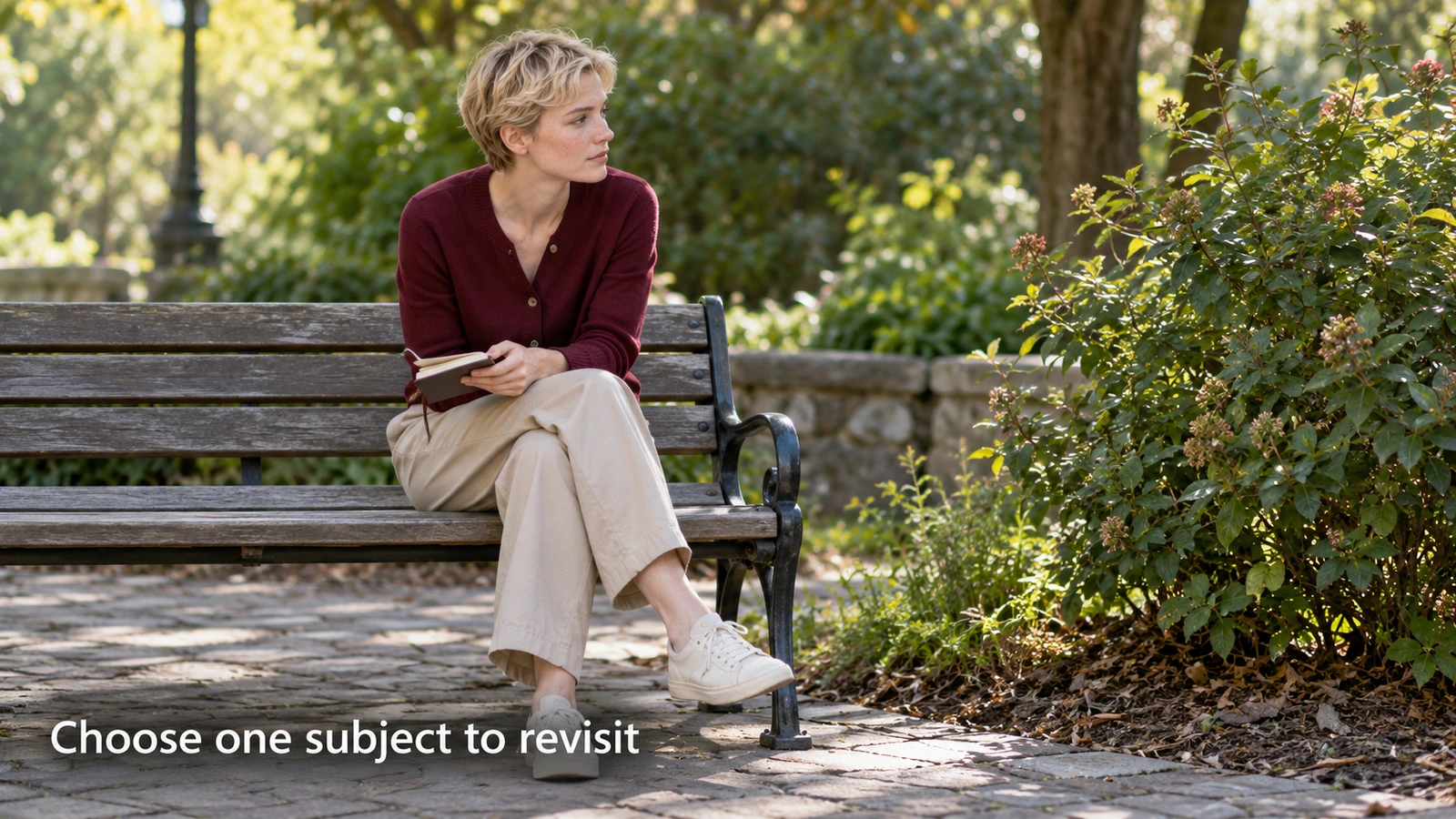
A subject can come from an ordinary view at home or a permitted garden. An indoor plant already in the room can also work. For a first entry, choose a detail you can find within the larger subject: a fork in a branch, a window-facing leaf or a particular cluster beside a gate. That detail helps you check which part you revisit.
Give the subject a plain temporary label: "plant in the clay pot beside the window latch" or "branch above the left side of the gate." Add the detail you will use to recognise it. This label connects your notes while the species remains unknown. If similar plants make the reference ambiguous, choose a clearer subject.
Record the occasion without making a location dossier
Add the date and a useful description of the time or conditions. "Tuesday afternoon, overcast, viewed from the kitchen" may be enough for your purpose. Do not invent an exact temperature, observation time or measurement you did not record. Approximate descriptions can remain approximate.
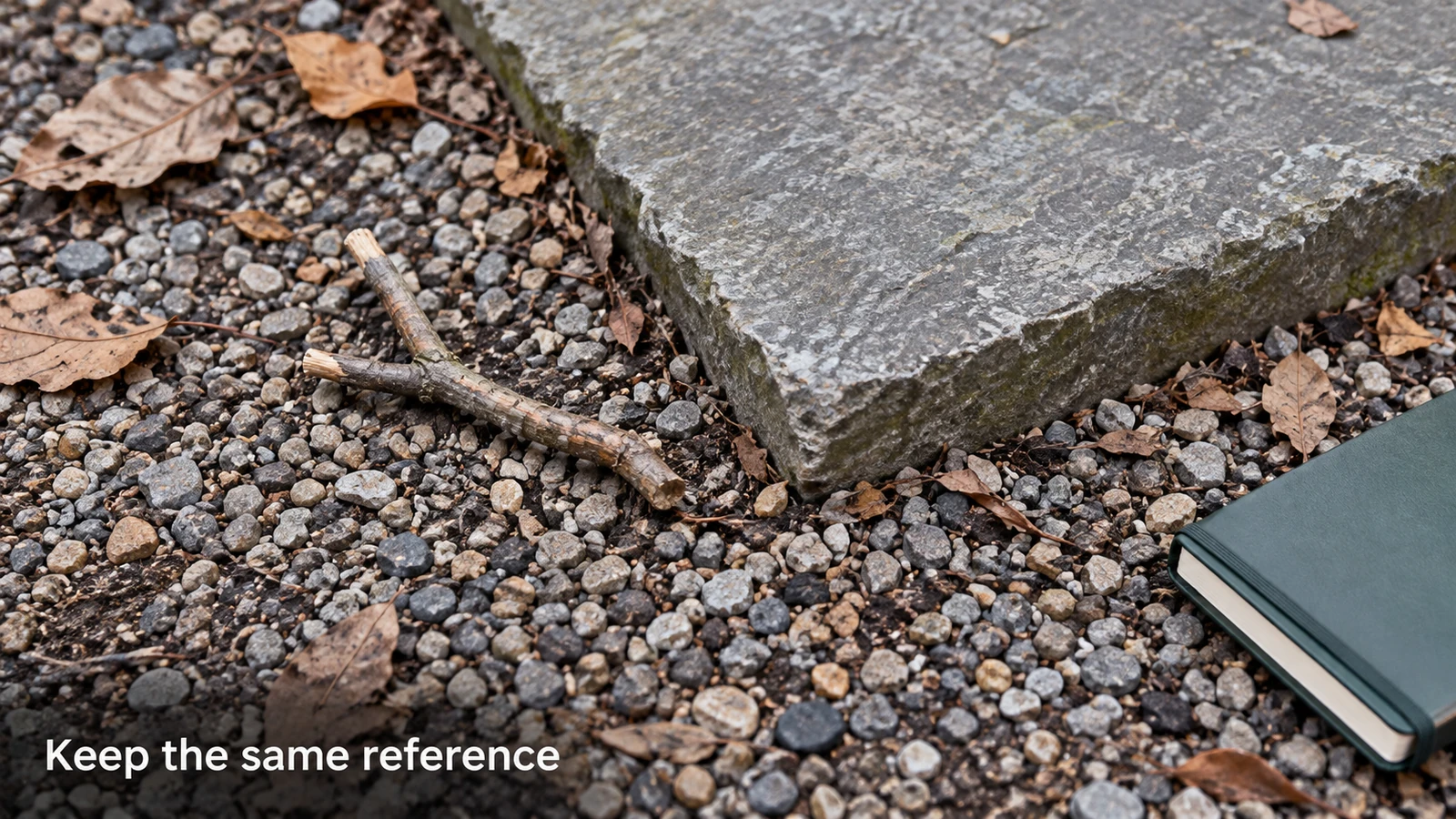
Include the viewpoint when it affects what you could see. Looking through a closed window differs from standing beside the pot. A curtain, reflection or crowded view may hide part of the subject. Record that limitation beside the description: "Viewed through glass; the reflection hides the lower leaves" makes the boundary available when you return.
Keep location details proportionate to a private notebook. A household reference may help you return without recording an address. Before sharing a page or photograph, consider whether it exposes your home, another person or a location you should not publicise. This method does not require publishing observations, uploading coordinates or creating an account.
Describe details before explaining them
Choose a few features you can describe directly: an outline, a colour, a visible number or a position relative to another feature. Write "three pale marks on the leaf facing the window" if that is what you saw. Avoid turning it immediately into a claim about disease, insect damage or the cause of a colour change.

Keep the boundary of a count visible. "Four leaves visible from this seat" does different work from "the plant has four leaves." The first describes your view; the second claims a total. Likewise, a rough comparison such as "longer than the leaf beside it" is not a measured length.
You can note an ordinary impression while marking it as an impression. "It looked lighter than I remembered" preserves uncertainty about memory and light. "It became lighter" asserts a change that the entry may not establish. The journal can contain both a description and a question without resolving the difference today.
If you prefer a drawing, use it to locate the detail and add words where they prevent confusion. A small outline with "pale area near this edge" can show which part the sentence concerns. Keep the subject reference and date beside it so the words and image belong to the same observation.
Give uncertainty its own place
Use a temporary description for an unfamiliar plant. If you later consult an identification source, add a dated note naming the source and the feature you compared. Keep the original description intact. "Possible identification, based on leaf shape" distinguishes that later suggestion from the leaf details you observed at the time.
Keep an identification question separate from a causal question. "What plant is this?" differs from "Why is that leaf folded?" Naming the plant would not automatically answer what happened to this leaf on this occasion. The notebook does not need either answer before you can record what you saw.
This guide involves observation without collecting, tasting, feeding or handling wildlife or unfamiliar plants. Do not move a subject or remove a leaf to improve the entry. Follow the rules of the place you are using. If a view is unavailable, leave the observation undone rather than trying to gain access for the notebook.
Return to the same subject, then compare
On another occasion, check the subject reference first. Look for the same plant or branch and the detail that identifies it within your notes. A container or position alone may now hold something else. If you cannot establish continuity, say so and start a separate entry. Record a changed viewpoint before making comparisons.
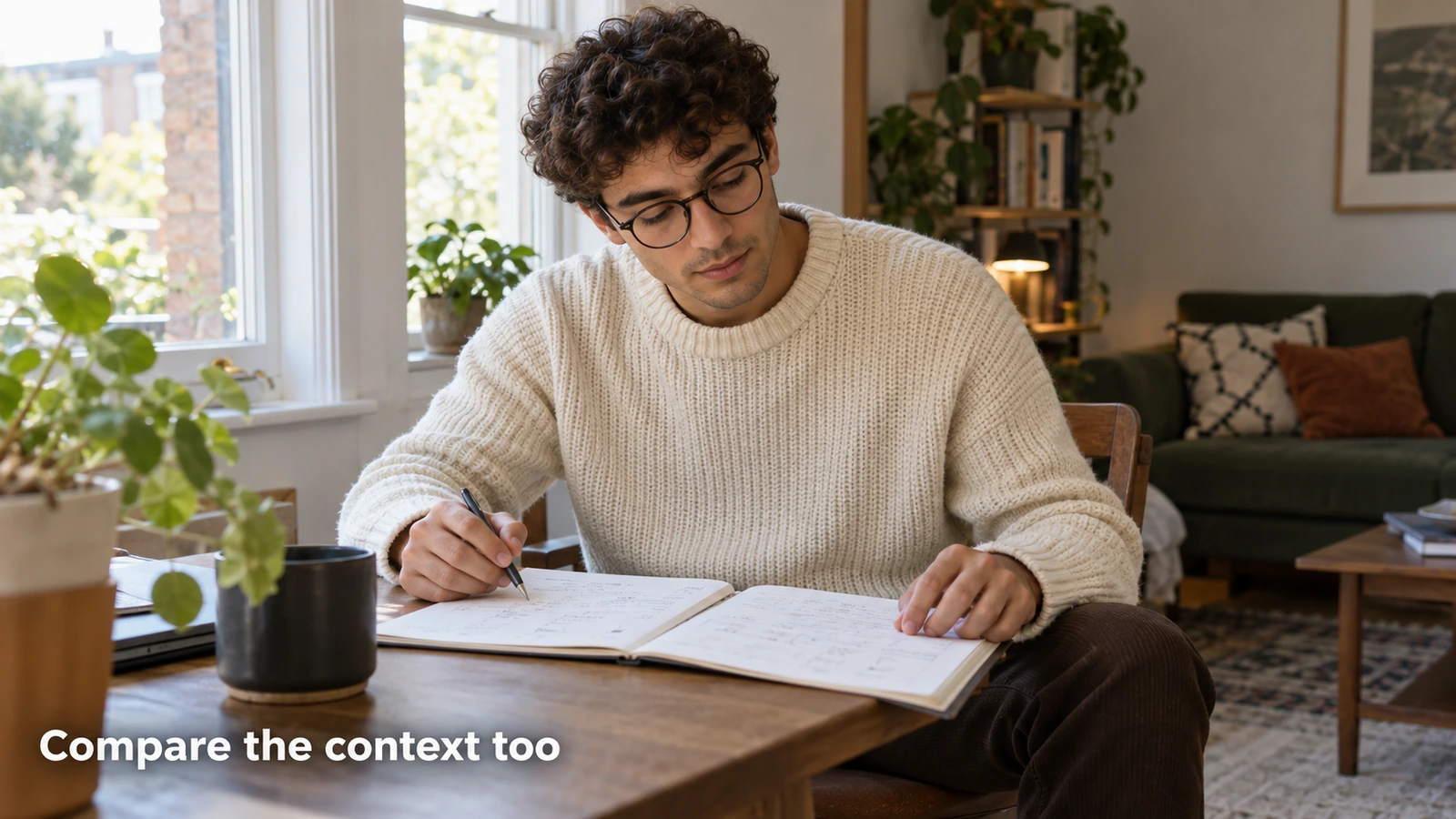
Describe the current view before reading the earlier description closely. Then compare one named detail using three short lines: Earlier observation; Current observation; Comparison limit. For example, 'two pale marks on the window-facing leaf; two marks visible today; a reflection hides one edge' retains what can be matched and what cannot. This illustrative comparison does not establish that the marks are unchanged in size or cause. If you cannot recognise the same leaf, write 'detail not matched' rather than forcing a comparison from a similar-looking leaf.
A changed record does not automatically establish the cause of a change in the subject. Different lighting, viewpoint, attention or visibility can matter. Even when a change seems clear, two informal entries do not explain its mechanism or establish a wider seasonal or ecological pattern. Keep the claim close to the evidence you actually retained.
If you want a separate method for reading older personal writing, explore SoulFul GLO's guide to reviewing old journal entries. It addresses context and present-day interpretation when the object of the review is your earlier writing.
Fictional example: the plant beside the window
Leena is a fictional reader who wants to remember a particular plant rather than identify it. Her first entry reads: "4 May, late afternoon. Clay pot beside the kitchen window latch, viewed from the same chair I use for breakfast. One leaf facing the window has two pale areas near its edge. I cannot see the back of the plant. I do not know its name."
Her return entry reads: "11 May, morning. I recognise the same window-facing leaf by the two pale areas near its edge; the pot remains beside the latch. Today the room is brighter and the window is open. I notice a smaller leaf behind it, but I do not know whether it was already there on 4 May."
Leena can compare the described leaf across the two entries. The newly noticed leaf remains a question because her first view was incomplete. On another occasion, she could look for that smaller leaf using its position behind the one with pale areas, then record whether she can recognise it. The entries preserve what remains unresolved as well as what she saw.
Fictional example: the branch above the gate
Mateo is another fictional reader. From a public path where stopping is permitted, he writes: "18 September, after lunch. Branch above the left side of the gate, viewed from the path. Several yellow leaves among green ones. I counted five yellow leaves in the visible section before losing track. The far side is hidden. I wonder whether the colour will look different next time."
On returning, he writes: "25 September, after lunch. Same branch reference. A parked vehicle limits my view from the earlier position, so I remain farther along the path. Yellow leaves are visible, but I cannot match the section I counted. I have not repeated the count." He leaves that comparison open.
Mateo stays on the permitted path and records the viewing limitation. His second entry leaves the earlier count unmatched, which tells him why the numbers cannot be compared. Both readers and all dates, plants and observations in these examples are fictional illustrations of recordkeeping.
Keep the notebook useful at its actual scale
After a gap, begin with the next observation's actual date. A month between entries is simply a gap in this record. Describe what you can see now and leave the intervening period unrecorded. If you no longer recognise the subject, state that before deciding whether to start a new reference.
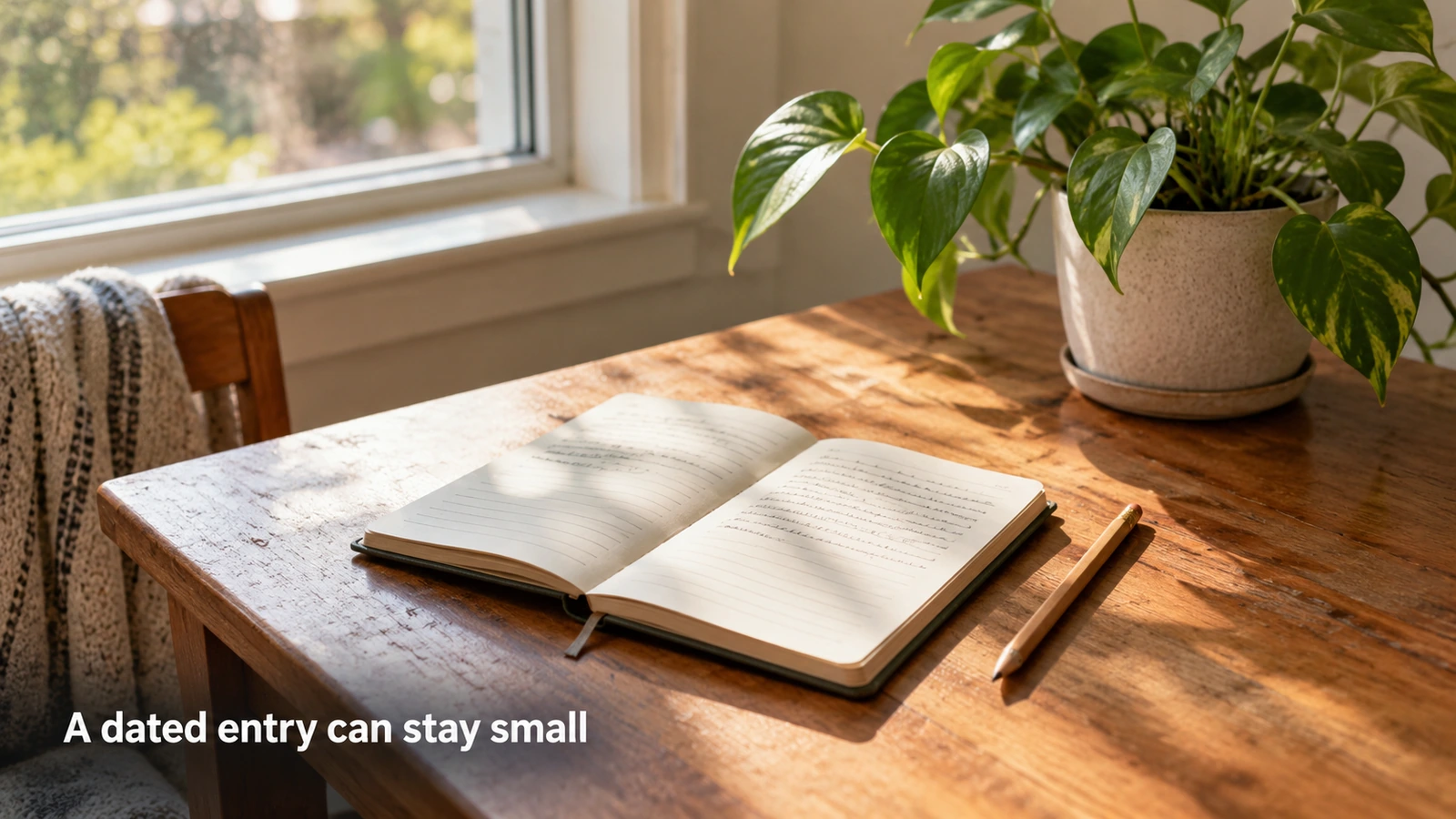
Connect entries with a subject label and an earlier date or page number. For Leena, a later page might point to "window-latch plant: first entry 4 May; return 11 May." This gives her a route back to the two descriptions without copying them into each new note. If she begins observing another plant, a separate label keeps the records apart.
Frequently asked questions
Do I need to know the species?
No species name is required for this private observation method. Use a recognisable temporary reference and keep uncertain identification visible. If you want to contribute to a formal research project, follow that project's own identification and recording requirements instead of assuming these notes qualify.
Can the entry contain only words?
Yes. Describe the subject and the detail clearly enough for your purpose. Draw or photograph it only when that helps and is permitted. A picture can still omit context, so keep the date and practical reference beside whichever format you choose.
What if nothing seems to have changed?
Record what you observed at the same scale as the earlier detail. "I could recognise the same two marks; the back of the leaf remained hidden" describes a limited comparison. Keep an observation of one visible part distinct from a claim that the whole subject remained unchanged.
Is this a therapy exercise or a scientific dataset?
This is a personal observation practice, not a mental-health assessment or a validated scientific dataset. For a formal project, use its recording protocol; for a health concern, seek suitable qualified support. The framework and examples here are editorial suggestions for a private notebook.
Source context
The Smithsonian National Museum of Natural History's field-book activity teaches dated, situated observations and keeping questions when identification is uncertain. National Park Service nature-journaling guidance discusses descriptive details and different recording formats. This article adapts educational ideas for an adult personal notebook; its particular framework and fictional examples are editorial suggestions.
For writing about your own feelings and needs, explore SoulFul GLO's emotional wellness journal guide. You can choose that reflection format on another page or another occasion, while keeping this observation record focused on the external subject.