
The washing machine is running, someone is making lunch and a conversation carries through the wall. You have a few minutes to sit down, but the room does not sound like the meditation space you imagined. Waiting for complete silence could mean waiting until everyone has gone to bed, including you.
A shared home asks for a different starting point. Instead of treating every sound as an interruption that must disappear, decide what you can reasonably do in the setting you have. You might listen to one ordinary sound, keep your eyes open or choose a pause short enough to fit between responsibilities. Sometimes the practical choice is to stop and respond to another person.
This guide is about arranging a voluntary attention practice around household noise and interruptions. It does not promise that meditation will make noise pleasant, resolve household conflict or treat distress. You can prefer a quieter time without making the current room, or yourself, a failure.
Quick answer: can you meditate in a noisy home?
You can try a short meditation without requiring silence. Choose a comfortable place, identify any responsibilities you need to remain available for and use an ordinary sound or visual point as your optional anchor. When another sound catches your attention, notice it and return if you want to continue. Respond to people or safety concerns normally. Change the practice or stop if the setting becomes uncomfortable.
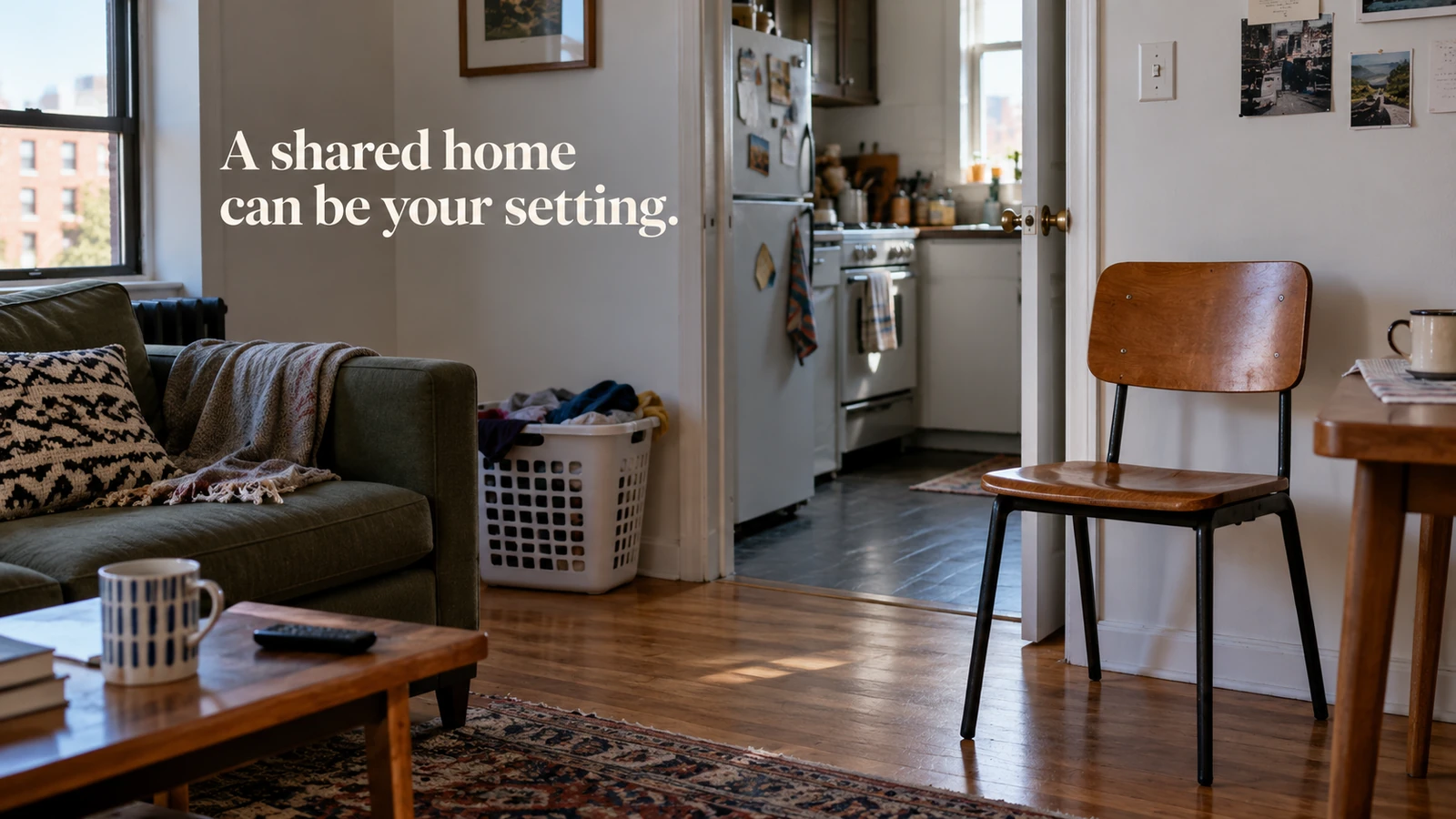
The goal is not to ignore everything. It is to make a manageable choice about attention for a few moments, while keeping ordinary household needs in view.
Separate sound from a responsibility
Not every noise asks you to do something. The refrigerator humming may simply be part of the room. A family member calling your name may require a response. Before starting, make that distinction as practical as possible.
If you are responsible for a child, a person needing care or a task that requires monitoring, keep those needs first. A meditation exercise is not a reason to miss a call for help, leave cooking unattended or make yourself unavailable. A brief pause while another responsible person takes over is a different situation from trying to withdraw while you remain the only person available.
You might also be waiting for a delivery or an important call. Decide whether a short session makes sense while you wait. Keeping your eyes open and your device available may be practical; choosing another time may be easier. You do not need to turn availability into a concentration challenge.
Choose one adjustment that you can actually make
Walk through the room once and notice what would make sitting down more workable. Perhaps a chair farther from the television is available. Perhaps turning away from the kitchen reduces visual reminders. Perhaps a different time avoids the busiest part of the household day.

Choose one adjustment rather than organising everyone else's behaviour. You can ask for a short quieter period when that is reasonable, but the request remains a conversation. Other people may have work, care or rest needs of their own. A shared space cannot always be reserved for one person's preferred practice.
Keep requests specific. “Could we leave this television off for five minutes after lunch?” gives the other person something concrete to consider. “You never let me meditate” mixes the immediate request with a wider disagreement. If a larger household issue needs discussion, address it separately; a meditation session is not a substitute for negotiating shared space.
You do not need to buy equipment to begin. The useful adjustment may be a chair angle, a shorter duration or permission to try later. Adding a complicated setup can make a brief pause harder to start.
Try an ordinary sound as the anchor
A sound anchor is something you choose to notice and return to. It could be rain at the window, a fan or another steady part of the room. You are not deciding that the sound is healing or that it must make you calm. You are simply giving attention a concrete place to return.
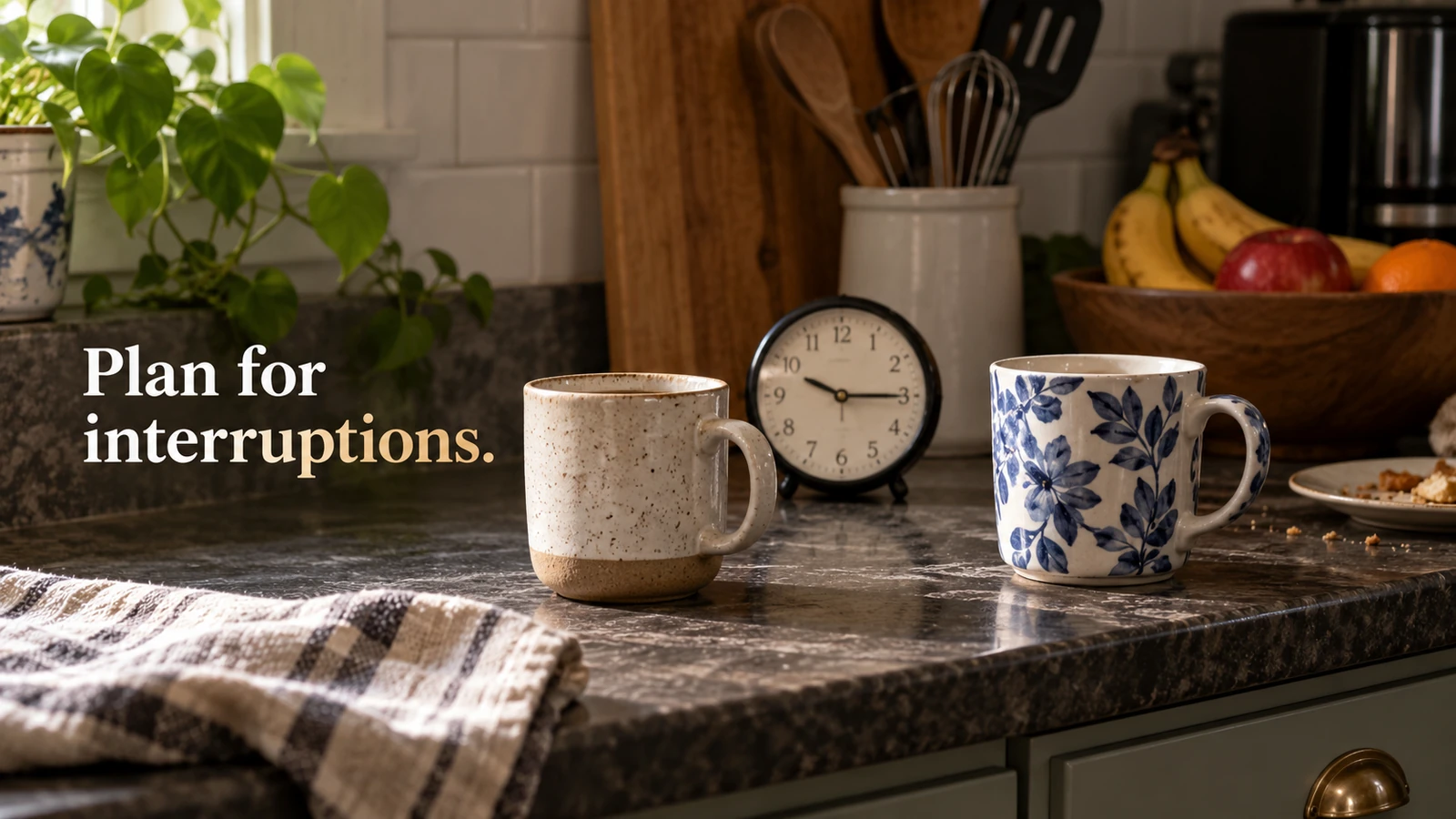
Begin by listening normally. Choose a sound that does not feel unpleasant and does not ask you to take action. Notice one quality: steady, intermittent, nearby or distant. There is no need to count every noise or work out where all of it comes from.
If attention follows a thought about the sound, notice that too. You may start thinking about repairing the fan or checking the weather. Return to listening when you want to continue. If the sound keeps leading into a task, another anchor may be more useful.
You can use a visual point instead. Looking toward a plain area of the room lets you remain aware of your surroundings without making sound the centre of the exercise. Let blinking and ordinary movement happen. The anchor is a choice, not something you have to endure.
A pause that can survive an interruption
Read this example before you start, then leave the instructions aside. The timing is optional. You can finish after a few moments or decide that another setting would be better.
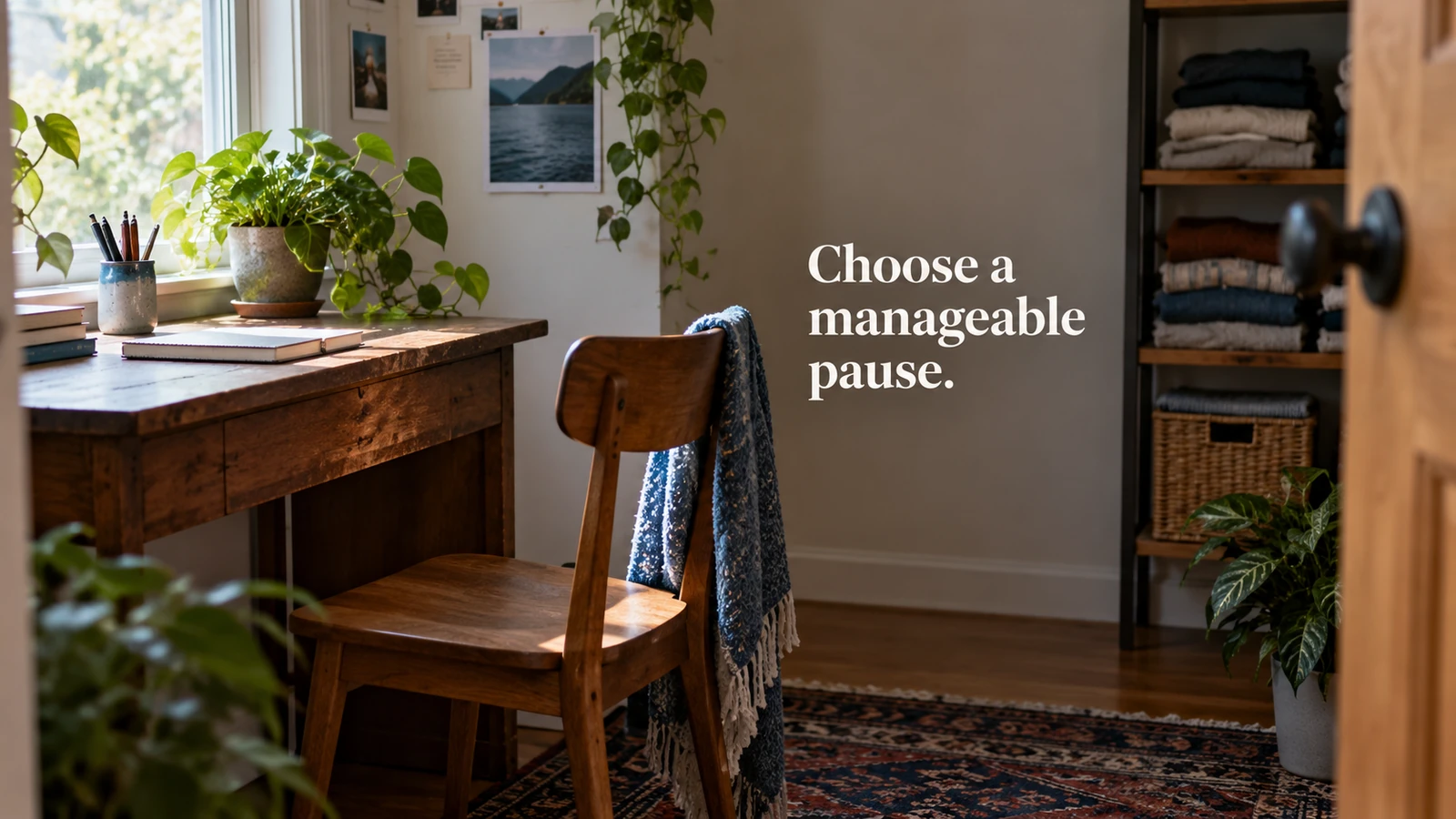
First, sit somewhere comfortable and look around. Notice the room and any responsibilities you are holding. If a task needs attention now, do that rather than trying to postpone it with meditation.
Next, choose one anchor: an ordinary sound, a view of a plain surface or a comfortable point of contact with the chair. Let breathing remain natural. No counting, breath holds or prescribed depth are needed for this example.
Spend a few moments noticing the anchor. When attention follows a thought or another noise, acknowledge the change and return if you want to. You can use a short mental description such as “conversation” or “planning” without analysing it.
If someone interrupts, respond. Afterward, ask whether you still want to sit for another moment. You can return to the same anchor, choose a different one or finish. There is no need to restart a full session to make the interrupted time count.
End by looking around more freely and choosing your next activity. The exercise can finish while the washing machine is still running. A household sound continuing does not prevent you from making a clear transition.
Find small pauses in an ordinary day
For related examples that fit between daily tasks, read SoulFul GLO's guide to mindfulness for busy people. Use the situations that match your life and leave the rest.
Explore mindfulness for busy people
Three shared-home examples
The kitchen is busy
Imagine a reader who has finished eating while their housemate washes dishes. The water and plates are audible from the living room. The reader chooses a chair, notices the room and listens to the steady water for a short time.
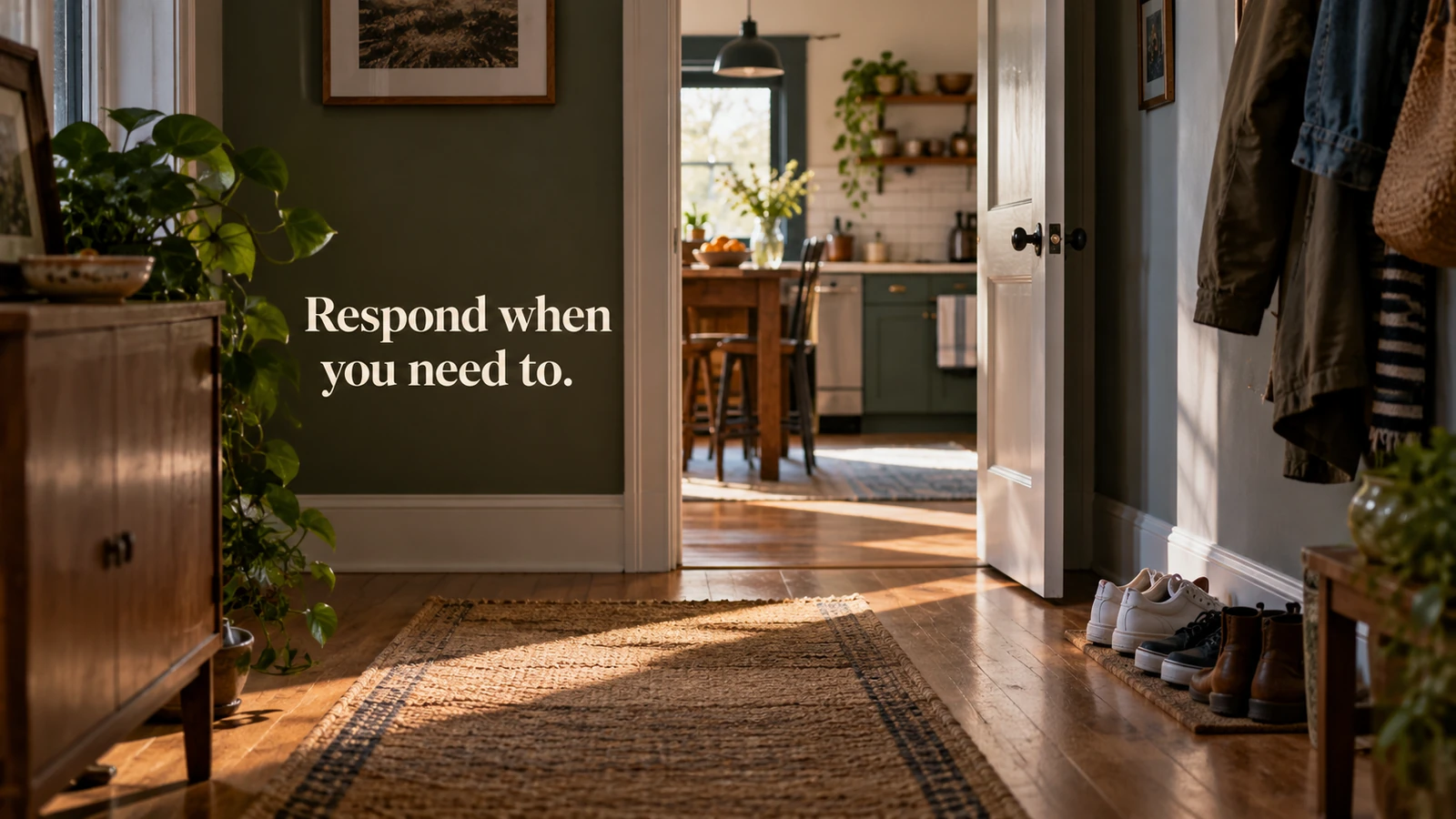
When the housemate asks where a container belongs, the reader answers. They then decide to sit for another moment. The exchange is part of sharing a home; it does not need to become evidence that the pause failed. If the conversation continues, they finish the exercise and participate normally.
Work calls carry through the wall
Another reader shares a small flat with someone working remotely. Speech keeps drawing attention toward the meaning of the conversation. Trying harder to ignore the words makes the session effortful.
They choose a different time, after the call, or look toward a plain surface for a shorter pause. This is a setup decision. It does not establish that speech is always unsuitable for meditation or that the reader needs more discipline. The particular room and moment simply do not support their preferred exercise.
Caregiving makes uninterrupted time uncertain
A reader may have only brief opportunities while another adult handles a household responsibility. They agree on a clear handover and sit for a small pause. If they are needed sooner than expected, they respond and finish.
This example depends on an actual responsible handover. It does not advise using meditation to become unavailable while someone relies on you. A short practice can be optional even when a longer session is impossible; there is no obligation to fit it into every demanding day.
When sound becomes uncomfortable
Noise can be unpleasant for ordinary reasons, and this guide cannot diagnose your response. You do not need to label it positively or stay with it until it feels different. Change the room, change the timing or stop the exercise.
If you add audio, consider the other people in the space. Ask before playing it through speakers. Do not use louder sound simply to cover household noise. This article does not give hearing-health advice or establish a safe listening level; seek appropriate guidance for hearing concerns.
The National Center for Complementary and Integrative Health explains that meditation has varied forms, that safety research is limited and that negative experiences can occur. Meditation should not replace conventional care. If a practice causes distress, you can stop; persistent or concerning difficulties deserve qualified support rather than a demand to practise harder.
Read NCCIH's meditation and mindfulness guidance
Make the next attempt easier to choose
After the pause, record a practical detail rather than rating how calm you became. “The chair near the hall meant I could hear the door” or “Speech was too distracting during the call” describes a setup choice you can use again.

You can keep a small plan: a place, an anchor and a condition for stopping. For example, “I will sit near the window, notice the rain and finish if someone needs me.” On a day without rain, choose another anchor. The plan can remain flexible rather than becoming a rule that requires a particular sound.
If every attempt happens during the busiest household period, consider whether a different moment is available. If none is, meditation can wait. The point is to make a voluntary pause workable, not to add another responsibility to a crowded home.
Frequently asked questions
Do I need silence for meditation?
Not for the short exercise described here. You can use an ordinary sound or visual point as an anchor. A quieter setting may still suit you better, and you are free to choose it.
Should I try to ignore all sounds?
No. Notice sound without making every noise into a task, but respond to responsibilities and safety concerns normally. The practice does not require becoming unaware of the room.
Does an interruption mean I should start again?
You can resume for another moment or finish. There is no need to repeat the whole sequence. Choose according to the time and attention you actually have.
Can I ask housemates for quiet?
You can make a specific, reasonable request and hear their needs too. A request is not a guarantee that the shared room will be available. Wider disagreements need a separate conversation.
Is music required to cover background noise?
No. You can practise with the room as it is, use a different anchor or choose another time. Do not assume louder audio is the solution. Speaker use should respect the people sharing the space.
What if the noise makes the practice feel worse?
Change the exercise or stop. Meditation is optional and does not require tolerating distress. Seek appropriate professional support for persistent or concerning symptoms.
Choose the pause that fits today
A workable shared-home practice begins with the room, the people and the responsibilities that are actually present. If you want a broader choice of listening, movement or meditation, SoulFul GLO's practice chooser can help you explore related options without committing to one method.