
A hotel room can contain an ordinary chair, a narrow space beside a bed and several things competing for your attention. You may be waiting for a colleague, expecting housekeeping or checking when you need to leave. A practice that fits your home does not automatically fit that arrangement.
Begin with the practical setting. Before choosing a recording, decide whether you have a reasonable opportunity to pause and whether you feel comfortable doing so in this room. Meditation is optional. Unpacking, eating or getting ready for the next commitment may be the more useful choice.
This guide offers a planning method for temporary accommodation. It is not travel-security advice, treatment for travel anxiety or a way to overcome a setting that feels unsafe. Its purpose is to help you make one modest session workable without rebuilding your home routine.
Quick answer
Check the room and your responsibilities, choose an ordinary supported seat, then select a short practice whose playback and ending you understand. Keep enough awareness of your surroundings to remain comfortable. Leave time afterward to put things away and return to your plans. Skip or stop the practice if the setting, instructions or timing do not suit you.
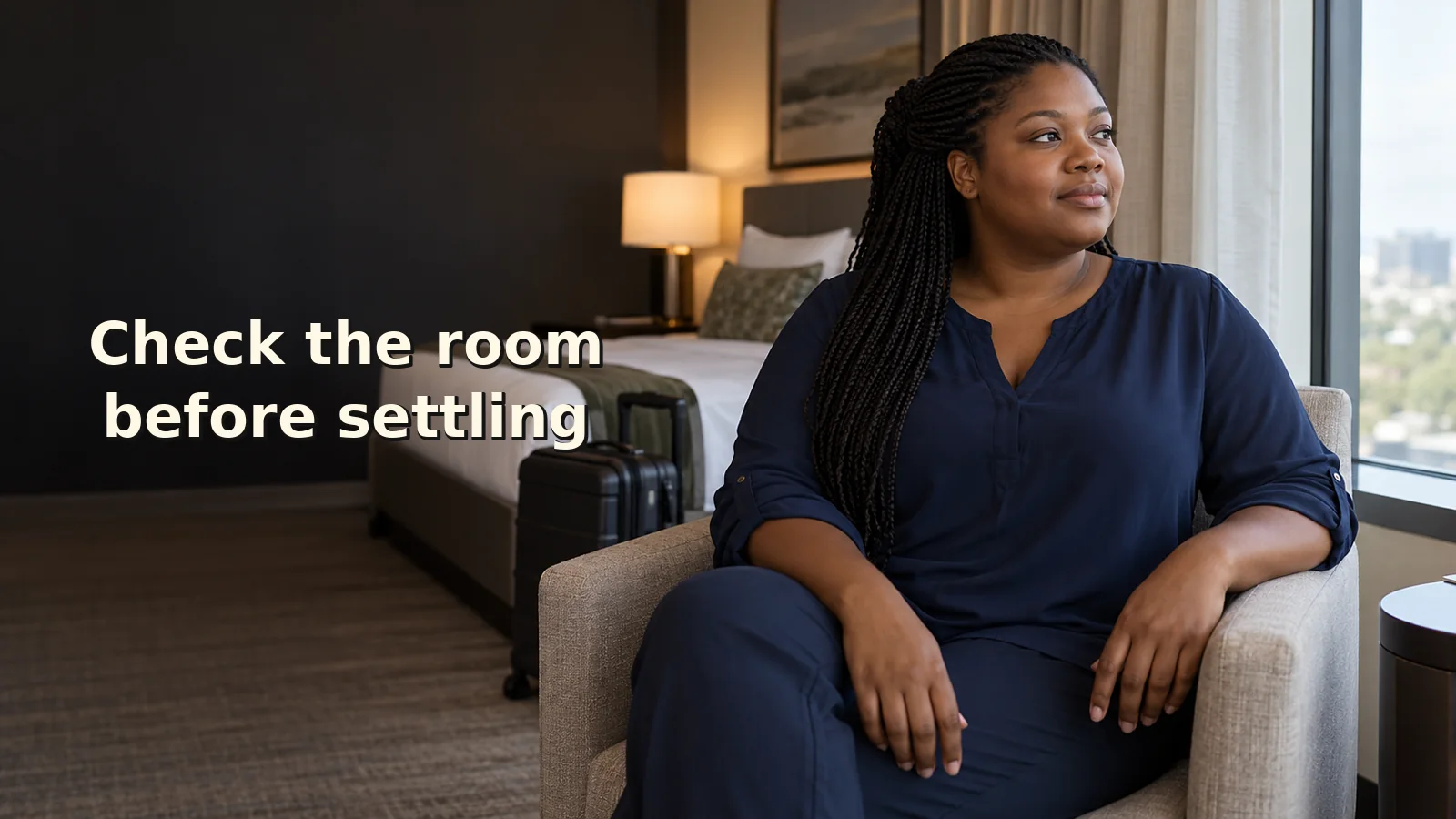
There is no need to recreate a meditation corner or use hotel facilities in a special way. The most useful preparation may be deciding that you will sit on the chair already available and follow one familiar instruction, rather than searching for an ideal experience.
Check the room before settling
First, deal with the practical questions that would otherwise interrupt your attention. Do you know when you need to leave? Are you expecting someone? Are you responsible for another person or waiting for information that needs a prompt response? A short pause should fit around those responsibilities.

Keep walkways clear and avoid moving unfamiliar furniture or using unstable surfaces as seats. Follow the property's ordinary guidance about access, room use and housekeeping. A meditation article cannot determine whether a particular building, lock or location is secure. Address concerns through appropriate practical channels before considering a session.
If another adult shares the room, discuss whether the time and sound will work for both of you. Their agreement to stay in the room does not establish agreement to listen to a recording. A quiet individual practice or a different opportunity may fit better than shared audio.
Choose a location where you feel comfortable maintaining awareness. You might prefer facing part of the room instead of looking directly at a wall. You can keep your eyes open. If an unfamiliar setting makes inward attention unwelcome, ordinary observation or a different activity remains available.
Choose a session that fits the actual gap
Work backward from your next commitment. Include the time needed to put on shoes, gather belongings or meet someone downstairs. The entire gap is not necessarily available for meditation. Select a session that leaves an ordinary transition rather than requiring you to finish at the moment you must leave.

For example, imagine you have twenty minutes before meeting a friend. You may choose a brief pause and then prepare to leave, rather than starting a recording that fills all twenty minutes. The numbers in this example illustrate scheduling; they are not a recommended therapeutic dose.
Choose one purpose for this attempt. Perhaps you want a few minutes of familiar guided attention, or simply a chance to notice the room before beginning your evening. A specific purpose helps you select an approach without expecting it to remove tiredness, guarantee sleep or change the whole trip.
If you are returning after a longer break, the restart meditation guide addresses changes to the wider routine. Here, the narrower task is arranging one session in temporary accommodation.
A practical framework: seat, anchor, exit
Find an ordinary supported seat
Use a stable chair or another position you already find comfortable. You do not need to sit on the floor because you are meditating. Keep the arrangement simple enough that you can change position or stop without climbing around luggage or moving equipment.
Notice whether the available support suits you today. A decorative chair may look inviting but feel awkward after a journey. You can choose another appropriate position or decide against sitting. This guide does not prescribe posture adaptations for pain, injury or a medical condition; use qualified advice when those questions apply.
Keep drinks, charging cables and personal items arranged as you normally would for a seated activity. Preparation should reduce practical inconvenience, rather than turn the room into a project. A cushion, scented product or new purchase is not an entry requirement.
Choose an attention anchor you actually want
You can follow a familiar guide, attend to an ordinary sound or notice physical support. The National Center for Complementary and Integrative Health describes different meditation approaches, including attention to breathing, sound or a visual image. That variety does not make every method suitable for every person.
Choose an approach that fits the available setting and your own comfort. Eyes-open attention may suit the room better than a recording that repeatedly asks you to close your eyes. If an instruction does not fit, choose another practice rather than forcing the room or your body to match it.
You can explore SoulFul GLO's guided meditation overview when deciding what kind of practice interests you. Check the actual recording and its instructions before choosing it; a product overview does not establish that a particular session will suit this stay.
Decide how you will finish
An ending can be practical: the selected recording ends, or you finish the brief pause you planned. Keep enough time to look around, change position comfortably and gather what you need next. There is no requirement to preserve a particular mood when you leave.
If you use an alarm, set it through a tool whose behaviour you understand. Check the sound and the next scheduled alert. This is a planning suggestion, not a claim that SoulFul GLO includes a particular timer or alarm function.
Check playback before starting
Do a brief playback check while you are still preparing. Can you hear the chosen recording comfortably? Do you know how to pause it? Does another track start afterward? Account for the actual device, connection and audio arrangement instead of assuming they behave exactly as at home.
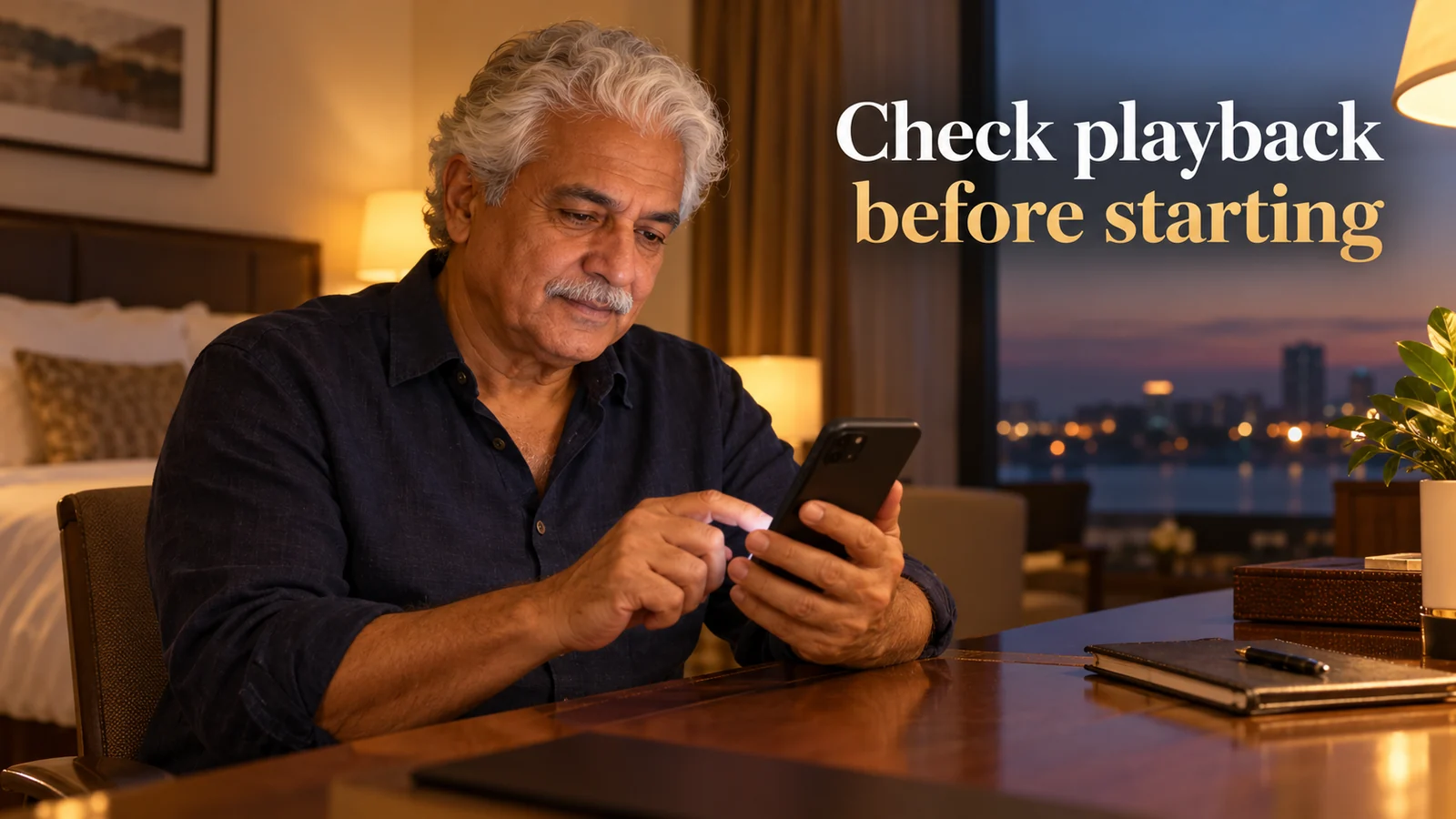
Hotel connectivity can vary. Verify what is available before depending on streaming or downloads. A download button or offline entitlement must be confirmed in the tool you actually use. If playback is unavailable, you can choose an unguided pause or another activity without troubleshooting through the whole gap.
Keep awareness of relevant surroundings and responsibilities. Headphones are not required. If you use speakers, consider the other person in the room and ordinary sound carry. The headphones or speakers guide covers that equipment choice in more detail.
Avoid turning the session into a device test. Once you have identified a problem, you can stop and decide later whether it is worth fixing. Spending the available time reconnecting audio does not create an obligation to extend the session or delay another commitment.
Two different temporary-room plans
Consider a fictional work trip. An adult checks in before an evening meeting and wants a familiar pause. The room has a stable desk chair and a clear walking route. They choose a short guide, preview its ending and leave time to collect their bag. The plan answers a scheduling question rather than promising a particular feeling.
Suppose the recording does not load. They decide against further troubleshooting and spend a short period noticing ordinary sounds instead. Their preparation still helped: they know when to stop and what comes next. They have not failed to complete a prescribed programme, because no such programme was required.
Now consider two adults sharing accommodation on a leisure trip. One would like to meditate while the other reads. They agree that spoken audio would be distracting, so the first person chooses a quiet pause with eyes open. They leave the chair where it is and keep the shared route to the door clear.
The plans differ because the arrangements differ. Neither adult needs to persuade the other that a meditation session is the best use of the room. A workable plan respects the actual space, timing and preferences involved, including the option to skip practice for this stay.
Pack only what you will use
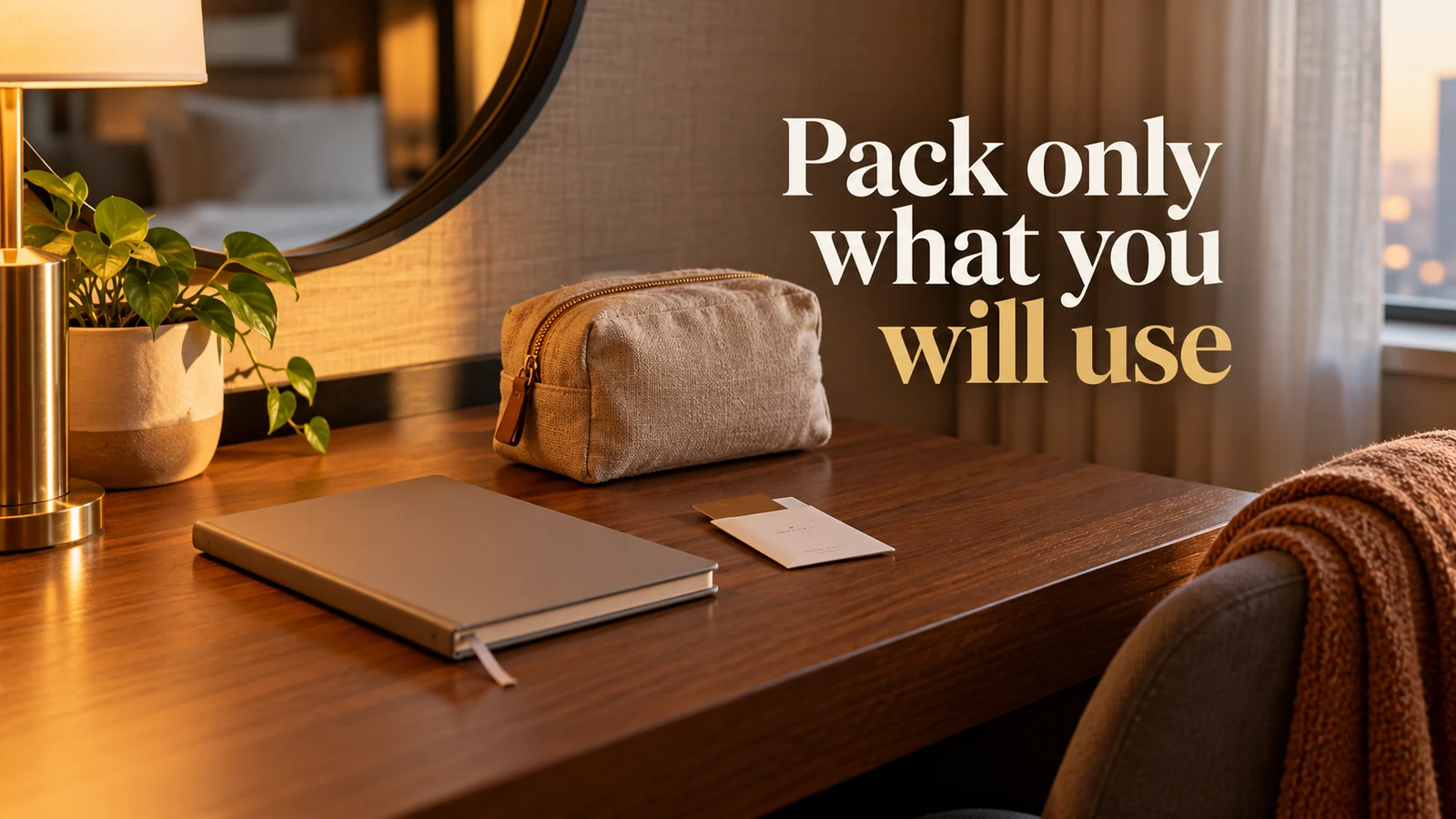
A familiar recording or ordinary item may be useful if you already use it comfortably. Bring what serves a clear purpose and fits the trip. Avoid making successful travel practice depend on recreating every detail of your home setup.
Before departure, check practical requirements through the provider's current information. That includes account access or any feature you intend to rely on. This article does not promise offline availability, universal device compatibility or a specific subscription entitlement.
After one attempt, note a concrete observation if useful: the seat worked, the timing was tight or the recording was difficult to follow in that setting. Those observations can inform a later choice without turning the trip into a meditation performance record.
If the same practical issue appears on another stay, change the arrangement rather than requiring more determination. You might choose a different time, leave audio out or decide that a travel day is better served by ordinary rest. A single hotel-room attempt does not need to become a travel habit. Keep what was useful, leave the rest undecided and avoid making your next trip a test of whether you maintained a routine.
FAQs
Must I meditate every day while travelling?
No. You can decide whether a session fits each day's circumstances. Missing a session does not require a catch-up practice. Travel responsibilities, rest and ordinary plans can take priority without needing a special explanation.
Can I keep my eyes open?
Yes, if that fits the approach you choose and feels comfortable. Look at an ordinary area rather than forcing your gaze. If a recording's instructions do not suit you, select something else or end the session.
Is a hotel-room practice a treatment for travel anxiety?
No. This is practical planning for an optional self-care activity. Meditation does not replace conventional care. If distress is persistent, concerning or interferes with daily life, seek appropriate qualified support instead of trying to resolve it by extending a session.
What if I feel uncomfortable after starting?
Stop or change activity. You can look around, respond to a responsibility and return to ordinary plans. NCCIH notes that firm conclusions about meditation safety are limited and advises against delaying conventional care. Completion is not more important than your response to the practice.
Do I need special equipment?
No particular purchase is required by this method. Use an appropriate stable seat and an approach that fits. If you choose audio, check the actual playback arrangement and keep controls accessible.
When you have a suitable opportunity, explore SoulFul GLO's meditation overview and choose a practice after checking its current details. Keep the plan small enough to fit the room and the trip you are actually taking.