
A friend would like someone to check in with about meditation. You like the idea of a little company around the practical arrangements, but you do not want another person grading your concentration, asking for private thoughts or deciding whether your session was long enough. Those preferences can shape the invitation from the beginning.
A meditation buddy can mean many things. Two people might agree to begin individual practice at the same time, exchange a brief practical message or occasionally discuss a question for a teacher. None of those arrangements automatically includes teaching, emotional support, monitoring or a promise to practise whenever the other person does.
This guide offers an original planning approach for a voluntary arrangement between adults. It includes a small agreement, a table and fictional examples. It does not present a validated programme, guarantee consistency or make another person's reply evidence that your practice was worthwhile.
Quick answer
Agree on the small role you actually want help with, such as a practical check-in before separately chosen practice. Decide when a message is welcome, what information it needs and what happens when either person is unavailable. Keep personal experiences optional and do not compare session lengths or moods as scores. A friend remains a friend; instruction and health concerns need the appropriate qualified routes.
Define the job before naming the arrangement
Begin with the practical task. Perhaps you would welcome an occasional question about whether a planned time still suits you. Perhaps you want someone to know that a particular session has been postponed. These are different requests from asking someone to notice when you have missed a practice and keep prompting until you comply.
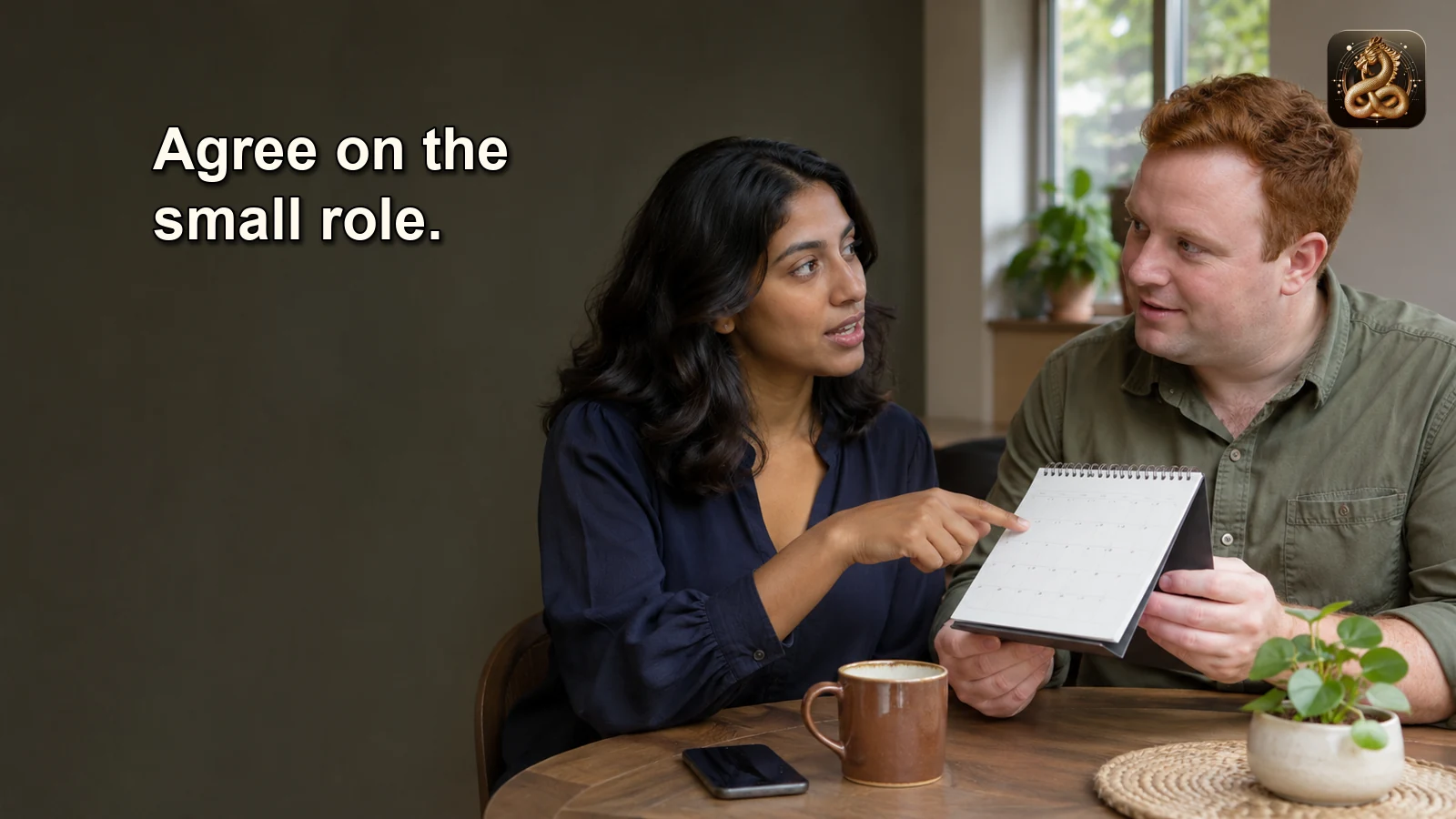
Use language that makes the choice clear to both people. You might ask whether your friend would like one agreed check-in before an occasional individual session. That invitation says more than “Keep me accountable,” which can conceal very different expectations about reminders, persuasion, explanations and reporting.
The other person may prefer a smaller role or none. Their answer does not establish whether they value meditation or care about you. They may have limited attention, dislike messaging arrangements or want to keep their own practice separate. An invitation works only when declining remains a real option.
Avoid assigning an existing friend the role without asking. Sending a daily account and expecting a reply can create work the recipient never agreed to do. First establish whether the arrangement is wanted. You can also decide that a personal reminder or no check-in fits better than involving another person.
Keep a check-in different from shared meditation
Agreeing to exchange a practical message does not mean that you will meditate together, use the same recording or begin at exactly the same time. Those are separate choices. One person may prefer an unguided practice while another follows a familiar resource; the support arrangement need not erase the difference.
If you do want to practise at the same time, clarify whether you will be in a call, in one room or simply aware of a shared starting point. A time on the calendar does not establish that cameras, microphones or personal discussion are wanted. Decide through the actual arrangement, not the word buddy.
A planned time may become unsuitable. Let either person change or decline without requiring a replacement session or a detailed account of the day. Practical support becomes harder to understand when every missed occasion creates a debt. Keep any revised plan dependent on a fresh, willing agreement.
For a separate choice about moving beyond recordings, SoulFul GLO's unguided meditation guide considers that practice decision. A friend's presence does not supply the missing instructions or make two different methods equivalent.
Choose what the message needs to contain
A practical check-in can be brief. You might confirm that the planned time still works, say that you are postponing or decide not to make a plan today. The message does not need to include a mood, a count of distractions or the contents of the thoughts that appeared during practice.

Decide whether a reply is expected. A simple update can require no answer, while a question about timing may need one before the arrangement goes ahead. Make that difference explicit. Otherwise, silence can become a misleading sign of disapproval when it only means that the other person has not checked messages.
Keep the audience clear. A direct message is different from a group thread, a public streak or a shared spreadsheet. Do not add people, forward updates or publish participation records without a separate conversation about that use. An informal agreement is not a confidentiality guarantee or a secure storage system.
Share only what you want in the actual channel. You do not need to prove sincerity through personal disclosure. If the arrangement begins to invite material you would rather keep private, change the agreement or stop. A practical planning request need not grow into a continuing account of your inner life.
Leave comparisons out of the job
Two people can use the same recording and report different experiences. One may feel distracted; the other may say very little. A check-in does not provide a fair way to rank their practice, infer effort from the description or decide who is progressing faster.
Do not turn elapsed time into a character measure. Someone who stops early may be responding to a practical need or an unwelcome instruction. Someone who finishes a long recording has not supplied evidence of a better health result. Keep each person's choices and circumstances with them.
You can discuss a practical observation if both people want that conversation. For example, a player setting was unclear or a scheduled time did not fit. Stay with the observation rather than interpreting what it proves about motivation. Advice, suggestions and personal questions each need their own invitation.
If you notice yourself wanting a report so that your own session feels complete, reconsider that expectation. The other person's account cannot certify what happened for you. Your optional practice and their freedom to reply are separate matters, even when the arrangement began as a shared idea.
A small agreement to try once
First, name one useful role. Choose a practical question, such as whether an agreed time remains available. Avoid beginning with a bundle of reminders, session reports, reading suggestions and emotional support. A small role is easier to understand and easier for either person to decline.
Second, choose when and how contact is welcome. Use a channel you both already understand and a timing arrangement that fits. No new app, public record or shared account is required by this guide. Keep the plan realistic rather than adding a complicated system to make it appear serious.
Third, decide what an unavailable reply means. It can mean that no shared plan is confirmed, leaving each person free to choose independently. Avoid setting up repeated prompts or assumptions about another person's welfare merely because an optional meditation message went unanswered.
Fourth, retain an ordinary ending. Try the arrangement for one agreed occasion if that suits you, then ask whether either person wants another. There is no required review period, daily streak or notice requirement here. A clear decision to stop need not contain an explanation of private circumstances.
Finally, keep the arrangement separate from any practice instruction. Choose resources on their own merits and ask an appropriate teacher about unclear guidance. A buddy agreement cannot verify a method's safety, establish a provider's qualifications or replace individual care.
A table for deciding the role
| Possible role | What to agree | What it does not establish | A smaller option |
|---|---|---|---|
| A timing check-in | When a question and reply are welcome | A commitment to identical practice | Make your own plan independently |
| A brief practical update | What information is useful | Permission to ask for private experiences | Send no update |
| Company around a chosen session | Whether contact is before, during or after | A shared method or required disclosure | Begin separately |
| Discussing a resource question | Whether suggestions are invited | Teaching qualifications or individual advice | Ask the responsible teacher |
| Ending the arrangement | How to say it no longer fits | A judgment about the friendship | Leave future contact unplanned |
Use only the row that answers the actual request. The table is an original planning aid, not a course protocol or a measure of an effective partnership. An arrangement can be kind and still unsuitable for the time or attention either person has available.
Fictional demonstration: one timing question
In this invented example, Anika and Tomas consider a short check-in before individual practice. They agree that one person may ask whether the time still suits, and the other may answer yes, postpone or decline. Neither is expected to report what happened during the session afterward.
On the first occasion, Tomas is unavailable and replies that the shared timing will not work. Anika decides independently whether she wants to practise. She does not send more prompts or ask him to make up the missed time. The arrangement supplied a practical answer, even though they did not begin together.

Later, they decide whether another check-in is wanted. They may keep the same arrangement, change it or leave it there. This fictional example demonstrates the scope of an invitation; it does not establish a lasting habit, improved motivation or a change in either person's wellbeing.
The simpler option is for Anika to use her own calendar and leave Tomas out of the plan. That does not make the friendship less supportive. It recognises that the task might not need another person, and that ordinary company can exist without a meditation reporting arrangement.
Fictional demonstration: declining an experience report
Another fictional pair, Mei and Sam, initially agree to exchange a practical message. After several occasions, Sam asks what Mei felt during practice. Mei does not want that conversation. She explains that the arrangement she wanted concerned timing, rather than discussing personal experiences.

Sam can accept that boundary and decide whether the smaller role still suits him. Mei does not have to offer an alternative private detail to soften the refusal. Their agreement can return to its original scope, change by mutual choice or end without becoming a dispute about who is taking meditation seriously.
If a different kind of conversation is wanted later, either can ask separately. A previous yes to timing does not supply a yes to every future topic. The example makes no claim about resolving relationship difficulties; it illustrates keeping one voluntary agreement from silently becoming another.
Know when the question needs another route
A friend can say what they noticed about their own resource without becoming your instructor. If a direction is unclear, use the source's question route or an appropriate qualified teacher. NCCIH recommends asking about an instructor's training and experience when considering meditation or mindfulness. A buddy's confidence is not a substitute for that information.
Keep concerning health reactions and urgent needs outside the check-in arrangement. A casual partner may not be available or equipped to provide suitable help. This guide does not establish a monitoring service, a clinical relationship or a reason to delay appropriate support while waiting for a message.
Possible value remains modest: an agreed contact can make a practical arrangement clearer, and a small boundary can leave the request understandable. No particular effect on consistency, mood or relationships is established here. Stop or revise a plan that becomes unwelcome rather than treating endurance as evidence of commitment.
Questions readers often ask
Do we need to practise for the same length of time?
No matching duration is required by this planning approach. Choose your actual practice and stopping point separately. A practical check-in can remain useful without comparing minutes, completed recordings or the amount of time either person had available.
What if my friend does not reply?
Use the arrangement you actually agreed. For an optional timing question, an absent reply can simply leave no shared plan confirmed. Do not repeatedly prompt, infer a private explanation or turn an informal practice arrangement into a monitoring role that was never requested.
Must I explain why I stopped meditating?
This guide supplies no such reporting requirement. You can share what you want within the agreement or decide that you prefer to keep the matter private. If the arrangement no longer fits, say so without making another person's acceptance depend on disclosing personal details.
Can a buddy teach me a meditation?
Friendship alone does not establish relevant qualifications or that a method suits you. Check the actual resource and instructor, and use appropriate routes for unclear instructions or health concerns. A practical support agreement should not quietly turn into an unverified teaching relationship.
Keep support small enough to choose
Read SoulFul GLO's meditation-teacher questions when you are considering guidance rather than a practical check-in. A buddy, a teacher and an individual plan have different jobs. You can choose one, combine clearly agreed roles or leave the arrangement aside without scoring your commitment.