
A string of beads can give a repeated practice a physical place: this bead, then the next. That arrangement may interest you if keeping a mental tally becomes a separate distraction. Before trying it, decide what you want the beads to do and whether you are following a particular tradition or a small self-led attention exercise.
The beads do not determine the meaning of a phrase or the result of a session. A traditional mala, an ordinary bracelet and a handheld object can have different roles. This guide explains practical questions about counted repetition and offers an optional short example. It does not supply religious authority, a medical treatment or a promised emotional outcome.
Quick answer
Read the actual practice instructions before deciding how beads are used. For an ordinary self-led counting attempt, choose a comfortable string you can handle without strain, identify a starting place and advance one bead at a time while noticing the movement. Keep breathing natural. Try only as much as you want, then stop. Completing a whole string or reaching a particular number is optional in this suggested version.
Understand the beads in their actual context
Penn Museum’s catalogue describes one Tibetan prayer-bead object and explains that some Buddhists use a mala with 108 beads to keep track of mantra repetitions. That is a specific cultural description. It does not establish one rule for every string, every Buddhist practice or everybody who uses beads.
If you want to learn a named practice, use its actual teaching. Ask what is repeated, how the beads are handled, what the sequence means and whether there are conventions you should understand. A general article cannot replace instruction merely by attaching the word mala to an ordinary exercise.
Prayer beads also appear in different religious settings. The Scouts’ educational resource introduces several faith contexts and emphasises respect for participants’ beliefs. That background supports asking what an object means to its user, rather than assuming all bead practices are interchangeable. This article does not reproduce the resource’s craft activity.
Keep a personal object’s significance separate from a health claim. You may value a string because it belongs to your practice or reminds you of somebody. Those meanings deserve accurate description. They do not establish that its material, colour or number of beads treats a condition or guarantees a particular state.
Choose the job you want the beads to do
There are several possible tasks. You might use beads to keep a physical place in a repeated sequence, to notice the movement of advancing them or to follow the instructions of a religious practice. Choose the task before combining them. More tasks do not automatically make a session more useful.
For a physical tally, the sequence lets you recognise where you are without holding every repetition in memory. That is a practical arrangement, not evidence of improved memory or concentration. You can still lose your place or find the object distracting. Decide from the attempt you actually have.
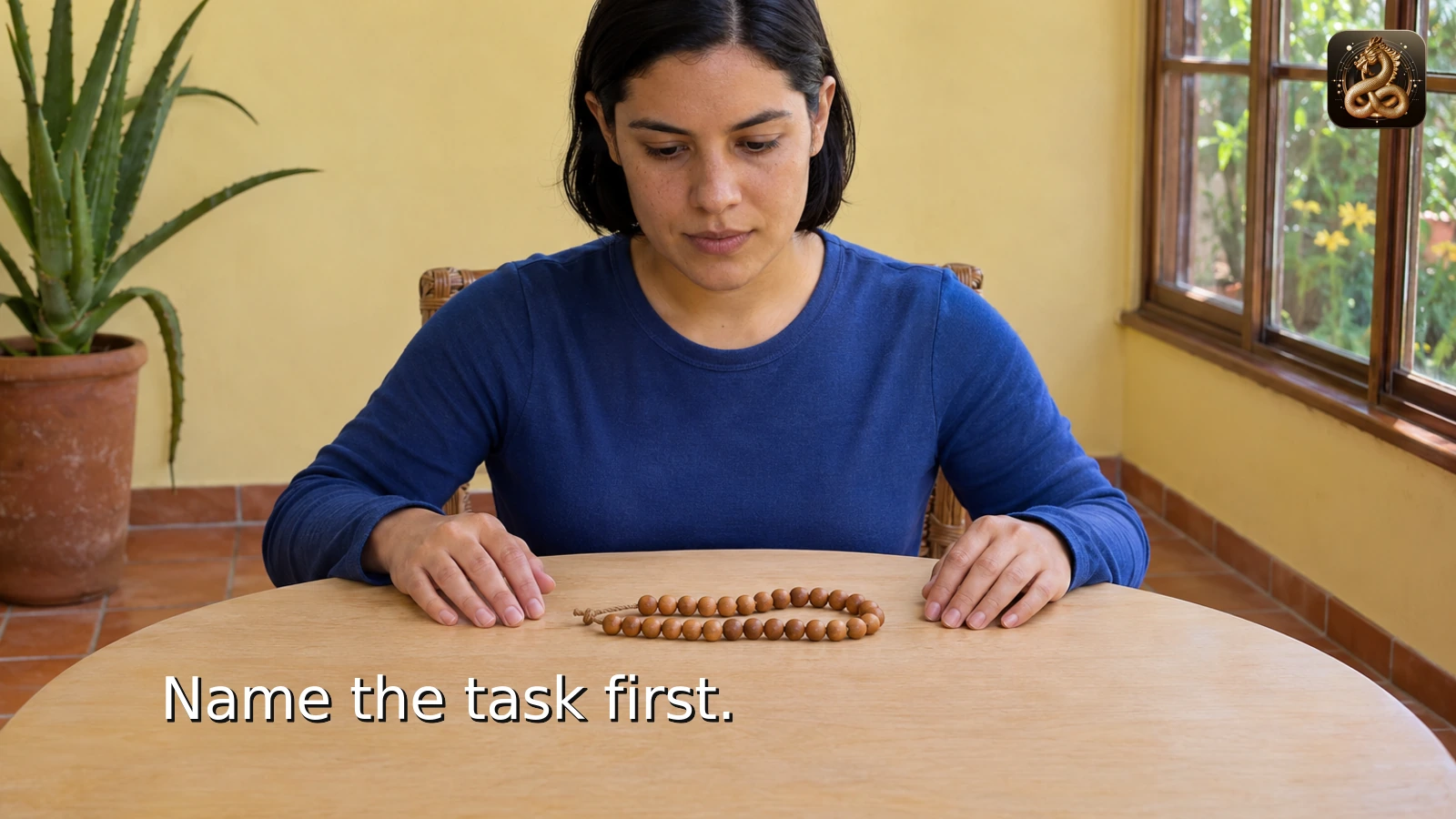
Simply noticing a surface is a different task. If you are interested in the feel of one bead, you may not need to move through the string at all. Likewise, wearing beads during the day does not establish that you are carrying out a counted meditation practice.
An ordinary counting attempt can remain separate from a mantra, prayer or affirmation. You do not need to invent a sacred phrase or make a statement about how you should feel. If the particular instruction you want includes meaningful words, learn those words and their context from an appropriate source.
Check the object and the handling arrangement
Use something you already own or are permitted to use. Check that it is intact and that the surface and weight are comfortable for your hand. Leave aside an object that catches on your skin, has an unfamiliar coating or needs a tight grip to keep it from slipping.
Keep the string supported when that helps. A table or your lap may be more workable than holding its whole weight in the air. Choose a position in which your shoulders and hand can rest ordinarily. This guide gives no universal finger placement or requirement to use a particular hand.
If the object belongs to a named practice, check its actual conventions before repurposing it. An unfamiliar larger bead, pendant or marker may have a specific role. You can learn that role rather than guessing from its appearance. A photograph is not a complete handling instruction.
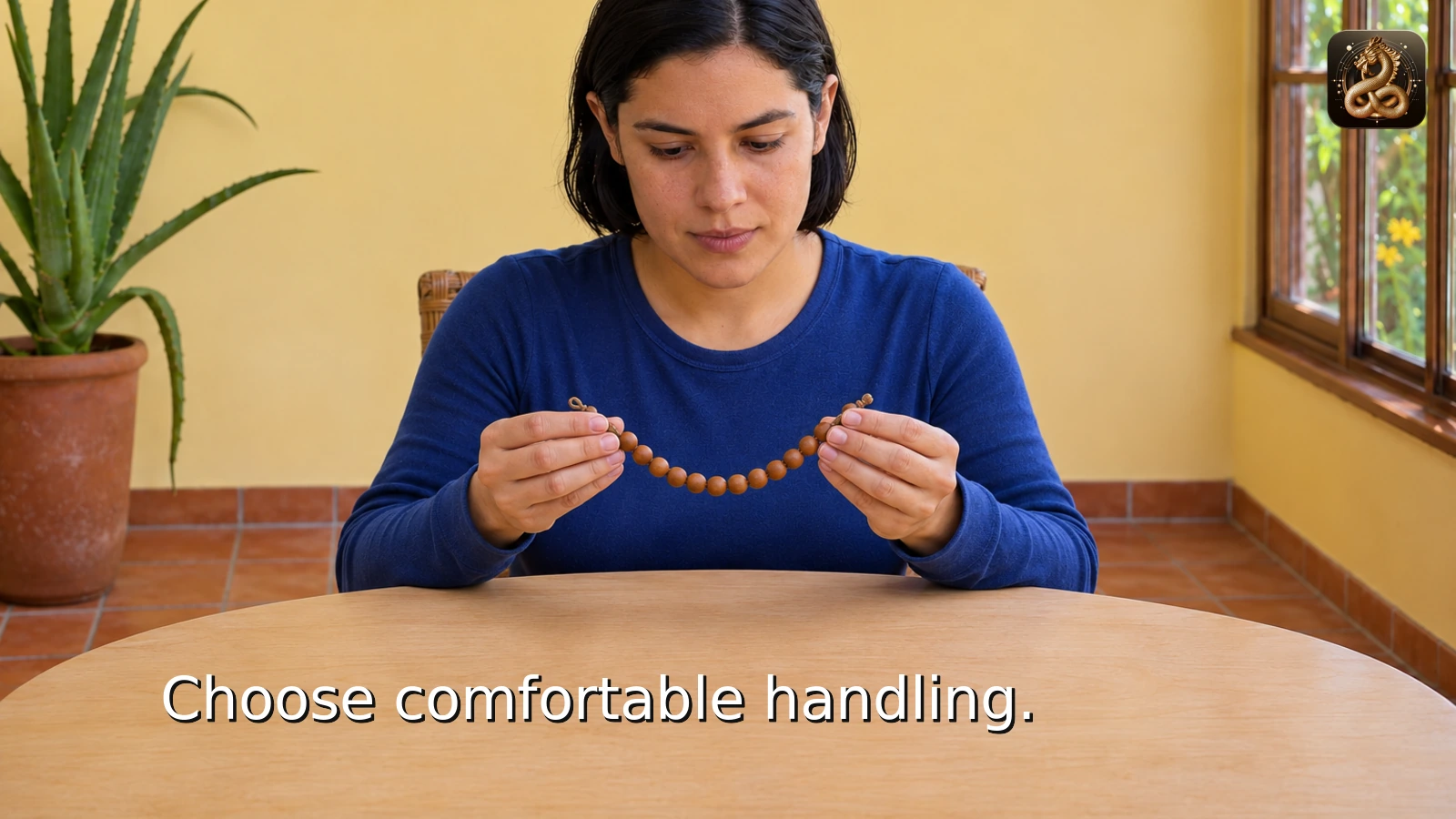
You can choose a different activity if advancing beads is awkward or uncomfortable. There is no need to buy equipment to prove interest in meditation. Keep individual concerns about hand movement, sensation or pain on an appropriate advice route instead of using this exercise to assess them.
Make a small plan before the first repetition
Identify the task and starting place
For the simple version here, the task is to notice moving from one bead to the next while keeping a modest count if you want one. Choose a starting bead or another clear physical cue. You can make a short partial attempt without defining a whole-string target.
Try one comfortable movement
Advance a single bead in a way that works for the object and your hand. Notice whether you can do that without pulling, squeezing or rushing. Adjust the support or stop if the movement is inconvenient. There is no need to establish a rhythm before deciding whether you like the task.
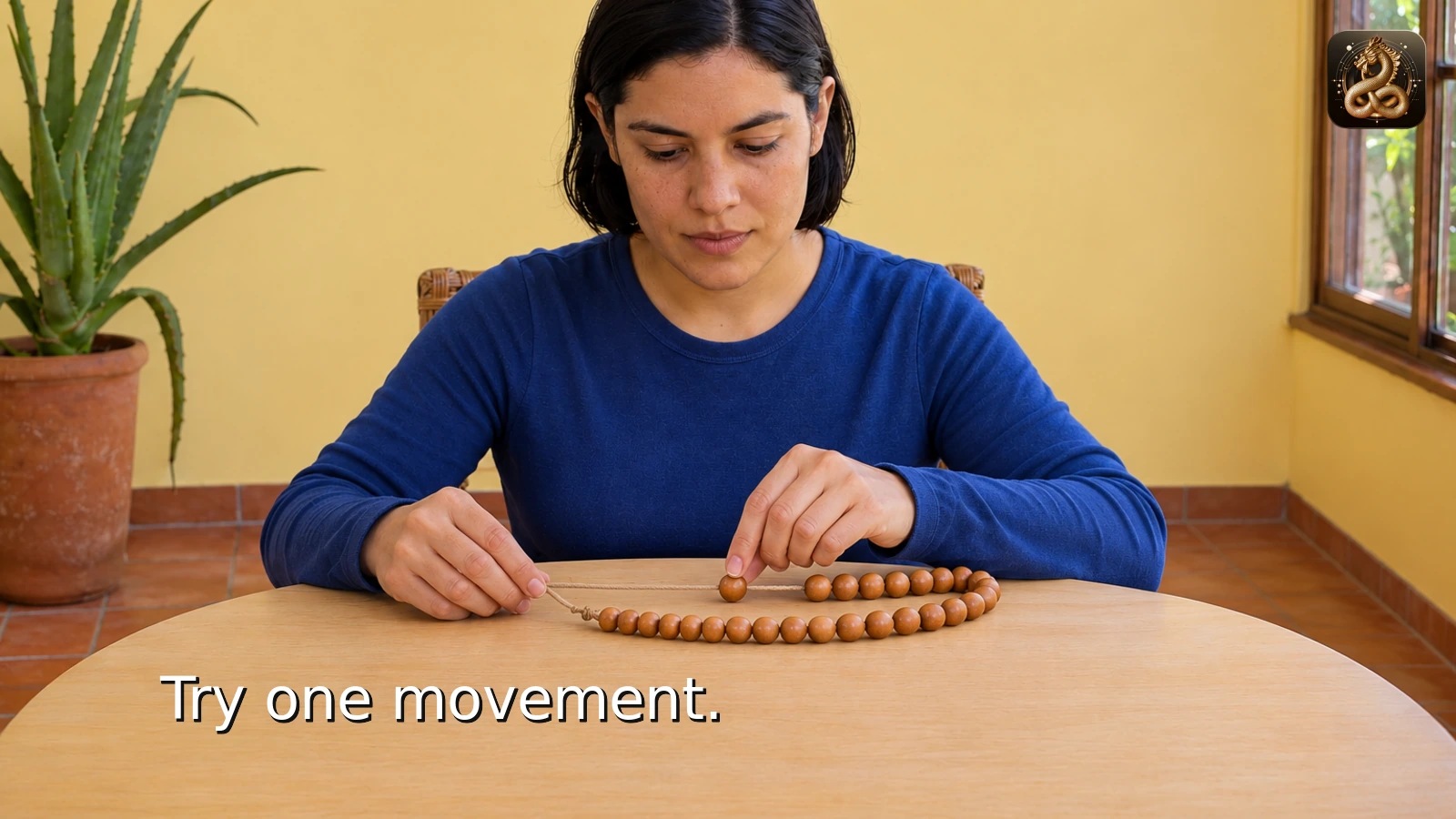
Continue without recruiting your breathing
Move to the next bead only when you choose. Let breathing continue naturally, rather than fitting movement to an inhale, exhale or hold. The pace may vary. A count can describe where you are in this attempt without becoming a deadline or a demand for a quiet mind.
Choose a clear ending
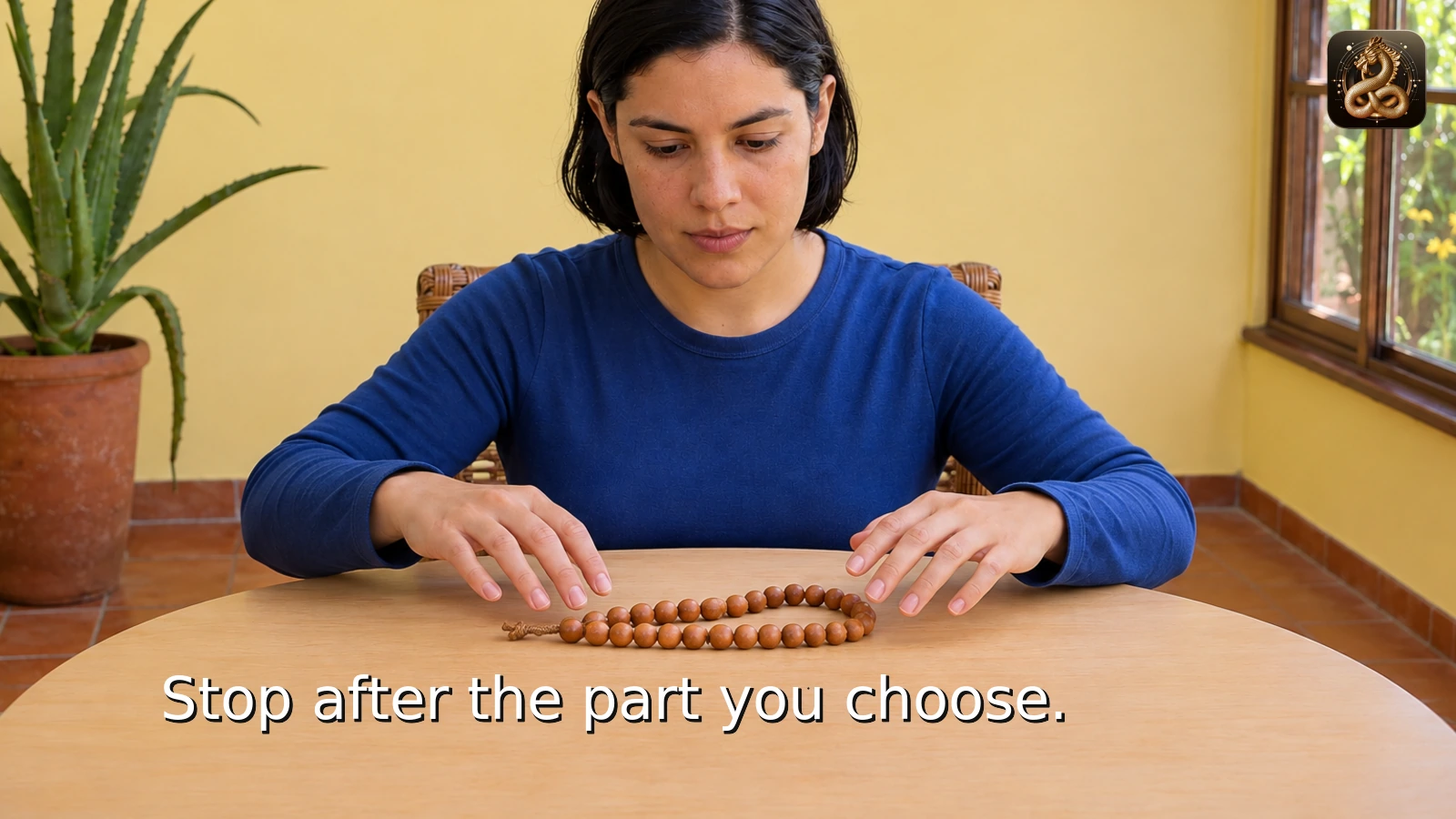
Stop after the portion you want to try. Rest the string and notice your surroundings before moving to another task. You can finish while thoughts are present or before reaching an obvious marker. A later attempt can have a different length or use no count at all.
A table for choosing the actual task
The same object can support different activities. Use the distinctions below to decide what information you need, rather than treating the table as a sequence to complete. Choose one task or leave the object aside.
| Task you want | What to clarify | A possible simpler option |
|---|---|---|
| Counted repetitions | What one bead represents and where you stop. | Try a short partial sequence. |
| Notice movement | How to advance comfortably. | Test one movement without counting. |
| Notice contact | Which contact you want to attend to. | Keep one bead still. |
| Learn a named practice | Its source, meaning and actual conventions. | Ask its teacher before starting. |
A fictional demonstration: a short counted attempt
Leena is an invented adult with an ordinary bead string that she owns. She is curious about following a small physical sequence while seated at a table. She is choosing a self-led counting exercise, so she makes no claim to be learning a traditional mantra practice from the object alone.
She checks that the string is intact and rests its weight on the table. She identifies a starting bead, moves to the next one and quietly notes the count she has chosen for this attempt. The movement stays comfortable, and her breathing continues in its ordinary way.
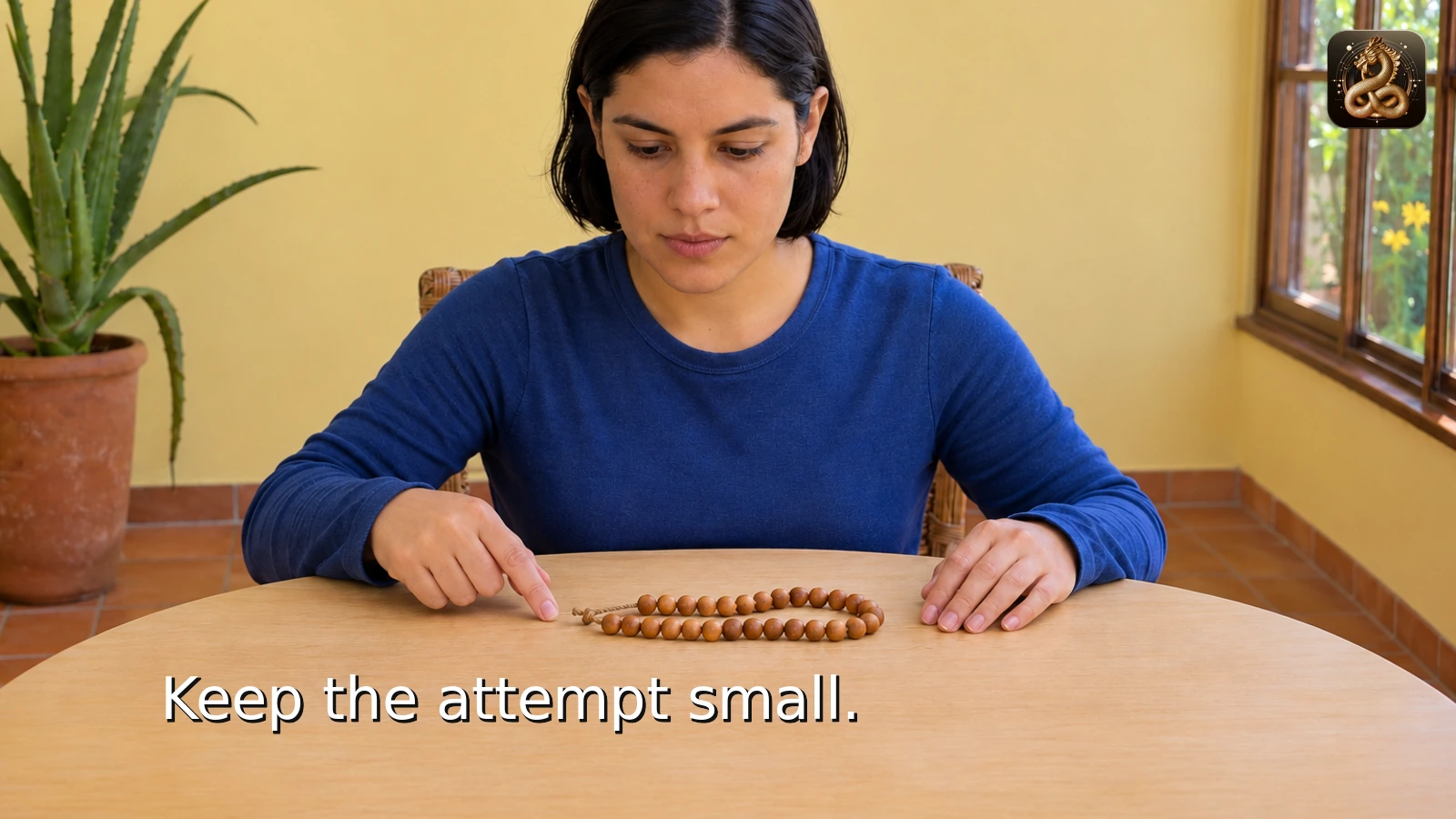
After several beads, Leena realises she is thinking about tomorrow’s plans and no longer remembers the number. She pauses. She can begin a new small count from the bead she is holding, use movement without a number or stop. None of those choices requires reconstructing every earlier repetition.
She chooses a few uncounted movements, then sets the string down. Her practical observation is that advancing beads interested her more than retaining a number. Another time she might choose the same arrangement or a different attention task. The example supplies no evidence about concentration, stress or a lasting change.
The simpler version would test one comfortable movement and finish. A reader following formal instruction would instead ask its teacher how a lost count or partial sequence is handled in that practice. Leena’s invented choices are examples for this optional exercise, not universal rules for religious use.
Keep an uncounted word practice separate
SoulFul GLO’s plain-word meditation guide offers an uncounted verbal anchor without requiring a bead string. Use that guide if the word itself is the attention task you want. A physical tally is another arrangement, with its own practical demands and stopping choices.
When the count becomes more demanding than the practice
Notice what you are actually spending attention on. You may be following the movement, checking a number or worrying about whether you skipped something. Those are different tasks. You can simplify the attempt by choosing one, rather than adding a second count to check the first.
Losing a number does not mean you must complete extra repetitions to compensate. In this suggested self-led version, you can restart a short sequence from your present place or finish. If you are following a named method, learn its actual convention instead of borrowing a rule from an unrelated guide.
Avoid turning a traditional number you have read about into an instruction for yourself. A museum’s description of 108 repetitions explains a context; it is not a recommended dose or a requirement attached to every meditation session. Use the practice you intentionally chose, with its actual boundaries.
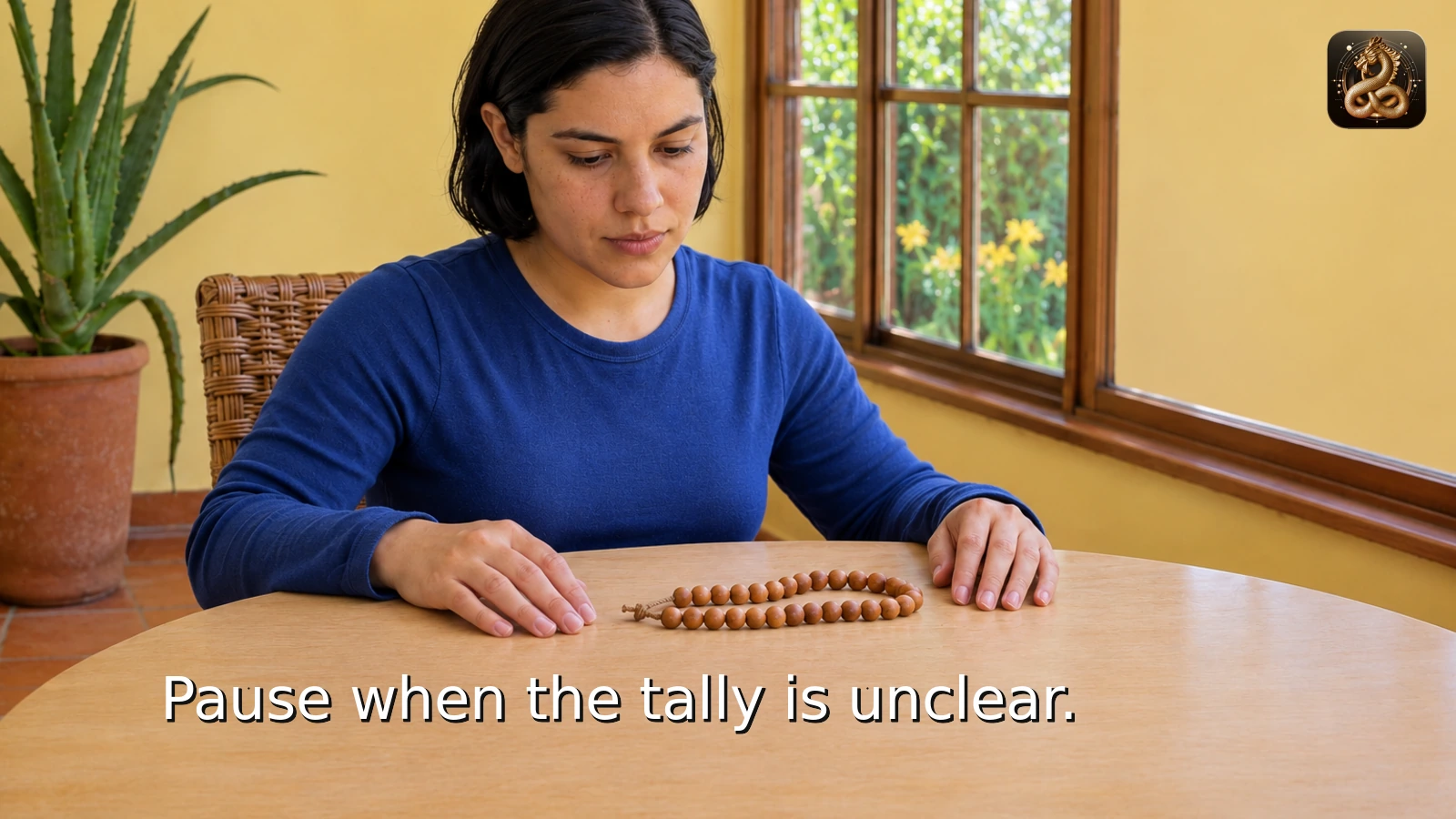
If repeated counting becomes unpleasant or difficult to put aside, stop rather than increasing the target. Set the beads down and attend to an ordinary activity. Optional meditation does not replace appropriate support for persistent distress or a concerning reaction.
Leave material claims at their real scope
A string may be wooden, glass, stone or another material. Physical differences can affect weight, texture and how it moves through your hand. Check those ordinary properties when choosing what to handle. The material alone does not establish a healing effect.
Descriptions such as energising or calming may express a seller’s language, a spiritual belief or somebody’s personal association. Ask which meaning is intended before treating the description as an evidence-based prediction. This guide recommends no material for changing sleep, anxiety, pain or another health outcome.
You can respect an object’s cultural or devotional meaning without converting it into a scientific mechanism. Equally, you can choose an ordinary nonreligious attention exercise while describing it honestly. Keep the source and purpose clear instead of assuming that one version represents every tradition.
Make the ending useful for the next activity
Once you stop, put the string somewhere you will find it if you want it again. You can notice one practical point: whether the weight was comfortable, whether you preferred a count or whether the setup asked more of your hand than you wanted. A short observation can be enough.
There is no need to keep the count running while doing another task. Return attention to the activity that now needs it. Repetition while driving, using equipment or handling a responsibility requiring vigilance is outside this suggested seated exercise.
A pleasant attempt does not create a daily obligation, and a distracting attempt does not settle your ability to meditate. You can keep the beads within an existing practice, try another clearly described method or leave the question open. The next choice can depend on what you actually want to do.
Frequently asked questions
Must a string have 108 beads?
No universal rule is established here. The cited museum catalogue describes 108 beads within a particular example. Named traditions may have their own instructions. An ordinary partial counting attempt need not adopt that number as a target.
Should I coordinate each bead with a breath?
This suggested version requires no breath coordination. Let breathing remain natural. If a particular method teaches a different arrangement, use its actual instruction and appropriate guidance rather than combining unfamiliar techniques.
What if I lose my place?
Pause and decide whether to begin a smaller sequence from where you are, continue without a number or stop. For a formal practice, ask its teacher about the relevant convention. The ordinary exercise here has no penalty for a partial count.
Can the beads guarantee relaxation?
No. They provide a possible physical arrangement for a practice, not a guaranteed result or medical treatment. Choose by the actual task, instructions and your willingness. Stop if the activity becomes uncomfortable or unwelcome.
Compare another kind of meditation focus
Explore SoulFul GLO’s practice-selection guide when choosing among meditation, movement and listening. Beads can remain an optional tool within a clearly understood practice, rather than something you need before taking a pause.